Kiprun Shoes


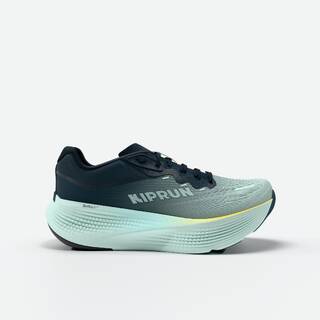
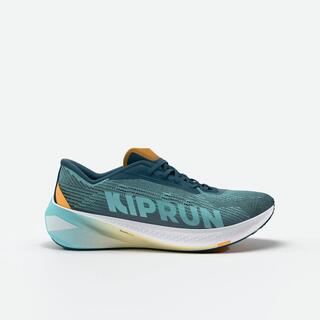
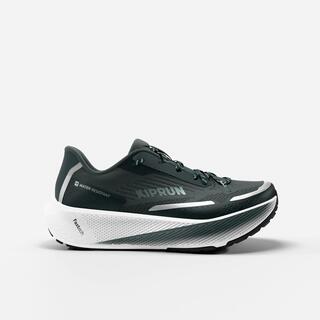
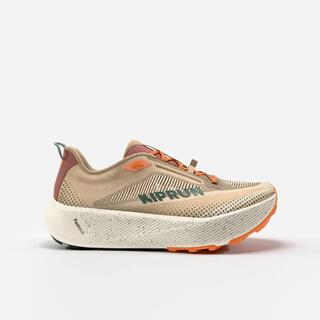
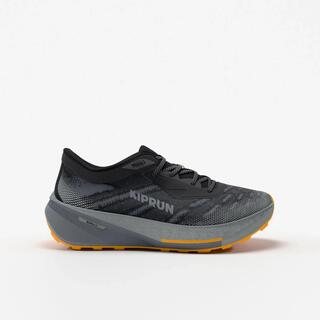
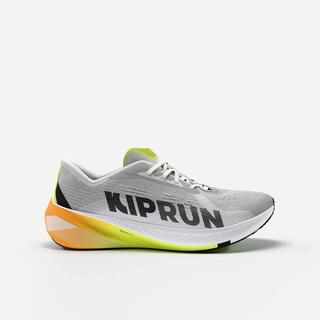
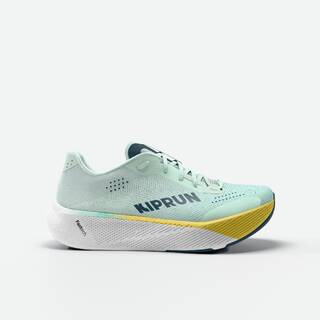
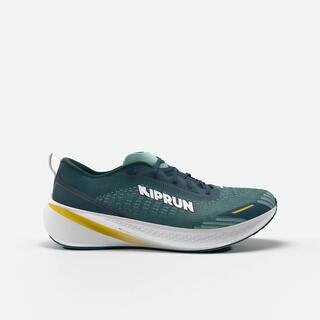
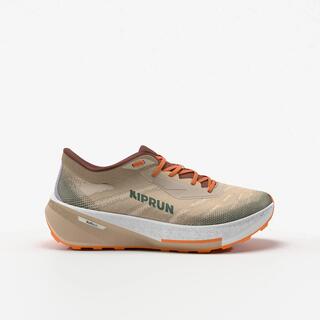
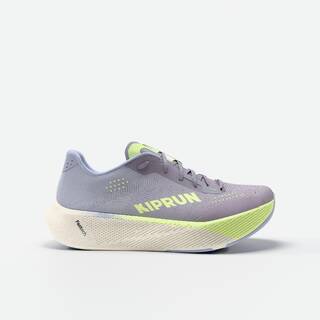
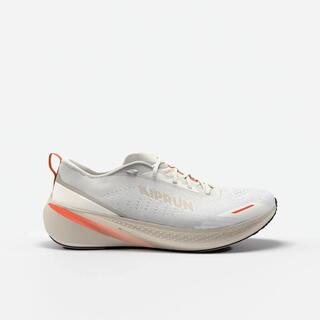
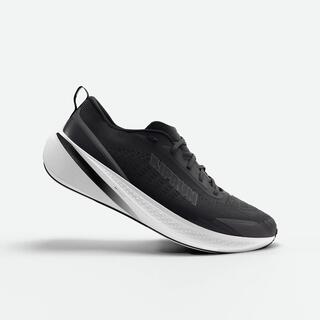
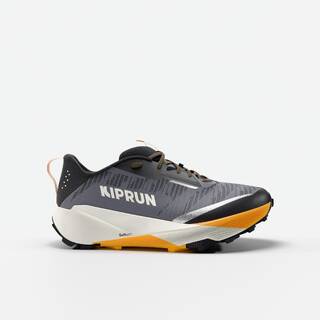
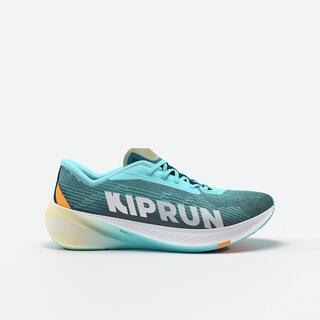
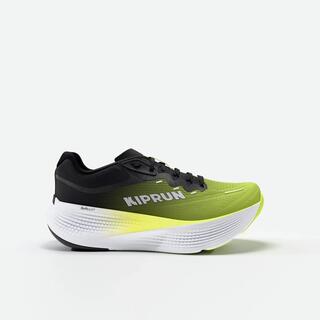
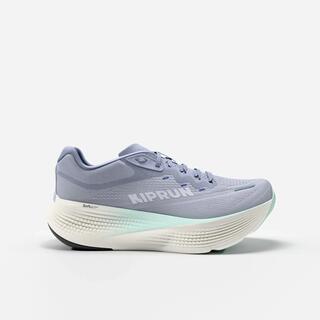
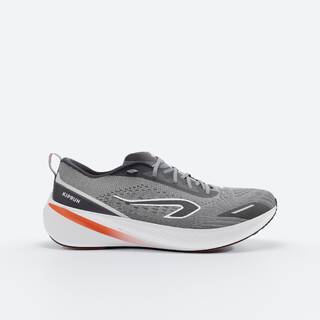
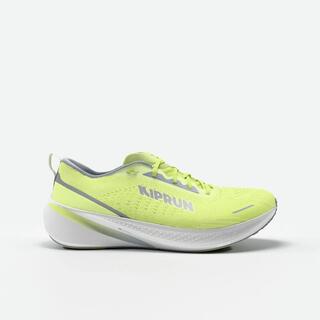
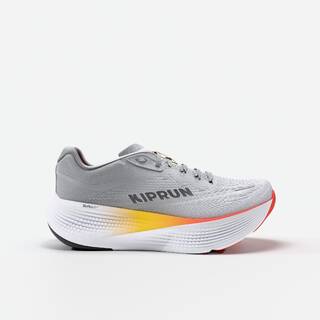
Kiprun Marathon Racing Shoes: Carbon Plate Propulsion and Dual-Density Foam Stacks for Sub-4 Hour Targets
Marathon racing shoes from Kiprun deploy full-length carbon fiber plates embedded between dual-density midsole foam layers, converting vertical ground reaction forces (2.5 to 3 times body weight at heel strike) into forward propulsion through mechanical energy return. The plate geometry follows a rocker profile with a 4 to 6 mm heel-to-toe drop, reducing calf eccentric load during the 42.195 km distance while maintaining midfoot strike efficiency. Stack heights range from 35 mm in the heel to 31 mm in the forefoot, balancing cushioning depth with ground feel precision required for pace control across variable Indian road surfaces.
Upper construction uses engineered monofilament mesh with laser-cut perforations positioned over metatarsal flex zones, achieving moisture vapor transmission rates above 8000 g/m²/24h to manage high-humidity coastal marathon conditions in Mumbai, Chennai, and Kolkata. Internal heel counters use thermoplastic polyurethane exoskeletons that lock the calcaneus bone without pressure points, preventing posterior slippage during the glycogen-depletion phase past kilometer 30. Outsole contact patches feature 2 mm blown rubber lugs in high-wear zones (lateral heel, medial forefoot) and exposed foam in midfoot transition areas, reducing overall shoe weight to 210 to 240 grams per shoe in men's UK 9 sizing.
Kiprun racing models differentiate through foam compound selection. The Kiprun KD Plus integrates Pebax-based supercritical foam with 87% energy return coefficients, while the Kiprun KD Light uses dual-layer EVA compression molding at 45 Shore A durometer in the heel and 38 Shore A in forefoot zones. Carbon plate stiffness varies from 8 Nm (newton-meters) bending resistance for flat course profiles to 12 Nm for elevation-gain routes like the Ladakh Marathon, where uphill propulsion efficiency outweighs pure cushioning depth. Reflective TPU overlays on lateral quarters and heel tabs enhance low-light visibility during early-morning start times common in Indian marathon events.
Training Marathon Shoes: High-Mileage Durability and Impact Attenuation for 80 to 100 km Weekly Volumes
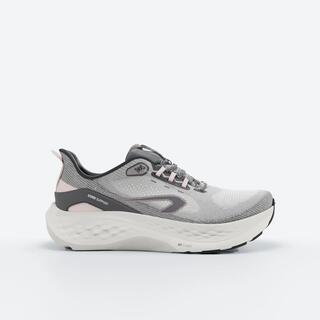
Training marathon shoes prioritize midsole compression resistance over racing weight, using injection-molded EVA foam with 280 to 320 Newton compression set ratings that maintain 85% of original cushioning properties through 600 to 800 km of pavement pounding. Heel-to-toe drops measure 8 to 10 mm, accommodating runners transitioning from recreational 10K training to structured marathon build-up phases without abrupt Achilles tendon stress. Medial posts in dual-density configurations (60 Shore A inner, 55 Shore A outer) provide pronation guidance for overpronators logging high weekly mileage on cambered Indian roads and uneven concrete footpaths.
Outsole rubber compounds blend carbon black filler particles at 15 to 18% concentration, achieving 65 to 72 Shore A hardness for wet-surface traction during monsoon training blocks (June through September across most Indian regions). Lug patterns feature 3 mm depth in heel crash pads and 2 mm forefoot flex grooves, balancing durability against flexibility through the gait cycle's toe-off phase. Decathlon's Kalenji training range incorporates wider toe boxes (10 to 12 mm additional width versus racing lasts) to accommodate foot swelling during long runs exceeding 25 km, preventing subungual hematoma (black toenail) common in undertrained marathoners.
Upper materials in training shoes use double-layer mesh construction with 1.2 mm thermoplastic film reinforcements in high-stress zones (eyestay rows, midfoot saddle), extending structural integrity beyond 500 km before mesh tearing occurs. Removable EVA sockliner inserts at 4 mm thickness allow custom orthotic insertion for runners requiring additional arch support or metatarsal padding. Reflective elements cover minimum 80 cm² surface area per shoe, meeting visibility standards for pre-dawn training sessions in low-traffic rural roads and urban park loops where streetlight coverage remains inconsistent.
Biomechanical Fit Profiles: Pronation Control, Neutral Cushioning, and Supination Accommodation Across Indian Foot Morphology
Indian runners exhibit diverse foot strike patterns influenced by barefoot childhood locomotion and transition to shod running in adolescence or adulthood. Neutral cushioning marathon shoes serve runners with 4 to 8 degrees of natural pronation (inward ankle roll), using symmetrical midsole geometries and centered heel counters that allow the foot's natural shock absorption mechanisms to function without interference. These models suit approximately 60% of the running population, featuring uniform foam densities and straight lasted construction from heel through forefoot.
Stability marathon shoes address moderate overpronation (8 to 15 degrees inward roll) through medial posting, where firmer foam densities on the arch side resist excessive midfoot collapse during stance phase. Dual-density midsoles combine 55 Shore A EVA on lateral edges with 62 Shore A medial wedges, creating 4 to 6 mm height differential that guides the subtalar joint toward neutral alignment. External TPU shanks spanning from heel to midfoot add torsional rigidity, preventing excessive arch flattening under body weight loads during the 35,000 to 40,000 foot strikes accumulated over marathon distance.
Supination (underpronation) affects 15 to 20% of runners, characterized by outward ankle roll and reduced natural shock absorption. Cushioned neutral shoes with softer midsole compounds (45 to 50 Shore A) and curved lasts encourage slight inward roll, distributing impact forces across broader surface areas. Decathlon sizing accommodates Indian foot dimensions, with D-width standards fitting narrower heel profiles common in South Indian populations and 2E width options available for broader Punjabi and North Indian foot structures. In-store gait analysis using pressure plate technology identifies individual strike patterns, matching biomechanical needs to appropriate shoe categories.
Concrete and Asphalt Impact Management: Midsole Stack Heights and Foam Compression Cycles for Indian Road Marathons
Indian marathon courses predominantly feature concrete and asphalt surfaces with minimal shock absorption, generating peak impact forces of 2.8 to 3.2 times body weight during heel strike (compared to 2.2 to 2.5 times on synthetic tracks). Marathon shoes must dissipate these loads through midsole compression without bottoming out, requiring minimum 28 mm stack heights in racing shoes and 32 mm in training models. Foam compression cycles (the material's ability to recover original thickness after repeated loading) determine long-term cushioning retention, with quality EVA maintaining 80% rebound efficiency through 500 compression cycles.
Dual-density midsole construction places softer foam (42 to 48 Shore A) in initial contact zones where peak forces concentrate, transitioning to firmer foam (52 to 58 Shore A) in midfoot propulsion areas where structural support outweighs pure cushioning needs. This layering prevents the 'dead leg' sensation marathoners experience past kilometer 35, when accumulated microtrauma to plantar fascia and Achilles tendons amplifies perceived effort. Decathlon's testing protocols subject shoes to 1000-cycle compression testing at 1.5 Hz frequency, simulating 180 steps per minute cadence over extended distances.
Indian summer temperatures (38 to 45°C in northern plains during April and May marathons) accelerate midsole foam degradation through thermal softening. EVA compounds with crosslinked molecular structures resist heat-induced compression set, maintaining cushioning integrity in high-temperature storage and use. Reflective midsole sidewalls and light-colored upper materials reduce solar heat absorption, keeping internal shoe temperatures 4 to 6°C lower than dark-colored alternatives during midday training runs. Runners training in Bangalore's moderate climate (18 to 28°C year-round) experience 20 to 25% longer midsole lifespan compared to Delhi-based athletes facing extreme seasonal temperature swings.
Monsoon Traction and Wet-Weather Grip: Outsole Rubber Compounds and Lug Geometries for Rainy Season Training
Monsoon conditions (June through September across most Indian regions) transform road surfaces into low-friction environments where standard rubber compounds lose 30 to 40% grip coefficient. Marathon training shoes require outsole rubber with minimum 68 Shore A hardness blended with silica particles at 12 to 15% concentration, maintaining traction on wet concrete through mechanical interlocking rather than pure adhesion. Lug patterns feature 2.5 to 3 mm depth with siping (thin cuts) that channel water away from contact patches, preventing hydroplaning at faster training paces above 4:30 min/km.
Heel crash pads use segmented lug designs with 5 to 7 mm spacing between individual elements, allowing water evacuation during initial ground contact when impact forces peak. Forefoot flex grooves align with metatarsal break points (typically 65 to 70% of shoe length from heel), maintaining natural toe-off mechanics on slippery surfaces without requiring shortened stride length. Decathlon's wet-surface testing involves 45-degree incline traction measurements on water-saturated concrete, with passing standards requiring minimum 0.65 coefficient of friction (compared to 0.85 on dry surfaces).
Runners in high-rainfall regions (Kerala, coastal Karnataka, Northeast states) benefit from marathon shoes with extended rubber coverage, wrapping 8 to 10 mm up midsole sidewalls to prevent lateral slip during cambered road running. Drainage ports in arch zones (3 to 4 mm diameter perforations through midsole and sockliner) allow water egress after puddle strikes, reducing in-shoe weight accumulation that can add 40 to 60 grams per shoe when fully saturated. Quick-drying mesh uppers with hydrophobic treatments shed 80% of absorbed water within 15 minutes of returning to dry conditions, critical for multi-hour long runs where foot maceration leads to blister formation.
Marathon Shoe Rotation Strategies: Race Day Models, Tempo Trainers, and Recovery Runs for Periodized Training Blocks
Structured marathon training programs benefit from shoe rotation across different workout intensities, matching footwear characteristics to specific training stimuli. Race day shoes (carbon-plated, 35 mm stack, 210 to 240 grams) reserve their 250 to 350 km lifespan for quality sessions: weekly tempo runs at marathon pace, monthly half-marathon tune-up races, and the goal marathon event itself. This preservation strategy maintains peak energy return properties when performance matters most, while preventing premature midsole compression from daily training volume.
Tempo training shoes occupy the middle ground, using responsive EVA foam (50 Shore A) with 8 mm heel-to-toe drops and moderate stack heights (30 mm heel, 22 mm forefoot). These models handle threshold intervals, progression runs, and marathon pace segments totaling 40 to 50 km weekly, offering sufficient propulsion for quality work without racing shoe fragility. Weight ranges from 260 to 290 grams, providing stability for controlled-pace efforts where form maintenance outweighs pure speed. Decathlon's Kiprun Long and Kalenji Run Support models fill this category, balancing cushioning depth with ground feel precision.
Recovery and easy-pace shoes prioritize maximum cushioning and durability for the 60 to 70% of weekly mileage run at conversational effort (5:30 to 6:30 min/km for sub-4 hour marathoners). Thick midsoles (38 to 42 mm stack heights) with soft foam compounds (45 Shore A) absorb repetitive impact loading during back-to-back training days, reducing cumulative stress on connective tissues. Higher heel-to-toe drops (10 to 12 mm) accommodate fatigued running mechanics common in recovery sessions, preventing Achilles strain when neuromuscular coordination declines. Rotating through three shoe models across a 16-week marathon training cycle distributes wear patterns, extending total footwear lifespan by 30 to 40% compared to single-shoe programs.
FAQ (Frequently Asked Questions)
Q1. What shoes are best for a beginner starting with 5K runs?
For 5K runs and short-to-medium road workouts, lightweight daily trainers with balanced cushioning—such as the Kiprun Kipcore or KS500 2—are ideal. They offer comfortable shock absorption and flexible support without feeling overly heavy on shorter distances.
Q2. What is the difference between road running and trail running shoes?
Q3. How to choose marathon running shoes?
Q4. What shoes do most marathon runners wear?
Q5. What shoes are legal for a marathon?
Q6. What is the fastest shoe for a marathon?
The fastest marathon shoes feature lightweight super-foams combined with a full-length carbon-fiber plate. This combination maximizes mechanical propulsion and energy return per stride, allowing runners to maintain higher speeds with reduced muscle fatigue over 42.2 km.
Q7. What heel-to-toe drop should I choose for marathon training on Indian roads?
Runners transitioning from casual jogging to marathon training perform well with 8 to 10 mm drops, which reduce Achilles stress during mileage build-up phases. Experienced marathoners with strong calf flexibility can use 4 to 6 mm drops in racing shoes for improved ground feel and midfoot strike efficiency. Higher drops (10 to 12 mm) suit recovery runs when fatigue compromises natural running mechanics.
Q8. How many kilometers can I expect from Kiprun marathon racing shoes before midsole compression affects performance?
Carbon-plated racing shoes maintain optimal energy return through 250 to 350 km, depending on runner weight and surface hardness. Reserve these for quality workouts (tempo runs, race-pace intervals) and goal events rather than daily training. Visible midsole creasing or reduced springiness during toe-off indicates replacement timing, typically after 8 to 12 weeks of structured marathon training.
Q9. Do marathon shoes require different sizing compared to regular running shoes due to foot swelling during long runs?
Marathon shoes need 8 to 12 mm additional toe box length (roughly half to full size up from casual shoe size) to accommodate foot expansion during runs exceeding 90 minutes. Measure feet in the afternoon after activity when natural swelling peaks. Thumb-width space between longest toe and shoe front prevents subungual hematoma (blackened toenails) common in undertrained marathoners.
Q10. Can stability marathon shoes correct overpronation for runners training on cambered Indian roads?
Medial-posted stability shoes guide moderate overpronation (8 to 15 degrees inward roll) through firmer foam densities on the arch side, helping maintain neutral alignment during high-mileage weeks. They work best combined with cadence drills (increasing steps per minute to 170-180) and hip strengthening exercises. Severe overpronation beyond 15 degrees may require gait retraining or custom orthotics rather than shoe correction alone.
Q11. What makes carbon-plated marathon shoes faster than standard training shoes?
Carbon fiber plates embedded in midsole foam convert vertical impact forces into forward propulsion through mechanical leverage, reducing energy cost by 3 to 4% at marathon pace. The plate's rocker geometry assists toe-off phase, decreasing calf muscle work during the 35,000 to 40,000 foot strikes over 42.195 km. Dual-density foam stacks (35 to 40 mm) provide cushioning without weight penalty, combining protection with responsiveness.
Q12. How do I maintain marathon shoe traction during monsoon training in high-rainfall regions?
Choose shoes with minimum 68 Shore A rubber hardness and 2.5 to 3 mm lug depth, which maintain wet-surface grip through mechanical interlocking. Siped (thinly cut) outsole patterns channel water away from contact patches, preventing hydroplaning above 4:30 min/km pace. After wet runs, remove insoles and stuff shoes with newspaper to accelerate drying, preventing midsole foam degradation from prolonged moisture exposure.
Q13. Should I use the same marathon shoes for race day and all training runs?
Rotating between race shoes (carbon-plated, lightweight), tempo trainers (moderate cushioning, responsive), and recovery shoes (maximum cushioning, durable) extends total footwear lifespan by 30 to 40% while matching shoe characteristics to workout intensity. Reserve racing shoes for quality sessions and goal events to preserve their 250 to 350 km energy return window. Daily training in max-cushioned shoes reduces cumulative impact stress during high-mileage weeks.
Q14. What midsole stack height balances cushioning and ground feel for concrete marathon courses?
Training shoes with 32 to 36 mm heel stack heights absorb repetitive concrete impact (2.8 to 3.2 times body weight per strike) without sacrificing stability during high-mileage weeks. Racing shoes use 28 to 32 mm stacks, prioritizing ground feel for pace control while maintaining adequate protection. Runners above 75 kg body weight benefit from thicker stacks (36 to 40 mm) to manage higher absolute impact forces.
Q15. How does Indian summer heat affect marathon shoe midsole durability?
Temperatures above 38°C accelerate EVA foam compression set through thermal softening, reducing cushioning lifespan by 15 to 20% compared to moderate climates. Store shoes in cool, ventilated areas away from direct sunlight. Light-colored uppers and reflective midsole sidewalls reduce solar heat absorption, keeping internal temperatures 4 to 6°C lower during midday training. Crosslinked EVA compounds resist heat-induced degradation better than standard foam formulations.
Q16. What width options accommodate broader Indian foot shapes in marathon shoes?
Decathlon offers D-width (standard) and 2E-width (wide) options across Kiprun and Kalenji ranges, with 2E providing 6 to 8 mm additional forefoot room. North Indian and Punjabi populations often require wider lasts due to broader metatarsal structures, while South Indian runners typically fit standard widths. In-store pressure plate analysis identifies specific width needs by mapping foot contact patterns during gait cycles.