Badminton Net


Portable Badminton Net Systems for Indian Court Setups and Outdoor Play
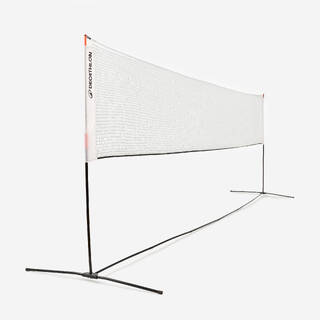
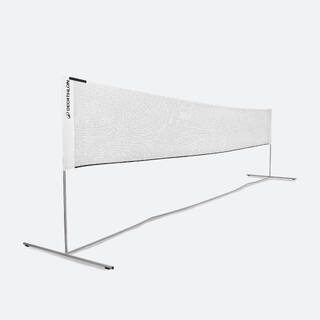
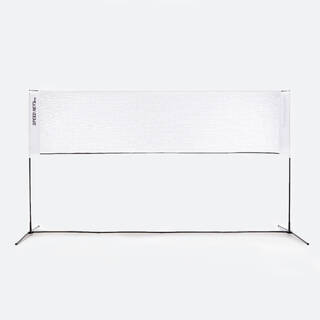
Portable badminton net systems from Perfly deliver tournament-grade height regulation (1.55 m at poles, 1.524 m at center) without permanent ground anchoring. These freestanding frames use telescopic steel poles with spring-loaded locking pins, allowing rapid assembly in parks, apartment courtyards, or terrace spaces where concrete drilling is prohibited. The base stability comes from weighted sandbag pockets or rubberized foot pads that resist lateral sway during aggressive net play and smash exchanges.
Indian outdoor courts face high-UV exposure and monsoon humidity cycles. Perfly nets integrate UV-stabilized polyethylene mesh (20 mm square apertures) that maintains tension integrity through six-month sun exposure without brittleness. The nylon braided top tape (38 mm width) distributes tension loads evenly across the 6.1 m span, preventing center sag under shuttle impact. Powder-coated steel frames resist rust formation in coastal salt air and monsoon moisture, extending functional lifespan beyond three years of regular weekend use.
Compact folding mechanisms reduce packed dimensions to 110 cm length, fitting inside car boots or apartment storage cupboards. Quick-release cam locks on pole joints enable single-person setup in under four minutes without tools. For beginners practicing drive clears and net drops, adjustable height settings accommodate junior players (1.45 m) and recreational mixed-doubles groups before transitioning to regulation BWF standards.
Tournament-Grade Net Tension and Mesh Durability for Competitive Training
Professional badminton nets require precise tension calibration to prevent shuttle deflection during fast-paced rallies. Perfly competition nets use 1.2 mm braided polyethylene cord construction with reinforced edge binding, maintaining 8 to 10 kg horizontal tension across the 6.1 m width. This tension spec ensures the net remains taut at regulation 1.524 m center height, critical for accurate net kill shots and tumbling net play where shuttle trajectory depends on consistent mesh rebound.
The 20 mm square mesh aperture prevents shuttle penetration while allowing visual clarity for cross-court deception shots. High-density weave patterns (12 strands per 10 cm) distribute impact forces from smash follow-throughs, reducing localized stress tears common in cheaper nets. Double-stitched perimeter tape (reinforced with nylon webbing) anchors mesh tension to pole clips, preventing corner detachment during intense training sessions.
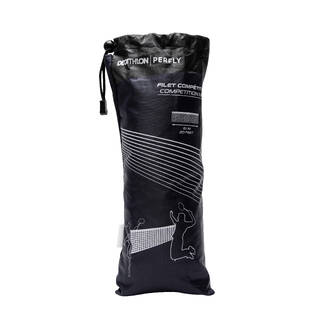
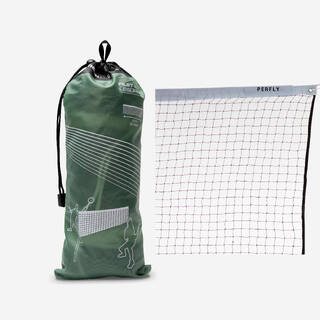
For club-level tournaments and district-level competitions, these nets meet Badminton World Federation dimensional tolerances. The white mesh color provides optimal shuttle contrast under both natural daylight and LED court lighting, aiding player depth perception during fast exchanges. Nets shipped with carrying bags include replacement cord kits and tension adjustment tools for field maintenance between matches.
Freestanding Frame Engineering for Concrete and Hard Surface Stability
Indian badminton courts often sit on concrete slabs, tile surfaces, or compacted red clay where ground stakes cannot penetrate. Perfly freestanding net systems solve this through weighted base designs: steel frames with horizontal foot bars spanning 80 to 100 cm width distribute load across larger surface areas, preventing tip-over during aggressive net rushes. Rubberized foot pads grip smooth concrete without scratching apartment flooring or gymnasium surfaces.
Sandbag stabilization pockets (integrated into base tubes) accept 5 to 8 kg of sand per pole, lowering the center of gravity and resisting wind gusts in open terrace setups. For outdoor park play during monsoon season, these weighted bases prevent frame displacement when sudden squalls hit, maintaining net position mid-rally. The tubular steel construction (25 mm outer diameter, 1.5 mm wall thickness) withstands lateral impacts from errant racket swings without bending.
Height adjustment mechanisms use spring-button detents at 5 cm intervals, locking poles at junior (1.45 m), recreational (1.50 m), and regulation (1.55 m) settings. This versatility supports multi-age coaching sessions where children and adults share court time. The telescopic design collapses to 60% original height for transport, with nylon carry straps enabling single-person portability between coaching venues.
UV-Resistant Mesh Materials for Year-Round Outdoor Durability
Outdoor badminton nets in India endure 10 to 12 hours of direct UV exposure daily during summer months, particularly in northern plains and Deccan plateau regions. Perfly nets incorporate UV-stabilized polyethylene fibers (treated with carbon black additives) that absorb ultraviolet radiation without polymer chain degradation. This treatment extends mesh lifespan to 18 months of continuous outdoor use before tension loss occurs, compared to six months for untreated nylon alternatives.
Monsoon humidity and sudden temperature swings (from 42°C daytime heat to 28°C evening cool-downs) cause expansion and contraction in synthetic fibers. The braided polyethylene construction maintains dimensional stability across this thermal range, preventing the sagging that disrupts net height regulation. Hydrophobic fiber coatings shed rainwater quickly, reducing mildew growth and allowing play resumption within 20 minutes after monsoon showers.
For coastal regions facing salt spray and high humidity (Mumbai, Chennai, Kochi), powder-coated steel poles resist corrosion better than galvanized alternatives. The epoxy-polyester coating (80 to 100 microns thickness) seals metal surfaces from chloride ion penetration, preventing rust bloom at weld joints. Nets stored outdoors under covered terraces retain structural integrity for three to four years, supporting weekend club play and daily practice routines.
Portable Net Solutions for Apartment Terraces and Community Courts
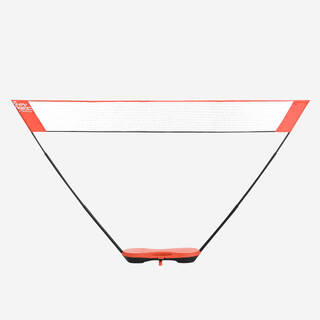
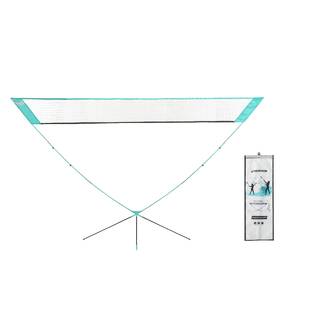
Urban Indian badminton players often convert apartment terraces, society lawns, or parking areas into temporary courts. Perfly portable nets address these space constraints through tool-free assembly: push-button pole extensions and clip-on mesh attachments enable setup in confined areas without requiring assistant help. The 6.1 m net width fits standard 13.4 m court dimensions, leaving adequate clearance for baseline rallies and smash recovery footwork.
Compact storage footprints matter in space-limited apartments. Folded net systems occupy 110 x 20 x 15 cm volumes, sliding under beds or into hall cupboards between play sessions. Lightweight aluminum pole variants (weighing 3.5 to 4 kg per set) allow children to transport equipment from storage to court independently, encouraging self-directed practice habits.
For community courts shared by multiple families, quick-release mechanisms enable rapid changeovers between users. Spring-loaded pole locks disengage with thumb pressure, allowing height adjustments for junior coaching sessions followed by adult competitive play. Rubberized base pads protect tile and marble flooring common in Indian residential complexes, preventing surface scratches that violate society maintenance rules. These portable systems democratize badminton access, removing the barrier of permanent court infrastructure for casual players and aspiring athletes.
Perfly Net Specifications for Beginner Practice and Advanced Rally Training
Beginner badminton players benefit from nets with visible height markers and forgiving mesh tension. Perfly starter nets include color-coded pole sections (red for junior 1.45 m, yellow for recreational 1.50 m, green for regulation 1.55 m) that simplify height selection during solo practice. The slightly relaxed mesh tension (6 to 7 kg horizontal force) allows beginners to develop net shot touch without fearing aggressive shuttle rebound, building confidence in tumbling net play and cross-court net kills.
Advanced players require nets that replicate tournament conditions. Perfly competition-grade models use tighter 9 to 10 kg tension and reinforced edge binding to withstand repetitive smash training. The mesh rebound characteristics mimic BWF-approved nets, helping players calibrate deceptive net shots and spinning tumbles that depend on precise shuttle interaction with mesh fibers. These nets pair with boundary line tape kits (50 mm width, pressure-sensitive adhesive) for marking regulation singles and doubles court dimensions on unmarked surfaces.
For coaching academies running multi-level sessions, adjustable nets reduce equipment costs. A single Perfly system serves under-12 junior batches (1.45 m setting), intermediate teenagers (1.50 m), and adult competitive groups (1.55 m regulation) across daily training blocks. The telescopic poles withstand 200+ height adjustment cycles without spring-button wear, supporting three to four years of intensive coaching use. Replacement mesh panels (sold separately) extend frame lifespan when original nets show wear from thousands of shuttle impacts.
FAQ (Frequently Asked Questions)
Q1. What is the standard height for a badminton net?
The standard height for a badminton net is 1.55 meters (5 feet 1 inch) from the surface of the court. This height is mandated by official badminton regulations to ensure fair play and consistent gameplay.
Q2. Can I use the same badminton net for indoor and outdoor courts?
While it is possible to use the same net for both indoor and outdoor courts, it is generally recommended to have separate nets for each environment. Indoor nets are typically designed to withstand less wear and tear, while outdoor nets are built to be more weather-resistant and durable against the elements.
Q3. How do I ensure my badminton net is properly tensioned?
Proper tension is crucial for a badminton net to perform optimally. Most nets come with adjustable tension cords or mechanisms that allow you to tighten or loosen the net as needed. Refer to the manufacturer's instructions for specific guidance on achieving the recommended tension for your net.
Q4. Can I use a badminton net for other sports?
While badminton nets are designed specifically for badminton, they can sometimes be used for other similar sports like pickleball or tennis practice. However, it's important to check the net dimensions and specifications to ensure they meet the requirements of the intended sport.
Q5. How often should I replace my badminton net?
The lifespan of a badminton net depends on various factors, such as the frequency of use, playing environment, and proper maintenance. As a general guideline, indoor nets may need to be replaced every 2-3 years, while outdoor nets may require replacement more frequently due to exposure to weather conditions.
Q6. Can I use a badminton net on different court surfaces?
Yes, most badminton nets are designed to be compatible with various court surfaces, such as hardwood, concrete, or synthetic surfaces. However, it's important to ensure that the net's support system is suitable for the specific court surface and that it can be securely anchored or weighted down.
Q7. What should I look for in a portable badminton net?
When choosing a portable badminton net, consider factors such as weight, ease of setup and breakdown, carrying case or bag, and overall portability. Look for lightweight yet sturdy materials, compact design, and user-friendly features that make it easy to transport and set up in different locations.
Q8. Can I use a badminton net for practice or training purposes?
Absolutely! Badminton nets are essential for both practice and competitive play. Many players opt for durable and adjustable nets that can be used for training sessions, drills, and skill development, in addition to actual matches.
Q9. Are there any special considerations for outdoor badminton nets?
Yes, outdoor badminton nets require additional considerations. Look for nets made from weather-resistant materials that can withstand exposure to sunlight, rain, and wind. Additionally, ensure the net's support system is designed for outdoor use and can be securely anchored or weighted down to prevent it from being blown away.
Q10. Can I customize or personalize my badminton net?
While most badminton nets are designed to meet standard specifications, some manufacturers may offer customization options, such as personalized branding or color choices. However, it's important to ensure that any customizations do not compromise the net's performance or violate official regulations for competitive play.
Q11. What is the regulation height for badminton nets and how do portable systems maintain this standard?
Regulation badminton nets measure 1.55 m at the poles and 1.524 m at the center. Perfly portable systems use spring-loaded locking pins on telescopic poles to secure these exact heights, with tension cords pulling the center downward to achieve the 26 mm differential. The braided polyethylene top tape distributes load evenly, preventing center sag during play.
Q12. Can badminton nets withstand outdoor monsoon conditions and high UV exposure in India?
UV-stabilized polyethylene mesh resists degradation from 10 to 12 hours of daily sun exposure, maintaining tension integrity for 18 months outdoors. Hydrophobic fiber coatings shed monsoon rain quickly, and powder-coated steel poles resist rust in high-humidity coastal regions. Nets dry within 20 minutes after rain, allowing rapid play resumption.
Q13. How do freestanding badminton nets stay stable on concrete or tile surfaces without ground stakes?
Freestanding frames use horizontal foot bars spanning 80 to 100 cm width to distribute weight across larger surface areas. Sandbag pockets accept 5 to 8 kg of sand per pole, lowering the center of gravity. Rubberized foot pads grip smooth concrete and tile without scratching, preventing tip-over during aggressive net play.
Q14. What mesh aperture size prevents shuttles from passing through while maintaining visibility?
Perfly nets use 20 mm square mesh apertures that block standard feather and nylon shuttles (base diameter 25 to 28 mm) while providing clear visual lanes for cross-court deception shots. High-density weave patterns (12 strands per 10 cm) distribute impact forces from smashes without tearing.
Q15. How long does it take to assemble a portable badminton net without tools or assistance?
Tool-free portable nets assemble in under four minutes using push-button telescopic poles and clip-on mesh attachments. Spring-loaded cam locks secure pole joints, and tension cords hook onto integrated pole clips. A single person can complete setup, making these systems ideal for solo practice sessions.
Q16. What is the difference between beginner practice nets and tournament-grade competition nets?
Beginner nets use 6 to 7 kg horizontal tension for forgiving shuttle rebound, helping new players develop net shot touch. Tournament-grade nets maintain 9 to 10 kg tension with reinforced edge binding, replicating BWF-approved mesh characteristics for advanced deceptive shots and spinning tumbles. Competition models include double-stitched perimeter tape to prevent corner detachment.
Q17. Can badminton nets be adjusted for junior players and then raised for adult regulation play?
Adjustable nets use spring-button detents at 5 cm intervals, locking at junior (1.45 m), recreational (1.50 m), and regulation (1.55 m) heights. Color-coded pole sections simplify height selection. The telescopic design withstands 200+ adjustment cycles, supporting coaching academies running multi-age training sessions daily.
Q18. What is the packed size of portable badminton nets for apartment storage and car transport?
Folded portable nets compress to 110 x 20 x 15 cm dimensions, fitting under beds or in hall cupboards. Lightweight aluminum variants weigh 3.5 to 4 kg per set, allowing single-person portability. The compact footprint enables storage in space-limited urban apartments between weekend play sessions.
Q19. How do powder-coated steel poles resist rust in coastal humidity and monsoon exposure?
Epoxy-polyester powder coating (80 to 100 microns thickness) seals steel surfaces from chloride ion penetration and moisture ingress. This coating prevents rust bloom at weld joints better than galvanized alternatives, extending pole lifespan to three to four years in coastal regions like Mumbai, Chennai, and Kochi.
Q20. Do Perfly badminton nets meet Badminton World Federation dimensional standards for club tournaments?
Perfly competition nets meet BWF dimensional tolerances for 6.1 m width, 1.55 m pole height, and 1.524 m center height. The 20 mm mesh aperture and white color provide shuttle contrast under LED court lighting. These nets support district-level competitions and club tournaments requiring regulation equipment.