Ankle Weights

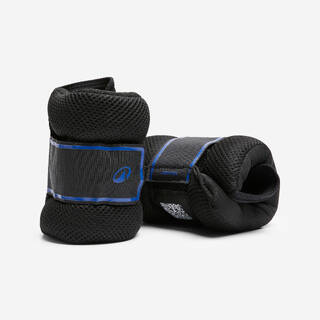
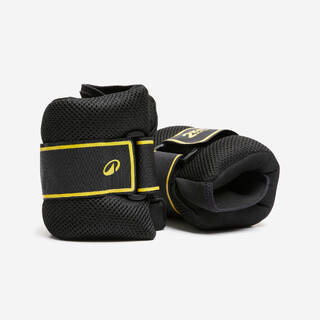
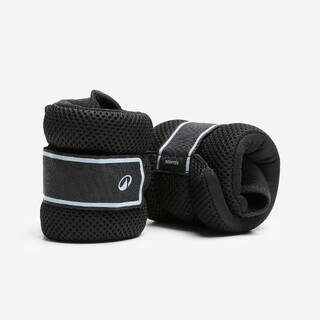
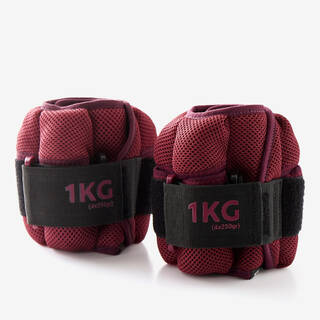
Buy Ankle Weights and Leg Weights Online at Decathlon
Ankle weights are compact resistance tools that strap around your ankles or wrists to add controlled load during bodyweight exercises, walking, pilates, and rehabilitation routines. They work by increasing muscular effort in your lower body without requiring barbells or machines. At Decathlon India, we stock Domyos and Nyamba ankle weights in various load options, from light 0.5kg pairs for mobility work to heavier 5kg and 10kg adjustable sets for advanced strength conditioning.
These leg weights feature wide Velcro strap closures that secure firmly around your ankle or wrist without pinching skin or restricting blood flow. Most models use sand filled or iron pellet cores wrapped in soft neoprene or polyester sleeves. This design distributes weight evenly across the cuff, reducing pressure points during leg lifts, glute bridges, or standing knee raises. You can wear them for low-impact cardio walks, mat-based core circuits, or targeted muscle activation drills.
Beginners often start with 1kg ankle weights per leg to build foundational strength in hip flexors, quadriceps, and glutes. Intermediate users progress to 2kg pairs for pilates reformer work or resistance walking sessions. Advanced lifters and athletes choose 5kg ankle weights or modular 10kg adjustable weight cuffs that let you add or remove smaller iron sand pouches as your endurance improves. This scalability makes them practical for long-term home gym setups and physiotherapy protocols.
Types of Ankle Weights and Leg Weight Belts Available
Fixed weight ankle cuffs come pre-loaded with a set mass, typically 0.5kg, 1kg, or 2kg per piece. They suit users who follow consistent workout routines and prefer grab-and-go simplicity. Domyos fixed ankle weights use durable outer fabric with reinforced stitching at stress points, ensuring the sand or pellet filling stays secure even after hundreds of leg swings or kickbacks.
Adjustable ankle weights feature removable iron sand pouches inserted into individual pockets along the cuff. You can customize total load by adding or removing these small packets, making one pair versatile across multiple training phases. A 10kg adjustable set might include ten 1kg pouches, allowing configurations from 2kg up to 10kg total. This flexibility is ideal for progressive overload training where you gradually increase resistance every two to three weeks.
Dual-use wrist and ankle weights have slightly longer straps and universal circumference adjustments. You strap them around your wrists during shadow boxing, arm circles, or overhead presses, then switch them to your ankles for donkey kicks or side leg raises. The Velcro closures typically extend from 20cm to 35cm, fitting most adult wrist and ankle girths comfortably. Look for models with thumb loops if you plan frequent wrist use, as this prevents the cuff from sliding down during dynamic arm movements.
How Ankle Weights Work for Strengthening and Toning
Ankle weights increase the load your muscles must overcome during concentric and eccentric contractions. When you perform a lying leg raise with 1kg strapped to each ankle, your hip flexors and lower abdominals work harder to lift and control the descent. This added resistance stimulates muscle fiber recruitment beyond bodyweight alone, leading to improved endurance and definition over consistent training cycles.
They also enhance proprioception and joint stability. Your ankles, knees, and hips must coordinate more precisely to maintain balance when extra mass is attached. This neuromuscular challenge improves movement control, which translates to better form in squats, lunges, and running mechanics. Rehabilitation specialists often prescribe light leg weights (0.5kg to 1kg) for patients recovering from ACL surgery or ankle sprains to rebuild strength without overloading healing tissues.
For toning and calorie burn, ankle weights amplify energy expenditure during low-impact activities. A 30-minute resistance walk with 2kg ankle weights can increase heart rate and muscular engagement compared to unweighted walking, though the effect is modest. The real benefit lies in muscular endurance adaptation. Your calves, quads, and glutes fatigue faster under load, forcing metabolic stress that promotes lean muscle retention during calorie-deficit phases.
Choosing the Right Weight: 1kg, 2kg, 5kg, or 10kg Ankle Weights
Start with 1kg ankle weights if you are new to resistance training or returning after a layoff. This load is light enough to maintain proper form during 15 to 20 repetitions of leg extensions, fire hydrants, or standing hip abductions. You should complete full range of motion without compensating through your lower back or shifting your pelvis. If 1kg feels too easy after two weeks, progress to 2kg per leg.
2kg ankle weights suit intermediate users who have built baseline leg strength through bodyweight squats and lunges. Use them for pilates mat sequences, barre-inspired pulses, or slow-tempo leg lifts where time under tension matters more than explosive power. Avoid wearing 2kg weights during high-impact activities like jumping jacks or box jumps, as the added momentum can strain knee ligaments and Achilles tendons.
5kg ankle weights and 10kg adjustable sets target advanced lifters focused on hypertrophy or sport-specific conditioning. Strap 5kg pairs during prone hamstring curls on a bench, or use them for weighted step-ups if you lack access to dumbbells. The 10kg adjustable option works well for periodized programs where you cycle between strength phases (heavier loads, fewer reps) and endurance phases (lighter loads, higher reps). Always secure the Velcro tightly and check for any shifting mid-set to prevent ankle bruising.
Safe Usage Guidelines for Walking and Daily Wear
Walking with ankle weights can improve lower body endurance, but limit sessions to 20 to 30 minutes at a moderate pace. Prolonged wear alters your natural gait pattern, placing asymmetric stress on hip flexors and knee joints. If you walk daily with weights, rotate between weighted and unweighted days to allow connective tissues adequate recovery. Never exceed 2kg per leg for walking workouts, as heavier loads increase ground reaction forces that may aggravate existing joint issues.
Do not wear ankle weights throughout the entire day or during sleep. Extended use can compress nerves around the ankle and restrict circulation, leading to numbness or swelling. Limit each weighted session to your actual exercise duration, then remove the cuffs immediately. If you notice persistent soreness in your shins, knees, or hips, reduce the load or take a rest week before resuming.
Proper strap tension is critical. The Velcro should feel snug but not constricting. You should fit one finger between the cuff and your skin. Too loose, and the weight shifts during movement, causing friction burns. Too tight, and you risk cutting off blood flow. Check the fit after your first set and readjust if needed. Clean neoprene sleeves regularly with mild soap and air dry to prevent odor buildup and material degradation.
Ankle Weights for Pilates, Rehabilitation, and Home Workouts
Pilates instructors incorporate light resistance leg weights (0.5kg to 1kg) to intensify mat exercises like single-leg circles, side-lying leg lifts, and bridge variations. The added load deepens core engagement because your stabilizer muscles must work harder to control limb movement. Nyamba ankle weights with soft inner lining are popular for pilates studios, as they stay comfortable during prolonged floor work and do not scratch reformer rails.
Physiotherapists use ankle weights to rebuild strength after lower limb injuries or surgeries. A typical protocol starts with 0.5kg for isometric holds and progresses to 1kg for controlled range-of-motion exercises. The gradual load increase helps patients regain muscle mass and joint confidence without risking re-injury. Always follow your therapist's prescribed weight and rep scheme; adding extra resistance prematurely can delay healing.
Home workout enthusiasts benefit from adjustable weight cuffs that adapt to different muscle groups. Strap them on your ankles for glute kickbacks and fire hydrants, then move them to your wrists for resistance during arm raises or tricep extensions. This dual-use design maximizes value and saves storage space. Pair ankle weights with resistance bands and a yoga mat for a complete lower body and core conditioning setup that fits in a small apartment corner.
Domyos and Nyamba Ankle Weights: Material and Build Quality
Domyos ankle weights use iron sand or cast iron pellet fillings encased in durable polyester or neoprene outer shells. Iron sand provides a dense, compact weight distribution that conforms slightly to your ankle shape, reducing bulk. Cast iron pellets offer a firmer feel and are easier to compartmentalize in adjustable models. Both materials are non-toxic and rust-resistant when kept dry.
The outer sleeve fabric matters for comfort and longevity. Neoprene resists sweat absorption and dries quickly, making it ideal for high-repetition circuits or outdoor walking sessions. Soft polyester blends feel gentler against bare skin and work well for pilates or yoga where you hold poses for extended periods. Reinforced stitching along the Velcro attachment points prevents tearing, even when you yank the strap open after a tough set.
Wide Velcro closures (5cm to 7cm) distribute pressure evenly and prevent the cuff from rolling or bunching. Cheaper models use narrow hook-and-loop strips that lose grip after repeated use. Decathlon's Domyos and Nyamba lines feature industrial-grade Velcro tested for thousands of open-close cycles. Some premium adjustable sets include metal D-rings for extra security, though Velcro alone suffices for most home and gym applications.
Common Mistakes to Avoid When Using Leg Weights
Do not use ankle weights during running or high-impact cardio. The extra mass increases joint stress with every foot strike, raising injury risk to knees, ankles, and hips. Stick to controlled, low-impact movements like leg lifts, kickbacks, or resistance walking at a steady pace. If you want to add resistance to running, consider a weighted vest that distributes load across your torso instead.
Avoid swinging or using momentum to complete reps. The goal is muscular tension, not speed. If you must jerk your leg upward to finish a rep, the weight is too heavy. Drop down to a lighter load and focus on slow, deliberate contractions. A good tempo is two seconds up, one second hold, three seconds down. This time under tension maximizes muscle fiber recruitment and minimizes joint strain.
Never skip warm-up sets. Even light ankle weights alter movement patterns, so perform five to ten bodyweight reps of each exercise before strapping on the cuffs. This primes your nervous system and lubricates joints. Similarly, cool down with static stretches targeting hip flexors, quads, hamstrings, and calves. Weighted training shortens muscles under load; stretching post-workout maintains flexibility and reduces next-day soreness.
FAQ (Frequently Asked Questions)
Q1. What are the benefits of using ankle weights?
Ankle weights offer several benefits, including increased resistance for improved strength and endurance, enhanced calorie burn for weight loss, and the ability to target and tone specific muscle groups in your lower body, core, and upper body.
Q2. How do I choose the right ankle weight for my fitness level?
Start with a lighter weight and gradually increase as you become more comfortable with the added resistance. Consider your fitness goals, the types of exercises you plan to perform, and opt for adjustable weights if you plan to progressively increase the intensity of your workouts.
Q3. Can ankle weights be used for walking or running?
Yes, ankle weights can be an excellent addition to your walking or running routine. They increase the intensity and calorie burn while also strengthening your lower body muscles. However, it's important to start with a lighter weight and gradually increase to avoid injury.
Q4. Are ankle weights suitable for strength training exercises?
Absolutely! Ankle weights can be incorporated into various strength training exercises, such as squats, lunges, and leg raises, to add resistance and target different muscle groups. Just be sure to use proper form and start with a weight that allows you to maintain control throughout the movements.
Q5. Can ankle weights be used for yoga or Pilates?
Yes, ankle weights can be a great addition to your yoga or Pilates practice. They can help increase the intensity of certain poses and movements, challenging your muscles and improving overall strength and flexibility. However, it's important to use lighter weights and prioritize proper form to avoid injury.
Q6. How do I properly maintain my ankle weights?
To maintain your ankle weights, clean them regularly with a damp cloth to remove sweat and dirt buildup, store them in a cool, dry place when not in use, inspect the fasteners and straps for wear and tear, and follow the manufacturer's instructions for proper care and usage.
Q7. Are ankle weights safe to use during pregnancy?
It's generally recommended to consult with your healthcare provider before using ankle weights or engaging in any new exercise routine during pregnancy. They can advise you on the appropriate weight and exercises based on your individual circumstances and stage of pregnancy.
Q8. Can ankle weights cause injury if not used properly?
Yes, improper use of ankle weights can potentially lead to injury. It's important to start with a weight that allows you to maintain proper form and control throughout your movements. Gradually increase the weight as you become stronger, and listen to your body to avoid overexertion or strain.
Q9. How often should I replace my ankle weights?
The lifespan of ankle weights can vary depending on the quality of the product and the frequency of use. It's a good idea to inspect them regularly for signs of wear and tear, such as fraying straps or loose fasteners. Replace them as needed to ensure safety and optimal performance during your workouts.
Q10. Can ankle weights be used for rehabilitation or physical therapy exercises?
Ankle weights can potentially be used for certain rehabilitation or physical therapy exercises, but it's crucial to consult with your healthcare provider or physical therapist first. They can provide guidance on the appropriate weight and exercises based on your specific condition and recovery goals.
Q11. Do ankle weights really work for strengthening and toning?
Yes, ankle weights add resistance that forces your muscles to work harder during bodyweight exercises, walking, and pilates. This increased load stimulates muscle fiber recruitment and endurance adaptation, leading to improved strength and definition over consistent training cycles. They are most effective for targeted lower body isolation movements like leg lifts, kickbacks, and hip abductions.
Q12. Is 1kg ankle weight too heavy for beginners?
No, 1kg per leg is a standard starting point for most beginners. It provides enough resistance to challenge muscles without compromising form or overloading joints. If you can complete 15 to 20 controlled reps with proper technique, 1kg is appropriate. Start lighter at 0.5kg if you are recovering from injury or have no prior strength training experience.
Q13. Is it safe to walk daily with ankle weights?
Walking daily with ankle weights is safe if you limit sessions to 20 to 30 minutes, use no more than 2kg per leg, and rotate between weighted and unweighted days. Prolonged or excessive use can alter your gait and stress knee and hip joints. Always listen to your body and rest if you experience persistent soreness or discomfort.
Q14. Can ankle weights increase height?
No, ankle weights cannot increase height. Height is determined by bone length, which stops growing after puberty when growth plates close. Ankle weights may improve posture and core strength, which can make you stand taller, but they do not lengthen bones or add actual height.
Q15. Do ankle weights help lose weight and burn calories?
Ankle weights can slightly increase calorie burn during low-impact activities like walking or leg exercises by adding resistance. However, the effect is modest compared to diet and overall activity level. Their primary benefit is building muscular endurance and strength, which supports long-term metabolism and lean muscle retention during fat loss phases.
Q16. What type of ankle weight is best for home workouts?
Adjustable ankle weights are best for home workouts because they let you customize resistance as you progress. Look for models with removable iron sand pouches, wide Velcro straps, and soft neoprene or polyester outer sleeves. A 10kg adjustable set offers flexibility for various exercises and training phases without needing multiple fixed-weight pairs.
Q17. How do adjustable ankle weights work?
Adjustable ankle weights contain individual pockets along the cuff that hold removable iron sand or pellet pouches. You add or remove these small packets to increase or decrease total load. This design allows one pair to serve multiple resistance levels, making them practical for progressive overload training and shared use among family members with different strength levels.
Q18. What is the 3-3-3 rule for workout?
The 3-3-3 rule typically refers to performing three sets of three exercises for three minutes each, or maintaining three seconds of eccentric (lowering) phase, three seconds of isometric hold, and three seconds of concentric (lifting) phase. This tempo-based approach maximizes time under tension and muscular engagement, which is effective when using ankle weights for strength and toning.
Q19. Can I use ankle weights as wrist weights?
Yes, most ankle weights double as wrist weights if they have adjustable Velcro straps that fit wrist circumference (typically 15cm to 25cm). Dual-use models work well for arm exercises like shoulder raises, bicep curls, or shadow boxing. Check that the strap length accommodates your wrist and includes a thumb loop if available to prevent slipping during dynamic arm movements.
Q20. Are sand filled ankle weights better than iron pellet versions?
Both work well, but sand filled ankle weights conform slightly to your ankle shape and feel less bulky, making them comfortable for prolonged wear during pilates or walking. Iron pellet versions are firmer and easier to compartmentalize in adjustable models, allowing precise load customization. Choose based on your preference for comfort versus adjustability and the specific exercises you plan to perform.