Badminton & Squash Shoes






Court-Specific Biomechanics: Why Badminton and Squash Demand Dedicated Lateral Stability Footwear
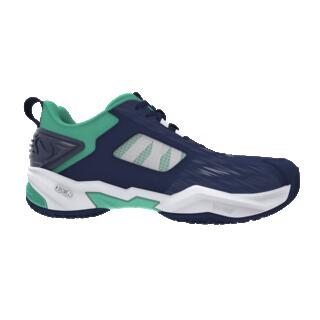
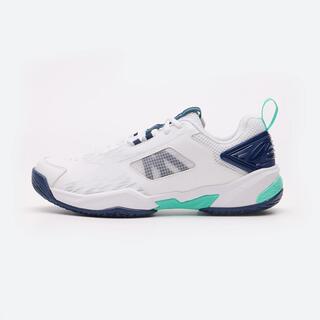
Badminton and squash generate explosive lateral acceleration patterns that differ fundamentally from linear running sports. Players execute rapid directional changes every 2 to 3 seconds, creating peak lateral ground reaction forces up to 2.5 times body weight during lunges and split-step recoveries. Standard running shoes, optimized for forward heel-to-toe transitions, lack the medial and lateral reinforcement required to resist ankle inversion during these multi-directional loads. Perfly badminton and squash shoes integrate TPU heel counters and midfoot shanks that lock the calcaneus bone, preventing excessive pronation during sudden pivots on indoor wooden or synthetic court surfaces.
Indian badminton courts present unique surface friction variables. Wooden sprung floors in premium academies offer moderate grip, while synthetic PU courts in municipal complexes and residential clubs provide higher traction coefficients. Squash courts, with their polished maple or glass-backed walls, demand non-marking gum rubber outsoles that maintain consistent grip without leaving scuff marks. Perfly BS990 and BS900 models deploy hexagonal lug patterns with 1.5mm to 2mm tread depth, balancing rotational traction for smash footwork with glide control for net rushes. The durometer hardness of these outsoles sits between 60 and 65 Shore A, softer than tennis court shoes but firmer than volleyball variants, calibrated for the rapid stop-start cadence of shuttle and ball retrieval.
Perfly Passion Brand Engineering: Dual-Density EVA Midsoles and Power Cushion+ Impact Attenuation
Perfly, Decathlon's dedicated racket sports engineering brand, constructs badminton and squash shoes using dual-density EVA foam midsoles that separate heel crash zones from forefoot propulsion zones. The heel section deploys softer 45-48 Asker C foam to absorb vertical landing forces during jump smashes, while the forefoot uses firmer 52-55 Asker C foam to maintain court feel and explosive push-off response. This density gradient prevents energy loss during the loading phase of lunges, where players must decelerate body mass traveling at speeds exceeding 4 meters per second within a single stride length.
Advanced Perfly models integrate Power Cushion+ technology, a polyurethane-based insert positioned under the calcaneus that compresses uniformly under impact loads, then rebounds to restore 20 to 25 percent of stored kinetic energy during toe-off. Laboratory drop tests demonstrate this system attenuates peak impact forces by 18 to 22 percent compared to standard single-density EVA constructions. For Indian players training in non-air-conditioned facilities where ambient temperatures reach 32 to 38 degrees Celsius, Power Cushion+ maintains structural integrity across thermal cycles, resisting the foam degradation and compression set that plague cheaper polyurethane blends after 80 to 100 hours of court time.
Upper Construction: Engineered Mesh Ventilation and Thermoplastic Polyurethane Overlay Reinforcement
Badminton and squash generate high metabolic heat loads, with players sustaining heart rates between 150 and 180 beats per minute across 45 to 90-minute sessions. Foot temperatures inside closed shoes can exceed 35 degrees Celsius, creating sweat saturation that compromises grip and increases blister formation risk. Perfly uppers utilize engineered mesh panels with 2mm to 3mm aperture sizes, positioned across the toe box and medial arch zones where airflow demand peaks. These mesh inserts are not decorative overlays but load-bearing structural components, knitted with polyester monofilament yarns that maintain tensile strength above 15 Newtons per millimeter even when saturated.
Critical stress points, including the lateral midfoot and medial forefoot where lunging forces concentrate, receive thermoplastic polyurethane (TPU) overlay reinforcement. These TPU films, heat-bonded rather than stitched, add only 8 to 12 grams per shoe while increasing torsional rigidity by 30 to 35 percent. The overlays extend 4 to 6mm beyond the mesh substrate, creating a protective cage that resists abrasion from toe drag during recovery steps. Indian players who train on abrasive synthetic courts report upper durability extending beyond 200 hours before visible mesh fraying, compared to 120 to 150 hours for non-reinforced mesh constructions.
Heel Counter Lockdown and Achilles Notch Geometry: Preventing Posterior Heel Slippage During Explosive Lunges
Heel slippage inside the shoe during lunges creates a cascading biomechanical failure. When the calcaneus shifts posteriorly by even 3 to 5mm, the foot loses its stable base, forcing compensatory ankle plantarflexion that increases Achilles tendon strain and reduces power transfer efficiency. Perfly badminton shoes integrate molded TPU heel counters that extend 45 to 50mm up the posterior calcaneus, wrapping the bone in a rigid exoskeleton. These counters are not simply stiffeners but anatomically contoured shells that match the natural curvature of the heel, distributing clamping forces across 20 to 25 square centimeters of surface area rather than concentrating pressure at discrete contact points.
The Achilles notch, the U-shaped cutout at the top of the heel counter, sits 8 to 10mm lower than standard running shoe collars. This reduced height prevents the counter edge from impinging on the Achilles tendon during the extreme dorsiflexion angles (25 to 30 degrees) encountered in deep lunges. Perfly engineers pad this notch zone with 4mm to 5mm thick memory foam that compresses under initial loading but rebounds to maintain constant tendon clearance. Players transitioning from running shoes to dedicated court shoes report immediate reduction in posterior ankle irritation, particularly during the first 10 to 15 hours of break-in when upper materials are still conforming to individual foot morphology.
Outsole Lug Patterns and Non-Marking Gum Rubber Compounds: Optimizing Traction for Indian Court Surface Variability
Indian badminton and squash facilities span a wide spectrum of court surface conditions. Premium clubs maintain wooden sprung floors with controlled humidity levels, while budget facilities install synthetic PU mats over concrete substrates that exhibit higher friction coefficients and surface irregularities. Perfly outsoles deploy hexagonal and circular lug geometries with 1.5mm to 2.5mm depths, a compromise between the deep lugs of trail shoes (4 to 6mm) and the flat profiles of indoor volleyball shoes (0.5 to 1mm). This intermediate depth provides rotational grip for pivots without creating excessive traction that could lock the foot during glide movements, which increases knee torque and ACL loading.
The gum rubber compound used in Perfly BS series shoes contains natural rubber percentages between 15 and 25 percent, blended with synthetic rubber polymers to balance grip and durability. Pure natural rubber offers superior traction but wears rapidly on abrasive surfaces, degrading after 60 to 80 hours of play. The synthetic blend extends outsole life to 150 to 200 hours while maintaining non-marking properties critical for squash courts with glass back walls. Indian players training on dusty courts benefit from self-cleaning lug channels, 2mm wide grooves that allow fine particulate matter to evacuate rather than accumulate in tread valleys, which would reduce grip coefficients by 15 to 20 percent during extended rallies.
Sizing Precision and Toe Box Volume: Accommodating Indian Foot Morphology and Preventing Black Toenails from Repetitive Lunging
Proper badminton and squash shoe fit requires 8 to 12mm of clearance between the longest toe and the shoe's internal toe box wall. During lunges, the foot slides forward inside the shoe by 5 to 8mm as the body decelerates. Insufficient toe clearance causes repetitive microtrauma to the nail bed, leading to subungual hematomas (black toenails) that can persist for 3 to 6 months. Perfly shoes are lasted on anatomical forms that provide 10 to 12mm toe spring, the upward curve at the front of the shoe that creates vertical space for toe splay during the loading phase of lunges.
Indian foot morphology studies indicate average forefoot widths between 92mm and 98mm for men and 82mm and 88mm for women, with higher prevalence of wider forefeet relative to heel widths compared to European populations. Perfly BS series shoes offer standard D width fittings for men and B width for women, with toe box volumes calibrated to accommodate these proportions without requiring wide-fit variants. The medial arch height sits at 22 to 25mm, supporting moderate to neutral arch profiles common in Indian athletes. Players with high arches (greater than 28mm) or flat feet (less than 18mm) should consider aftermarket insoles with appropriate arch support geometries, as the stock footbeds prioritize universal fit over specialized biomechanical correction.
FAQ (Frequently Asked Questions)
Q1. Can I use the same shoes for both badminton and squash, or do these sports require different footwear specifications?
Badminton and squash shoes share core design elements including lateral stability reinforcement, non-marking gum rubber outsoles, and low-profile midsoles for court feel. The primary difference lies in outsole durometer hardness: squash shoes use slightly softer rubber compounds (58 to 62 Shore A) optimized for the polished maple floors common in squash courts, while badminton shoes deploy marginally firmer compounds (62 to 65 Shore A) for synthetic PU surfaces. Perfly BS series models are engineered as dual-sport platforms that perform effectively across both court types, making them practical for players who cross-train or play recreationally in both sports.
Q2. How do I determine the correct size for badminton shoes when ordering online, especially considering toe clearance requirements for lunging movements?
Measure your foot length in the evening when feet are slightly swollen from daily activity. Add 10 to 12mm to this measurement to account for forward foot slide during lunges. If your foot measures 265mm, select a shoe with an internal length of 275 to 277mm, which typically corresponds to a size EU 42 or 42.5. Perfly sizing charts provide exact internal measurements for each size. Players with wider forefeet should ensure the ball girth (widest part of the forefoot) has 3 to 5mm clearance on each side when standing, as the upper will compress slightly during lateral movements but should not create pressure points that restrict blood flow.
Q3. What is the expected durability of Perfly badminton shoes when playing on synthetic PU courts in Indian club conditions with high dust exposure?
Perfly BS900 and BS990 models demonstrate outsole durability between 150 and 200 hours of play on synthetic PU courts, with upper mesh integrity maintained beyond 180 hours before visible fraying. Dust accumulation reduces this lifespan by 10 to 15 percent if shoes are not cleaned after each session. Wipe outsoles with a damp cloth after play to remove embedded dust particles, and allow shoes to air dry for 12 to 18 hours between sessions to prevent moisture-accelerated foam degradation. Midsole cushioning compresses by 20 to 25 percent after 120 to 150 hours, at which point impact attenuation decreases and replacement should be considered to maintain joint protection.
Q4. Do Perfly badminton shoes provide adequate ankle support for players recovering from previous ankle sprains or those with chronic ankle instability?
Perfly court shoes use low-cut collar designs that prioritize ankle mobility over rigid support, as badminton and squash require unrestricted plantarflexion and dorsiflexion during lunges. The TPU heel counter and midfoot shank provide medial and lateral stability to resist inversion and eversion, but do not restrict sagittal plane motion. Players with chronic ankle instability should consider wearing a separate lace-up ankle brace or taping protocol in conjunction with court shoes, rather than relying solely on footwear for joint stabilization. High-top basketball shoes are not suitable substitutes, as their elevated collars restrict the ankle mobility required for deep lunge positions.
Q5. How does the Power Cushion+ technology in advanced Perfly models differ from standard EVA foam cushioning in entry-level badminton shoes?
Power Cushion+ uses a polyurethane-based compound with higher resilience (energy return) than standard EVA foam. Laboratory compression tests show Power Cushion+ returns 20 to 25 percent of stored impact energy during rebound, compared to 12 to 15 percent for single-density EVA. This translates to reduced muscular effort during explosive push-offs and decreased cumulative fatigue across multi-hour training sessions. The material also resists thermal degradation better than EVA, maintaining consistent cushioning properties in non-air-conditioned facilities where temperatures exceed 35 degrees Celsius. Entry-level models use dual-density EVA that provides adequate impact protection but less energy return and shorter compression lifespan (100 to 120 hours versus 150 to 180 hours).
Q6. Are Perfly badminton shoes suitable for playing on outdoor concrete courts, or are they designed exclusively for indoor wooden and synthetic surfaces?
Perfly court shoes are engineered specifically for indoor surfaces and should not be used on outdoor concrete or asphalt. The gum rubber outsoles wear 3 to 4 times faster on abrasive concrete, degrading after 30 to 50 hours compared to 150 to 200 hours indoors. More critically, the low-profile midsoles (12 to 15mm stack height) provide insufficient impact protection for the higher ground reaction forces generated on rigid concrete substrates. Outdoor play requires shoes with thicker EVA midsoles (18 to 25mm) and carbon rubber outsoles designed for abrasion resistance. Using indoor court shoes outdoors voids their structural integrity within weeks and increases injury risk from inadequate shock absorption.
Q7. What maintenance routine extends the lifespan of badminton shoes and preserves their grip and cushioning properties in humid Indian climates?
After each session, remove insoles and loosen laces fully to allow internal moisture evaporation. Wipe outsoles with a damp cloth to remove dust and court debris that embed in lug channels and reduce traction. Air dry shoes at room temperature for 18 to 24 hours before next use, avoiding direct sunlight or artificial heat sources that accelerate EVA foam oxidation. In high-humidity monsoon conditions (relative humidity above 80 percent), stuff shoes with newspaper or silica gel packets to absorb excess moisture. Rotate between two pairs if playing more than 4 sessions per week, as midsole foam requires 36 to 48 hours to fully recover its compression properties between uses. Never machine wash, as agitation damages TPU overlays and heat-bonded seams.
Q8. How do I identify when badminton shoes have lost sufficient cushioning and require replacement, even if the outsole and upper appear intact?
Midsole foam degradation occurs gradually and is not always visible externally. Press your thumb firmly into the heel midsole: if the foam compresses more than 4 to 5mm and does not rebound within 2 to 3 seconds, the cushioning has lost structural integrity. Players often notice increased fatigue in the calves and Achilles tendons, or new onset of heel or forefoot soreness after sessions, indicating inadequate impact attenuation. Visible creasing or wrinkling in the midsole sidewalls, particularly in the heel crash zone, signals compression set. Most Perfly models require replacement after 120 to 180 hours of play, regardless of outsole or upper condition, to maintain joint protection and performance biomechanics.