Cricket Accessories

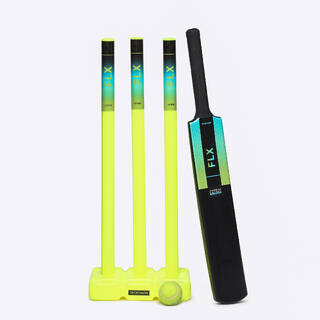
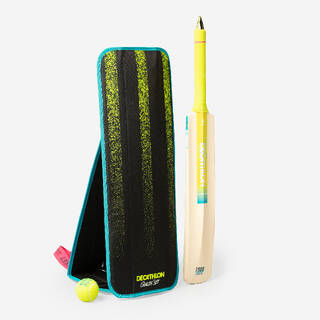
Cricket Accessories Built for Indian Pitch Conditions and High-Impact Play
Cricket accessories form the structural backbone of reliable on-field performance across turf wickets, concrete practice pitches, and dusty maidans. Decathlon's cricket accessory range addresses the unique demands of Indian cricket environments: high-temperature leather conditioning under 40°C summer heat, sweat-resistant grip compounds for humid coastal training sessions, and impact-absorbing foam densities engineered to withstand repeated ball strikes at velocities exceeding 130 km/h. Every protective guard, grip tape roll, and equipment bag undergoes rigorous field testing across varying pitch hardness levels to ensure durability through multi-season club and academy use.
The technical architecture of cricket accessories revolves around three core engineering pillars: impact attenuation, moisture management, and material longevity. High-density EVA foam inserts in thigh guards and arm guards compress under ball impact to distribute kinetic energy across a wider surface area, reducing localized pressure points that cause bruising. Polyurethane-coated synthetic leather grips resist moisture absorption during extended net sessions, maintaining consistent tackiness even when palm sweat saturation reaches peak levels. Reinforced stitching patterns on equipment bags utilize bartack thread anchoring at stress points, allowing safe transport of 8 to 10 kg gear loads without seam failure across thousands of load cycles.
Kipsta Cricket Protection Gear: Multi-Density Foam Layering and Anatomical Contouring
Kipsta cricket protection accessories integrate biomechanically mapped foam architectures that align with natural joint flexion ranges and high-risk impact zones. Thigh guards feature dual-density construction: a firm outer shell (Shore A hardness 70-80) deflects direct ball strikes, while an inner soft foam layer (Shore A 30-40) cushions residual shock transfer to muscle tissue. Elbow guards employ segmented plate designs that maintain full arm extension during batting strokes while providing 360-degree coverage around the olecranon process. Strapping systems use elastic webbing with silicone grip strips, preventing downward migration during repetitive lunging and driving movements.
Chest guards designed for junior and senior players incorporate ventilated foam channels that promote airflow across the torso, reducing core temperature buildup during afternoon training blocks under direct sun exposure. The ergonomic curvature of rib protection panels follows the natural thoracic cage contour, eliminating pressure gaps that allow ball penetration during mistimed pulls or hook shots. Lightweight construction (typically 200 to 300 grams per guard) ensures minimal restriction to shoulder rotation, preserving bat swing speed while delivering certified impact protection standards. Adjustable Velcro closures accommodate chest circumference variations from 75 cm to 110 cm, supporting growth phases in academy players and fit adjustments for layered clothing during winter matches.
Cricket Bat Grips and Grip Tape: Polyurethane Compounds and Sweat Channel Engineering
Bat grip technology centers on polymer surface texturing that maximizes friction coefficients between palm skin and handle interface, even under saturated moisture conditions. Replacement grips utilize embossed diamond or chevron patterns with channel depths ranging from 1.5 mm to 2.5 mm, creating capillary pathways that wick sweat away from primary contact zones. Polyurethane grip compounds maintain elasticity across temperature ranges from 10°C winter mornings to 45°C summer afternoons, preventing hardening or tackiness degradation that compromises handle control during aggressive stroke play.
Grip tape rolls serve dual functions: they build up handle circumference for customized palm fit and provide shock-dampening layers that reduce vibration transmission during mistimed shots. Standard grip tape thickness measures 0.8 mm to 1.2 mm per wrap, allowing batsmen to add two to four layers based on preferred handle diameter. Spiral wrapping techniques with 50% overlap create uniform compression across the handle length, eliminating dead spots or uneven cushioning. Adhesive backing uses pressure-sensitive acrylic formulations that bond securely to willow and cane handles without leaving residue during grip changes. Color-coded tape options (black, white, neon) support visual bat identification in shared team equipment scenarios.
Cricket Equipment Bags and Kit Storage: Reinforced Base Panels and Ventilated Compartments
Cricket kit bags engineered for Indian commuting conditions feature abrasion-resistant 600D to 900D polyester exteriors that withstand repeated contact with rough concrete surfaces, auto-rickshaw floors, and crowded local train compartments. Reinforced base panels incorporate high-density polyethylene (HDPE) sheets or EVA foam boards that maintain structural rigidity when fully loaded with pads, helmets, bats, and footwear. Dual-zipper main compartments with storm flaps prevent dust ingress during transport across unpaved academy grounds and open-air practice facilities.
Internal organization systems include dedicated bat sleeves with padded dividers, helmet pockets with ventilation mesh, and separate shoe compartments lined with moisture-wicking fabric to isolate sweat-soaked footwear from clean apparel. Adjustable shoulder straps with 5 cm wide padding distribute weight evenly across the trapezius muscles, reducing fatigue during 2 to 3 km walks from parking areas to practice nets. Exterior accessory pockets provide quick-access storage for grip tape, sunscreen, and hydration bottles. Wheeled kit bags designed for touring players feature inline skate wheels (diameter 60 mm to 80 mm) with sealed bearings that roll smoothly over uneven surfaces, reducing lifting strain during airport transfers and hotel check-ins.
Cricket Training Accessories: Stumps, Cones, and Boundary Markers for Skill Development Drills
Training accessories form the infrastructure for structured skill development across batting technique refinement, fielding agility circuits, and bowling accuracy protocols. Portable spring-loaded stumps with heavy-duty steel bases (weight 3 to 5 kg per stump) withstand repeated ball impacts at net practice velocities without tipping, while spring mechanisms allow bails to dislodge at regulation force thresholds. Collapsible stump sets with telescoping poles reduce packed dimensions to 60 cm length, fitting inside standard kit bags for transport to off-site training venues.
Agility cones and boundary markers constructed from UV-stabilized polypropylene resist color fading and brittleness under prolonged sun exposure across Indian summer months. Cone heights ranging from 15 cm to 30 cm support progressive drill complexity: low-profile markers for lateral shuffle drills, taller cones for high-knee running patterns and fielding dive simulations. Weighted cone bases (200 to 400 grams) provide wind resistance up to 25 km/h, maintaining position during outdoor sessions without requiring ground stakes. Reflective strips on training markers enhance visibility during early morning and late evening practice slots under low-light conditions. Modular training kit bundles typically include 12 to 20 cones, 6 stumps, and 4 boundary poles, supporting full-squad fielding formations and multi-station batting rotation setups.
Cricket Accessory Maintenance and Longevity Optimization for Multi-Season Use
Proper maintenance protocols extend the functional lifespan of cricket accessories through systematic cleaning, storage, and inspection routines. Protective guards require post-session wipe-downs with damp microfiber cloths to remove sweat salts and dirt accumulation that degrade foam elasticity and strap integrity. Air-drying in shaded, ventilated areas prevents UV-induced polymer breakdown and mildew growth in foam layers. Strapping systems benefit from periodic hand-washing in mild detergent solutions (pH 6 to 8) followed by thorough rinsing to maintain elastic rebound properties.
Bat grips demand replacement every 15 to 20 net sessions or when surface texturing becomes smooth and friction coefficients drop below effective levels. Grip tape storage in sealed plastic bags preserves adhesive strength and prevents premature drying. Equipment bags require quarterly inspections of zipper teeth, stitching integrity at handle attachment points, and base panel rigidity. Applying silicone-based fabric protectants to bag exteriors enhances water repellency and simplifies dirt removal. Wheeled bags need bearing lubrication every 6 months using lithium-based grease to maintain smooth rolling action. Storing accessories in climate-controlled indoor spaces when possible minimizes thermal cycling stress and extends material service life across multiple cricket seasons.
FAQ (Frequently Asked Questions)
Q1. What thickness of thigh guard foam is suitable for facing fast bowlers in hard-ball cricket?
Thigh guards for fast bowling (speeds above 120 km/h) should feature dual-density foam with a minimum combined thickness of 18 mm to 25 mm. The outer high-density layer (Shore A 70-80) deflects ball impact energy, while the inner soft layer (Shore A 30-40) absorbs residual shock. This construction effectively attenuates impact forces and reduces bruising risk during mistimed pull shots or inside-edge deflections.
Q2. How many layers of grip tape should I wrap on my cricket bat handle for optimal thickness?
Most batsmen apply two to three layers of grip tape (each layer 0.8 mm to 1.2 mm thick) to achieve comfortable handle diameter. Wrap with 50% overlap in a spiral pattern from bottom to top, ensuring uniform compression. Players with larger hands may add a fourth layer. Total build-up of 2.5 mm to 4 mm provides adequate cushioning while maintaining precise bat control during stroke execution.
Q3. Do cricket kit bags with wheels hold up on rough Indian academy grounds and concrete surfaces?
Wheeled cricket bags with inline skate wheels (diameter 60 mm to 80 mm) and sealed bearings perform reliably on moderately rough surfaces including concrete pathways and compacted dirt. For extremely uneven terrain with loose gravel or deep potholes, shoulder-strap carrying distributes weight more effectively. Reinforced wheel housing and impact-resistant polyurethane wheel materials extend durability across thousands of rolling cycles on abrasive Indian surfaces.
Q4. How often should I replace polyurethane bat grips during regular net practice sessions?
Replace bat grips every 15 to 20 net sessions or when surface texture becomes noticeably smooth and tackiness diminishes. High-frequency players (4 to 5 sessions per week) typically change grips every 4 to 5 weeks. Grips exposed to extreme heat or prolonged moisture may degrade faster. Maintain a spare grip in your kit bag to enable immediate replacement when friction performance drops below acceptable levels.
Q5. What denier polyester fabric in cricket bags resists tearing on crowded local trains and buses?
Cricket equipment bags constructed from 600D to 900D polyester provide strong abrasion resistance for daily commuting on public transport. The denier rating indicates fiber thickness: 900D offers maximum tear strength for heavy-use scenarios, while 600D balances durability with lighter overall bag weight. Reinforced stitching at stress points and base panel protection further enhance longevity when bags contact rough metal surfaces and concrete floors.
Q6. Are spring-loaded practice stumps durable enough for daily academy training with 20 to 30 players?
High-quality spring-loaded stumps with heavy-gauge steel springs and weighted bases (3 to 5 kg) withstand intensive daily use in academy environments. The spring mechanism absorbs ball impact energy and allows bails to dislodge at regulation force levels, then automatically resets. Inspect spring tension monthly and replace springs showing permanent deformation. Proper base weight prevents tipping during fast bowling, maintaining consistent stump positioning across hundreds of deliveries per session.
Q7. Can I wash cricket thigh guards and arm guards in a washing machine?
Avoid machine washing cricket protective guards as agitator action and spin cycles damage foam structure and weaken strap stitching. Instead, hand-wash guards in lukewarm water with mild detergent, gently scrubbing foam surfaces and straps. Rinse thoroughly to remove soap residue, then air-dry in a shaded, ventilated area away from direct sunlight. Machine washing accelerates foam compression loss and strap elastic degradation, significantly reducing protective performance and accessory lifespan.
Q8. What is the difference between Kipsta basic and advanced cricket accessory ranges?
Kipsta basic cricket accessories prioritize essential protection and functionality at entry-level construction standards, suitable for recreational players and beginners. Advanced Kipsta ranges incorporate multi-density foam layering, anatomically contoured shells, moisture-wicking liners, and reinforced strap systems designed for competitive club and academy use. Advanced accessories offer enhanced impact attenuation, superior ventilation, and extended durability under high-frequency training loads compared to basic models.
Q9. How do I prevent cricket equipment bags from developing mildew smell during monsoon season?
After each session, remove all gear from the bag and air-dry items separately before repacking. Wipe bag interiors with a dry cloth to remove moisture, then leave the bag fully unzipped in a well-ventilated area. Place silica gel packets or activated charcoal sachets inside compartments to absorb residual humidity. Avoid storing damp equipment in closed bags for extended periods. Monthly sunlight exposure (indirect, shaded) helps eliminate odor-causing bacteria without degrading polyester fabric.
Q10. What cone height is best for cricket fielding agility drills and lateral movement training?
Use 15 cm to 20 cm cones for lateral shuffle drills, quick-feet exercises, and ground fielding simulations where players need to navigate tight spacing patterns. Taller 25 cm to 30 cm cones work better for high-knee running drills, boundary sprints, and dive markers where visual prominence aids rapid directional changes. Mixing cone heights in progressive drill sequences challenges spatial awareness and improves fielding reaction times across varied game scenarios.