Elliptical Cross Trainers






Heavy-Gauge Steel Frame Construction and Maximum User Load Ratings for Indian Home Gyms
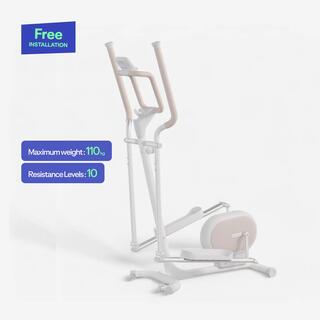
Elliptical cross trainers built for Indian apartment gyms require reinforced tubular steel frames with wall thicknesses exceeding 2.5mm to handle sustained user loads between 110kg and 130kg. Domyos elliptical frames use powder-coated heavy-gauge steel with welded junction points, not bolted assemblies that loosen under repetitive stride cycles. Maximum user weight capacity directly correlates to frame durability. A 120kg-rated machine withstands approximately 240kg of dynamic force during peak stride extension when factoring momentum and body weight transfer.
Floor protection becomes critical in multi-story apartments. Quality ellipticals integrate rubber-cushioned stabilizer feet that distribute machine weight (typically 45kg to 75kg) across contact points measuring 80mm to 120mm in diameter. This prevents tile cracking and reduces vibration transmission through concrete slabs. Compact footprint models measure 130cm to 150cm in length, fitting standard 10x10 foot Indian living rooms while maintaining stride length between 38cm and 42cm for users up to 185cm tall. Foldable models sacrifice flywheel mass and stride stability, making fixed-frame designs superior for serious training.
Flywheel Inertia Mass and Magnetic Resistance Systems for Smooth Pedaling Biomechanics
Flywheel mass determines pedaling smoothness and joint stress reduction. Entry-level ellipticals use 6kg to 9kg flywheels suitable for rehabilitation and light cardio. Intermediate trainers feature 10kg to 14kg flywheels that eliminate dead spots in the pedal stroke, critical for users recovering from knee surgeries or managing patellofemoral pain. Advanced Domyos models integrate 15kg to 18kg flywheels with balanced centrifugal distribution, replicating the fluid motion of commercial gym equipment and reducing impact forces on hip flexors and ankle joints.
Magnetic resistance systems outperform friction-based mechanisms in humid Indian climates. Motorized magnetic resistance uses electromagnetic coils positioned 3mm to 8mm from the flywheel rim, creating variable resistance across 16 to 32 intensity levels without physical contact or wear. Manual magnetic systems employ knob-adjusted permanent magnets, offering 8 to 16 resistance stages with zero maintenance requirements. Resistance progression should increase torque demand by 15% to 20% per level to match progressive overload training protocols. Silent operation below 60 decibels at maximum resistance prevents disturbance in shared living spaces.
Stride Length Geometry and Pedal Q-Factor for Natural Gait Biomechanics
Stride length between 38cm and 42cm accommodates users from 155cm to 190cm in height, matching natural walking gait patterns without hip abduction stress. Shorter 32cm to 36cm strides found in compact models force unnatural knee flexion angles exceeding 95 degrees at the top of the pedal arc, increasing pressure on patellar tendons. Adjustable stride length mechanisms add 8kg to 12kg in frame weight but allow household members of varying heights to maintain proper biomechanical alignment.
Pedal Q-factor, the lateral distance between pedal centers, should measure 180mm to 210mm to match natural hip width and prevent IT band friction. Oversized textured pedals measuring 320mm x 140mm with 15-degree toe-in angles reduce metatarsal pressure during 45-minute cardio sessions. Anti-slip rubber tread patterns with 4mm lug depth maintain grip during high-intensity intervals when sweat saturation occurs. Pedal arm length of 380mm to 420mm creates elliptical motion paths that minimize ankle dorsiflexion stress compared to 340mm arms that force excessive heel lift.
Console Telemetry and Heart Rate Monitoring for Zone-Based Training Protocols
Built-in consoles track stride rate (SPM), distance, calorie expenditure estimates, and elapsed time through magnetic reed sensors positioned near flywheel rotation points. Accuracy depends on proper user weight input and stride calibration. Contact heart rate sensors embedded in static handlebars use bioelectrical impedance analysis, requiring both palms to maintain contact for 8 to 12 seconds to generate readings within plus or minus 5% of chest strap monitors. Wireless Bluetooth connectivity allows pairing with Domyos E-Connected app for workout history tracking and custom interval programming.
Pulse rate monitoring enables zone-based cardio training. Zone 2 aerobic base building occurs at 60% to 70% of maximum heart rate, calculated as 220 minus age. Zone 4 lactate threshold work targets 80% to 90% max HR for VO2 max improvements. Integrated programs adjust resistance automatically based on target heart rate, increasing magnetic gap closure when pulse drops below prescribed zones. Console displays should use LED or LCD screens measuring 5 to 7 inches diagonally with anti-glare coatings for visibility under overhead tube lights common in Indian homes.
Dual-Action Handlebar Systems and Upper Body Engagement Mechanics
Elliptical trainers feature dual handlebar configurations. Moving handlebars connect directly to pedal arms through synchronized linkage systems, engaging chest, back, and shoulder muscles through push-pull motion. Handle grip diameter between 32mm and 38mm suits average Indian hand sizes without forearm fatigue. Static handlebars positioned at 1100mm to 1250mm height allow isolated lower body training while monitoring heart rate through embedded pulse sensors. Switching between handlebar modes alters calorie burn rates by 18% to 25% based on upper body muscle recruitment.
Handle grip materials use closed-cell foam or textured rubber compounds that resist moisture absorption during high-humidity monsoon training. Grip length of 180mm to 220mm accommodates varying shoulder widths and arm reach. Articulating handlebar joints should use sealed ball bearings with ABEC-5 or higher ratings to prevent squeaking after 500 hours of use. Forward and reverse pedaling capabilities engage different muscle fiber recruitment patterns, with reverse motion increasing hamstring and glute activation by 30% compared to forward-only stride mechanics.
Assembly Requirements, Maintenance Cycles, and Warranty Coverage for Home Fitness Equipment
Elliptical assembly requires two people and 90 to 120 minutes using included hex keys and adjustable wrenches. Pre-assembled main frames reduce setup to attaching pedal arms, console masts, and stabilizer feet. Bolt torque specifications typically range from 25Nm to 35Nm for structural joints and 15Nm to 20Nm for cosmetic shroud attachments. Improper torque causes frame flex and premature bearing wear. Leveling adjusters on stabilizer feet compensate for uneven flooring up to 15mm variance, critical for older apartment buildings with settled concrete slabs.
Maintenance involves wiping down rails and pedal arms after each use to prevent sweat corrosion on steel components. Bearing lubrication every 6 months using lithium-based grease extends lifespan beyond 2000 hours of operation. Inspect drive belt tension monthly by pressing the belt midpoint with 5kg force. Proper tension allows 10mm to 15mm deflection. Domyos ellipticals include 2-year frame warranties and 1-year coverage on electronic components and bearings. Regular maintenance logs help validate warranty claims for premature wear issues related to manufacturing defects rather than user neglect.
FAQ (Frequently Asked Questions)
Q1. What makes Decathlon ellipticals different from other brands?
Decathlon ellipticals are rigorously tested for durability and performance by power users across the world. This ensures our machines can handle high-intensity use, offering both beginners and professionals the best experience.
Q2. Are Decathlon ellipticals self-powered?
Yes, some models like the Elliptical EL520B and EL540 are self-powered, meaning they don’t require an external power source. This makes them eco-friendly and versatile for home use without worrying about plugging them in.
Q3. What’s the difference between a 3kg and a 9kg flywheel?
The flywheel weight determines the smoothness and resistance level of the elliptical. A heavier flywheel, like the 9kg on the EL540, offers a smoother and more stable ride, especially for power users. A 3kg flywheel, like on the EL100, is suitable for lighter workouts and beginners.
Q4. Can these ellipticals support heavy users?
Yes, the EL520B and EL540 models are designed to support users up to 130kg, making them ideal for heavier or more intense users. For lighter users, the EL100 and EL120 can support up to 100kg.
Q5. How many resistance levels do Decathlon ellipticals offer?
Our ellipticals come with various resistance levels to suit different fitness goals. The EL100 offers 8 resistance levels, while the EL120 features 10 levels. For more advanced users, the EL520B and EL540 provide customizable resistance for a more challenging workout.
Q6. Are there smart features in these ellipticals?
Yes, both the EL520B and EL540 are equipped with smart features that allow you to track your performance, such as speed, distance, calories burned, and more. These features help optimize your workout and keep you motivated.
Q7. Are Decathlon ellipticals good for small spaces?
Yes, many of our ellipticals are designed with compact spaces in mind. The self-powered feature in some models eliminates the need for cords, and their sleek design makes them a great fit for small home gyms.
Q8. How often should I maintain my elliptical?
Decathlon ellipticals are built for durability and low maintenance. We recommend checking for any loose parts and cleaning the machine every few months to ensure optimal performance.
Q9. What stride length do I need for my height on an elliptical cross trainer?
Users between 155cm and 175cm require minimum 38cm stride length for natural gait mechanics. Taller users from 175cm to 190cm need 40cm to 42cm stride length to prevent excessive knee flexion at the top of the pedal arc. Shorter strides below 36cm force unnatural hip angles and increase patellar tendon stress during extended cardio sessions.
Q10. How much flywheel weight is necessary for smooth pedaling without joint stress?
Flywheel mass between 10kg and 14kg eliminates dead spots in the pedal stroke for intermediate training and joint rehabilitation. Advanced users performing high-intensity intervals benefit from 15kg to 18kg flywheels that maintain momentum through stride transitions. Entry-level 6kg to 9kg flywheels suit light cardio but create jerky motion during resistance changes.
Q11. Can elliptical trainers handle maximum user weight ratings in Indian apartment conditions?
Quality ellipticals with 120kg user ratings withstand dynamic forces up to 240kg during peak stride extension when accounting for momentum transfer. Heavy-gauge steel frames with 2.5mm wall thickness and welded joints maintain structural integrity beyond 2000 hours of use. Bolted frame assemblies loosen under repetitive loading and require monthly retorquing to prevent wobble.
Q12. What is the difference between magnetic and friction resistance on elliptical machines?
Magnetic resistance uses electromagnetic coils or permanent magnets positioned 3mm to 8mm from the flywheel without physical contact, eliminating wear and operating silently below 60 decibels. Friction resistance applies brake pads directly to the flywheel, creating heat buildup and requiring pad replacement every 800 to 1000 hours. Magnetic systems perform reliably in humid monsoon conditions without maintenance.
Q13. How do I prevent floor damage from elliptical trainers in apartment buildings?
Rubber-cushioned stabilizer feet with 80mm to 120mm contact diameter distribute machine weight (45kg to 75kg) across multiple points to prevent tile cracking. Place 6mm thick rubber matting under the entire footprint to absorb vibration and protect flooring. Leveling adjusters compensate for uneven concrete slabs with up to 15mm variance common in older apartment construction.
Q14. What pedal Q-factor prevents hip and knee stress during elliptical training?
Pedal Q-factor between 180mm and 210mm matches natural hip width and prevents IT band friction during extended sessions. Narrower spacing below 170mm forces hip adduction that stresses knee ligaments. Oversized pedals measuring 320mm x 140mm with 15-degree toe-in angles reduce metatarsal pressure and maintain grip during sweat saturation.
Q15. How accurate are contact heart rate sensors compared to chest strap monitors?
Contact sensors embedded in static handlebars measure heart rate within plus or minus 5% accuracy when both palms maintain contact for 8 to 12 seconds. Dry hands, calluses, or interrupted grip cause reading errors. Chest strap monitors using Bluetooth transmission provide continuous real-time data for zone-based training without requiring handlebar contact during high-intensity intervals.
Q16. What maintenance schedule extends elliptical lifespan beyond 2000 hours of use?
Wipe rails and pedal arms after each session to prevent sweat corrosion on steel components. Lubricate bearings every 6 months using lithium-based grease and inspect drive belt tension monthly by pressing the belt midpoint with 5kg force for 10mm to 15mm deflection. Retorque structural bolts to 25Nm to 35Nm every 3 months to prevent frame flex and premature bearing wear.
Q17. Do moving handlebars increase calorie burn compared to static handlebar training?
Moving handlebars engage chest, back, and shoulder muscles through synchronized push-pull motion, increasing calorie expenditure by 18% to 25% compared to isolated lower body training with static handles. Upper body recruitment depends on maintaining active arm drive rather than passive hand placement. Alternating between handlebar modes every 10 minutes prevents forearm fatigue during 45-minute sessions.
Q18. What console features are necessary for progressive cardio training at home?
Essential telemetry includes stride rate (SPM), distance, elapsed time, and heart rate monitoring for zone-based training between 60% and 90% of maximum heart rate. Motorized magnetic resistance with 16 to 32 levels allows 15% to 20% torque increases per stage for progressive overload protocols. Bluetooth connectivity to Domyos E-Connected app enables workout history tracking and custom interval programming for structured training progression.