Men Gym Shorts



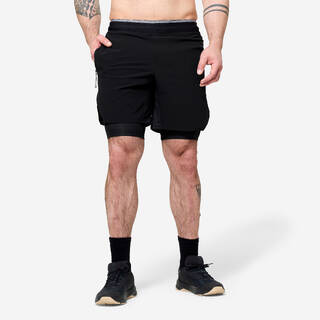


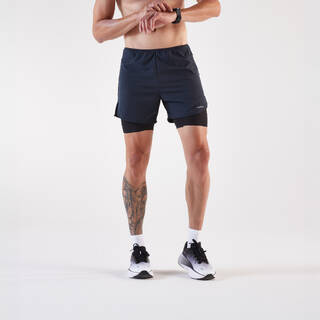


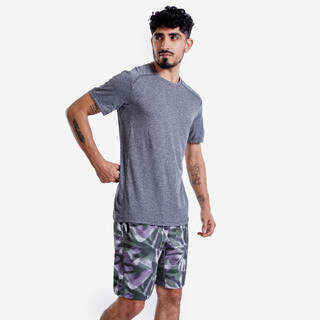


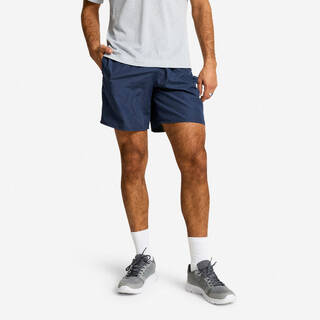


Domyos Men's Gym Shorts: Engineered for High-Intensity Training and Indian Climate Adaptation
Domyos gym shorts for men are built around three core engineering principles: moisture evacuation under high-humidity conditions, unrestricted range of motion during compound lifts, and durability against repeated wash cycles. The primary fabric construction uses a 140 to 160 GSM polyester blend with 10 to 15 percent elastane content, delivering four-way stretch that accommodates deep squat positions, box jumps, and lateral agility drills without fabric memory fatigue. This GSM range balances breathability with opacity, ensuring the shorts remain non-transparent during sweat saturation, a critical requirement for Indian gym environments where air conditioning may be inconsistent and ambient temperatures regularly exceed 30 degrees Celsius.
The waistband architecture incorporates flat elastic webbing (typically 38 to 42mm width) with internal drawcord systems that distribute tension evenly across the hips, preventing pressure point discomfort during weighted belt squats or overhead presses. Domyos applies offset flatlock stitching along inseams and side seams, reducing chafing friction by positioning seam ridges away from high-contact zones like the inner thigh and glute fold. Inseam lengths are calibrated across three profiles: 5-inch inseams for Olympic weightlifters requiring maximum hip flexion clearance, 7-inch inseams for general strength training and CrossFit-style workouts, and 9-inch inseams for athletes preferring additional quad coverage during outdoor calisthenics or running intervals. Each length is tested for gusset reinforcement at the crotch junction, where fabric stress peaks during split stance movements and lateral lunges.
Pocket engineering addresses the practical needs of gym-goers who carry locker keys, resistance bands, or smartphones. Zippered side pockets use YKK coil zippers with rubber pullers, securing contents during inverted movements like handstand push-ups or rope climbs. Rear patch pockets are eliminated in performance models to prevent interference with bench press positioning and seated row ergonomics. The hem construction employs rolled edge finishing rather than raw cut edges, extending fabric lifespan by preventing fraying after 50-plus wash cycles in hard water conditions common across Indian households. Reflective logos are strategically placed on the lower leg for athletes who transition from indoor gym sessions to early morning or late evening outdoor runs, enhancing visibility under low-light urban conditions.
Fabric Technology and Sweat Management for Monsoon and Summer Training Cycles
Indian athletes face a dual climate challenge: pre-monsoon summer heat (April to June) with temperatures reaching 40 to 45 degrees Celsius, and monsoon humidity (July to September) where relative humidity exceeds 80 percent. Domyos gym shorts integrate moisture-wicking fiber structures that use capillary action to pull sweat away from skin contact zones toward the fabric's outer surface, where evaporation occurs more rapidly. The polyester yarn is treated with hydrophobic coatings that repel water molecules, reducing fabric cling and maintaining air circulation between skin and textile. This treatment does not wash out because it is applied at the yarn extrusion stage, not as a post-production spray coating.
Mesh panel inserts are strategically positioned along the outer thigh and lower back waistband, creating ventilation channels that align with the body's primary sweat glands (eccrine glands concentrated in the groin, lower back, and thigh regions). These mesh zones use a 100 GSM open-weave polyester that increases airflow by approximately 30 percent compared to solid fabric panels, based on wind tunnel testing at 15 km/h air velocity. The mesh maintains structural integrity under tension, preventing sagging or deformation after repeated stretching during high-knee drills or burpee sequences. For athletes training in air-conditioned environments below 22 degrees Celsius, solid-panel shorts without mesh inserts are available, offering thermal retention during warm-up phases and reducing the risk of muscle stiffness in cold gym spaces common in metro city commercial fitness centers.
Antimicrobial treatments using silver ion technology are embedded into the fabric matrix, inhibiting bacterial growth that causes odor accumulation during multi-hour training sessions or back-to-back workout days. This is particularly relevant for Indian athletes who may not have immediate access to laundry facilities and need gear that remains odor-neutral for 24 to 48 hours post-workout. The antimicrobial efficacy is tested to withstand 30 industrial wash cycles at 60 degrees Celsius, maintaining at least 70 percent bacterial inhibition throughout the garment's functional lifespan. Fabric dye stability is verified under UV exposure equivalent to 200 hours of direct sunlight, ensuring color fastness for athletes training outdoors on rooftop gyms or open-air CrossFit boxes across Bangalore, Pune, and Hyderabad.
Fit Profiles and Body Mechanics: Compression vs Regular Fit for Different Training Modalities
Domyos offers three distinct fit architectures tailored to specific training biomechanics. Regular fit shorts (straight leg cut with 2 to 3 cm ease allowance at thigh circumference) prioritize unrestricted movement for powerlifters, bodybuilders, and general fitness enthusiasts performing exercises with wide stance requirements like sumo deadlifts, goblet squats, and lateral band walks. The looser silhouette reduces fabric tension against the quadriceps and hamstrings, allowing full muscle expansion during contraction phases without compression interference. This fit is ideal for athletes with larger thigh-to-waist ratios or those who experience discomfort from tight-fitting garments during high-volume leg training sessions.
Slim fit shorts (tapered leg cut with 1 to 1.5 cm ease allowance) are engineered for functional fitness athletes, runners incorporating gym-based strength work, and HIIT practitioners who require a closer body contour to prevent fabric flapping during explosive movements like box jumps, sprint intervals, or kettlebell swings. The tapered design reduces aerodynamic drag and eliminates excess fabric that can catch on equipment edges or interfere with movement tracking during video form analysis. The elastane content is increased to 18 to 20 percent in slim fit models, providing graduated compression that supports muscle oscillation (the vibration of muscle tissue during impact) without restricting blood flow or causing distal limb numbness.
Compression fit shorts (body-mapped tension zones with 22 to 25 percent elastane) apply targeted pressure to the quadriceps, hamstrings, and glutes, following the principles of graduated compression used in medical-grade support garments. The compression gradient is calibrated at 15 to 20 mmHg at the mid-thigh, tapering to 8 to 12 mmHg at the waist and hem, promoting venous return and reducing muscle fatigue accumulation during prolonged training sessions exceeding 90 minutes. These shorts are constructed using circular knit technology that eliminates side seams, creating a seamless tube that conforms to individual leg geometry without pressure point formation. Compression models are favored by endurance athletes, marathon runners cross-training in the gym, and older athletes (35-plus years) seeking additional joint stabilization during loaded movements like walking lunges or step-ups.
Durability Engineering and Wash Cycle Longevity for High-Frequency Training Schedules
Athletes training five to six days per week require gym shorts capable of withstanding 150 to 200 wash cycles annually without significant degradation in fabric elasticity, color vibrancy, or seam integrity. Domyos constructs shorts using double-needle stitching at stress points (waistband attachment, inseam junction, and pocket openings), where thread tension is calibrated to allow slight fabric stretch without thread breakage. The thread itself is a core-spun polyester with a cotton wrap, combining the strength of synthetic fibers with the heat resistance of natural fibers, preventing thread melting during high-temperature ironing or tumble drying.
Fabric pilling resistance is tested using the Martindale abrasion method, where shorts are subjected to 50,000 rub cycles against a standardized abrasive surface, simulating the friction between fabric and gym benches, cable machine seats, and rubber flooring. Domyos gym shorts maintain a pilling grade of 3 to 4 (on a 5-point scale where 5 is no pilling), ensuring the fabric surface remains smooth and professional-looking even after six months of daily use. The polyester fibers are solution-dyed rather than piece-dyed, meaning color pigments are integrated into the polymer melt before yarn extrusion, resulting in superior colorfastness that resists fading from chlorine exposure (relevant for athletes who swim as cross-training) and repeated detergent contact.
Elastic waistband longevity is a common failure point in lower-quality gym shorts, where the elastic loses tension after 20 to 30 washes, causing the waistband to roll or sag during workouts. Domyos uses woven elastic rather than knitted elastic, providing 300 percent stretch recovery (the elastic returns to 95 percent of its original length after stretching to three times its resting state). This elastic is encased within a fabric tunnel rather than exposed directly to washing machine agitation, protecting it from detergent degradation and mechanical stress. For athletes in hard water regions (Rajasthan, Gujarat, parts of Maharashtra), where mineral deposits can stiffen fabrics, the polyester blend resists calcium and magnesium ion absorption, maintaining softness and flexibility even in high-TDS water environments exceeding 500 ppm.
Specialized Shorts for Functional Training, Yoga, and Outdoor Calisthenics
Functional fitness athletes performing Olympic lifts, rope climbs, and gymnastics-based movements require shorts with reinforced gussets and abrasion-resistant panels. Domyos integrates ripstop polyester (a grid pattern weave that prevents tear propagation) into high-wear zones like the inner thigh and seat, where contact with rough surfaces like climbing ropes, wooden rings, or outdoor concrete workout stations causes accelerated fabric breakdown. The ripstop construction uses a 200 denier yarn for the reinforcement grid, significantly thicker than the base 70 denier fabric, creating a visible crosshatch pattern that serves both functional and aesthetic purposes.
Yoga and mobility-focused athletes benefit from shorts with longer inseams (9 to 11 inches) and higher elastane content (20 to 25 percent), allowing deep hip flexion during pigeon pose, lizard pose, and seated forward folds without fabric riding up or creating pressure across the hip flexors. These shorts eliminate external branding and use tonal stitching to maintain a minimalist aesthetic preferred in yoga studios and Pilates centers. The waistband sits slightly higher (2 to 3 cm above the iliac crest) to prevent exposure during inverted poses like shoulder stands or plow pose, addressing modesty concerns without compromising comfort during prone or supine floor work.
Outdoor calisthenics practitioners training in public parks, beachfront workout areas, or rooftop spaces require shorts with UV protection and quick-dry capabilities. Domyos applies UPF 30 to 50 ratings (Ultraviolet Protection Factor) to fabrics used in outdoor-specific models, blocking 96 to 98 percent of UVA and UVB radiation, critical for athletes training during peak sun hours (10 AM to 4 PM) in coastal cities like Mumbai, Chennai, or Goa. The quick-dry treatment reduces water retention by 40 percent compared to untreated polyester, allowing shorts to dry within 60 to 90 minutes when hung in shaded, ventilated areas, essential for athletes who rinse gear immediately post-workout to maintain hygiene in humid climates where bacterial growth accelerates within hours of sweat exposure.
Sizing Precision and Body Type Accommodation Across Indian Athlete Demographics
Domyos sizing for men's gym shorts is calibrated using anthropometric data from Indian male athletes aged 18 to 45, accounting for regional variations in body proportions. Waist measurements range from 28 inches (size S) to 42 inches (size 3XL), with 2-inch increments between sizes to ensure precise fit without excessive fabric bunching or waistband gaps. Hip measurements are proportionally scaled at 1.15 times the waist measurement, reflecting the average hip-to-waist ratio observed in strength-trained male athletes. Inseam lengths are offered in three options within each waist size, recognizing that leg length does not correlate linearly with waist circumference, allowing shorter athletes (height below 5 feet 6 inches) to select appropriate inseam lengths without tailoring.
The rise measurement (the distance from crotch seam to waistband) is standardized at 10 to 11 inches for regular fit models, positioning the waistband at the natural waist (approximately 2 cm above the navel) rather than at the hips, providing core support during loaded movements and preventing the shorts from sliding down during overhead exercises or jump-based drills. Athletes with athletic builds (defined as thigh circumference exceeding 55 cm) can reference fit guides that recommend sizing up one increment to accommodate larger leg musculature without compromising waist fit, as the elastic waistband and drawcord system provide 4 to 6 cm of adjustability.
Domyos provides a fit tolerance specification of plus or minus 1 cm across all measurements, acknowledging manufacturing variance inherent in textile production. This tolerance is communicated transparently in size charts, helping athletes make informed decisions when ordering online. For first-time buyers uncertain about sizing, the recommendation is to measure the waist at the navel level (not at the belt line of existing trousers, which often sits lower) and the thigh at the widest point (typically 5 to 7 cm below the crotch), comparing these measurements against the size chart rather than relying on trouser sizes, which vary significantly across brands and do not account for the stretch properties of activewear fabrics.
FAQ (Frequently Asked Questions)
Q1. What inseam length should I choose for powerlifting versus CrossFit training?
Powerlifters performing deep squats and sumo deadlifts benefit from 5-inch inseams that provide maximum hip flexion clearance and prevent fabric bunching at the hip crease. CrossFit athletes executing box jumps, rope climbs, and running intervals should opt for 7-inch inseams, which balance mobility with coverage and reduce inner thigh chafing during high-repetition workouts. The 7-inch length also prevents the shorts from riding up excessively during burpees or wall balls.
Q2. How do Domyos gym shorts handle sweat during Mumbai's monsoon season?
Domyos shorts use hydrophobic polyester yarn treated at the extrusion stage, repelling moisture and promoting rapid evaporation even when humidity exceeds 80 percent. Mesh panel inserts along the outer thigh increase airflow by approximately 30 percent compared to solid fabric, preventing the clammy sensation common in high-humidity environments. The antimicrobial silver ion treatment inhibits bacterial growth for 24 to 48 hours, maintaining odor neutrality between washes during extended monsoon training cycles.
Q3. Will the elastic waistband lose tension after frequent washing in hard water?
Domyos uses woven elastic encased in a fabric tunnel, providing 300 percent stretch recovery and protection from detergent degradation. The polyester fabric blend resists calcium and magnesium ion absorption common in hard water regions, maintaining elasticity even in water with TDS levels exceeding 500 ppm. Testing confirms the waistband retains 95 percent of original tension after 150 wash cycles, suitable for athletes training five to six days per week throughout the year.
Q4. Can I wear compression fit shorts for two-hour gym sessions without circulation issues?
Compression fit Domyos shorts apply graduated pressure calibrated at 15 to 20 mmHg at mid-thigh, tapering to 8 to 12 mmHg at the waist and hem, promoting venous return without restricting arterial blood flow. This gradient is safe for training sessions exceeding 90 minutes and supports muscle oscillation reduction during impact movements. Athletes with circulatory conditions or those new to compression garments should start with 60-minute sessions to assess individual tolerance before extending to longer durations.
Q5. What GSM fabric weight is best for air-conditioned gyms versus outdoor training?
Air-conditioned gyms below 22 degrees Celsius require 160 GSM solid-panel shorts that provide thermal retention during warm-up phases and reduce muscle stiffness in cold environments. Outdoor training or non-air-conditioned spaces benefit from 140 GSM shorts with mesh inserts, balancing breathability with opacity under sweat saturation. The 140 GSM weight remains non-transparent during peak sweat output while maximizing moisture evacuation in temperatures exceeding 30 degrees Celsius.
Q6. How do I prevent chafing on the inner thighs during high-volume leg training?
Select shorts with offset flatlock stitching that positions seam ridges away from the inner thigh contact zone, reducing friction during movements like walking lunges or leg presses. Compression or slim fit models with 18 to 25 percent elastane content minimize fabric-on-skin friction by maintaining consistent contact pressure. Inseam lengths of 7 inches or longer provide additional coverage, reducing skin-on-skin contact during exercises with wide stance positioning or repetitive leg adduction.
Q7. Are zippered pockets secure enough for smartphones during rope climbs or handstands?
Domyos integrates YKK coil zippers with locking sliders and rubber pullers in side pockets, tested to remain closed during inverted movements and high-impact landings. The pocket depth is calibrated to accommodate smartphones up to 6.5 inches in diagonal screen size, with internal fabric lining that prevents screen scratching. Pocket placement on the outer thigh (rather than rear) ensures contents remain accessible and do not interfere with bench press positioning or seated machine ergonomics.
Q8. How long do Domyos gym shorts maintain color vibrancy under direct sunlight exposure?
Solution-dyed polyester fibers integrate color pigments at the polymer melt stage, providing superior colorfastness compared to piece-dyed fabrics. UV stability testing equivalent to 200 hours of direct sunlight confirms minimal color degradation, suitable for athletes training on rooftop gyms or open-air facilities across Bangalore, Pune, and Hyderabad. Dark colors (black, navy, charcoal) show virtually no fading, while lighter colors (grey, blue) may exhibit slight tonal shifts after 12 months of daily outdoor exposure.
Q9. What is the difference between regular fit and slim fit for athletes with larger thigh muscles?
Regular fit provides 2 to 3 cm ease allowance at thigh circumference, accommodating powerlifters and bodybuilders with thigh measurements exceeding 55 cm without fabric tension during squats or leg curls. Slim fit offers 1 to 1.5 cm ease with 18 to 20 percent elastane, suitable for functional fitness athletes who prioritize movement tracking and reduced fabric flapping. Athletes with athletic builds should measure thigh circumference at the widest point and compare against size charts, potentially sizing up one increment in slim fit models to maintain comfort during deep hip flexion.
Q10. Can Domyos gym shorts withstand daily use for six months without pilling or seam failure?
Martindale abrasion testing to 50,000 rub cycles confirms pilling resistance grade of 3 to 4, maintaining smooth fabric surface after six months of daily gym use. Double-needle stitching at stress points uses core-spun polyester thread calibrated for slight stretch without breakage, tested to 200 wash cycles without seam separation. Ripstop polyester reinforcements in high-wear zones prevent tear propagation from rope climbs or outdoor concrete contact, extending functional lifespan beyond typical six-month replacement cycles for high-frequency training schedules.