Football jersey

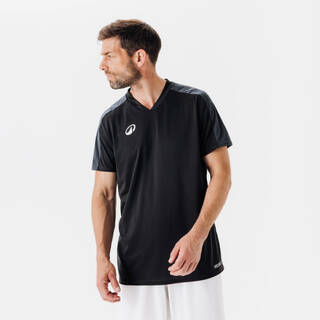

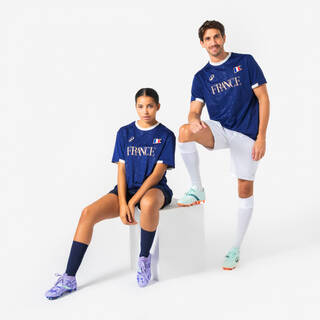
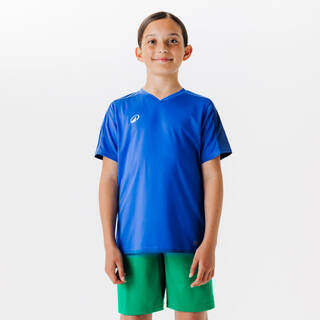

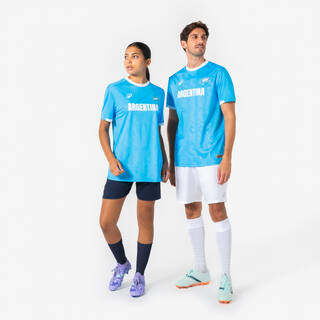

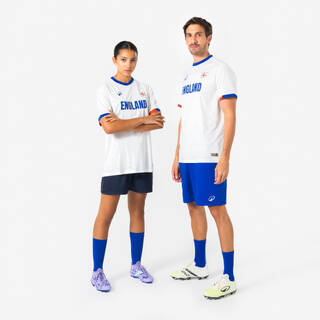
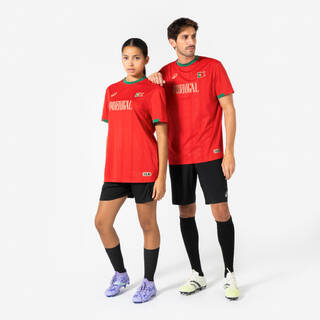
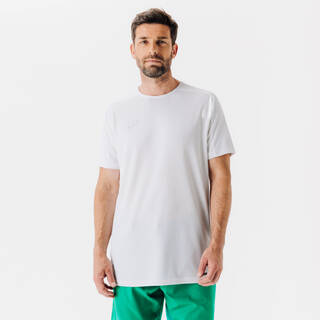
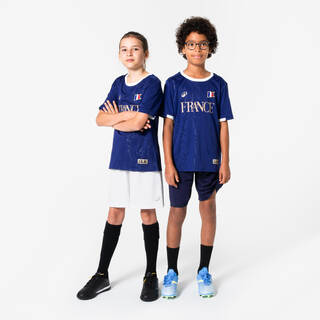
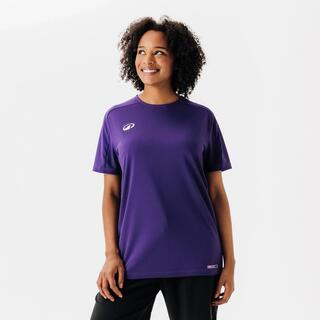
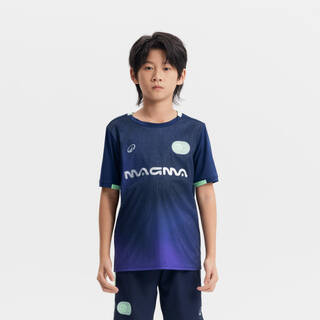
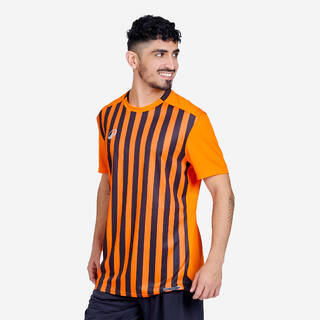
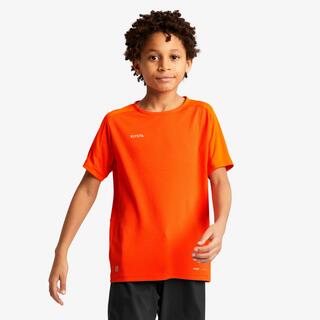
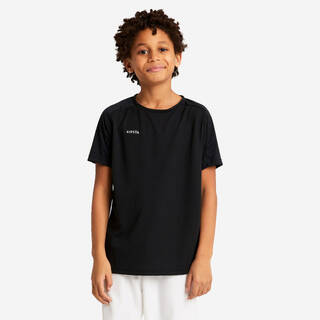
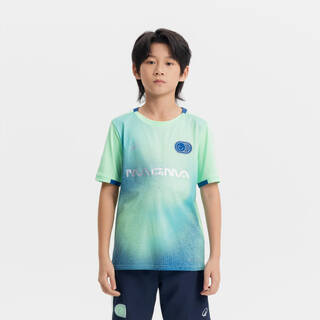
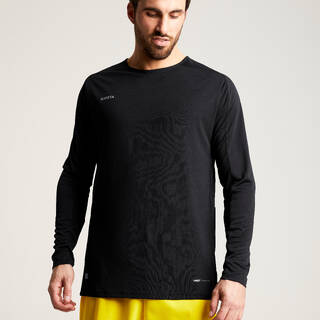
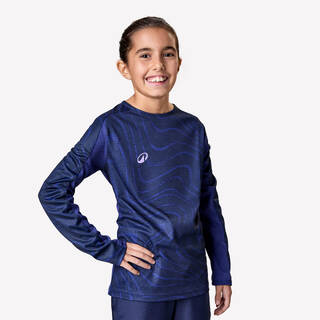
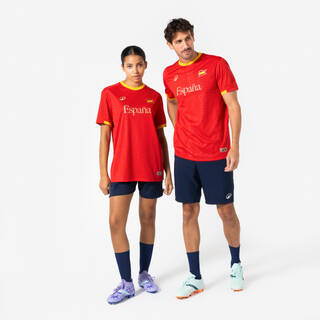
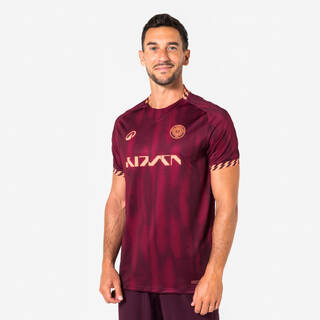
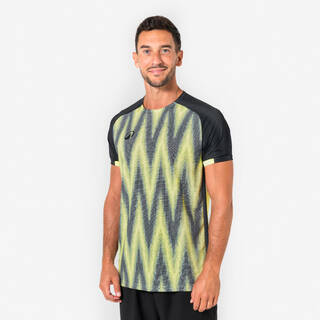
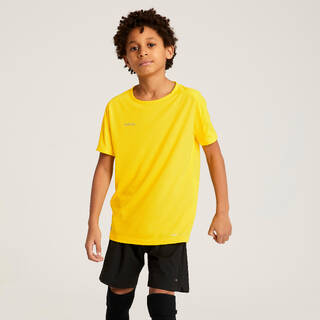
Engineered Polyester Knits for High-Sweat Indian Match Conditions
Football jerseys built for Indian summer tournaments and monsoon-season training demand moisture evacuation rates that match 90-minute match intensity. Kipsta football jerseys utilize circular-knit polyester fabrics in precise GSM ranges: 100-120 GSM ultralight racing jerseys for competitive matches where core temperature regulation is critical, and 140-160 GSM training jerseys that balance durability with ventilation during repetitive drill work on dusty maidan grounds. The circular knit construction eliminates vertical seam lines that trap sweat against the torso, while engineered mesh panels positioned across the upper back and underarm zones accelerate evaporative cooling when humidity exceeds 70 percent during coastal or monsoon matches.
Flatlock offset stitching along shoulder seams and side panels prevents chafing during explosive lateral movements, slide tackles, and overhead throw-ins. Unlike traditional overlocked seams that create raised ridges, flatlock construction bonds fabric edges in a flush plane that sits neutral against skin even when saturated. This becomes critical during extended tournament play where jersey contact points (collar base, armpit junction, lower hem) experience continuous friction cycles. Indian players training on abrasive artificial turf or natural grass fields with uneven terrain benefit from reinforced hem taping that resists fraying when jerseys snag on ground contact or opponent jersey pulls during marking situations.
Sublimation Print Durability vs Screen Print Fade Resistance
Jersey graphics and team branding undergo severe degradation when exposed to Indian laundry cycles: high-temperature bucket washing, aggressive detergent concentrations, and prolonged sun-drying on terrace lines under direct UV exposure. Kipsta employs two core printing technologies matched to usage intensity. Sublimation printing embeds dye molecules directly into polyester fiber structure through heat-transfer processes, creating graphics that cannot peel, crack, or fade because the color exists within the yarn itself rather than as a surface coating. This method delivers superior wash durability (tested beyond 50 wash cycles without color shift) but requires 100 percent polyester base fabrics and works only with light to mid-tone jersey colors.
Screen printing applies plastisol or water-based inks as surface layers, offering vibrant opacity on dark jersey bases (navy, black, maroon) where sublimation cannot achieve sufficient contrast. However, screen prints form a discrete film layer vulnerable to cracking along flex points (chest logos, number curves) after 20 to 30 wash cycles, especially when jerseys are wrung dry or ironed at high heat. For tournament-grade jerseys requiring maximum graphic longevity, sublimation on polyester delivers unmatched retention. For budget training kits where jersey replacement cycles align with seasonal team orders, screen printing provides cost-effective branding with acceptable 6-month durability under standard care protocols.
Raglan Sleeve vs Set-In Sleeve Biomechanics for Throw-Ins and Overhead Clearances
Sleeve construction directly impacts shoulder mobility during high-frequency overhead actions: throw-ins from touchline positions, goalkeeper punches during corner clearances, and defensive headers under pressure. Raglan sleeve patterns extend from underarm to collar in a diagonal seam line that eliminates the traditional shoulder seam junction. This design removes the mechanical restriction point where set-in sleeves create fabric bunching when arms elevate beyond 90 degrees, allowing unrestricted scapular rotation and full humeral abduction during explosive overhead movements. Goalkeepers and defenders executing repetitive aerial challenges benefit from this expanded range of motion, particularly during tournament schedules where cumulative shoulder fatigue compounds mobility restrictions.
Set-in sleeve construction positions the sleeve cap seam directly atop the shoulder joint, creating a defined silhouette preferred for team uniformity and sponsor logo placement across the deltoid region. While this pattern introduces minor restriction at extreme shoulder flexion angles (beyond 160 degrees), the impact remains negligible for outfield players whose primary arm movements occur below horizontal plane during sprinting, shielding, and passing actions. The set-in design also provides superior fabric tension distribution across the chest and back panels, preventing jersey ride-up during forward sprints or when opponents grab fabric during physical challenges. Indian club teams prioritizing visual cohesion and sponsor visibility typically specify set-in sleeve kits, while goalkeeper-specific jerseys default to raglan patterns for functional advantage.
Sizing Architecture for Indian Athletic Builds and Kit Layering
Kipsta football jerseys follow European athletic fit standards adapted for Indian player demographics through extended size runs and modified torso-to-sleeve ratios. Size M specifications typically measure 71cm chest width and 73cm body length, designed for a 172cm height reference with athletic shoulder development. Indian players often require adjusted proportions: broader chest dimensions relative to sleeve length for North Indian builds, or extended body length with narrower chest for South Indian lean frames. The jersey cut incorporates 4 to 6 percent elastane content in side panels, providing mechanical stretch that accommodates size variance within a single marked size while maintaining compression fit across the core for aerodynamic benefit during sprinting phases.
Layering compatibility becomes critical during winter tournament play in North India (Delhi, Chandigarh, Jaipur) where morning kickoff temperatures drop to 8-12°C. Jerseys sized for direct skin contact in summer conditions must accommodate base layer thermals without restricting thoracic expansion during high-intensity running. Kipsta sizing accounts for this by engineering 2-3cm additional chest circumference in S through XL ranges compared to pure racing fits, allowing a thin synthetic baselayer to sit beneath the jersey without compressing the rib cage or limiting diaphragm descent during peak aerobic demand. Players competing across seasonal temperature ranges (summer day matches at 38°C, winter evening fixtures at 10°C) benefit from purchasing jerseys one size larger than training apparel to enable thermal layering flexibility without requiring separate seasonal kits.
Collar Design Impact on Core Temperature and Psychological Comfort
Collar construction influences both physiological cooling efficiency and psychological comfort during match pressure situations. Crew neck collars (round, close-fitting neck opening) provide maximum ventilation surface area, allowing heat dissipation directly from the carotid artery region and upper chest where core temperature sensors concentrate. This design suits attacking midfielders and forwards who maintain continuous high-intensity running outputs, requiring maximum thermal regulation to sustain repeated sprint performance across 90-minute durations. The absence of collar structure also eliminates fabric contact against the anterior neck, reducing tactile distraction during high-concentration moments (penalty situations, one-on-one finishing scenarios).
V-neck and polo collar designs introduce structured fabric along the neck opening, creating a defined aesthetic preferred for team uniformity and traditional club identity. The additional fabric layer marginally reduces ventilation efficiency (approximately 8-12 percent reduced surface area for convective cooling) but provides psychological comfort for players who prefer covered neck profiles or require sun protection during afternoon matches on exposed pitches. Polo collars with button plackets offer adjustable ventilation: players can open buttons during high-exertion phases (defending a lead, pressing in attacking third) and close them during lower-intensity periods (holding possession in midfield, defensive shape maintenance). Indian amateur leagues and corporate tournaments often specify polo collar kits for formal presentation standards, while competitive youth academies and semi-professional clubs default to crew neck designs prioritizing performance over aesthetic convention.
Care Protocols for Extended Jersey Lifespan in Hard Water and Sun Exposure
Indian laundry conditions accelerate jersey degradation through multiple stress factors: hard water mineral deposits (calcium, magnesium concentrations exceeding 200 mg/L in North Indian municipal supplies), aggressive detergent formulations with high alkalinity, and intense UV exposure during terrace drying (UV index 9-11 during summer months). Polyester fibers resist chemical breakdown but accumulate mineral scaling that blocks fabric pores, reducing moisture wicking capacity by 30-40 percent after 15-20 wash cycles in untreated hard water. Pre-treating jerseys with white vinegar rinses (50ml per wash load) dissolves mineral buildup and restores capillary action within the knit structure, maintaining original evaporative performance.
Color retention requires protection from direct sunlight during drying phases. UV radiation degrades synthetic dyes through photochemical oxidation, causing visible fading across chest panels and shoulders (highest sun exposure zones when hung vertically) within 8-10 weeks of regular outdoor drying. Flipping jerseys inside-out before hanging shields exterior graphics and primary color surfaces from direct UV contact, extending vibrant appearance by 60-80 percent compared to standard drying orientation. Avoiding fabric softeners preserves moisture management function, as softener compounds coat individual polyester fibers with hydrophobic films that repel sweat instead of wicking it away from skin. Tournament players maintaining multiple jersey rotations should implement cold water washing (below 30°C), immediate removal from machines to prevent mildew in humid climates, and shaded drying locations to achieve 100-plus wash cycle lifespans without performance degradation.
FAQ (Frequently Asked Questions)
Q1. What GSM weight should I choose for football jerseys used in Mumbai's humid coastal conditions versus Delhi's dry heat?
Coastal humid regions (Mumbai, Chennai, Kolkata) require 100-115 GSM ultralight jerseys that prioritize maximum airflow and rapid moisture evacuation, as sweat evaporation rates drop significantly when ambient humidity exceeds 75 percent. North Indian dry heat conditions (Delhi, Jaipur, Ahmedabad) allow 130-145 GSM jerseys that provide slightly more durability for abrasive turf contact while still maintaining adequate ventilation, since lower humidity enables efficient evaporative cooling even with moderately heavier fabric weights.
Q2. How do I determine correct jersey size if I'm between Kipsta size measurements?
If your chest measurement falls between two Kipsta sizes, select the larger size if you plan to wear base layers during winter matches or prefer looser fit for maximum ventilation. Choose the smaller size if you prioritize aerodynamic compression fit for competitive play and will wear the jersey directly against skin. Kipsta jerseys include 4-6 percent elastane in side panels, providing enough mechanical stretch to accommodate 2-3cm variance within a single size designation.
Q3. Why do some football jerseys lose their moisture-wicking ability after several washes?
Hard water mineral deposits (calcium and magnesium) accumulate within polyester knit structures, blocking capillary channels that transport sweat away from skin. Fabric softeners coat fibers with hydrophobic films that repel moisture instead of absorbing it. To restore wicking function, wash jerseys in cold water with 50ml white vinegar added to the rinse cycle, and completely avoid fabric softener products.
Q4. Can I use the same football jersey for training sessions and competitive matches?
Training jerseys (140-160 GSM) prioritize durability for repetitive ground contact, slide tackles, and frequent washing cycles on abrasive maidan surfaces. Match jerseys (100-120 GSM) optimize weight reduction and ventilation for peak performance during 90-minute competitive play. Using lightweight match jerseys for training accelerates fabric breakdown, while wearing heavier training jerseys in matches compromises cooling efficiency during high-intensity periods.
Q5. How does raglan sleeve construction benefit goalkeepers compared to standard set-in sleeves?
Raglan sleeves eliminate the shoulder seam junction that restricts arm elevation beyond 90 degrees, allowing unrestricted overhead reach during high ball punches, cross collections, and diving saves. This diagonal seam pattern removes fabric bunching at the shoulder joint that occurs with set-in sleeves during explosive upward arm movements, reducing cumulative shoulder fatigue across tournament schedules with multiple matches per week.
Q6. What causes jersey numbers and logos to crack or peel after washing?
Screen-printed graphics apply ink as a surface film layer that flexes and stresses during wear and washing cycles. High-temperature washing (above 40°C), machine drying heat, and direct ironing cause plastisol inks to crack along curved number edges and logo boundaries. Sublimation-printed jerseys embed dye within polyester fiber structure, eliminating surface layers entirely and providing superior durability beyond 50 wash cycles without graphic degradation.
Q7. Should I size up football jerseys if I have broad shoulders but a narrow waist?
Select jersey size based on chest and shoulder measurements rather than waist dimensions, as football jerseys are engineered with athletic tapers that accommodate broader upper body proportions. Kipsta jerseys include elastane content in side panels that provides mechanical stretch across the torso, preventing excess fabric bunching at the waist even when shoulders require a larger size designation. Raglan sleeve patterns further accommodate broad shoulder builds by eliminating restrictive shoulder seam junctions.
Q8. How do I prevent jersey color fading when drying clothes on a terrace in direct sunlight?
UV radiation causes photochemical dye degradation that fades jersey colors within 8-10 weeks of regular sun exposure. Turn jerseys inside-out before hanging to shield exterior graphics and primary color surfaces from direct UV contact. Dry jerseys in shaded locations or during early morning hours (before 9 AM) when UV index remains below 6, extending color vibrancy by 60-80 percent compared to midday sun drying.
Q9. What is the functional difference between crew neck and V-neck collar designs for football jerseys?
Crew neck collars maximize ventilation surface area around the carotid artery and upper chest, providing superior core temperature regulation for high-intensity positions (attacking midfielders, forwards). V-neck and polo collars introduce additional fabric structure that reduces ventilation efficiency by 8-12 percent but offers adjustable coverage for sun protection and traditional aesthetic preferences common in amateur leagues and corporate tournaments.
Q10. Can I remove sweat stains and odor buildup from polyester football jerseys used in hot conditions?
Polyester fibers trap bacterial colonies within knit structures, causing persistent odor even after washing. Soak jerseys in cold water with 100ml white vinegar for 30 minutes before washing to break down bacterial films and dissolve mineral deposits. Add 50g baking soda directly to the wash drum (not detergent compartment) to neutralize acidic sweat residues. Avoid hot water washing, which sets protein-based stains permanently into synthetic fibers.