Footballs









Match Ball Construction: Thermobonded vs Hand-Stitched Panels for Indian Turf and Concrete Pitches
Football construction determines bounce consistency, water absorption, and panel separation risk across India's diverse playing surfaces. Thermobonded footballs use heat-sealed polyurethane (PU) panels without stitching, creating seamless joints that resist moisture penetration during monsoon training sessions and reduce water weight gain by up to 40 percent compared to traditional stitched balls. Hand-stitched footballs, constructed with 32 or 18 panels joined by polyester or cotton thread, offer superior air retention and shape stability on abrasive concrete surfaces common in urban India. The stitching pattern creates micro-flex zones that absorb impact energy differently than bonded surfaces, affecting shot trajectory and goalkeeper handling characteristics.
Kipsta thermobonded match balls feature 12-panel geometric designs that reduce seam count and improve aerodynamic stability during long passes and corner kicks. The polyurethane outer shell, typically 1.2 to 1.5mm thick, bonds to a polyester backing layer and butyl bladder using controlled heat application between 60 to 80 degrees Celsius. This construction eliminates thread degradation from UV exposure in Rajasthan's high-altitude training grounds or coastal humidity in Kerala. Hand-stitched variants use reinforced nylon thread with 2,000 to 2,400 individual stitches, creating tactile surface texture that enhances spin control for curved free kicks and controlled dribbling on artificial turf with 40 to 50mm pile height.
Bladder technology directly impacts air retention and pressure maintenance across temperature fluctuations. Butyl rubber bladders retain air pressure 3 to 4 times longer than latex alternatives, maintaining FIFA-specified inflation between 0.6 to 1.1 bar (8.5 to 15.6 psi) for 6 to 8 weeks without re-inflation. Latex bladders offer softer touch and better rebound response but require weekly pressure checks. For training on hard tar or red soil pitches in Tamil Nadu and Karnataka, butyl construction withstands repeated high-velocity impacts without micro-tears that cause gradual deflation. The bladder sits between the outer casing and a polyester winding layer with 1,200 to 1,800 individual wraps, creating uniform sphericity within FIFA's 68.5 to 69.5cm circumference tolerance.
Size Progression and Weight Standards: Matching Ball Specifications to Age Groups and Skill Development
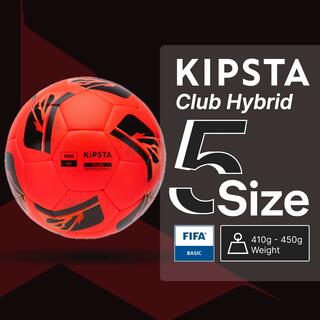
Football sizing follows international standards that correlate ball mass and circumference to player age, leg strength, and technical skill development. Size 5 balls, the official match standard for players aged 13 and above, measure 68 to 70cm in circumference and weigh 410 to 450 grams when properly inflated. This specification generates optimal flight dynamics for long passes exceeding 40 meters and provides sufficient momentum for powerful strikes from outside the penalty area. Size 4 balls (63.5 to 66cm, 350 to 390 grams) suit players aged 8 to 12 years, reducing joint impact forces on developing ankle and knee structures while maintaining realistic bounce characteristics on full-sized pitches.
Size 3 footballs (58 to 60cm, 300 to 320 grams) serve as introduction tools for players under 8 years, allowing proper foot-to-ball contact ratios for instep drives and inside-foot passes. The reduced mass decreases peak deceleration forces during headers and improves ball control success rates during foundational dribbling drills. Kipsta produces size-specific balls with adjusted panel thickness: Size 5 match balls use 1.4mm PU casings for durability against adult shooting power, while Size 3 training balls employ 1.0mm casings that compress more easily under lighter contact forces. Weight distribution affects rotational inertia during flight, with properly balanced balls maintaining spin axis stability for curved trajectories and predictable bounce angles on uneven municipal ground surfaces.
Inflation pressure interacts with ball size to determine contact patch deformation and energy return. Size 5 balls inflated to 0.9 bar create contact patches of approximately 18 to 22 square centimeters during stationary ground contact, compressing 3 to 5mm into synthetic turf fibers. Under-inflation below 0.7 bar increases contact patch area by 30 to 40 percent, slowing roll speed and reducing rebound height to 55 to 65 percent of drop height instead of the standard 70 to 80 percent. Over-inflation above 1.0 bar hardens the ball surface, increasing impact shock transmitted to the foot during volleys and reducing controllability during chest traps. For training on India's varied surfaces, from Kerala's coastal sand pitches to Punjab's hard clay grounds, maintaining manufacturer-specified pressure ensures consistent performance across 200 to 300 training hours before panel wear necessitates replacement.
Surface-Specific Ball Selection: Turf Grain, Concrete Abrasion, and Red Soil Friction Coefficients
Playing surface characteristics dictate optimal ball construction and material durability requirements. Artificial turf with 40 to 60mm pile height and silica sand infill creates high friction coefficients (0.35 to 0.45) that accelerate PU casing wear, particularly on thermobonded seams subjected to dragging forces during slide tackles and goal-line scrambles. Kipsta turf-specific balls incorporate reinforced outer layers with 1.6 to 1.8mm thickness and abrasion-resistant coatings that withstand 500 to 600 hours of play before visible panel degradation. The textured surface pattern, featuring micro-dimples or pebbled finishes, enhances grip during wet conditions when monsoon rains saturate synthetic fibers and reduce natural traction.
Concrete and hard tar surfaces, prevalent in 60 to 70 percent of urban Indian football training facilities, generate extreme abrasion forces that erode standard match balls within 40 to 60 hours of use. Training balls designed for these conditions use dual-layer construction: a 2.0mm thick outer PU shell bonded to a 1.5mm polyester backing cloth, creating total wall thickness of 3.5mm compared to 2.5mm in standard match balls. The increased material density raises ball weight by 20 to 30 grams but extends usable lifespan to 150 to 200 hours on abrasive surfaces. Bounce characteristics change on concrete, with rebound coefficients reaching 0.75 to 0.80 (higher than grass or turf), requiring players to adjust first-touch techniques and anticipate faster ball reactions during passing combinations.
Red soil and natural grass pitches in Karnataka, Goa, and Maharashtra present variable friction based on moisture content and grass blade density. Dry red soil creates dusty conditions with friction coefficients dropping to 0.25 to 0.30, causing balls to skid and maintain velocity through tackles. Match balls with textured casings and slightly tacky PU coatings improve surface contact and reduce unpredictable skipping during through-balls. Grass pitches with 20 to 30mm blade height offer ideal playing conditions but require balls with water-resistant treatments. Kipsta applies hydrophobic polyurethane coatings that cause water droplets to bead and roll off the surface, preventing the 80 to 120 gram weight increase that occurs when untreated balls absorb moisture during monsoon matches. This coating maintains consistent flight dynamics and reduces the heavy, waterlogged feel that affects shooting accuracy and passing distance in wet conditions.
Aerodynamic Panel Design: 32-Panel vs 12-Panel Geometry and Boundary Layer Turbulence
Panel configuration directly influences airflow patterns around the ball during flight, affecting drag coefficients and trajectory stability. Traditional 32-panel designs, featuring 20 hexagonal and 12 pentagonal panels in an icosahedron pattern, create numerous seam ridges that trip boundary layer airflow from laminar to turbulent at lower velocities (12 to 15 meters per second). This early turbulence transition reduces drag and prevents the unpredictable knuckling effect observed with smooth-surface balls traveling at 20 to 25 meters per second. The seam depth on hand-stitched 32-panel balls measures 0.8 to 1.2mm, sufficient to generate vortex shedding that stabilizes spinning shots and maintains curved flight paths during corner kicks and free kicks from 18 to 25 meters.
Modern 12-panel and 14-panel thermobonded designs reduce seam count by 60 to 65 percent, creating smoother surfaces with lower drag at high velocities above 28 meters per second. Kipsta's geometric panel layouts use computer-modeled shapes that distribute stress evenly across seam junctions, preventing the panel bulging that occurs in traditional balls after 100 to 150 hours of play. The reduced seam count lowers surface roughness from 15 to 20 microns (32-panel) to 8 to 12 microns (12-panel), delaying turbulence transition and allowing skilled players to generate knuckleball effects during long-range shots. However, this smoothness requires higher launch velocities (18 to 22 m/s) to achieve stable flight, making 12-panel balls more suitable for advanced players with developed shooting power.
Surface texture treatments compensate for reduced panel count in modern designs. Micro-textured coatings featuring 0.2 to 0.4mm raised patterns create artificial roughness that mimics traditional seam effects without compromising thermobonded joint integrity. These patterns, applied through embossing or chemical etching, generate consistent turbulence across wind speeds from 5 to 15 km/h, typical of evening training sessions in Delhi's winter months or coastal matches in Mumbai's sea breeze conditions. Wind tunnel testing shows textured 12-panel balls maintain trajectory deviation within 15 to 20cm over 30-meter passes, compared to 30 to 40cm deviation in untreated smooth balls under crosswind conditions. For Indian players training in open grounds exposed to seasonal wind patterns, textured panel designs provide predictable flight characteristics essential for developing accurate long-passing techniques and defensive clearances.
Training Ball Durability: Impact Resistance, Panel Delamination, and Maintenance Protocols for Extended Lifespan
Training ball construction prioritizes durability over match-grade touch and flight precision, using reinforced materials that withstand 300 to 500 hours of intensive use across multiple players and varied surfaces. Kipsta training balls employ machine-stitched construction with reinforced polyester thread (0.6 to 0.8mm diameter) and triple-layer backing cloth that prevents panel separation during high-impact shooting drills and repetitive wall-passing exercises. The outer PU casing uses cross-linked polymers with Shore A hardness ratings of 65 to 70, compared to 55 to 60 in match balls, creating a firmer surface that resists scuffing on concrete and maintains shape integrity after 2,000 to 3,000 individual strikes.
Impact resistance testing measures ball deformation under standardized force application. Training balls must withstand 2,000 impacts at 50 joules (equivalent to a full-power strike from 8 to 10 meters) without panel cracking or bladder puncture. The polyester winding layer, consisting of 1,500 to 2,000 individual thread wraps, distributes impact energy across the entire ball structure rather than concentrating stress at seam junctions. This construction prevents the localized panel bulging that creates irregular bounce patterns and affects passing accuracy during extended training sessions. For academies and clubs conducting 15 to 20 hours of weekly training, durable construction reduces replacement frequency from every 2 to 3 months (standard match balls) to 6 to 8 months (reinforced training balls), maintaining consistent ball characteristics across seasonal training cycles.
Proper maintenance extends training ball lifespan and preserves performance characteristics. Balls should be stored at temperatures between 15 to 25 degrees Celsius and relative humidity below 60 percent to prevent PU casing degradation and bladder oxidation. After use on dusty or muddy surfaces, cleaning with damp cloth and mild soap removes abrasive particles that accelerate panel wear. Avoid petroleum-based cleaners or solvents that dissolve polyurethane coatings and compromise water resistance. Inflation checks every 10 to 15 training hours maintain optimal pressure, as balls naturally lose 0.05 to 0.1 bar per week through microscopic bladder permeation. For balls used on concrete, rotating between 3 to 4 units during training sessions distributes wear patterns and prevents premature panel delamination at high-stress contact points. Proper storage away from direct sunlight prevents UV-induced PU hardening that reduces touch sensitivity and increases injury risk during headers and chest control.
Kipsta Ball Range: Matching Skill Level, Playing Frequency, and Budget to Optimal Ball Specifications
Kipsta produces tiered ball ranges addressing different skill levels and usage intensities. Entry-level training balls use hybrid construction combining machine stitching with partial thermal bonding, offering durability for recreational players training 3 to 5 hours weekly on municipal grounds and school pitches. These balls feature 1.4 to 1.6mm PU casings and butyl bladders, providing 4 to 6 months of usable life under moderate playing conditions. Mid-range match balls employ full thermobonded construction with 12 to 14 panels and textured surfaces, suitable for club-level competitions and players training 8 to 12 hours weekly. The improved aerodynamics and consistent bounce characteristics support technical skill development in passing accuracy, first-touch control, and shooting placement.
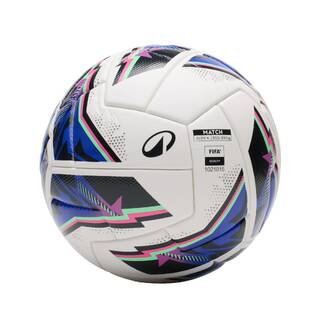
Premium Kipsta match balls meet FIFA Quality Pro standards, undergoing rigorous testing for circumference tolerance (plus or minus 1.0cm), weight consistency (plus or minus 10 grams), water absorption (maximum 10 percent weight gain), and rebound height (125 to 155cm when dropped from 2 meters onto steel plate). These specifications ensure professional-grade performance for competitive matches and advanced training programs. The balls use 1.2mm thermobonded PU with nano-particle coatings that enhance water repellency and maintain surface grip in humidity levels exceeding 80 percent, common during monsoon seasons across India. Shape retention testing involves 2,000 impacts at 50 km/h, with acceptable deformation limited to 1.5 percent maximum deviation from perfect sphericity.
Specialized balls address specific training needs: futsal balls feature reduced bounce characteristics (50 to 55 percent rebound height) and size 4 dimensions for indoor court play, while beach soccer balls use softer PU casings (Shore A 50 to 55) that reduce impact shock on bare feet. Goalkeeper training balls incorporate high-visibility colors (fluorescent yellow or orange) with contrast panels that improve tracking during reflex drills and diving exercises. For youth academies developing players aged 6 to 16 years, progressive ball sizing from Size 3 through Size 5 allows age-appropriate skill development while maintaining consistent construction quality across the range. Coaches can implement technical progression programs using balls with matching touch characteristics, ensuring skills learned with Size 3 balls transfer directly to Size 5 match play without requiring adjustment periods for different panel textures or bounce responses.
FAQ (Frequently Asked Questions)
Q1. What is the difference between thermobonded and hand-stitched footballs for training on concrete pitches in India?
Thermobonded footballs use heat-sealed panels without stitching, preventing water absorption during monsoon sessions and reducing moisture weight gain by 40 percent. Hand-stitched balls offer better air retention and shape stability on abrasive concrete surfaces, with 2,000 to 2,400 reinforced nylon stitches creating tactile texture for improved spin control. For concrete training, choose reinforced training balls with 2.0mm thick outer shells that extend lifespan to 150 to 200 hours compared to 40 to 60 hours for standard match balls.
Q2. Which football size should I buy for my 10-year-old child playing in school tournaments?
Size 4 footballs (63.5 to 66cm circumference, 350 to 390 grams) suit players aged 8 to 12 years, reducing joint impact forces on developing ankles and knees while maintaining realistic bounce on full-sized pitches. This size allows proper foot-to-ball contact ratios for instep drives and provides sufficient momentum for passes exceeding 20 to 25 meters. Transition to Size 5 occurs around age 13 when leg strength supports the 410 to 450 gram match ball weight.
Q3. How do I maintain proper inflation pressure in my football and how often should I check it?
Maintain inflation between 0.6 to 1.1 bar (8.5 to 15.6 psi) as specified by the manufacturer, checking pressure every 10 to 15 training hours. Butyl bladders retain air 3 to 4 times longer than latex, maintaining pressure for 6 to 8 weeks, but balls naturally lose 0.05 to 0.1 bar weekly through microscopic permeation. Under-inflation below 0.7 bar reduces rebound height to 55 to 65 percent and slows roll speed, while over-inflation above 1.0 bar hardens the surface and reduces controllability during traps.
Q4. Why does my football absorb water and become heavy during monsoon matches?
Untreated PU casings absorb moisture through panel seams and micro-pores, increasing ball weight by 80 to 120 grams and affecting flight dynamics. Kipsta balls with hydrophobic polyurethane coatings cause water to bead and roll off, preventing absorption and maintaining consistent weight. Thermobonded construction eliminates stitching gaps where water penetrates, reducing moisture gain by 40 percent compared to traditional hand-stitched balls during wet conditions.
Q5. What causes a football to lose its shape and develop flat spots after extended use?
Panel bulging occurs when impact stress concentrates at seam junctions, causing the polyester winding layer to compress unevenly. Training balls with 1,500 to 2,000 thread wraps distribute impact energy across the structure, preventing localized deformation. Proper inflation maintenance and rotating between 3 to 4 balls during sessions extends shape retention. Balls used on concrete require reinforced construction with 3.5mm total wall thickness to withstand 150 to 200 hours before visible panel degradation.
Q6. How do 32-panel and 12-panel football designs affect ball flight and control during matches?
Traditional 32-panel balls create seam ridges that generate turbulent airflow at 12 to 15 m/s, stabilizing curved shots and preventing knuckling effects. Modern 12-panel thermobonded designs reduce seam count by 60 percent, creating smoother surfaces with lower drag above 28 m/s but requiring higher launch velocities for stable flight. Textured 12-panel balls use micro-patterns (0.2 to 0.4mm raised) that maintain trajectory deviation within 15 to 20cm over 30-meter passes in crosswind conditions.
Q7. Can I use the same football for both turf and concrete surfaces or do I need different balls?
Artificial turf creates friction coefficients of 0.35 to 0.45 that accelerate casing wear, requiring balls with 1.6 to 1.8mm reinforced outer layers for 500 to 600 hour lifespan. Concrete generates extreme abrasion demanding dual-layer construction with 3.5mm total wall thickness. Using turf-specific balls on concrete reduces lifespan to 40 to 60 hours, while concrete training balls work on turf but feel firmer due to increased material density. Dedicated balls for each surface optimize durability and performance characteristics.
Q8. What is the lifespan of a Kipsta training football under regular academy use?
Reinforced Kipsta training balls withstand 300 to 500 hours of intensive use across multiple players and varied surfaces, translating to 6 to 8 months for academies conducting 15 to 20 weekly training hours. Lifespan depends on surface type: grass and turf allow 400 to 500 hours, while concrete reduces this to 150 to 200 hours. Proper maintenance including pressure checks every 10 to 15 hours, cleaning after dusty conditions, and storage at 15 to 25 degrees Celsius extends usable life by 20 to 30 percent.
Q9. Do FIFA-approved footballs perform better than non-approved balls for club-level matches?
FIFA Quality Pro balls undergo testing for circumference tolerance (plus or minus 1.0cm), weight consistency (plus or minus 10 grams), water absorption (maximum 10 percent), and rebound height (125 to 155cm from 2-meter drop). These specifications ensure consistent bounce, predictable flight, and maintained characteristics across 2,000 impacts at 50 km/h. For competitive club matches, FIFA-approved balls provide professional-grade performance, while non-approved training balls prioritize durability over precision flight dynamics and touch sensitivity.
Q10. How does ball pressure affect performance on different playing surfaces in India?
Optimal pressure (0.9 bar for Size 5) creates 18 to 22 square centimeter contact patches that compress 3 to 5mm into synthetic turf, providing 70 to 80 percent rebound height. On concrete with higher rebound coefficients (0.75 to 0.80), proper inflation maintains predictable bounce for first-touch control. Red soil with low friction (0.25 to 0.30) when dry requires correct pressure to prevent excessive skidding. Under-inflation increases contact patch area by 30 to 40 percent, slowing roll speed and reducing passing distance by 10 to 15 percent across all surfaces.