Hiking Poles



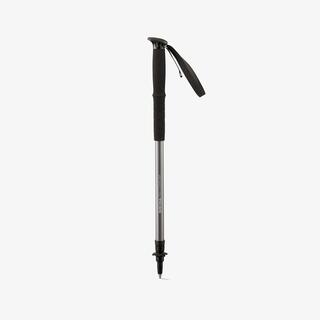
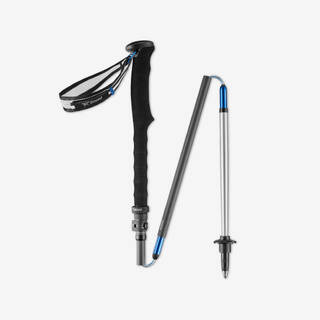


Quechua Hiking Poles: Aluminium Alloy Shafts and Anti-Shock Spring Systems for Indian Terrain
Quechua hiking poles anchor biomechanical stability across Himalayan scree fields, Western Ghats monsoon trails, and Sahyadri ridge scrambles. Poles transfer 20 to 30 percent of upper body load away from knee joints and ankle ligaments during steep descents. Aluminium 7075-T6 alloy shafts resist bending under lateral torque while maintaining sub-250-gram per pole weight for multi-day treks. Telescopic three-section designs collapse to 65 centimeters for external pack attachment or internal cabin baggage stowage. Anti-shock coil springs absorb ground reaction spikes on hard laterite or granite surfaces, reducing cumulative wrist and elbow strain over 15 to 20 kilometer daily distances.
Tungsten carbide tips bite into wet moss-covered rocks and loose shale without dulling after 500 plus kilometer usage cycles. Foam EVA grips with extended lower sections enable choke-up hand repositioning during steep uphill switchbacks without stopping to adjust pole length. Cork handles wick palm sweat in 80 percent plus humidity conditions across monsoon months, preventing blisters from synthetic rubber slippage. Adjustable nylon wrist straps with quick-release buckles distribute pole load across forearm tendons rather than grip strength alone, delaying fatigue onset during 6 to 8 hour trekking days. Quechua engineers calibrate spring tension and shaft flex specifically for 60 to 90 kilogram user loads common among Indian trekkers carrying 10 to 15 kilogram backpacks.
Telescopic vs Fixed-Length Pole Geometry: Locking Mechanisms and Shaft Stability Under Load
Telescopic poles with external twist-lock or internal lever-lock cam systems adjust from 110 to 135 centimeters to match user height and terrain gradient. Twist-lock collars require 180-degree rotation to engage aluminum threads that resist 100 plus kilogram vertical compression forces. Lever-lock FlickLock mechanisms snap into place with one-handed operation, allowing mid-trail adjustments without removing gloves or stopping momentum. Internal expander plugs inside each shaft section prevent telescopic collapse under downhill braking loads when poles plant at 45-degree angles on steep descents.
Fixed-length poles eliminate adjustment mechanisms entirely, reducing total pole weight by 40 to 60 grams per pair while removing potential failure points from sand ingress or thread wear. Trekkers committed to specific trail profiles (consistent altitude gain/loss ratios) benefit from rigid one-piece or two-piece folded designs. Folding Z-pole architectures use aramid fiber cord tensioning systems, collapsing to 35 to 40 centimeter lengths for ultralight fastpacking across Ladakh or Spiti high-altitude routes. Cord-tensioned poles deploy in under 10 seconds by snapping tubular sections into pre-tensioned alignment, eliminating twist-lock time waste during alpine starts or emergency shelter setups.
Basket Diameter Selection: Trekking vs Snow Baskets for Monsoon Mud and Himalayan Powder
Standard 5 to 6 centimeter diameter trekking baskets prevent pole tips from sinking into soft monsoon mud, laterite clay, or decomposed granite trails common across Coorg, Munnar, and Kodaikanal regions. Small basket surface area minimizes branch snag risk in dense rhododendron or bamboo thickets along narrow single-track paths. Removable basket systems allow field swaps without tools, adapting single pole sets to seasonal terrain transitions from pre-monsoon dry dust to post-monsoon saturated soil.
Wide 10 to 12 centimeter snow baskets distribute load across powder snow or névé fields above 4000 meters in Himachal, Uttarakhand, and Sikkim alpine zones. Larger surface area prevents poles from punching through crusted snow layers during early morning frozen conditions or soft afternoon slush. Rubber tip protectors cover tungsten carbide points during road walks or village approaches, preventing pavement wear and reducing metallic clanging noise on stone staircases. Interchangeable tip and basket modularity extends pole lifespan across 3 to 5 year usage cycles, replacing worn components without discarding entire shaft assemblies.
Grip Ergonomics and Wrist Strap Load Transfer: Cork, Foam, and Extended Grip Zones
Cork handles mold to individual palm contours after 50 to 100 hours of use, creating custom friction surfaces that resist moisture buildup better than closed-cell foam or rubber compounds. Natural cork cellular structure absorbs hand sweat through capillary action, maintaining dry grip contact even during 35 to 40 degree Celsius valley approaches in Rajasthan or Karnataka summer months. Foam EVA grips offer softer initial cushioning for trekkers with arthritis or joint sensitivity, though they compress and lose rebound after 200 to 300 hours compared to cork's 500 plus hour durability.
Extended grip zones below main handles provide 15 to 20 centimeter rubberized sections for quick hand repositioning during steep ascents without adjusting pole length. Trekkers shorten effective pole height by sliding hands down extended grips, maintaining forward lean posture on 30 to 40 degree gradient climbs. Padded wrist straps with adjustable cam-lock buckles transfer 40 to 50 percent of downward pole pressure from hand grip to forearm bones, reducing finger flexor fatigue and preventing cramping during long descent sequences. Proper strap technique involves threading hand up through loop from below, allowing strap to support wrist on downstroke while maintaining loose grip for shock absorption.
Pole Length Calculation and Adjustment Protocols for Variable Terrain Gradients
Baseline pole length equals user height multiplied by 0.68, creating 90-degree elbow angles when pole tips contact flat ground and handles rest in relaxed grip. A 170 centimeter tall trekker requires 115 centimeter poles for level trail walking. Shorten poles by 5 to 10 centimeters for sustained uphill sections steeper than 15 degrees, maintaining upright torso posture and preventing shoulder hunch. Lengthen poles by 5 to 10 centimeters for downhill grades exceeding 20 degrees, planting poles ahead of body to brake momentum and reduce quadriceps eccentric loading.
Asymmetric pole length adjustments on side-slope traverses compensate for uneven ground, with uphill pole extended 5 centimeters longer than downhill pole to maintain balanced shoulder alignment. Mark optimal length settings on pole shafts with permanent marker or colored tape for rapid field adjustments without trial and error. Telescopic poles lose 2 to 3 centimeters of effective range per locking section due to overlap requirements, so 135 centimeter maximum extension poles actually adjust from 65 to 132 centimeters usable height. Pre-trek length calibration on flat surfaces prevents mid-trail fumbling with unfamiliar locking mechanisms under fatigue or poor visibility conditions.
Maintenance Protocols and Durability Benchmarks for Multi-Season Himalayan Use
Disassemble telescopic sections every 10 to 15 trekking days to flush sand, silt, and organic debris from internal shaft channels using warm water and mild detergent. Dry all components completely before reassembly to prevent galvanic corrosion between dissimilar aluminum alloys in humid storage. Lubricate twist-lock threads with dry silicone spray (never oil-based lubricants that attract dust) to maintain smooth rotation and prevent seizing after monsoon exposure. Inspect tungsten carbide tips for mushrooming or chipping after 300 to 500 kilometer use, replacing worn tips before metal core exposure compromises grip on wet rock.
Store poles in loosened or partially extended positions to relieve spring tension in anti-shock mechanisms and prevent coil fatigue during off-season months. Avoid leaving poles in hot car trunks or direct sunlight above 50 degrees Celsius, which degrades foam grip adhesives and cork binder resins. Replace wrist straps every 2 to 3 years or after visible fraying, as strap failure under load can cause wrist hyperextension injuries during sudden slips. Quality aluminum poles withstand 5 to 7 years of regular weekend use (80 to 100 days per year) before shaft dents or locking mechanism wear necessitate replacement, while carbon fiber models offer 30 percent weight reduction but require more careful handling to avoid catastrophic fractures from side impacts.
FAQ (Frequently Asked Questions)
Q1. What pole length should I choose for my height and typical Himalayan trekking conditions?
Multiply your height in centimeters by 0.68 to get baseline pole length for flat terrain. A 165 cm trekker needs 112 cm poles. Choose telescopic models adjusting from 110 to 135 cm to accommodate uphill shortening (minus 5 to 10 cm) and downhill lengthening (plus 5 to 10 cm) across variable Himalayan gradients. Test adjustment by standing upright with poles, confirming 90-degree elbow bend when tips touch ground.
Q2. Do I need anti-shock springs for trekking in Western Ghats and Sahyadri ranges?
Anti-shock coil springs reduce wrist and elbow impact on hard laterite, granite, and concrete surfaces common in Western Ghats descents. Springs absorb 20 to 30 percent of ground reaction spikes during steep downhill sections, delaying joint fatigue over 6 to 8 hour days. Disable or remove springs for uphill climbs to maintain rigid pole plant and prevent energy loss from spring compression during push-off phases.
Q3. How do I maintain telescopic locking mechanisms after monsoon treks in high humidity?
Disassemble all pole sections within 24 hours of returning from monsoon treks. Flush internal shafts with warm water to remove mud, silt, and organic debris. Dry completely for 12 to 24 hours in ventilated area before reassembly. Apply dry silicone spray to twist-lock threads or lever-lock cams every 10 to 15 trekking days to prevent corrosion and maintain smooth operation.
Q4. What is the difference between cork and foam grips for sweaty hands during summer treks?
Cork handles absorb palm sweat through natural cellular structure, maintaining dry friction contact in 35 to 40 degree heat and 80 percent humidity. Cork molds to hand shape after 50 to 100 hours, lasting 500 plus hours before degradation. Foam EVA grips offer softer initial cushioning but compress after 200 to 300 hours and retain more moisture, causing blisters during extended use in humid conditions.
Q5. Can I use the same poles for both monsoon mud trails and winter snow treks above 4000 meters?
Yes, if poles have removable basket systems. Use standard 5 to 6 cm trekking baskets for monsoon mud and laterite clay to prevent sinking while minimizing branch snags. Swap to 10 to 12 cm snow baskets for powder snow and névé fields above 4000 meters, distributing load to prevent punching through crusted layers. Carry both basket types and swap without tools in 30 seconds.
Q6. What shaft material is better for rough Himalayan terrain, aluminum or carbon fiber?
Aluminum 7075-T6 alloy offers superior impact resistance against rocks and side loads, bending rather than shattering under stress. Carbon fiber reduces weight by 30 percent but fractures catastrophically from side impacts or over-tightened locking mechanisms. Choose aluminum for rugged scrambles, scree fields, and multi-season durability. Carbon suits experienced trekkers prioritizing weight savings on maintained trails with careful handling protocols.
Q7. How do I use wrist straps correctly to reduce hand fatigue during long descents?
Thread hand up through wrist strap loop from below, so strap sits across back of hand between thumb and index finger. Adjust strap snug but not tight, allowing strap to support wrist during downstroke while maintaining loose grip. This transfers 40 to 50 percent of pole pressure from finger flexors to forearm bones, preventing cramping during 3 to 4 hour descent sequences. Never wrap straps around wrists tightly, which prevents quick release during falls.
Q8. What is the lifespan of tungsten carbide tips on rocky Ladakh and Spiti trails?
Tungsten carbide tips last 500 to 700 kilometers on mixed terrain including granite, shale, and scree. Inspect tips every 100 kilometers for mushrooming or chipping. Replace tips when carbide wears down to expose softer metal core, which loses grip on wet rock and ice. Use rubber tip protectors during road walks and village approaches to extend tip life and reduce pavement wear.
Q9. Should I choose telescopic or folding Z-poles for multi-day Himalayan treks with flight travel?
Telescopic poles collapse to 60 to 65 cm, fitting inside large backpacks or checking as cabin baggage on most domestic flights. Folding Z-poles with cord tensioning collapse to 35 to 40 cm, fitting inside carry-on bags and deploying in under 10 seconds. Choose Z-poles for ultralight fastpacking and frequent air travel. Choose telescopic for durability, easier length adjustment, and lower cost over 5 to 7 year lifespan.
Q10. How much weight do hiking poles actually remove from knees during steep descents?
Properly used poles transfer 20 to 30 percent of upper body load away from knee joints and ankle ligaments during descents steeper than 20 degrees. On a 15 kilometer descent losing 1500 meters elevation, poles reduce cumulative knee compression forces equivalent to removing 3 to 5 kilograms from pack weight. Plant poles ahead of body to brake momentum, reducing quadriceps eccentric loading and delaying fatigue onset during long downhill sections.