Kettlebells







Cast Iron vs Vinyl-Coated Kettlebell Construction for Indian Home Gyms
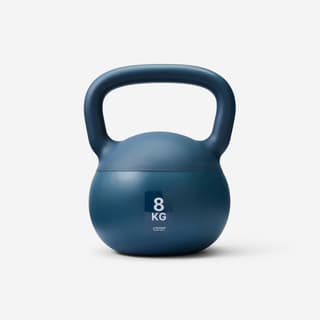
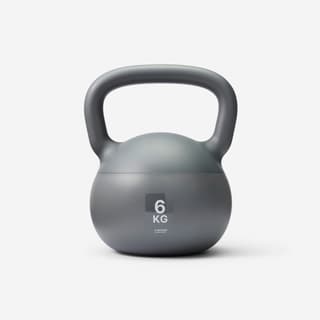
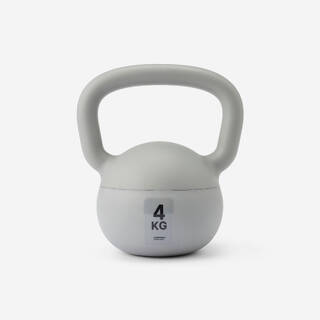
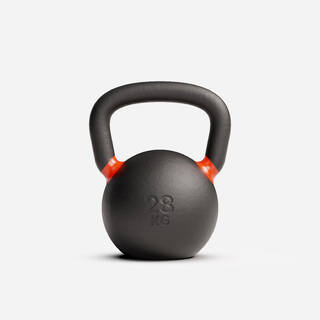
Kettlebells fall into two primary construction categories: bare cast iron and vinyl-coated cast iron. Bare cast iron units offer superior grip texture and authentic ballistic training feedback, but they demand careful floor protection in apartment setups. A single 16 kg cast iron kettlebell dropped from waist height generates impact forces exceeding 400 kg on tile or marble flooring. Vinyl-coated models feature 2 to 3 mm thick PVC outer shells that dampen floor contact noise and prevent surface scratches, making them ideal for multi-story residential buildings where noise transmission is a concern.
The core casting process determines long-term durability. Domyos kettlebells use single-pour cast iron molds that eliminate weld seams and internal voids. Welded handle kettlebells, common in budget imports, develop micro-fractures under repetitive swing loads, particularly during high-rep American swings or snatches. Check for uniform wall thickness by inspecting the handle-to-bell junction. A properly cast kettlebell maintains 8 to 10 mm wall thickness throughout, ensuring the center of mass remains stable across 500 to 1,000 training sessions. Vinyl coatings should be seamless and heat-bonded, not glued, to prevent delamination under high-humidity monsoon conditions where adhesive bonds weaken.
Handle Diameter, Grip Width, and Ballistic Movement Biomechanics
Handle diameter directly impacts grip endurance and swing control. Standard kettlebell handles measure 33 to 35 mm in diameter for weights between 8 kg and 16 kg, widening to 38 to 40 mm for 20 kg and 24 kg models. This diameter progression matches the natural grip strength curve, where heavier loads require thicker contact surfaces to distribute compressive forces across the palm. Handle width (the distance between handle attachment points) should provide 10 to 15 mm clearance on each side of a closed fist during two-handed swings. Insufficient clearance causes knuckle abrasion during the backswing phase when the bell passes between the legs.
Grip texture separates functional training tools from decorative weights. Bare cast iron develops a natural micro-texture through oxidation, creating friction coefficients between 0.6 and 0.8 even when hands are sweaty. Vinyl-coated handles require embossed or knurled patterns to achieve similar grip security. Smooth vinyl surfaces become slippery under perspiration loads exceeding 50 grams per hour, common during high-intensity interval circuits in non-air-conditioned spaces. Test grip security by performing a single-arm deadlift hold: the bell should remain stable in a neutral wrist position for 30 seconds without requiring excessive forearm tension.
Weight Progression Protocols for Swing, Snatch, and Turkish Get-Up Patterns
Kettlebell training demands precise weight selection based on movement complexity and force production requirements. The foundational two-handed swing generates hip hinge power outputs between 400 and 600 watts, allowing most intermediate trainees to handle 16 kg to 20 kg loads. Single-arm swings reduce load capacity by 30 to 40 percent due to unilateral stabilization demands, requiring a step-down to 12 kg or 14 kg. Snatches add an overhead lockout component that tests shoulder stability under ballistic deceleration forces, typically necessitating another 2 to 4 kg reduction from single-arm swing weights.
Turkish get-ups impose the highest neuromuscular coordination demands, combining ground-to-standing transitions with overhead load stabilization. Begin get-up progressions with 8 kg for women and 12 kg for men, focusing on movement quality over load magnitude. The seven-phase get-up sequence (roll to elbow, elbow to hand, hand to knee, knee to lunge, lunge to stand, and reverse) requires 12 to 18 seconds of continuous tension. Premature weight increases compromise shoulder packing mechanics and thoracic spine alignment. Progress in 2 kg increments only after completing 5 consecutive reps per side with zero compensatory movements. Domyos offers weight intervals at 4 kg, 6 kg, 8 kg, 10 kg, 12 kg, 14 kg, 16 kg, 20 kg, and 24 kg, covering beginner to advanced strength ranges.
Floor Protection Systems and Apartment-Safe Training Protocols
Indian apartment flooring (vitrified tiles, marble, or engineered wood) cannot withstand direct kettlebell impacts. A 16 kg bell dropped from 60 cm generates peak impact forces near 2,000 Newtons, sufficient to crack ceramic tiles or dent wooden planks. Implement a two-layer floor protection system: a 10 mm thick EVA foam base mat (minimum density 80 kg per cubic meter) covered by 6 mm rubber lifting tiles. This combination absorbs 70 to 80 percent of impact energy while preventing mat migration during lateral lunges or step-back movements.
Noise attenuation matters in multi-story buildings. Vinyl-coated kettlebells reduce impact decibel levels by 15 to 20 dB compared to bare iron, bringing peak noise from 85 dB down to 65 to 70 dB. For early morning or late evening training sessions, add interlocking rubber tiles (12 mm thickness, 90 Shore A hardness) beneath the EVA base layer. This three-layer stack (rubber tile, EVA mat, training surface) creates acoustic isolation equivalent to commercial gym flooring. Maintain a 1.5 to 2 meter clearance radius around your training zone to accommodate swing arcs and prevent furniture contact during high-velocity movements.
Domyos Kettlebell Range: Material Specifications and Load-Bearing Durability
Domyos engineers kettlebells using grade 20 grey cast iron (minimum tensile strength 200 MPa) that resists deformation under cyclical loading. This material specification ensures handles maintain structural integrity through 50,000 swing cycles, the equivalent of 3 to 4 years of consistent training at 4 sessions per week. The vinyl coating on PVC models uses plasticized polyvinyl chloride with 25 to 30 percent dioctyl phthalate (DOP) plasticizer content, balancing flexibility with abrasion resistance. Cheaper vinyl formulations use 40+ percent plasticizer, resulting in sticky surfaces and accelerated degradation under UV exposure.
Weight tolerance standards determine training consistency. Domyos maintains +/- 2 percent weight variance across production batches, meaning a labeled 16 kg bell weighs between 15.68 kg and 16.32 kg. This precision matters for progressive overload tracking and bilateral symmetry work. Competition-grade kettlebells meet tighter +/- 1 percent tolerances, but recreational training does not require this specification. Inspect the base of each bell for the cast weight stamp and manufacturing date code. Bells older than 5 years may have outdated vinyl formulations prone to cracking in high-heat storage conditions (above 45°C), common in closed balconies or car trunks during summer months.
Ballistic Training Adaptations: Metabolic Demand and Recovery Protocols
Kettlebell swings generate unique metabolic signatures compared to traditional resistance training. A 10-minute swing protocol (20 seconds work, 40 seconds rest) elevates heart rate to 75 to 85 percent of maximum while maintaining power outputs between 300 and 500 watts. This combination of cardiovascular stress and mechanical tension triggers both oxidative and glycolytic energy system adaptations. Post-exercise oxygen consumption (EPOC) remains elevated for 90 to 120 minutes following high-volume swing sessions, increasing total caloric expenditure by 15 to 20 percent beyond the training window.
Recovery demands differ from conventional lifting. Ballistic movements impose high eccentric loads during the deceleration phase, particularly in snatches and cleans. This eccentric stress causes delayed-onset muscle soreness (DOMS) peaking 48 to 72 hours post-session, especially in the posterior chain (glutes, hamstrings, erectors). Program swing-focused sessions with 48-hour minimum recovery intervals. Turkish get-ups and goblet squats impose lower eccentric stress and can be trained with 24-hour recovery windows. Beginners should limit total swing volume to 100 to 150 reps per session, distributed across 8 to 10 sets, to prevent overuse strain on the lumbar spine and hip flexors.
FAQ (Frequently Asked Questions)
Q1. What kettlebell weight should a beginner start with for two-handed swings?
Women should begin with 8 kg to 10 kg kettlebells, while men typically start with 12 kg to 16 kg for two-handed swings. This weight range allows proper hip hinge mechanics and 15 to 20 rep sets without grip failure. Progress to the next weight increment only after completing 100 total swings in a single session with controlled form.
Q2. How do cast iron and vinyl-coated kettlebells differ in grip feel during sweaty hands?
Bare cast iron maintains superior grip friction under perspiration due to its naturally porous surface texture, achieving friction coefficients near 0.7. Vinyl-coated models require embossed handle patterns to prevent slippage, but smooth vinyl becomes slick when sweat accumulation exceeds 40 to 50 grams. For high-humidity monsoon training, cast iron offers more reliable grip security.
Q3. Can kettlebell training damage apartment flooring, and what protection is needed?
Yes. A 16 kg kettlebell dropped from waist height generates impact forces exceeding 400 kg, sufficient to crack tiles or dent wood. Use a layered system: 10 mm EVA foam mat (80 kg/m³ density) topped with 6 mm rubber lifting tiles. This combination absorbs 70 to 80 percent of impact energy and reduces noise transmission in multi-story buildings.
Q4. What handle diameter is standard for 16 kg to 20 kg kettlebells?
Handles on 16 kg to 20 kg kettlebells measure 35 to 38 mm in diameter. This thickness distributes compressive grip forces across the palm during high-rep swings. Thinner handles (below 33 mm) concentrate pressure on smaller contact areas, causing premature grip fatigue. Thicker handles (above 40 mm) reduce finger wrap and compromise control during single-arm movements.
Q5. How many kettlebells are needed for a complete home training setup?
A three-bell setup covers most training needs: a light bell (8 kg to 10 kg) for Turkish get-ups and overhead presses, a medium bell (12 kg to 16 kg) for single-arm swings and snatches, and a heavy bell (20 kg to 24 kg) for two-handed swings and goblet squats. This range supports progressive overload across foundational movement patterns without requiring extensive storage space.
Q6. What is the difference between Russian and American kettlebell swings in terms of load selection?
Russian swings (chest height finish) allow 10 to 15 percent heavier loads than American swings (overhead finish) due to reduced range of motion and lower shoulder mobility demands. A trainee using 20 kg for Russian swings typically drops to 16 kg or 18 kg for American swings. The overhead lockout phase in American swings requires greater deltoid and rotator cuff stabilization strength.
Q7. How do I know if a kettlebell handle width is correct for my hand size?
Close your fist and place it inside the handle opening during a two-handed swing position. You should have 10 to 15 mm clearance on each side of your knuckles. Insufficient clearance causes knuckle abrasion during the backswing phase. Excessive clearance (over 20 mm per side) allows the bell to rotate in your grip, reducing control during single-arm movements.
Q8. What is the expected lifespan of a vinyl-coated kettlebell under regular use?
Quality vinyl coatings (25 to 30 percent plasticizer content) last 4 to 6 years under regular use (3 to 4 sessions per week). Inferior coatings with higher plasticizer content degrade faster, becoming sticky or cracking within 18 to 24 months. Store vinyl bells away from direct sunlight and temperatures above 45°C to prevent accelerated deterioration. Bare cast iron bells have indefinite lifespans if protected from rust.
Q9. Should I buy competition kettlebells or standard cast iron bells for home training?
Standard cast iron kettlebells suit home training needs. Competition bells offer uniform handle height and bell diameter across all weights, but this consistency matters primarily for sport-specific training (girevoy sport). Cast iron bells cost 30 to 40 percent less and provide identical strength and conditioning benefits. Competition bells are justified only if you plan to compete or require precise weight tolerances under +/- 1 percent.
Q10. How much floor space is required for safe kettlebell swing practice?
Allocate a minimum 2 meter by 2 meter training zone for two-handed swings, expanding to 2.5 meter by 2.5 meter for single-arm work. This clearance accommodates the bell's arc during the backswing (60 to 80 cm behind the body) and forward projection (up to 1 meter in front). Add an extra 0.5 meter buffer if training near walls or furniture to prevent accidental contact during high-velocity movements.