Men Trekking Pants and Cargos

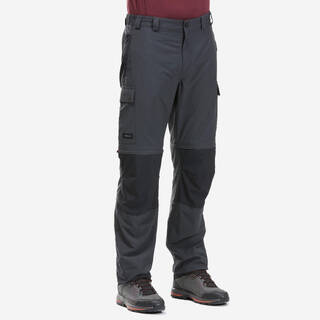
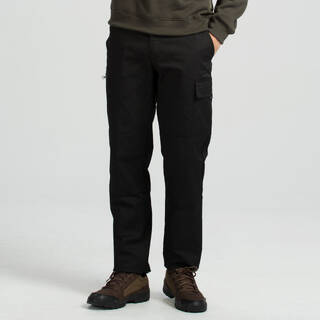

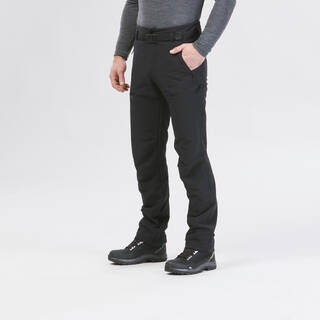
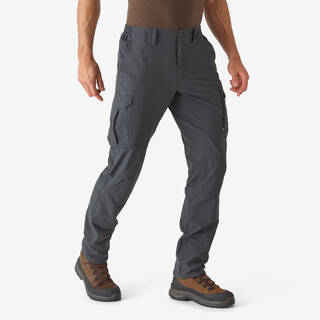
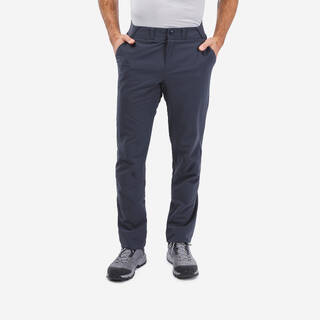
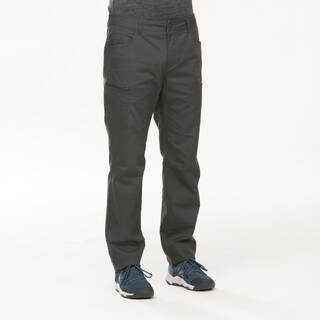
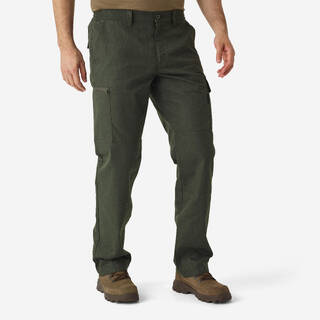

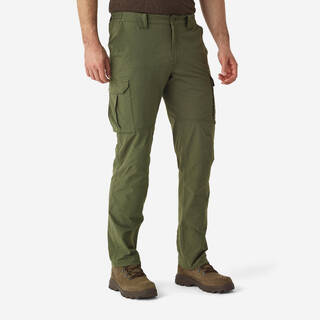
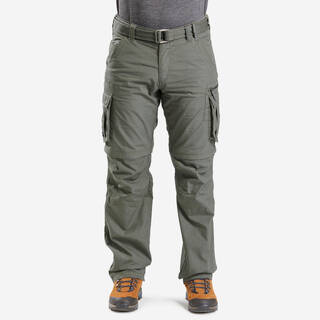
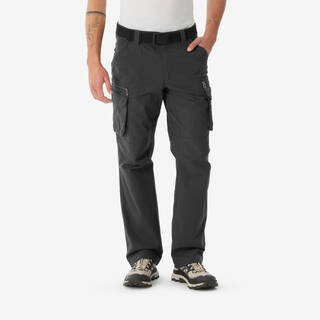
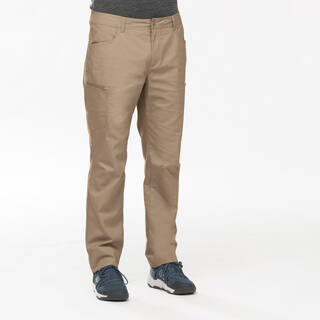

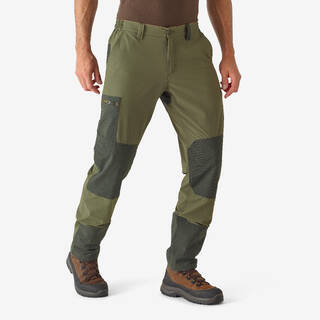

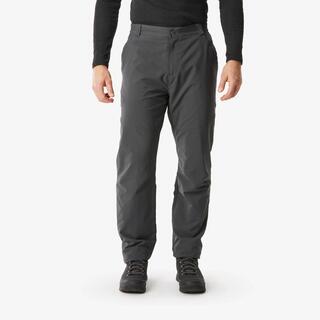

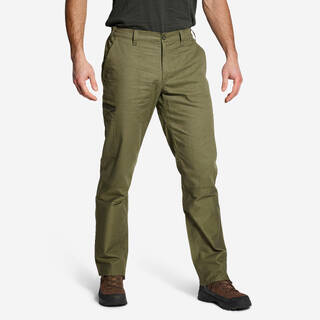
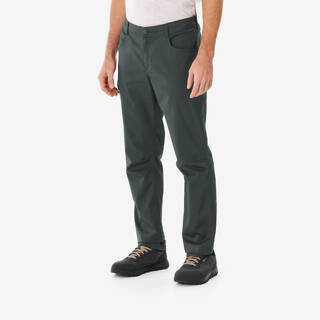

Ripstop Polyester and Stretch Nylon Construction for Multi-Terrain Indian Trekking
Men's trekking pants engineered for Indian Himalayan trails, Western Ghats monsoon routes, and high-altitude desert plateaus demand fabric architectures that resist abrasion, wick sweat, and maintain structural integrity across temperature swings. Quechua and Forclaz trekking pants deploy ripstop polyester weaves (typically 150D to 210D denier ratings) reinforced with nylon grid patterns that arrest tear propagation when snagged on granite outcrops, thorny scrub, or sharp limestone edges. This grid structure distributes tensile stress across multiple yarn intersections, preventing single-point failures common in plain-weave fabrics.
Stretch nylon blends (usually 88 to 92 percent polyamide with 8 to 12 percent elastane) deliver four-way mechanical stretch essential for high-step boulder scrambles, deep knee flexion during steep descents, and cross-body reaches on exposed ridgelines. Fabrics rated at 200 to 240 GSM balance durability with packability, compressing into 25 to 30 liter summit packs without excessive bulk. Reinforced knee panels and seat zones often incorporate double-layer ripstop or abrasion-resistant polyamide overlays rated to withstand 50,000+ Martindale cycles, critical for multi-day treks where pack weight and repeated rock contact accelerate wear.
Moisture management becomes non-negotiable during humid monsoon ascents in Uttarakhand or Karnataka, where relative humidity exceeds 85 percent and sweat evaporation stalls. Advanced wicking treatments pull perspiration from skin to fabric surface, where increased surface area accelerates vapor diffusion. Pants with DWR (Durable Water Repellent) coatings shed light rain and morning dew, maintaining fabric breathability while preventing saturation that adds pack weight and triggers evaporative cooling during high-altitude wind exposure.
Articulated Knee Construction and Gusseted Crotch Geometry for Biomechanical Range of Motion
Anatomical patterning separates functional trekking pants from casual outdoor wear. Articulated knees (pre-shaped three-dimensional curves sewn into the leg panels) align fabric grain with natural knee flexion arcs, eliminating fabric bunching behind the patella during sustained climbs. This ergonomic shaping reduces friction against skin, prevents chafing on 12 to 18 kilometer daily trekking distances, and maintains unrestricted blood flow to lower leg muscles during prolonged uphill exertion.
Gusseted crotch panels (diamond-shaped fabric inserts at the inseam intersection) expand the range of motion for wide-stance boulder steps, river crossings on unstable stones, and emergency scrambles requiring sudden lateral movements. Standard inseam cuts restrict hip abduction to roughly 30 degrees before fabric tension limits movement. Gusseted designs extend this range to 45+ degrees, critical when navigating off-trail sections or executing high steps onto ledges exceeding knee height. Flatlock or offset stitching along these high-friction zones prevents seam abrasion and pressure points that develop into hot spots during extended wear.
Adjustable waistbands with low-profile hook-and-loop closures or micro-ratchet belt systems accommodate layering variations (base layers in cold high-altitude starts, stripped down to single-layer during midday valley heat) and prevent downward sag when carrying loaded hip belts from 50 to 65 liter backpacks. Elastic waist inserts at the rear maintain comfort during seated rest breaks without creating pressure bands that restrict diaphragmatic breathing at elevations above 3,500 meters where oxygen saturation drops.
Cargo Pocket Configuration and Zippered Security for Multi-Day Expedition Utility
Functional cargo pockets transform trekking pants into mobile storage systems for navigation tools, energy gels, first-aid supplies, and communication devices. Quechua MH500 and Forclaz Trek 500 models integrate thigh-mounted cargo pockets with volumes ranging from 0.4 to 0.8 liters, sized to secure smartphones, GPS units, or 250ml water bottles without impeding leg swing during walking gait. Pocket placement 18 to 22 centimeters below the hip joint maintains load balance and prevents lateral sway that disrupts natural stride mechanics.
Zippered closures (typically YKK #5 coil zippers with reversed sliders) prevent gear loss during steep descents, river crossings, or sudden weather evacuations where open flap pockets shed contents. Internal mesh dividers or elastic loops organize small items like compass, whistle, fire starter, or electrolyte tablets, eliminating the need to dig through jumbled pocket contents during time-critical situations. Some models incorporate hidden zippered hip pockets for passport, permits, or currency during international treks crossing Nepal, Bhutan, or Ladakh border regions.
Ventilation zippers along outer thigh seams (typically 25 to 35 centimeters in length) function as adjustable cooling ports during high-exertion climbs in humid subtropical forests or sun-exposed alpine meadows. Opening these vents creates convective airflow that exhausts trapped heat and moisture without requiring full pant removal. Mesh-backed vents prevent insect entry while maintaining airflow, essential in leech-prone monsoon trekking zones across the Western Ghats or Northeast hill states.
Convertible Zip-Off Designs and Modular Layering for Variable Elevation Climate Zones
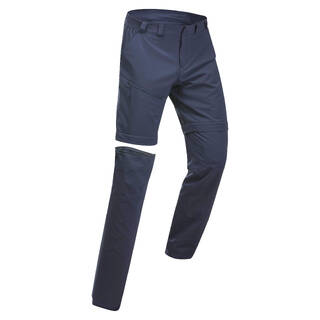
Convertible trekking pants with zip-off lower legs (transforming full-length pants into shorts via circumferential zippers positioned 8 to 12 centimeters above the knee) address the thermal variability encountered during single-day elevation gains exceeding 1,200 meters. Morning starts in cold base camps (temperatures 4 to 8 degrees Celsius) require full leg coverage, while midday valley sections (temperatures 22 to 28 degrees Celsius) demand ventilation to prevent hyperthermia and excessive fluid loss through sweating.
Zipper placement follows anatomical landmarks (typically the mid-patella line) to maintain fabric drape and prevent bunching when converted to shorts. Reinforced zipper tape and bar-tack stitching at stress points withstand repeated attachment/detachment cycles (rated for 200+ conversions) without tape separation or slider failure. The modular design reduces pack weight by eliminating the need to carry separate shorts, a critical advantage on lightweight fast-packing routes or ultra-distance treks where every 100 grams matters.
Full-length non-convertible models suit trekkers prioritizing maximum abrasion protection on technical routes with sustained rock contact, dense thorn scrub, or high-altitude UV exposure where skin protection outweighs ventilation needs. Ankle cuffs with drawcord adjustments or elastic inserts seal pant legs against boot tops, preventing debris entry, tick access, and heat loss during cold bivouacs. Some Forclaz models incorporate reinforced scuff guards at the inner ankle (Cordura or Kevlar patches) that resist damage from crampon contact during snow/ice crossings on Himalayan passes.
UPF 50+ Sun Protection and Thermal Regulation for High-Altitude Himalayan and Plateau Exposure
Ultraviolet radiation intensity increases approximately 10 to 12 percent per 1,000 meters of elevation gain due to reduced atmospheric filtering. At 4,000 meters (common on Ladakh, Spiti, or Sikkim treks), UV exposure can reach index levels of 11+, classified as extreme risk for unprotected skin. Trekking pants rated UPF 50+ block 98+ percent of UVA and UVB radiation, preventing sunburn, reducing long-term skin damage risk, and eliminating the need for repeated sunscreen application on legs (which creates slippery surfaces inside boots and attracts dust).
Fabric weave density and synthetic fiber composition determine UPF ratings. Tightly woven polyester or nylon fabrics with thread counts exceeding 180 threads per inch naturally block more UV than loose weaves. Some Quechua pants incorporate titanium dioxide or zinc oxide particles embedded in yarn during manufacturing, enhancing UV absorption without adding fabric weight or reducing breathability. Dark colors (navy, charcoal, olive) absorb more UV than light colors but also retain more solar heat, creating a trade-off between protection and thermal comfort in exposed high-desert environments.
Thermal regulation extends beyond moisture wicking to include reflective heat management. Light-colored fabrics (stone grey, sand, light khaki) reflect solar infrared radiation, reducing fabric surface temperatures by 8 to 12 degrees Celsius compared to black fabrics under identical sun exposure. This passive cooling reduces core body temperature rise during exposed ridge walks or glacier approaches where shade is absent for 6+ continuous hours. Conversely, darker fabrics provide better camouflage for wildlife photography treks and show less visible dirt accumulation during multi-day expeditions without washing facilities.
Reinforced Stitching Standards and Field Repair Compatibility for Extended Expedition Durability
Seam construction determines whether trekking pants survive a single season or endure 100+ trekking days across multiple years. Triple-needle felled seams (three parallel stitch lines enclosing raw fabric edges) along inseams and outseams distribute tensile loads across a wider zone, preventing single-thread failures that propagate into full seam separation. Stitch density of 12 to 16 stitches per inch balances strength with fabric flexibility, avoiding over-stitching that perforates fabric and creates weakness lines.
Bar-tack reinforcements (dense zigzag stitch blocks) at high-stress points like pocket corners, belt loops, and fly zipper terminations concentrate thread mass where localized forces peak during bending, sitting, or pack-weight transfer. These reinforcements typically use bonded nylon or polyester thread (tex 70 to tex 90 weight) with higher tensile strength than the base fabric, ensuring stitching outlasts fabric wear. Quality trekking pants position bar-tacks 6 to 8 millimeters inward from fabric edges to prevent thread pull-through under load.
Field repairability matters on remote multi-week expeditions where gear failure cannot be immediately replaced. Pants with standard YKK zippers allow replacement with universal spare sliders or zipper tape carried in repair kits. Ripstop fabric damage (small tears or punctures) can be temporarily sealed with adhesive ripstop repair patches or permanently sewn using curved needles and bonded thread. Avoid pants with proprietary closures, non-standard zipper gauges, or welded seams that require specialized tools or adhesives unavailable in remote Himalayan villages or base camps.
FAQ (Frequently Asked Questions)
Q1. What is the difference between trekking pants and cargos?
Trekking pants are designed specifically for outdoor activities like hiking and trekking, with features like reinforced knees, multiple pockets, and moisture-wicking fabrics. Cargos, on the other hand, are more versatile pants with a relaxed fit and additional pockets, suitable for both outdoor and casual wear.
Q2. Are Decathlon's trekking pants and cargos suitable for all seasons?
Yes, our collection includes options suitable for different seasons and weather conditions. We offer lightweight and breathable pants for warm weather, as well as insulated and water-resistant options for cooler or wet conditions.
Q3. Can I machine wash my trekking pants or cargos?
Yes, most of our trekking pants and cargos are machine washable. However, we recommend following the care instructions on the garment label for best results and to ensure longevity.
Q4. Do you offer trekking pants or cargos with sun protection?
Yes, we have several options in our collection that feature built-in UV protection, helping to shield your skin from harmful sun rays during outdoor activities.
Q5. Are your trekking pants and cargos suitable for rock climbing or bouldering?
While our trekking pants and cargos are designed for activities like hiking and trekking, some styles with reinforced knees and a gusseted crotch may be suitable for rock climbing or bouldering. However, for these activities, we recommend checking our dedicated rock climbing apparel collection for optimal performance and durability.
Q6. Can I exchange or return my trekking pants or cargos if they don't fit properly?
Absolutely! At Decathlon, we offer a hassle-free exchange or return policy to ensure you find the perfect fit. Simply visit your nearest Decathlon store or follow the online return process for a seamless experience.
Q7. Do you offer trekking pants or cargos in different inseam lengths?
Yes, we understand that finding the right inseam length is crucial for a comfortable fit. Our collection includes trekking pants and cargos in various inseam lengths to accommodate different heights and preferences.
Q8. Are your trekking pants and cargos suitable for travel?
Absolutely! Many of our trekking pants and cargos are designed with travel in mind, featuring quick-drying fabrics, multiple pockets for organization, and a comfortable fit for long journeys. They're perfect for adventurous travelers who want to stay comfortable and prepared.
Q9. Can I purchase Decathlon's trekking pants and cargos online?
Yes, you can conveniently browse and purchase our entire collection of men's trekking pants and cargos online at decathlon.in. Our website offers detailed product descriptions, sizing guides, and customer reviews to help you make an informed decision.
Q10. Do you offer any discounts or promotions on trekking pants and cargos?
At Decathlon, we frequently offer discounts, promotions, and special deals on our products, including trekking pants and cargos. Be sure to check our website or sign up for our newsletter to stay updated on the latest offers and savings.
Q11. What fabric weight (GSM) works best for year-round trekking across different Indian climate zones?
For versatile year-round use, target 200 to 240 GSM ripstop polyester or nylon blends. Lighter 150 to 180 GSM fabrics suit hot-season treks in Rajasthan, Gujarat, or coastal ranges but lack durability for rocky Himalayan routes. Heavier 260+ GSM pants provide maximum abrasion resistance for technical scrambles but retain excess heat during humid monsoon treks and add unnecessary pack weight for moderate trails.
Q12. How do I choose between convertible zip-off pants and full-length trekking pants for Himalayan treks?
Convertible pants excel on treks with large elevation variations (1,000+ meters daily gain/loss) where you encounter both cold morning starts and hot midday valleys, such as Markha Valley or Hampta Pass routes. Full-length pants suit high-altitude treks above 3,500 meters (Stok Kangri, Goechala) where temperatures remain cold throughout the day and maximum leg protection against UV, wind, and rock abrasion is prioritized over ventilation flexibility.
Q13. What denier rating should I look for in ripstop fabric for multi-day Himalayan trekking?
For sustained contact with granite, limestone, or basalt rock on technical Himalayan routes, target 180D to 210D ripstop polyester or nylon. Lower 100D to 150D fabrics suit lightweight fast-packing on established trails with minimal scrambling. Fabrics below 100D lack durability for Indian mountain environments where sharp rock and thorny vegetation accelerate abrasion wear, often failing within 5 to 8 trekking days of heavy use.
Q14. Do trekking pants need DWR coating for monsoon trekking in Western Ghats or Northeast regions?
Yes, DWR (Durable Water Repellent) coatings are essential for monsoon trekking where you encounter frequent light rain, morning dew, and high humidity. DWR causes water to bead and roll off fabric surfaces rather than saturating fibers, maintaining breathability and preventing the added weight of waterlogged fabric. Reapply DWR treatment every 15 to 20 trekking days or after 8 to 10 wash cycles to maintain effectiveness, as abrasion and repeated washing degrade the coating.
Q15. How should trekking pants fit to prevent chafing on long-distance treks of 15+ kilometers daily?
Proper fit requires a mid-rise waist that sits at or slightly below the navel without requiring a tight belt, articulated knees that align with your natural leg bend, and a gusseted crotch that allows 45+ degrees of hip abduction without fabric tension. Inseam length should allow the cuff to rest on the boot lacing area without dragging on the ground. Avoid overly tight fits that restrict blood flow during prolonged climbs or excessively loose fits that create friction folds behind the knees.
Q16. What is the difference between Quechua MH500 and Forclaz Trek 500 trekking pants?
Quechua MH500 pants target day hikers and weekend trekkers with moderate durability (160 to 180D ripstop), basic cargo pockets, and simplified construction for lower pack weight. Forclaz Trek 500 models are engineered for multi-day expeditions with heavier 200 to 210D ripstop, reinforced knee and seat panels, additional zippered pockets, and advanced articulation for technical terrain. Trek 500 pants typically add 80 to 120 grams but deliver significantly longer service life on abrasive Himalayan routes.
Q17. Can I wear trekking pants in hot desert environments like Ladakh or Spiti during summer?
Yes, but prioritize light-colored (stone, sand, light grey) fabrics in the 180 to 200 GSM range with maximum breathability and UPF 50+ sun protection. High-altitude deserts combine intense solar radiation with low humidity and cool air temperatures, requiring pants that block UV while allowing convective cooling. Models with thigh ventilation zippers provide critical heat dump capability during midday sun exposure on exposed trails where shade is unavailable for extended periods.
Q18. How do I maintain and wash trekking pants to preserve DWR coating and fabric integrity?
Wash trekking pants in cold water (below 30 degrees Celsius) using technical fabric detergent (avoid standard detergents with fabric softeners that clog DWR). Tumble dry on low heat or air dry away from direct sunlight to reactivate DWR coating. Reapply spray-on or wash-in DWR treatment every 8 to 10 washes or when you notice water no longer beads on the fabric surface. Avoid harsh scrubbing or wringing that damages ripstop grid structure and accelerates fabric wear.
Q19. What cargo pocket configuration is most functional for carrying trekking essentials without affecting gait?
Thigh-mounted cargo pockets positioned 18 to 22 centimeters below the hip joint with volumes of 0.4 to 0.6 liters provide optimal balance between storage and mobility. Pockets placed too low (below mid-thigh) swing excessively during walking and create gait interference. Zippered closures prevent gear loss during steep descents or scrambles. Internal mesh dividers or elastic loops organize small items like GPS, compass, or energy gels, eliminating the need to empty entire pockets to locate specific gear during time-critical situations.
Q20. Are reinforced knee and seat panels necessary for Indian trekking conditions?
Reinforced panels are essential for technical Himalayan routes involving sustained rock contact, boulder scrambles, or sitting on abrasive surfaces during rest breaks. Double-layer ripstop or Cordura overlays rated to 50,000+ Martindale abrasion cycles extend pant lifespan by 200 to 300 percent compared to single-layer construction. For gentle forest trails or established paths with minimal rock contact, standard single-layer construction suffices, reducing weight by 60 to 100 grams and improving packability for lightweight trekking approaches.