Shuttlecocks







Feather Shuttlecocks vs Nylon Shuttlecocks: Flight Trajectory, Durability, and Court Speed Dynamics
Feather shuttlecocks use 16 goose or duck feathers arranged in a conical skirt, delivering authentic aerodynamic drag and rapid deceleration after the apex of flight. The natural keratin structure creates micro-turbulence at the feather edges, producing the characteristic steep drop trajectory that advanced players rely on for net play precision and deceptive clears. Cork bases (typically 25mm diameter, 5 to 6 grams) provide consistent strike feedback, but feather shuttles degrade quickly under smash impacts exceeding 400 km/h, typically lasting 1 to 3 games in competitive play. High-humidity monsoon conditions accelerate feather brittleness, causing premature splitting along the quill shaft.
Nylon shuttlecocks substitute synthetic polyamide skirts for feather plumes, bonded to cork or composite foam bases. Nylon variants offer 10 to 15 times the durability of feather models, withstanding repeated smash impacts and surviving 20 to 40 games in recreational settings. Flight speed grades (slow, medium, fast) are controlled by skirt density and base weight, allowing altitude and temperature compensation. Nylon models maintain stable trajectories across India's wide temperature range (15°C hill stations to 45°C plains), but exhibit flatter parabolic flight paths with reduced deceleration, altering stroke timing for players transitioning from feather to synthetic play. Decathlon's Perfly nylon shuttles use precision-molded skirts with radial rib reinforcement, reducing wobble during high-speed rallies.
Perfly FSC 500 and FSC 960 Feather Shuttlecocks: Tournament-Grade Cork Bases and Goose Feather Grading
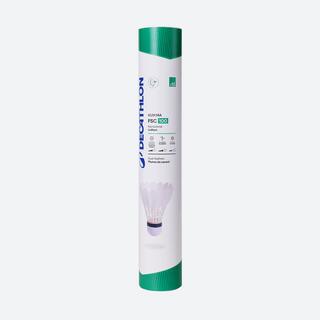
The Perfly FSC 500 feather shuttlecock uses grade A goose feathers (16-count symmetrical arrangement) with natural curvature uniformity within 0.3mm tolerance, ensuring stable spin-free flight. The 25mm Portuguese cork base (density 240 kg/m³) delivers consistent racket strike acoustics and rebound energy, critical for players reading shuttle speed off the strings. Base weight is calibrated to 4.9 to 5.1 grams, meeting BWF tournament specifications for sea-level play. Feather tips are hand-sorted for length consistency (62 to 70mm), and quills are reinforced with thread binding at the cork junction to delay splitting under repeated smash loading.
The FSC 960 model elevates feather quality to grade AA goose down, sourced from cold-climate geese with denser keratin structures. Feather wall thickness increases by approximately 15%, extending durability to 4 to 6 competitive games before noticeable flight degradation. The cork base incorporates a thin EVA shock-absorbing layer (1mm) at the racket contact zone, reducing harsh vibration on off-center hits. Both models are speed-graded (75, 76, 77) using base weight adjustments, allowing players to compensate for high-altitude venues like Bangalore (900m elevation) or hot coastal courts in Chennai. Store feather shuttles in humidity-controlled environments (50 to 60% RH) to prevent quill desiccation and premature cracking.
Perfly PSC 100 and PSC 500 Nylon Shuttlecocks: Injection-Molded Skirts and Multi-Game Resilience
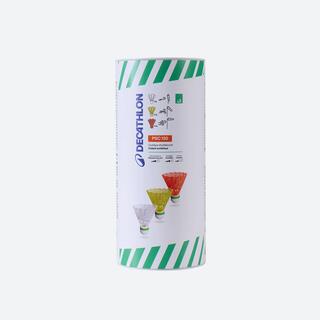
The Perfly PSC 100 nylon shuttlecock targets recreational and club-level play, using injection-molded polyamide 6.6 skirts with 16 radial ribs mimicking feather geometry. The skirt base diameter measures 66mm, tapering to a 6mm tip opening, creating aerodynamic drag coefficients close to feather models at speeds below 300 km/h. Cork composite bases (50% natural cork, 50% synthetic binder) reduce cost while maintaining strike feel. Skirt thickness averages 0.6mm, providing flex resilience across temperature swings. Expect 25 to 35 games of lifespan under moderate smash intensity (below 350 km/h), with gradual skirt deformation rather than catastrophic feather breakage.
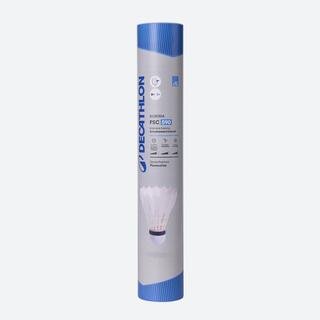
The PSC 500 upgrades to precision-molded nylon with tighter rib spacing (18 ribs instead of 16), improving lateral stability during cross-court drives. The cork base shifts to 100% natural Portuguese cork (same as FSC 500 feather models), delivering superior tactile feedback and acoustic response. Base weight tolerance tightens to ±0.1 grams, ensuring speed consistency across a dozen shuttles in a tube. UV-resistant additives in the nylon compound prevent skirt embrittlement under direct sunlight exposure on outdoor courts, a common issue in Indian summer conditions. The PSC 500 bridges the gap between feather authenticity and nylon durability, suitable for intermediate players refining stroke mechanics without the cost burden of frequent feather replacement.
Shuttle Speed Grading (75, 76, 77, 78): Altitude, Temperature, and Humidity Compensation for Indian Courts
Shuttle speed numbers (75, 76, 77, 78) indicate base weight in grains, directly controlling flight distance under standardized test conditions (strike from baseline at 45° angle, measuring landing distance). Lower numbers (75) produce slower, shorter flights suited to hot, low-altitude venues (sea level to 300m) where air density is high. Higher numbers (78) accelerate flight for cold, high-altitude courts (above 1000m elevation) where thin air reduces aerodynamic drag. A 76-speed shuttle at 25°C and sea level will travel approximately 8 to 10 meters farther than a 75-speed model under identical strike force.
Indian players must adjust speed selection across the country's extreme climate diversity. Coastal cities like Mumbai and Kolkata (high humidity, 30 to 35°C) require 75 or 76 speeds to prevent shuttles from flying long and disrupting baseline clears. Hill station venues like Shimla or Ooty (15 to 20°C, 1500 to 2200m elevation) demand 77 or 78 speeds to maintain proper court coverage. Monsoon humidity (above 80% RH) adds 2 to 3% weight to feather shuttles through moisture absorption, effectively slowing flight by half a speed grade. Store shuttles in sealed tubes with silica gel packets, and allow 30 minutes of acclimatization to court temperature before match play to stabilize skirt rigidity and base weight.
Shuttlecock Maintenance and Storage: Extending Feather Lifespan and Preserving Nylon Skirt Geometry
Feather shuttlecocks require humidity management to prevent quill brittleness. Store tubes vertically (feathers pointing up) in a cool, dry space (18 to 24°C, 50 to 60% RH). Before play, lightly steam the feather skirt for 10 to 15 seconds using a kettle or humidifier, rehydrating the keratin fibers to restore flexibility. This pre-play conditioning reduces feather breakage during the first few rallies. Avoid refrigeration, which causes condensation and accelerates cork base delamination. Rotate shuttles every 2 to 3 games, allowing damaged models to rest while feathers partially recover shape memory.
Nylon shuttlecocks tolerate wider storage conditions but degrade under prolonged UV exposure and extreme heat (above 50°C). Store away from direct sunlight and car trunks during summer months. Inspect skirt ribs for micro-cracks after 15 to 20 games, as hairline fractures propagate into full rib separation, causing erratic flight wobble. Gently reshape deformed nylon skirts by briefly dipping in 60°C water for 5 seconds, then air-cooling to reset molecular alignment. Cork bases on both feather and nylon models can be rejuvenated by light sanding (220-grit paper) to remove surface glazing, restoring grip texture for consistent racket contact. Replace shuttles immediately if the base separates from the skirt or if flight trajectory deviates more than 0.5 meters from the expected landing zone during warm-up rallies.
Choosing Shuttlecocks for Beginner, Intermediate, and Advanced Play: Matching Shuttle Quality to Skill Progression
Beginner players (first 6 to 12 months) benefit from durable nylon shuttlecocks like the Perfly PSC 100, which tolerate off-center hits and mishit impacts without immediate failure. The extended lifespan (25 to 35 games) allows new players to focus on footwork and grip fundamentals without the distraction of frequent shuttle replacement. Nylon's flatter flight trajectory also provides a more forgiving margin for timing errors, building confidence in baseline clears and net drops. Avoid feather shuttles at this stage, as the rapid degradation and higher skill requirement for trajectory reading create unnecessary frustration and expense.
Intermediate players (1 to 3 years of regular play) should transition to premium nylon models like the PSC 500 or entry-level feather shuttles (FSC 500) to develop stroke precision and deception skills. Feather shuttles teach players to read the steeper deceleration curve, essential for advanced net play and tight drop shots. Alternate between nylon and feather during practice sessions, using nylon for endurance drills and feather for tactical shot-making routines. Advanced and competitive players (tournament level) must train exclusively with feather shuttles matching their competition standards, typically FSC 960 or equivalent BWF-approved models. The authentic flight physics and rapid feedback on technique flaws (wobble from poor contact, early deceleration from weak clears) are irreplaceable for elite skill refinement. Budget 1 feather shuttle per game for tournament preparation, and maintain a reserve stock of 3 to 5 tubes for consistent training quality.
FAQ (Frequently Asked Questions)
Q1. What is the main difference between feather and nylon shuttlecocks for badminton play?
Feather shuttlecocks use 16 natural goose or duck feathers with cork bases, providing steep deceleration and authentic flight trajectory preferred by advanced players, but they last only 1 to 3 games. Nylon shuttlecocks use synthetic polyamide skirts, offering 10 to 15 times greater durability (20 to 40 games) with flatter flight paths, ideal for recreational play and practice sessions.
Q2. How do I choose the correct shuttle speed (75, 76, 77, 78) for my local court conditions in India?
Shuttle speed numbers indicate base weight, controlling flight distance. Use 75 or 76 speeds for hot, low-altitude coastal cities (Mumbai, Chennai) where high air density slows flight. Use 77 or 78 speeds for cold, high-altitude venues (Bangalore, hill stations above 1000m) where thin air reduces drag. Monsoon humidity effectively slows shuttles by half a speed grade.
Q3. How long do Perfly feather shuttlecocks last compared to nylon models?
Perfly FSC 500 feather shuttlecocks last 1 to 3 competitive games before feather splitting degrades flight quality, while FSC 960 models extend to 4 to 6 games with grade AA goose feathers. Perfly PSC 100 nylon shuttles survive 25 to 35 games, and PSC 500 nylon models offer similar durability with improved flight stability and cork base feedback.
Q4. Should I use feather or nylon shuttlecocks as a beginner learning badminton?
Beginners should start with nylon shuttlecocks like the Perfly PSC 100, which tolerate off-center hits and last 25 to 35 games, allowing focus on footwork and grip fundamentals. Transition to feather shuttles (FSC 500) after 1 to 2 years of regular play to develop stroke precision and learn the steeper deceleration trajectory required for advanced net play.
Q5. How does monsoon humidity affect shuttlecock performance and storage in India?
Monsoon humidity above 80% adds 2 to 3% weight to feather shuttlecocks through moisture absorption, slowing flight by approximately half a speed grade and accelerating feather brittleness. Store shuttles in sealed tubes with silica gel packets at 50 to 60% relative humidity, and allow 30 minutes of court acclimatization before play to stabilize skirt rigidity.
Q6. Can I restore or extend the lifespan of damaged feather shuttlecocks?
Lightly steam feather shuttles for 10 to 15 seconds before play to rehydrate keratin fibers and reduce breakage. Rotate shuttles every 2 to 3 games to allow partial shape recovery. Sand cork bases with 220-grit paper to restore grip texture. Replace shuttles immediately if feathers split beyond 3 to 4 quills or if flight deviates more than 0.5 meters from expected trajectory.
Q7. What is the difference between Perfly FSC 500 and FSC 960 feather shuttlecocks?
FSC 500 uses grade A goose feathers with 62 to 70mm length consistency and Portuguese cork bases, lasting 1 to 3 games. FSC 960 upgrades to grade AA goose feathers with 15% thicker keratin walls and a 1mm EVA shock-absorbing layer in the cork base, extending durability to 4 to 6 games and reducing harsh vibration on off-center hits.
Q8. Why do nylon shuttlecocks have a flatter flight path than feather shuttles?
Nylon skirts lack the micro-turbulence created by natural feather edges, reducing aerodynamic drag and producing flatter parabolic trajectories with slower deceleration after the apex. Feather shuttles generate rapid deceleration due to keratin fiber texture, creating the steep drop essential for advanced net play and deceptive clears.
Q9. How should I store shuttlecocks to prevent damage in hot Indian summer conditions?
Store shuttlecocks in sealed tubes away from direct sunlight and temperatures above 50°C to prevent nylon skirt embrittlement and feather quill desiccation. Keep tubes vertically (feathers up) in cool, dry spaces at 18 to 24°C and 50 to 60% relative humidity. Avoid car trunks and outdoor storage during summer months.
Q10. Are Perfly nylon shuttlecocks suitable for outdoor badminton courts?
Perfly PSC 500 nylon shuttlecocks include UV-resistant additives to prevent skirt embrittlement under direct sunlight, making them suitable for outdoor play. However, wind conditions above 10 km/h severely disrupt shuttle trajectories regardless of material type. For consistent play, indoor courts with controlled air circulation are strongly recommended for both feather and nylon models.