Sports Caps & Hats







Engineered Sports Caps for High-UV Indian Conditions and Sweat Management
Sports caps in India face extreme UV exposure, high-humidity sweat saturation, and rapid thermal heat buildup. Decathlon's range addresses these through technical fabric engineering and ventilation architecture. Caps designed for running, cycling, hiking, and tennis integrate moisture-wicking polyester blends (typically 100-140 GSM) with laser-cut perforations or engineered mesh panels positioned at crown hotspots. This accelerates evaporative cooling during sustained aerobic output. UPF 50+ rated fabrics block 98% of UVA and UVB radiation, critical for athletes training in open sun across coastal plains, Himalayan plateaus, and urban concrete environments.
Brim construction varies by sport biomechanics. Running caps from Kalenji feature lightweight, semi-rigid visors (40-50mm projection) that shield eyes without adding frontal weight during head oscillation. Cycling caps under Triban and Van Rysel use shorter, aerodynamic brims compatible with helmet integration. Hiking caps from Quechua and Forclaz employ wider, foldable brims (70-90mm) with reinforced stitching for pack compression and trail durability. Adjustable rear closures (hook-and-loop straps, elastic drawcords, or snapback systems) accommodate different head circumferences (typically 54-62cm) and allow fine-tuning for secure fit during high-impact lateral movements in tennis or trail running.
Sweatband engineering is critical for Indian monsoon and summer training. Internal terry cotton or microfiber sweatbands (8-12mm width) absorb forehead perspiration before it reaches eyes. Some models integrate hydrophobic outer shells with hydrophilic inner linings, creating a moisture gradient that pulls sweat away from skin and disperses it across a larger evaporative surface area. This prevents the salt-sting and vision obstruction common in high-output cardio sessions. Caps designed for multi-day trekking or ultra-distance events include antimicrobial treatments (silver ion or zinc pyrithione finishes) that inhibit odor-causing bacterial growth in humid storage conditions.
Kalenji and Kiprun Caps for Road Running and Track Training
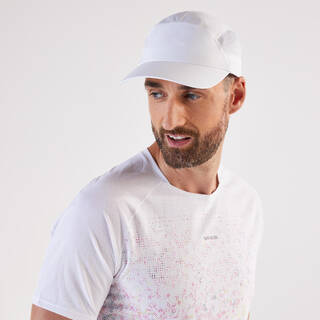
Kalenji caps prioritize minimal weight and maximum breathability for road runners logging high weekly mileage on Indian asphalt and concrete. Typical construction uses ripstop polyester (100-115 GSM) with four to six laser-cut ventilation ports positioned at frontal and lateral crown zones. This creates cross-flow ventilation that reduces scalp temperature by 2 to 3 degrees Celsius compared to solid-panel designs. The lightweight build (35-50 grams) prevents neck fatigue during long runs, while reflective logos and rear strips enhance low-light visibility for early morning or evening training sessions common in Indian cities to avoid midday heat.
Kiprun caps target competitive runners and marathon trainees requiring aerodynamic profiling and race-day performance. These models feature lower-profile crowns that reduce wind resistance at sustained paces above 12 km/h. Moisture management integrates dual-layer construction: an outer polyester shell (120-140 GSM) for structural integrity and UV protection, paired with an inner mesh lining that creates an air gap for thermal insulation. Elastic rear bands with silicone grip strips prevent upward migration during high-cadence running. Some Kiprun models include detachable neck flaps (sold separately or integrated) for ultra-distance events in exposed terrain, providing occipital sun protection without compromising frontal aerodynamics.
Quechua and Forclaz Hiking Caps for Multi-Day Trekking and Mountain Exposure
Quechua trekking caps address the dual challenge of intense UV exposure at altitude and unpredictable weather transitions in Himalayan and Western Ghats environments. Wide-brim designs (70-90mm projection) provide 360-degree sun coverage for face, ears, and neck. Fabric choices include ripstop polyester (140-180 GSM) with durable water repellent (DWR) coatings that shed light rain and morning dew. Chin straps with cord-lock adjusters secure caps during high-wind ridge crossings, preventing loss in gusts exceeding 40 km/h. Packability is engineered through flexible brim wire or foldable construction, allowing caps to compress into backpack side pockets without permanent creasing.
Forclaz caps for technical alpine trekking and fast-packing integrate advanced material layering. Some models use nylon-polyester blends (160-200 GSM) with reinforced stitching at stress points (brim attachment, crown seams) to withstand repeated pack compression and branch abrasion on overgrown trails. Ventilation balances sun protection with cooling: mesh crown panels or eyelets positioned under brim overhangs allow heat escape while maintaining UV blockage. Rear adjustment systems include elastic drawcords with barrel locks, enabling one-handed tightening when wearing gloves during high-altitude cold-weather ascents. Forclaz caps often feature removable or stowable neck capes (legionnaire-style) that deploy for extended sun exposure on glacier approaches or desert treks.
Triban and Van Rysel Cycling Caps for Road and Gravel Riding
Cycling caps serve dual functions: helmet liner for sweat management and standalone headwear for pre-ride or recovery. Triban caps use traditional cycling cap geometry with short, stiffened visors (30-40mm) that fit under road helmets without interfering with retention systems. Lightweight cotton-polyester blends (100-120 GSM) provide breathability during high-output climbs, while the close-fitting crown prevents fabric bunching against helmet padding. Four-panel or six-panel construction creates a contoured fit that stays in place during aggressive out-of-saddle efforts. Sweatbands channel perspiration away from eyebrows, critical for maintaining clear vision on technical descents.
Van Rysel caps target performance-oriented cyclists requiring aerodynamic optimization and moisture control during long endurance rides or gravel events. These models integrate hydrophobic outer fabrics with mesh crown inserts, creating ventilation channels that align with helmet vents for enhanced airflow. Some designs feature extended rear panels that provide occipital coverage under helmet rear cradles, preventing sunburn on exposed neck areas during long days in the saddle. Reflective detailing on visors and side panels improves visibility during early morning group rides. The lightweight build (25-40 grams) ensures zero perceptible weight penalty, while quick-drying properties allow caps to function as post-ride recovery wear after washing.
Artengo and Perfly Caps for Racket Sports and Court Performance
Tennis and badminton caps must balance sun protection with unrestricted head mobility during rapid directional changes and overhead shots. Artengo tennis caps use curved visors (50-60mm) that shield eyes from high sun angles without limiting upward vision during serve tosses or lob tracking. Moisture-wicking polyester (120-140 GSM) with mesh side panels accelerates sweat evaporation during multi-set matches in open-court heat. Elastic rear bands with Velcro closures allow quick adjustments between games, while the secure fit prevents cap displacement during explosive lateral movements and emergency slides on hard courts.
Perfly badminton caps prioritize lightweight construction and minimal frontal obstruction for indoor court play. Shorter visors (35-45mm) reduce peripheral vision interference during net play and smash returns. Breathable mesh panels cover 40 to 50 percent of crown surface area, addressing the high thermal load generated in enclosed indoor facilities with limited air circulation. Sweatbands use microfiber blends that absorb moisture rapidly, preventing drips during long rallies. The low-profile design ensures caps remain stable during jump smashes and quick overhead clears, while antimicrobial treatments manage odor in humid storage conditions between training sessions.
Material Durability and Maintenance for Indian Training Environments
Sports caps in India endure harsh conditions: high-UV degradation, salt-laden coastal humidity, dust accumulation on urban roads, and frequent washing cycles. Fabric durability depends on polyester denier ratings and weave density. Caps using 150D to 200D ripstop polyester resist tearing from branch snags during trail running or backpack abrasion during multi-day treks. Flatlock or offset stitching at seams prevents irritation during prolonged wear and increases structural integrity under repeated stress. DWR coatings maintain water-shedding properties through 20 to 30 wash cycles when cleaned with non-detergent soap, critical for monsoon training periods.
Maintenance protocols extend cap lifespan and preserve technical properties. Hand washing in cold water with mild detergent prevents fabric breakdown and color fading from harsh chemicals. Air drying away from direct sunlight preserves elastic integrity in rear bands and prevents UV-induced fiber brittleness. Caps with removable sweatbands allow separate cleaning, reducing bacterial buildup and odor retention. Storage in ventilated areas (not compressed in gym bags) maintains brim shape and prevents mildew growth in humid climates. Periodic reproofing with DWR spray restores water repellency on hiking caps after extended use, ensuring continued performance in variable weather conditions.
FAQ (Frequently Asked Questions)
Q1. What materials are Decathlon's sports caps and hats made from?
Decathlon's sports caps and hats are crafted from a variety of high-quality materials, including moisture-wicking polyester, breathable nylon, and classic cotton. We carefully select the materials based on their performance characteristics and suitability for different sports and activities.
Q2. Do Decathlon's caps and hats offer sun protection?
Yes, many of our sports caps and hats are designed with sun protection in mind. We offer options with built-in UV protection, wide brims, and moisture-wicking fabrics to keep you cool and protected from harmful UV rays during outdoor activities.
Q3. Can I customize or personalize Decathlon's sports caps and hats?
Absolutely! We offer a range of customization options, including embroidery and printing services, allowing you to personalize your cap or hat with team logos, names, or other designs. Contact your local Decathlon store or visit our website for more information on customization options.
Q4. Are Decathlon's sports caps and hats adjustable for a perfect fit?
Yes, many of our caps and hats feature adjustable straps, velcro closures, or elastic bands to ensure a comfortable and secure fit. These adjustable features allow you to customize the fit to your head size and preference, ensuring your headwear stays in place during even the most intense activities.
Q5. Can I machine wash Decathlon's sports caps and hats?
Most of our sports caps and hats are machine-washable, but it's always best to check the care label for specific instructions. In general, we recommend washing them on a gentle cycle with mild detergent and air-drying them to prevent shrinkage or damage.
Q6. Do Decathlon's sports caps and hats come in different sizes?
Yes, we offer sports caps and hats in various sizes to accommodate different head shapes and sizes. Our size range typically includes options like small, medium, large, and extra-large. Be sure to consult our size charts or seek assistance from our knowledgeable staff to find the perfect fit.
Q7. Can I return or exchange Decathlon's sports caps and hats if they don't fit properly?
Absolutely! At Decathlon, we want you to be completely satisfied with your purchase. If your sports cap or hat doesn't fit as expected, you can return or exchange it within a reasonable timeframe, subject to our return and exchange policy. Please refer to our website or speak with a store associate for more details.
Q8. Do Decathlon's sports caps and hats come with any warranties or guarantees?
Yes, all Decathlon products, including our sports caps and hats, come with a warranty against manufacturing defects. The duration and terms of the warranty may vary depending on the specific product. Please refer to the product information or speak with a store associate for more details on the warranty coverage.
Q9. Can I purchase Decathlon's sports caps and hats online?
Yes, you can conveniently shop for our entire collection of sports caps and hats online at www.decathlon.in. Our website offers detailed product descriptions, size guides, and customer reviews to help you make an informed purchase from the comfort of your home.
Q10. What is the difference between running caps and hiking caps in terms of design and functionality?
Running caps prioritize minimal weight (35-50 grams), aerodynamic profiling, and maximum ventilation through laser-cut ports or mesh panels for high-output road training. Hiking caps use wider brims (70-90mm vs 40-50mm), heavier ripstop fabrics (140-180 GSM vs 100-115 GSM), and often include chin straps or neck capes for extended sun exposure and wind resistance during multi-day treks. Running caps focus on sweat management and visibility, while hiking caps emphasize all-weather durability and comprehensive UV protection.
Q11. How do I choose the right cap size for a secure fit during high-intensity sports?
Measure head circumference at the widest point (typically 2cm above eyebrows) using a flexible tape measure. Most Decathlon caps accommodate 54 to 62cm through adjustable rear closures (Velcro straps, elastic drawcords, or snapback systems). For running and racket sports, choose caps with elastic rear bands that provide snug contact without pressure points. For cycling, ensure the cap fits smoothly under your helmet without bunching, testing fit during head tilts and aggressive movements before committing to training use.
Q12. Can sports caps provide adequate sun protection for long-duration outdoor training in Indian summer heat?
Yes, caps with UPF 50+ rated fabrics block 98% of UVA and UVB radiation, significantly reducing facial and scalp sun exposure. Wide-brim hiking caps (70-90mm projection) provide superior coverage for ears and neck compared to running caps (40-50mm). However, caps alone do not protect all exposed skin. Combine cap use with sunscreen on face, neck, and arms, and consider caps with removable neck flaps for ultra-distance events or high-altitude trekking where UV intensity increases by 10 to 12 percent per 1000 meters of elevation gain.
Q13. How effective are mesh panels and ventilation ports in reducing head temperature during monsoon humidity?
Mesh panels and laser-cut ventilation ports create cross-flow airflow that reduces scalp temperature by 2 to 3 degrees Celsius compared to solid-panel caps. During monsoon humidity (80 to 95 percent relative humidity), evaporative cooling becomes less efficient, but ventilation still expels trapped hot air from the crown. Caps with dual-layer construction (outer shell plus inner mesh lining) create air gaps that prevent direct fabric-to-skin contact, improving comfort. Choose caps with at least four ventilation zones positioned at frontal and lateral crown hotspots for optimal airflow during high-humidity training.
Q14. Are Decathlon sports caps machine washable, and how do I maintain water-repellent coatings?
Most Decathlon sports caps tolerate machine washing on gentle cycles (cold water, mild detergent), but hand washing extends fabric lifespan and preserves elastic integrity. DWR coatings on hiking caps maintain effectiveness through 20 to 30 washes with non-detergent soap. After extended use, reproofing with DWR spray restores water-shedding properties. Always air dry caps away from direct sunlight to prevent UV-induced fiber degradation and elastic breakdown. Remove and separately wash sweatbands if detachable to reduce bacterial buildup and odor retention in humid storage conditions.
Q15. What cap features are essential for early morning or evening runs in low-light urban conditions?
Reflective logos, side strips, or rear panels that catch vehicle headlights are critical for visibility during dawn and dusk training. Kalenji and Kiprun running caps integrate reflective elements positioned at multiple angles (frontal logo, side panels, rear band) to maximize 360-degree detection. Lightweight construction (35-50 grams) and secure elastic rear bands prevent cap displacement during high-cadence running. Moisture-wicking sweatbands prevent vision obstruction from sweat drips, maintaining clear sightlines for navigating traffic and uneven pavement in low-light conditions.
Q16. Can cycling caps be worn under helmets without causing discomfort or fit issues?
Yes, cycling caps from Triban and Van Rysel are specifically designed as helmet liners with short visors (30-40mm) and low-profile crowns that fit smoothly under retention systems. Four-panel or six-panel construction creates contoured shapes that prevent fabric bunching against helmet padding. Test fit by wearing the cap under your helmet and performing aggressive head movements (side-to-side, up-down) to ensure no pressure points or shifting. The cap should channel sweat away from eyebrows without interfering with helmet stability or ventilation alignment.
Q17. How do I prevent cap brims from losing shape after repeated packing during trekking trips?
Choose hiking caps with flexible brim wire or foldable construction designed for pack compression. When packing, fold brims along their natural crease lines rather than forcing random bends. Store caps in external backpack pockets or top compartments rather than compressing them under heavy gear. After unpacking, reshape brims by gently bending wire back to original curvature or allowing fabric to relax in open air. Quechua and Forclaz caps use reinforced stitching at brim attachment points to withstand repeated folding cycles without permanent deformation or structural failure.
Q18. What is the advantage of caps with removable or stowable neck flaps for high-altitude trekking?
Removable neck flaps (legionnaire-style) provide occipital and lateral neck sun protection during extended exposure on glacier approaches, desert treks, or alpine ridges where UV intensity increases significantly with elevation. These flaps deploy when needed and stow or detach for shaded forest sections or camp use, offering versatility without carrying separate sun protection gear. Forclaz caps integrate these features with lightweight fabric (100-120 GSM) that adds minimal weight penalty. The modular design allows customization based on terrain and weather, reducing pack bulk while maintaining comprehensive UV coverage.
Q19. Do antimicrobial treatments in sweatbands actually reduce odor during multi-day training or trekking?
Yes, antimicrobial treatments using silver ion or zinc pyrithione finishes inhibit bacterial growth that causes odor in sweat-saturated fabrics. These treatments remain effective through 30 to 50 wash cycles when cleaned with mild detergent. During multi-day treks or training blocks without daily washing, antimicrobial sweatbands significantly reduce odor buildup compared to untreated cotton. However, proper drying between uses (hanging in ventilated areas, not storing damp in closed bags) is equally important. Caps with removable sweatbands allow separate cleaning and faster drying, further improving hygiene in humid Indian climates.