Squash Balls

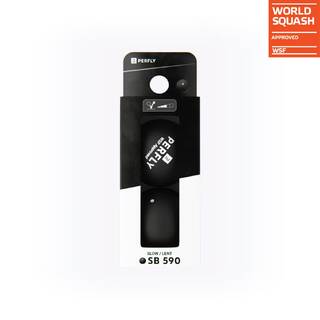
Rubber Compound Composition and Bounce Retention Across Humidity Levels
Squash ball performance hinges on precise rubber compound formulations engineered to deliver controlled rebound characteristics under variable thermal and humidity conditions. Decathlon squash balls utilize natural rubber blends with specific Shore A durometer ratings that govern compression resistance and energy return. The yellow double-dot competition ball maintains a Shore A hardness of approximately 60-65, requiring extended rally warm-up to achieve optimal playing temperature of 45-50°C for consistent 12-15% rebound height off a standard court wall. Single yellow dot variants reduce hardness to 55-60 Shore A, enabling faster warm-up cycles suited to intermediate players and air-conditioned Indian club environments where ambient temperatures hover around 18-22°C.
Indian squash courts experience significant humidity fluctuations, particularly during monsoon months when relative humidity exceeds 80%. Rubber compounds absorb atmospheric moisture, which can alter internal air pocket pressure and dampen rebound consistency. Competition-grade balls feature vulcanized rubber shells with minimal porosity, limiting moisture ingress to under 2% mass gain over a 90-minute match. Blue and red dot progression balls incorporate slightly softer compounds (50-55 Shore A) with larger internal diameters, generating 15-20% higher rebound ratios at lower kinetic energy thresholds. This construction allows beginners to sustain rallies without requiring the high racket head speeds and precise impact timing demanded by double-dot balls. Court surface temperature directly affects bounce dynamics. Concrete-backed wooden sprung floors in metro clubs retain heat better than synthetic polyurethane surfaces common in newer facilities, influencing ball selection based on venue infrastructure.
Dot Color Progression System and Impact Force Attenuation
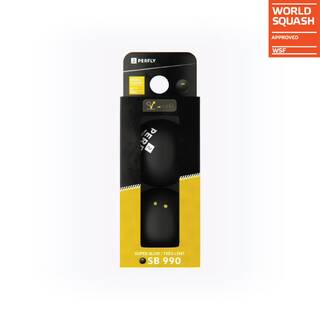
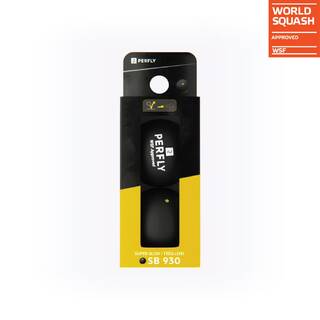
The World Squash Federation standardizes ball speed classifications through a color-coded dot system that correlates to rebound velocity and hang time. Double yellow dot balls generate the slowest rebound, requiring players to impart greater racket acceleration and achieve ball surface temperatures above 45°C through sustained rallies. These balls suit advanced players capable of generating racket head speeds exceeding 120 km/h, with stroke mechanics that compress the ball against the front wall for controlled placement. Single yellow dot balls offer 10-12% faster rebound speeds, reducing the warm-up period to approximately 3-5 minutes of moderate-intensity rallies. Green dot (super slow) and white dot (extra slow) variants exist for high-altitude venues above 1500 meters, where reduced atmospheric pressure increases natural ball velocity.
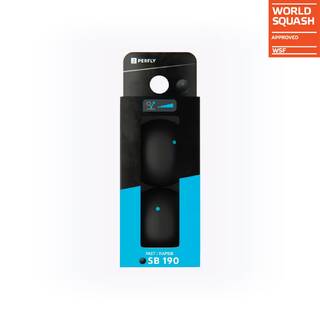
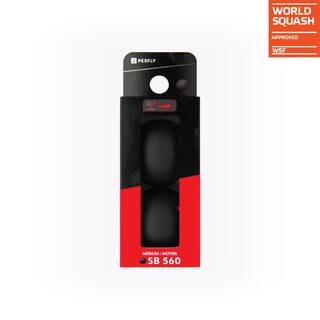
Blue dot balls serve as the primary training tool for intermediate players transitioning from recreational to competitive play. The increased rebound height (approximately 18-22% off a cold wall strike) allows players to develop footwork patterns, swing paths, and court positioning without the physical demands of sustaining extended rallies with slower balls. Red dot balls provide the highest rebound ratio, ideal for junior players aged 8-14 years developing fundamental stroke mechanics. Impact force attenuation differs across dot ratings. Double yellow balls compress 15-18% under a 25 kg strike force, absorbing kinetic energy that would otherwise transfer to wrist and elbow joints. Softer blue and red dot balls compress 20-25% under identical force loads, reducing joint stress but sacrificing the precision control required for advanced shot-making. Players recovering from wrist tendinitis or elbow inflammation benefit from temporary progression to single yellow or blue dot balls, reducing repetitive strain while maintaining court time.
Seam Construction and Aerodynamic Stability Through Rally Exchanges
Squash ball manufacturing employs two-hemisphere molding with precision-aligned seams that influence aerodynamic drag and rotational stability during high-velocity exchanges. Competition balls feature offset seam placement with less than 0.3mm protrusion height, minimizing turbulent air separation that causes erratic flight paths during cross-court drives exceeding 100 km/h. The seam orientation affects spin retention. Balls struck with heavy topspin or slice generate Magnus force perpendicular to the flight path, with seam irregularities amplifying or dampening rotational decay rates. Decathlon squash balls undergo seam smoothness testing to ensure less than 5% deviation in lateral drift over a 10-meter flight path at 80 km/h velocity.
Seam durability determines ball lifespan under repetitive wall impacts. Each front wall strike subjects the seam junction to shear forces approaching 200-300 Newtons, concentrated over a contact patch measuring 8-12mm in diameter. Vulcanized rubber seams bonded at 140-160°C provide tensile strength exceeding 8 MPa, resisting delamination through 500-700 impact cycles before visible separation occurs. Players notice performance degradation when seam separation exceeds 1mm, allowing air pocket deformation that reduces rebound consistency by 8-12%. Indian club players rotating through 2-3 balls per session extend individual ball life by allowing rest periods between games, permitting rubber compounds to recover elastic properties and internal air pressure to stabilize. Storing balls in climate-controlled environments (20-25°C, 40-50% relative humidity) prevents premature hardening or softening that alters dot rating performance characteristics.
Internal Pressure Dynamics and Altitude Compensation Factors
Squash balls contain a sealed internal air cavity maintained at near-atmospheric pressure during manufacturing. The rubber shell thickness (typically 3.5-4.2mm for competition balls) provides structural rigidity while allowing controlled deformation under impact loads. As ball temperature increases through rally friction and wall impacts, internal air pressure rises according to Gay-Lussac's Law, with a 20°C temperature increase generating approximately 7-8% pressure gain. This thermal expansion reduces shell compression depth, increasing rebound velocity and providing the characteristic "livelier" feel of a warmed-up ball. Players in high-altitude Indian cities like Bangalore (920 meters elevation) or Pune (560 meters) experience marginally faster ball speeds due to reduced atmospheric pressure differential across the rubber shell.
Extreme altitude venues above 2000 meters require specialized high-altitude balls with reinforced shell construction to compensate for reduced external atmospheric resistance. Standard double yellow dot balls at these elevations exhibit rebound characteristics similar to single yellow dots at sea level, necessitating dot rating adjustments. Conversely, coastal venues in Mumbai, Chennai, or Kochi at sea level provide maximum atmospheric resistance, slowing ball flight and requiring higher player energy output to achieve equivalent shot depth. Internal pressure loss through microscopic rubber porosity occurs gradually, with competition balls losing approximately 2-3% pressure per month under storage conditions. This degradation manifests as reduced bounce height and softer impact feel, signaling replacement necessity for competitive match play. Recreational players tolerate higher pressure loss thresholds, extending ball usage to 15-20 playing hours before noticeable performance decline.
Match Ball Selection for Indian Court Surfaces and Climate Zones
Indian squash facilities span diverse construction standards, from international-specification glass-back show courts to converted badminton halls with temporary front walls. Court surface composition dramatically affects ball interaction dynamics. Traditional hardwood maple floors with sprung substructures (common in established clubs across Delhi, Mumbai, and Kolkata) provide consistent thermal retention, warming balls efficiently through floor friction during lateral movement. Synthetic polyurethane surfaces installed in newer facilities offer superior grip and joint cushioning but exhibit lower thermal conductivity, requiring 2-3 additional minutes of warm-up rallies to achieve optimal ball temperature. Concrete-backed courts without sprung systems transmit higher impact shock loads to players' joints while rapidly heating balls through increased surface friction coefficients.
Regional climate variations necessitate strategic ball selection. Northern India experiences winter temperatures dropping to 5-10°C in unheated facilities, where even red dot balls struggle to achieve adequate bounce without extended warm-up periods. Players in these conditions benefit from starting matches with blue or single yellow dot balls, transitioning to double yellow dots only after 10-15 minutes of play. Southern coastal regions maintain year-round temperatures of 25-35°C with high humidity, where double yellow dot balls reach playing temperature within 3-5 minutes but require frequent toweling to remove surface moisture that reduces grip friction. Air-conditioned tournament venues stabilize conditions at 18-20°C, matching international competition standards and allowing consistent double yellow dot performance. Court wall temperature also influences ball behavior. Glass back walls in show courts retain less heat than traditional plaster walls, creating cooler impact zones that temporarily reduce ball temperature and rebound velocity during back wall retrieval shots.
Training Progression Protocols and Ball Rotation Strategies
Structured skill development requires systematic ball progression aligned with technical competency milestones. Junior players aged 8-11 years developing foundational swing mechanics benefit from red dot balls that maintain rally continuity at lower swing speeds, allowing focus on footwork patterns and racket preparation without the frustration of dead bounces. Intermediate juniors (12-15 years) transition to blue dot balls as racket head speed increases beyond 80 km/h, introducing the physical conditioning demands of longer rallies while preserving adequate hang time for shot setup. Adult beginners follow accelerated progressions, often moving from blue to single yellow dot balls within 8-12 weeks as cardiovascular fitness and stroke consistency improve.
Competitive players employ ball rotation strategies during training sessions to target specific skill domains. Double yellow dot balls develop power generation, court coverage speed, and mental resilience required for extended rallies. Single yellow dot balls facilitate technical refinement of volley techniques, drop shots, and deception plays where slightly higher bounce provides margin for experimentation. Alternating between dot ratings within a single session prevents overuse strain while maintaining training intensity. Club players purchasing balls in multi-pack formats should rotate balls between games rather than depleting a single ball completely. This practice distributes impact wear across multiple balls, extending collective lifespan and maintaining consistent performance characteristics. Marking balls with colored dots or initials prevents mixing balls of different usage histories, which creates unpredictable bounce variations during rallies. Proper ball maintenance includes wiping surface dust and court debris after each session, storing in breathable mesh bags rather than sealed containers, and avoiding direct sunlight exposure that accelerates rubber oxidation and hardening.
FAQ (Frequently Asked Questions)
Q1. Which squash ball dot color should I use as a beginner in India?
Start with blue dot squash balls that provide 18-22% higher rebound than competition double yellow dots, allowing you to sustain rallies while developing footwork and stroke mechanics. Blue dot balls warm up within 2-3 minutes even in air-conditioned Indian club environments (18-22°C), whereas double yellow dots require advanced racket head speeds exceeding 120 km/h and extended rallies to reach optimal playing temperature. Transition to single yellow dot balls after 8-12 weeks once you consistently generate rally lengths of 15-20 shots.
Q2. How long does a squash ball last before needing replacement?
Competition double yellow dot balls maintain optimal performance for approximately 500-700 wall impacts, translating to 8-12 playing hours for intermediate players or 5-8 hours for advanced players generating higher impact forces. Performance degradation becomes noticeable when seam separation exceeds 1mm or rebound height drops below 12% off a cold wall strike. Rotating between 2-3 balls during practice sessions and allowing rest periods between games extends individual ball lifespan by permitting rubber compound recovery and internal pressure stabilization.
Q3. Why does my squash ball not bounce properly in Mumbai's humidity?
Rubber compounds absorb atmospheric moisture during monsoon months when relative humidity exceeds 80%, causing up to 2% mass gain that dampens rebound consistency and reduces bounce height by 8-12%. Wipe balls thoroughly with a dry towel between games to remove surface moisture, and store balls in climate-controlled environments (20-25°C, 40-50% humidity) rather than in gym bags. Competition-grade balls feature vulcanized rubber with minimal porosity, limiting moisture ingress better than recreational-grade balls, making them more suitable for coastal Indian venues.
Q4. Can I use the same squash ball in Bangalore and Delhi during winter?
Bangalore's moderate year-round temperatures (15-28°C) allow double yellow dot balls to reach playing temperature within 4-6 minutes, while Delhi's winter conditions (5-10°C in unheated facilities) require 10-15 minutes of intensive rallies or starting with single yellow/blue dot balls. Court surface type also matters: sprung hardwood floors in established clubs retain heat better than synthetic surfaces, warming balls faster. Consider carrying both double yellow and single yellow dot balls when playing in northern India during winter months, selecting based on facility heating and warm-up duration.
Q5. What causes squash ball seams to split and how can I prevent it?
Seam delamination occurs when repetitive wall impacts generate shear forces of 200-300 Newtons concentrated over an 8-12mm contact patch, exceeding the tensile strength of the vulcanized rubber bond (typically 8 MPa). Prevent premature seam failure by rotating between multiple balls during sessions, avoiding continuous play with a single ball that concentrates wear. Store balls away from direct sunlight and extreme temperatures (below 10°C or above 40°C) that cause rubber hardening or softening, weakening seam integrity. Competition balls with precision-aligned seams (less than 0.3mm protrusion) exhibit superior durability compared to recreational-grade balls.
Q6. Do squash balls perform differently on glass court walls versus plaster walls?
Glass back walls retain less thermal energy than traditional plaster walls, creating cooler impact zones that temporarily reduce ball temperature by 3-5°C during back wall retrieval shots, slightly lowering rebound velocity. Plaster walls provide consistent thermal properties across the entire playing surface, maintaining uniform ball temperature throughout rallies. The difference becomes noticeable during the first 5-8 minutes of play before balls reach stable operating temperature (45-50°C). Front wall composition (typically plaster in both configurations) has greater impact on performance since it receives 70-80% of all ball strikes during standard rallies.
Q7. How do I know when my double yellow dot ball is properly warmed up?
A properly warmed double yellow dot ball reaches 45-50°C internal temperature and exhibits 12-15% rebound height when dropped from shoulder height onto the front wall, bouncing back to approximately knee height. The ball should feel noticeably warmer to touch and produce a slightly higher-pitched sound upon wall impact compared to a cold ball. This typically requires 5-8 minutes of moderate to high-intensity rallies with continuous ball movement. In air-conditioned facilities below 20°C, extend warm-up to 10-12 minutes or start with a single yellow dot ball before switching to double yellow for competitive play.
Q8. Should I buy squash balls in single packs or multi-packs for regular club play?
Multi-packs of 3-5 balls provide better value for regular players (2-3 sessions per week) and enable ball rotation strategies that extend collective lifespan. Rotating between three balls during each session distributes impact wear evenly, allowing rubber compounds to recover elastic properties between uses. Mark each ball with colored dots or initials to track usage history and prevent mixing balls with different wear levels. Single-pack purchases suit occasional players (less than once weekly) or those testing different dot ratings before committing to a preferred specification.
Q9. Can altitude affect squash ball performance in hill station clubs?
Reduced atmospheric pressure at elevations above 1500 meters (common in hill stations like Ooty, Shimla, or Darjeeling) decreases external resistance on the ball, increasing rebound velocity by approximately 8-12% compared to sea-level performance. Standard double yellow dot balls at high altitude exhibit bounce characteristics similar to single yellow dots at sea level. Players in these locations may need to select slower dot ratings (green or white dots designed for high altitude) or adjust to faster-paced rallies. Conversely, coastal venues at sea level provide maximum atmospheric resistance, requiring higher energy output for equivalent shot depth.
Q10. Why do some squash balls feel harder than others with the same dot rating?
Manufacturing tolerances allow Shore A durometer variations of plus or minus 3-5 points within the same dot rating specification, creating perceptible hardness differences between individual balls. Storage conditions also affect rubber compound properties: balls stored in hot environments (above 35°C) or direct sunlight undergo accelerated oxidation that increases hardness, while cold storage (below 10°C) temporarily softens rubber. Age degrades rubber elasticity, with balls older than 18-24 months exhibiting reduced compression even without use. Purchase balls from climate-controlled retail environments and check manufacturing date codes when available to ensure consistent performance characteristics.