Squash Rackets

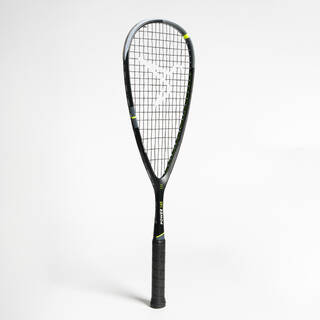
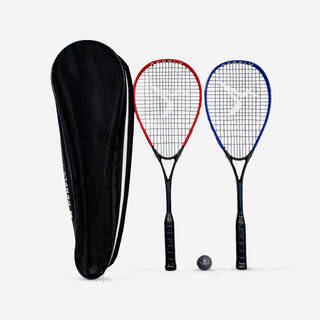

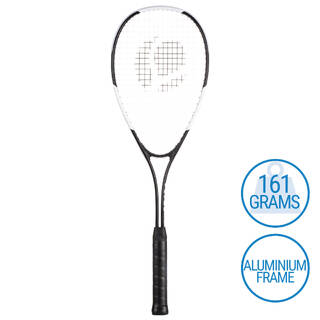
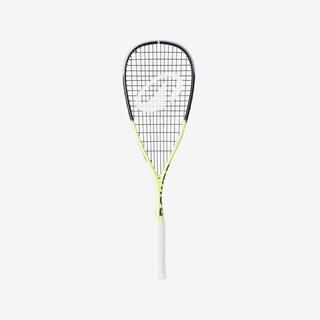

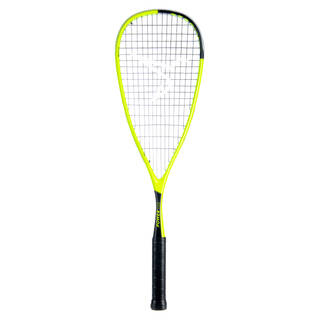
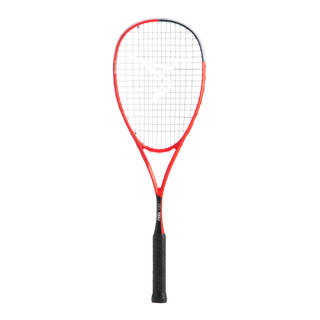
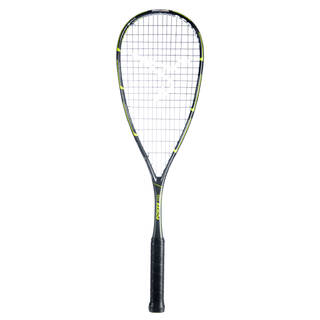
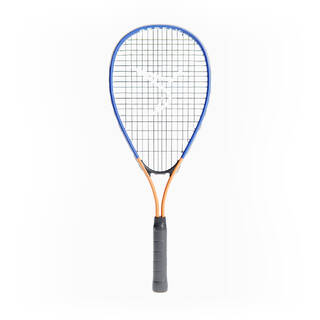

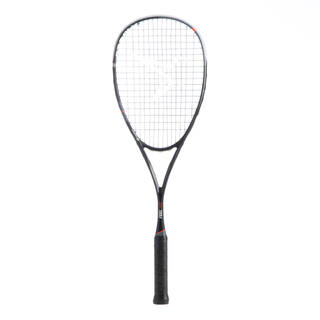
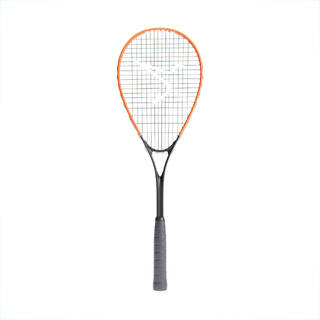
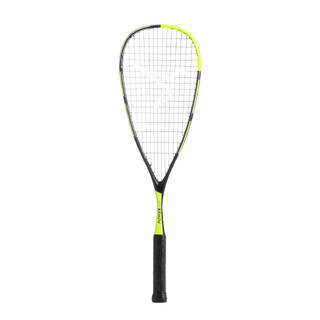

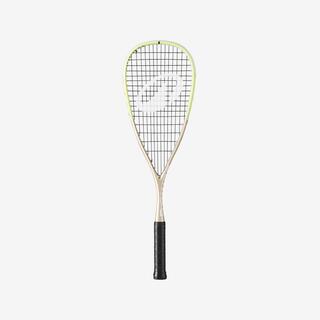
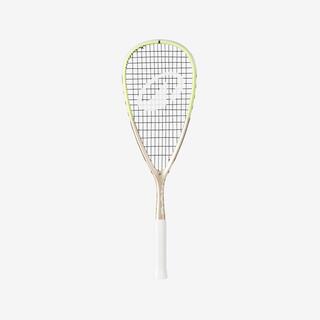
High-Modulus Graphite Frames and Balance Profiles for Court Dominance
Squash racket engineering revolves around three core variables: frame weight distribution, head shape geometry, and composite layup stiffness. Artengo squash rackets deploy high-modulus graphite composites in the 135g to 175g weight range, calibrated for explosive swing acceleration and rapid directional changes inside the 9.75m x 6.4m court dimensions. Head-heavy balance profiles (335mm to 345mm from handle base) amplify swing momentum for deep drives and cross-court kills, while head-light configurations (315mm to 325mm) prioritize wrist snap speed for tight volley exchanges at the T-junction. Frame stiffness, measured through torsional rigidity testing, determines power transfer efficiency during off-center hits against the front wall's unforgiving concrete surface.
Indian squash courts present unique environmental challenges. High-humidity coastal clubs in Mumbai and Chennai accelerate grip tape degradation and increase ball drag coefficients, demanding rackets with wider string spacing (16x19 patterns) to shed moisture and maintain spin potential. Altitude venues in Bangalore and Pune reduce air density, allowing faster ball speeds that require stiffer frame layups to control impact shock. Artengo engineers rackets across three distinct player profiles: beginners require larger 500cm² head sizes with extended sweet spots for forgiveness on mis-hits, intermediate players benefit from 485cm² teardrop heads balancing power and control, while advanced competitors demand 470cm² compact heads with dense 18x20 string beds for surgical shot placement during three-wall nicks and reverse angles.
String Tension Dynamics and Factory Pre-Strung Specifications
Factory string tension directly governs ball dwell time, launch angle, and energy return during wall impact. Artengo rackets ship pre-strung between 24 lbs and 28 lbs using multifilament synthetic gut or monofilament polyester constructions. Lower tensions (24-26 lbs) increase string bed deflection, extending contact duration for enhanced power generation during lob clearances and boast shots that require vertical lift against gravity. Higher tensions (27-28 lbs) reduce trampoline effect, tightening response windows for players executing drop shots with 2mm net clearance or rail drives demanding consistent depth control within the service box's 1.6m width.
String gauge thickness affects durability under India's abrasive court conditions. Thicker 1.25mm gauges withstand extended rallies on gritty wooden floors that generate fine particulate matter, embedding in string grooves and accelerating notching wear. Thinner 1.20mm gauges bite deeper into the ball's rubber surface, generating 15-20% more spin rotation for corkscrew lobs and topspin kills. Multifilament constructions using braided nylon cores wrapped in polyurethane sheaths provide superior shock absorption, reducing vibration transmission through the handle during mishit frames. Monofilament polyester strings offer 30% greater tension stability across humidity swings, maintaining consistent launch characteristics during monsoon months when ambient moisture content spikes above 80% relative humidity.
Grip Construction and Sweat Management for Extended Match Play
Handle grip engineering addresses two biomechanical imperatives: moisture evacuation and tactile feedback precision. Artengo employs polyurethane base grips with embossed micro-perforations that channel sweat away from palm contact zones, critical during India's summer tournament circuits where court temperatures exceed 32°C and players generate 400-600ml perspiration per hour. Grip circumference follows standardized sizing: G0 (100mm) suits junior players and smaller hand anatomies, G1 (105mm) accommodates most adult male players, while G2 (110mm) provides additional surface area for players preferring thicker handle diameters or multiple overwrap layers.
Overwrap tape selection impacts friction coefficients and cushioning depth. Tacky polyurethane overwraps increase rotational grip security during wrist pronation and supination movements, preventing handle slippage during aggressive forehand cross-court drives. Dry-feel synthetic leather overwraps absorb 40% more moisture volume but require replacement every 8-10 hours of play as cellulose fibers compress and lose texture. Replacement grip tape adds 2-3mm diameter, altering leverage ratios and swing weight perception. Players competing in high-stakes matches often carry pre-wrapped backup rackets to maintain consistent feel across extended five-game formats, where cumulative grip degradation affects shot precision during decisive tie-break scenarios.
Frame Geometry and Aerodynamic Profiles for Swing Speed Optimization
Racket head shape dictates aerodynamic drag coefficients and sweet spot positioning. Teardrop profiles concentrate mass in the upper third of the head, creating a 15mm offset sweet spot that aligns with impact zones during overhead kills and high volley intercepts. Oval heads distribute weight more evenly, producing centered sweet spots ideal for defensive retrieval patterns and sustained baseline exchanges. Frame thickness varies from 18mm in power-oriented models to 22mm in control-focused designs, with thicker cross-sections increasing torsional stiffness by 25-30% to resist frame twisting during off-axis impacts.
Shaft flexibility governs energy storage and release timing. Stiffer shafts (measured through three-point bend testing) transfer kinetic energy instantaneously, suited for compact swing mechanics and quick reflex volleys inside the service box. Flexible shafts introduce 8-12 millisecond lag phases, allowing players to load energy during backswing phases and release stored potential during follow-through, amplifying racket head speed for players with longer swing arcs. Artengo integrates reinforced grommet systems using injection-molded nylon with 12-16 string holes per quadrant, distributing string tension loads across wider surface areas to prevent premature cracking in high-stress zones near the 10 and 2 o'clock positions where string breakage frequency peaks.
Beginner to Advanced Racket Progression and Skill-Specific Technologies
Entry-level rackets prioritize forgiveness through enlarged head sizes (500-510cm²) and balanced weight distributions (340mm balance points). These specifications reduce rotational inertia penalties during late swing adjustments, allowing novice players to develop consistent stroke patterns without compensating for extreme head-heavy or head-light characteristics. Aluminum composite frames at this tier sacrifice some vibration dampening but deliver exceptional impact durability against accidental wall strikes and floor collisions common during skill acquisition phases.
Intermediate rackets transition to 485cm² heads with moderate head-light balance (325-330mm), encouraging faster swing speeds as players develop core rotation mechanics and wrist snap techniques. Advanced competition rackets employ 470cm² compact heads with dense string patterns (18x20 configurations) that reduce string movement during impact, tightening shot dispersion patterns for players executing tactical game plans requiring millimeter-level accuracy. These models integrate graphite-tungsten hybrid layups, positioning tungsten particles in specific frame zones to fine-tune swing weight without altering static mass. Tournament-grade rackets often feature extended 685mm lengths (versus standard 675mm) that increase reach radius by 10mm, providing geometric advantages during lunge retrievals and stretched volley intercepts along the sidewall channels.
Maintenance Protocols and String Replacement Cycles for Indian Climate Conditions
String tension degrades 8-12% within the first 24 hours post-stringing as polymer chains settle under load, then continues declining 2-3% per week during active play. Indian humidity accelerates this process, with nylon multifilaments absorbing atmospheric moisture that plasticizes core fibers and reduces elastic modulus by 15-20%. Players logging 3-4 hours weekly court time should restring every 6-8 weeks to maintain consistent launch characteristics, while competitive athletes restring every 15-20 hours of play to preserve precise tension specifications.
Frame inspection focuses on grommet wear and cosmetic cracks. Grommets protect strings from sharp frame edges, and worn grommets create friction points that accelerate string breakage. Visual inspection reveals whitening or fraying around high-stress holes, indicating replacement necessity. Hairline cracks near the throat or shaft junction compromise structural integrity, and continued use risks catastrophic frame failure during high-velocity impacts. Post-match care includes wiping down frames with dry microfiber cloths to remove court dust and perspiration salts that corrode graphite resin matrices. Storage in climate-controlled environments between 18-24°C with 40-60% relative humidity prevents thermal expansion-contraction cycles that fatigue composite bonds over extended timelines.
FAQ (Frequently Asked Questions)
Q1. What is the ideal racket weight for beginner squash players in India?
Beginners should start with rackets in the 160g to 175g range with head sizes around 500cm². These specifications provide sufficient mass for stable swing planes while maintaining maneuverability during rapid directional changes. Lighter rackets below 150g often feel too whippy for players still developing consistent stroke mechanics, while heavier models above 180g fatigue forearm muscles during extended rallies.
Q2. How does head-heavy versus head-light balance affect squash racket performance?
Head-heavy rackets (balance point 335-345mm from handle) generate greater swing momentum for powerful drives and kills but require stronger wrist control during quick volleys. Head-light rackets (315-325mm balance) accelerate faster through compact swing arcs, ideal for front-court interceptions and rapid reflex shots at the T-junction. Intermediate players often prefer even balance (328-332mm) that compromises between power and maneuverability.
Q3. What string tension should I use for playing squash in humid coastal cities?
Humid environments like Mumbai and Chennai cause strings to absorb moisture and lose tension faster. Start with 26-27 lbs for multifilament strings or 27-28 lbs for polyester monofilaments to account for the 10-15% tension drop that occurs within the first week of play. Higher initial tensions compensate for accelerated degradation, maintaining playable characteristics for 6-8 weeks in high-humidity conditions.
Q4. How often should I replace the grip tape on my squash racket?
Overwrap grip tape should be replaced every 8-12 hours of active play, or when you notice reduced tackiness and visible compression of the cushioning layer. Players competing in hot Indian climates may need to replace grips every 6-8 hours due to increased perspiration exposure. Base grips typically last 40-50 hours before requiring replacement, identified by smooth worn patches and loss of embossed texture.
Q5. What is the difference between teardrop and oval head shapes in squash rackets?
Teardrop heads concentrate mass in the upper portion, creating a sweet spot positioned 15-20mm higher that aligns with overhead kill shots and high volleys. Oval heads distribute weight more evenly, producing a centered sweet spot better suited for defensive play and baseline rallies. Teardrop designs generate 10-15% more power on full swings, while oval shapes offer greater forgiveness on off-center hits.
Q6. Can I use the same squash racket for both singles and doubles play?
Yes, but doubles squash (played on larger courts) benefits from slightly head-heavy rackets (340-345mm balance) that generate extra power for covering the increased court dimensions. Singles play on standard 9.75m courts often favors more maneuverable head-light or even-balanced rackets. If playing both formats regularly, choose a racket with 330-335mm balance that provides versatility across both game types.
Q7. How do I know when my squash racket frame needs replacement?
Replace your racket when you observe visible cracks near the throat or shaft junction, significant frame deformation, or multiple broken grommets that cannot be replaced. Hairline cracks compromise structural integrity and risk catastrophic failure during play. Cosmetic paint chips are acceptable, but any crack penetrating through the graphite composite layers indicates the frame has reached end of life after approximately 200-300 hours of intensive play.
Q8. What racket specifications help generate more spin on squash shots?
Spin generation requires open string patterns (16x18 or 16x19 configurations) that allow greater string movement and ball bite, combined with thinner 1.20mm gauge strings that embed deeper into the ball surface. Lower string tensions (24-26 lbs) increase dwell time, allowing strings to snap back and impart rotational energy. Textured polyester monofilaments grip the ball 20-25% more effectively than smooth multifilaments for enhanced spin potential.
Q9. Are Artengo squash rackets suitable for competitive tournament play in India?
Yes, Artengo's advanced range features high-modulus graphite construction, competition-grade string patterns, and weight distributions meeting international tournament specifications. Models in the 145-165g range with 470-485cm² head sizes and dense 18x20 string beds provide the control and precision required for state and national level competition. Many Indian club players and regional competitors use Artengo rackets across various skill divisions.
Q10. How does racket length affect reach and swing mechanics in squash?
Standard squash rackets measure 675mm, while extended models reach 685mm, adding 10mm to your effective reach radius during lunge shots and stretched volleys. This extra length increases swing weight by 3-5%, requiring slightly more effort during rapid exchanges but providing geometric advantages when retrieving deep corner shots. Players above 175cm height often benefit from extended lengths, while shorter players may find standard lengths offer better maneuverability.