Surfboards & Bodyboards



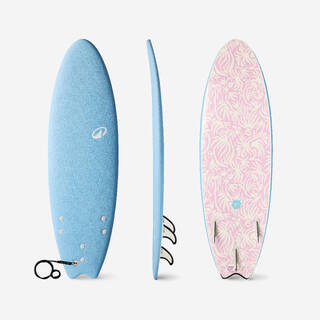


EPS Core Density and Buoyancy Engineering for Indian Coastal Conditions
Surfboards and bodyboards engineered for Indian surf breaks rely on expanded polystyrene (EPS) core densities ranging from 1.5 lb/ft³ to 2.5 lb/ft³, directly governing buoyancy and paddling efficiency in warm Arabian Sea and Bay of Bengal waters. Lower density cores (1.5 to 1.8 lb/ft³) deliver maximum float for beginner surfers learning wave timing at Varkala or Covelong, while higher density EPS (2.2 to 2.5 lb/ft³) provides responsive flex patterns for intermediate riders carving steep beach breaks. Decathlon's Olaian surfboards integrate closed-cell EPS construction with epoxy resin lamination, creating a waterproof barrier that withstands prolonged saltwater immersion and prevents waterlogging during extended surf sessions.
Bodyboards designed for Indian shorebreaks utilize polyethylene (PE) or polypropylene (PP) cores with Shore A durometer ratings between 45 and 60, balancing flex response with impact resistance against rocky reef entries at Gokarna or Mulki. PE cores maintain consistent flex across temperature ranges of 28°C to 35°C typical of tropical Indian coastlines, while PP cores offer stiffer rebound for advanced prone riders executing el rollo maneuvers. Crescent tail designs and bat tail profiles optimize water channeling and directional hold in choppy monsoon swell conditions, where cross-shore winds create textured wave faces requiring precise rail engagement.
Fiberglass Layup Schedules and Epoxy Resin Systems for Tropical Durability
Surfboard construction for Indian surf conditions demands specific fiberglass layup configurations, typically employing 4 oz or 6 oz woven cloth on deck surfaces and 4 oz cloth on bottom surfaces to achieve optimal strength-to-weight ratios. Standard layup schedules for beginner soft-top boards feature single 6 oz deck layers bonded to EVA foam decks, while performance shortboards require dual 4 oz deck wraps with tail patches reinforcing high-stress fin box zones. Epoxy resin systems cure at ambient temperatures between 25°C and 32°C without requiring controlled climate environments, making them ideal for coastal workshop production and field repairs at Indian surf camps.
Rail construction follows either pinched rail profiles for sharp directional changes in small 2 to 3 foot surf or rounded 50/50 rails for forgiving paddle stability in learning zones. Stringer systems using vertical grain paulownia or basswood strips (3mm to 6mm thickness) run longitudinally through EPS cores, providing torsional rigidity during bottom turns while maintaining overall board flex. Olaian boards eliminate traditional stringers in favor of parabolic carbon fiber reinforcement strips, reducing total board weight by 200 to 300 grams while increasing impact resistance against submerged rocks common at Goa and Karnataka surf spots.
Fin Configuration Geometry and Thruster vs Quad Setups for Variable Indian Swell
Fin systems dictate turning radius and drive generation across varying Indian wave conditions, with thruster (tri-fin) configurations providing balanced maneuverability for beach breaks at Mahabalipuram and Pondicherry. Standard thruster templates feature center fins measuring 4.5 to 5.0 inches in height with side fins at 4.25 to 4.5 inches, creating predictable pivot points for cutbacks and floaters. Base widths ranging from 4.3 to 4.6 inches and rake angles between 33° and 38° optimize water flow attachment during high-speed sections, while flex patterns in composite fiberglass fins absorb chop without losing directional hold.
Quad fin setups eliminate center fins entirely, positioning four smaller fins (3.75 to 4.0 inches height) closer to rail lines for increased drive down wave faces and looser tail release in hollow sections. This configuration suits advanced surfers riding Ramakrishna Beach pointbreaks or Mangalore rivermouth barrels where speed generation and late bottom turns require immediate response. Futures and FCS II toolless fin boxes allow rapid configuration changes between sessions, adapting to shifting swell directions during southwest monsoon (June to September) versus northeast monsoon (October to December) patterns. Bodyboard fin systems use asymmetrical blade designs with stiff leading edges and flexible trailing edges, generating propulsion during duck dives and directional control during wave face traverses.
Rocker Profiles and Volume Distribution for Beginner Progression in Gentle Indian Surf
Rocker curvature, measured as nose lift and tail kick relative to a flat baseline, determines wave entry speed and turning arc radius across different skill levels. Beginner-focused surfboards feature flat rocker profiles with minimal nose lift (1.5 to 2.5 inches over 9 foot lengths), maximizing paddle speed and early wave catching in slow-rolling beach breaks at Palolem and Ashwem. Volume distribution concentrated forward (55% to 60% nose volume) creates stable platforms for popup practice, while wide outlines (22 to 23 inches at widest point) prevent tipping during off-center weight shifts common in first-month learners.
Intermediate shortboards incorporate moderate rocker curves (3.5 to 4.5 inches nose lift over 6 foot lengths) allowing tighter pocket riding in steeper wave faces, while tail rocker (1.5 to 2.0 inches) facilitates vertical snaps and cutback initiation. Volume calculations follow the rider weight formula: beginner boards provide 2.5 to 3.0 liters per kilogram of body weight, intermediate boards reduce to 1.8 to 2.2 liters per kilogram, and advanced performance shortboards operate at 1.2 to 1.5 liters per kilogram. Bodyboards sized between 37 and 42 inches length match rider height from chin to forehead when standing vertically, ensuring proper body positioning during prone riding and optimal leverage during drop-knee maneuvers in shore dump conditions.
Olaian Soft-Top Technology and Slick Bottom Construction for Safe Learning Progression
Olaian soft-top surfboards integrate EVA foam deck surfaces with Shore A hardness ratings between 25 and 35, providing cushioned impact protection during wipeouts and board contact incidents common in crowded Indian surf schools. Closed-cell EVA construction resists water absorption even after prolonged submersion, maintaining consistent buoyancy across multi-hour sessions in warm saltwater temperatures. Heat-laminated EVA bonding eliminates adhesive delamination failures typical in tropical humidity, while textured diamond groove patterns create non-slip traction without requiring wax application that melts in 38°C beach sand temperatures.
Slick bottom skins constructed from high-density polyethylene (HDPE) sheets reduce water friction during paddling and wave riding, generating 15% to 20% faster planing speeds compared to raw foam bottoms. This construction method suits beginner and intermediate riders learning at Varkala Cliff Beach or Covelong Point, where increased glide compensates for developing paddle technique. Reinforced nose and tail blocks molded from impact-resistant polymer absorb collision forces during beach entries and exits across rocky shorelines. Integrated leash plugs rated to 150 kg breaking strength prevent leash pullout during heavy shorebreak tumbles, while stainless steel screws resist saltwater corrosion across multiple monsoon seasons.
Bodyboard Channels, Bat Tails, and Elbow Bulb Design for Prone and Drop-Knee Riding
Advanced bodyboard construction incorporates bottom channel configurations, typically dual concave channels or single-to-double transitions, directing water flow from nose to tail and generating lift during high-line trim positions. Channel depth ranges from 3mm to 6mm, with deeper channels providing increased planing surface area in mushy summer surf while shallower channels maintain speed in hollow winter swells. Crescent tail cutouts measuring 4 to 6 inches deep create natural leg pockets for drop-knee stance transitions, allowing riders to shift from prone to upright positioning during critical wave sections at Mulki or Little Andaman breaks.
Elbow bulb contouring along upper rail sections provides ergonomic arm positioning during prone riding, reducing shoulder fatigue during extended paddle-outs through impact zones. Deck contours follow anatomical body curves, with graduated foam thickness from 55mm at center to 35mm at rails, optimizing flex response while maintaining structural integrity. Slick bottom skins on performance bodyboards use surlyn or HDPE laminates bonded through heat fusion, creating seamless interfaces that prevent delamination in tropical heat cycles. Tail stiffeners constructed from carbon fiber or polypropylene rods insert into tail sections, adding directional hold during bottom turns without sacrificing overall board flex through midsections where body weight concentrates during wave riding.
FAQ (Frequently Asked Questions)
Q1. What surfboard length and volume should a 70 kg beginner choose for learning at Goa or Pondicherry beaches?
A 70 kg beginner requires a surfboard between 7'6" to 8'0" length with volume ranging from 60 to 70 liters, providing stable paddle platforms and early wave-catching ability in gentle 2 to 3 foot Indian beach breaks. Soft-top construction with wide outlines (21 to 22 inches) prevents tipping during popup practice. As paddling strength develops over 15 to 20 sessions, transitioning to 50 to 55 liter mid-length boards allows progression to steeper wave faces.
Q2. How do I prevent surfboard damage when transporting to Indian surf spots with rocky beach entries?
Use padded board bags with 10mm foam inserts protecting rails and nose sections during vehicle transport over rough coastal roads. At rocky entry points like Varkala or Gokarna, carry boards vertically with one hand on nose and other on tail center, avoiding dragging across barnacle-covered rocks. Apply additional nose guard tapes or epoxy resin coats to vulnerable impact zones, and rinse boards with freshwater immediately after sessions to prevent saltwater crystallization weakening fiberglass laminate.
Q3. What is the difference between EPS and PU foam cores in surfboards for Indian tropical conditions?
EPS (expanded polystyrene) cores with epoxy resin lamination resist water absorption better than traditional PU (polyurethane) foam cores, making them ideal for Indian tropical humidity and prolonged saltwater exposure. EPS boards weigh 15% to 20% less than equivalent PU constructions, improving paddle efficiency in small surf. PU foam cores offer more flexible, forgiving ride characteristics preferred by some longboard riders, but require careful ding repair to prevent waterlogging during monsoon season storage.
Q4. Can bodyboards be used effectively in Indian shorebreak conditions with strong backwash?
Bodyboards excel in Indian shorebreak conditions at beaches like Mahabalipuram and Covelong where backwash creates steep, fast-breaking waves close to shore. PE core bodyboards with crescent tails maintain control during rapid direction changes required when navigating backwash interference. Choose boards between 40 to 42 inches length for adult riders, and always use coiled wrist leashes to prevent board loss in turbulent whitewater zones where rip currents develop.
Q5. How often should I replace surfboard fins and what materials work best for Indian reef breaks?
Inspect fin bases and tabs every 10 to 15 surf sessions for stress cracks or loosening in fin boxes, replacing immediately if lateral movement exceeds 1mm. Fiberglass composite fins balance flex and durability for mixed sand and reef bottoms at Goa and Karnataka breaks, while stiffer carbon fiber fins suit experienced surfers riding hollow waves requiring immediate response. Avoid pure plastic fins in rocky reef entries as they crack on impact. Clean fin boxes monthly with freshwater to remove sand buildup affecting secure fit.
Q6. What maintenance steps prevent surfboard delamination in high humidity Indian coastal storage?
Store surfboards in shaded, ventilated areas away from direct sunlight, as UV exposure accelerates epoxy resin degradation and foam expansion causing delamination. Keep boards horizontal on padded racks rather than vertical against walls to prevent pressure point stress. Repair all dings within 48 hours using marine-grade epoxy resin, as even small cracks allow water intrusion that expands foam cores in 80% to 90% humidity conditions. Apply UV protectant wax or resin coats to deck surfaces every three months during active use periods.
Q7. Are Olaian soft-top surfboards suitable for intermediate surfers progressing beyond beginner stages?
Olaian soft-top boards in 6'6" to 7'0" lengths with moderate rocker profiles serve intermediate surfers practicing cutbacks and bottom turns in 3 to 4 foot surf. The EVA deck cushioning still provides safety during wipeouts while slick bottom construction generates sufficient speed for performance maneuvers. Intermediate riders benefit from soft-top forgiveness when learning aerial attempts or floater sections. Transition to hardtop epoxy boards occurs when consistently riding overhead waves requiring tighter turning radius and reduced swing weight.
Q8. What leash thickness and length should I use for surfing Indian beach breaks versus reef breaks?
Beach break surfing at Palolem or Ashwem requires 6mm thick leashes in lengths matching board size (7 foot leash for 7 foot board) to handle moderate pulling forces during whitewater tumbles. Reef break surfing at rocky points demands 7mm competition leashes with double swivel systems preventing tangles during longer hold-downs in 5 to 6 foot surf. Always attach leashes to rear ankle using neoprene cuffs, and replace leashes annually or after any incident causing visible cord stretching or swivel corrosion from saltwater exposure.
Q9. How do I choose between thruster and quad fin setups for variable monsoon swell conditions?
Thruster (tri-fin) setups provide predictable control for learning surfers and suit cross-shore wind conditions common during southwest monsoon when wave faces become choppy. The center fin adds directional stability during bottom turns and prevents spinouts in steep sections. Quad fin configurations benefit experienced surfers riding clean groundswell during northeast monsoon, generating increased drive and speed down open wave faces. Keep both fin sets available and swap based on daily swell direction and wind forecasts, as Indian coastal conditions shift rapidly between monsoon transitions.
Q10. What water temperature wetsuit thickness is needed for year-round surfing in Indian coastal waters?
Indian ocean temperatures range from 26°C to 30°C year-round, eliminating wetsuit requirements for most surfers. Rash guards with UPF 50+ sun protection suffice for tropical sessions, preventing sunburn and minor abrasions from wipeouts. Surfers sensitive to cooler morning water temperatures (24°C to 26°C) during January and February in southern regions may use 1mm to 2mm neoprene spring suits for core warmth. Focus investment on quality boardshorts with four-way stretch and reinforced seams rather than thermal protection for Indian surf conditions.