Table Tennis Tables


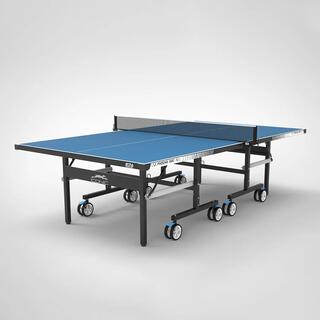
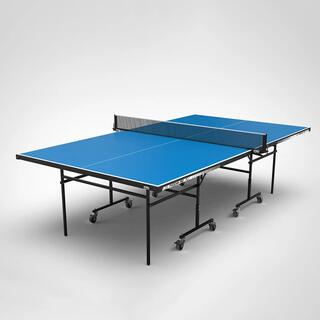
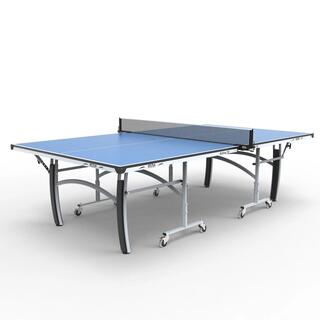
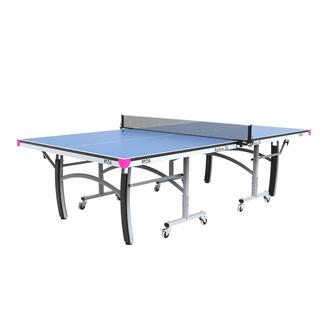
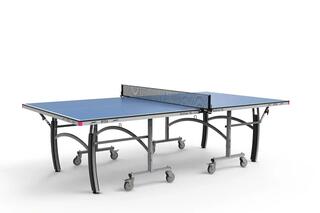
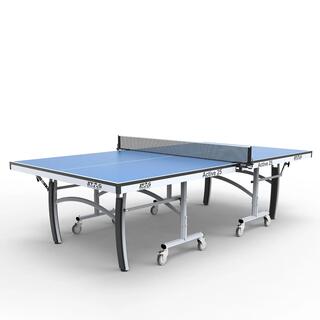
Pongori Table Tennis Tables: Frame Geometry, Bounce Consistency, and Indoor vs Outdoor Build Standards
Pongori table tennis tables are engineered around three critical performance parameters: tabletop thickness (measured in millimeters), frame rigidity (tubular steel gauge), and bounce uniformity (ITTF rebound height standards). Indoor competition tables feature 22mm to 25mm chipboard or MDF tops coated with anti-glare melamine, delivering consistent 23cm rebound when a regulation ball is dropped from 30cm height. Outdoor tables use 5mm to 7mm resin laminate or aluminum composite tops with UV-resistant coatings, sacrificing marginal bounce precision for year-round monsoon and dust exposure resistance. Frame construction dictates long-term stability: 40mm x 40mm or 50mm x 50mm tubular steel undercarriages with cross-bracing prevent warping under humidity fluctuations common in coastal Indian cities.
Wheel diameter and locking mechanisms separate recreational from club-grade tables. Pongori competition tables mount on 125mm to 150mm double-wheel casters with individual brake locks on each leg, ensuring zero lateral drift during aggressive rallies. Folding hinge systems use spring-loaded safety locks: single-fold designs (one half folds onto the other) suit compact apartment storage, while rollaway designs (each half folds independently) enable solo playback mode for stroke practice. Net tension systems range from simple clamp-on spring nets (recreational) to screw-tensioned ITTF-approved nets with 15.25cm height precision and taut horizontal alignment. Indian buyers prioritizing longevity should verify powder-coated steel frames (minimum 60-micron thickness) to resist rust in high-humidity monsoon storage conditions.
Indoor Tournament Tables: 22mm Chipboard Tops, ITTF Rebound Standards, and Club Training Specifications
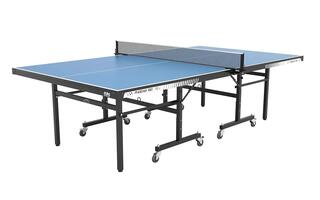
Indoor tournament tables built to ITTF specifications use 22mm or 25mm high-density chipboard with melamine resin surfaces, calibrated to produce 23cm ± 2cm rebound height when tested with a 40mm celluloid or plastic ball dropped from 30cm. This rebound consistency depends on uniform density across the 2.74m x 1.525m playing surface and precise leveling: adjustable leg levelers (threaded bolts with 20mm to 30mm range) compensate for uneven apartment flooring. Anti-glare coatings reduce reflective hotspots under LED tube lights or ceiling-mounted fixtures common in Indian sports complexes. Table edges are finished with 40mm to 50mm PVC or ABS corner protectors, absorbing impact from accidental collisions during multi-table training halls.
Frame architecture for indoor tables prioritizes rigidity over portability. Pongori club models use 50mm square-section steel tubing with diagonal cross-members welded at 45-degree angles, creating a torsion-resistant chassis that prevents tabletop flex during smash strokes. Folding mechanisms incorporate gas-spring dampers or hydraulic pistons, allowing controlled descent when unfolding (critical safety feature for solo setup). Storage footprint matters in urban Indian homes: a folded competition table occupies roughly 1.55m x 0.6m x 1.5m (length x width x height), fitting through standard 80cm doorways. Net posts are mounted via screw-clamp systems with spring-loaded tension adjusters, maintaining 15.25cm net height across the 1.83m span without sagging at the center.
Outdoor All-Weather Tables: Resin Laminate Tops, Rust-Proof Galvanized Frames, and UV Degradation Resistance
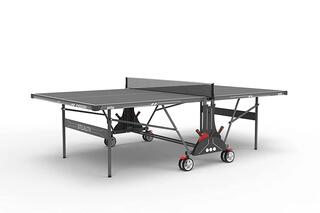
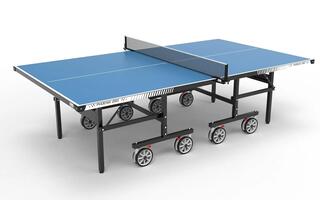
Outdoor table tennis tables substitute chipboard for 5mm to 7mm resin laminate or aluminum composite panels, engineered to withstand direct monsoon rain, 40°C to 45°C summer heat, and high-UV exposure in open terraces or building compounds. Resin laminates (melamine-faced phenolic resin) are bonded to marine-grade plywood or aluminum honeycomb cores, achieving IPX4 water resistance (splash-proof, not submersion-proof). Bounce quality on outdoor tables measures 20cm to 22cm rebound height, slightly lower than indoor standards due to material density tradeoffs. Surface textures are intentionally coarser (180-grit to 220-grit finish) to maintain ball grip in humid coastal air where condensation forms on playing surfaces.
Frame construction for outdoor tables uses hot-dip galvanized steel or powder-coated aluminum alloys (6061 T6 grade), both resistant to oxidation in salt-laden coastal environments or industrial pollution zones. Leg assemblies feature larger footprint bases (60cm x 60cm or wider) to prevent tipping on uneven concrete or tile surfaces common in Indian building courtyards. Wheel systems upgrade to 150mm to 200mm diameter pneumatic or solid rubber tires, rolling smoothly over expansion joints and rough outdoor flooring. Folding hinges are sealed with rubber gaskets to block dust ingress, and locking pins use stainless steel construction to avoid seizure from rust. Net systems on outdoor tables often use weatherproof polyester mesh with UV-stabilized coatings, maintaining tension despite temperature swings between morning dew and afternoon sun.
Compact and Mini Tables: Space-Efficient Designs for Apartment Living and Kids' Skill Development
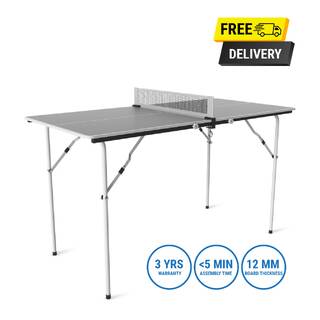
Compact table tennis tables scale down to 75% or 50% regulation dimensions (approximately 2m x 1.1m or 1.5m x 0.75m), fitting inside 10ft x 10ft bedrooms or balconies in urban Indian apartments. These tables use 12mm to 16mm MDF or particleboard tops, sacrificing professional bounce consistency for portability: folded dimensions shrink to 1m x 0.6m x 0.15m, sliding under beds or into storage cupboards. Leg assemblies are non-adjustable fixed-height designs (typically 70cm to 76cm, matching regulation 76cm standard), using 25mm x 25mm tubular steel or aluminum tubing to minimize weight (total table mass: 15kg to 25kg). Compact tables suit children aged 6 to 12 years developing hand-eye coordination and stroke mechanics before transitioning to full-size equipment.
Mini tables (also called tabletop or conversion tops) are freestanding 12mm to 15mm MDF panels placed atop dining tables or desks, measuring 1.2m x 0.6m or smaller. These require no dedicated floor space but demand stable base surfaces: a wobbling dining table transfers vibration into the playing surface, disrupting ball bounce. Clamp-on net systems use spring-loaded grips with rubber pads to avoid scratching furniture finishes. Mini tables are ideal for stroke practice drills (forehand loops, backhand blocks) in confined spaces but cannot replicate the footwork demands or rally distances of regulation play. For Indian families prioritizing multi-use furniture, conversion tops offer recreational play without permanent equipment commitment.
Playback Mode, Safety Locks, and Solo Training Configurations for Stroke Repetition Drills
Playback mode (also called solo play or practice position) allows one table half to fold vertically at 90 degrees, creating a rebound wall for solo stroke drills. This feature requires independent folding halves: each half must lock securely in upright position using spring-loaded pins or rotating lever locks. Pongori rollaway tables achieve this via dual-hinge systems, where each half operates on separate wheel carriages. Playback stability depends on base weight distribution: tables with center-mounted wheel clusters (rather than corner-mounted) resist tipping when a vertically folded half experiences off-center ball impacts during smash practice. Solo training mode is critical for Indian players lacking consistent practice partners, enabling forehand topspin loops, backhand chop drills, and serve placement repetitions.
Safety mechanisms prevent accidental folding or collapse during play. Competition-grade tables use 16-point locking systems: four locks per leg (two per wheel carriage), each requiring manual disengagement before folding. Cheaper recreational tables may use 8-point or 4-point locks, increasing risk of unintended movement if a single lock fails. Hinge safety bars (horizontal steel rods) slot into frame brackets when the table is fully unfolded, physically blocking hinge rotation until manually removed. For households with children, tables should include secondary safety straps (nylon webbing with quick-release buckles) connecting both halves when folded, preventing a child from accidentally unfolding a heavy tabletop. Indian buyers storing tables in shared building basements or terraces should verify lockable wheel brakes (foot-pedal activated) to prevent unauthorized movement or theft.
Maintenance Protocols: Surface Cleaning, Frame Lubrication, and Monsoon Storage Best Practices
Table tennis table longevity in Indian climates requires monthly maintenance cycles addressing dust accumulation, humidity-induced warping, and mechanical wear. Playing surfaces should be cleaned with microfiber cloths dampened (not soaked) in pH-neutral detergent solutions, wiping along the grain direction to avoid scratching melamine or resin coatings. Avoid silicone-based polishes or wax sprays: these create slippery patches that alter ball spin behavior. For outdoor tables exposed to monsoon rain, post-rain drying is critical: use absorbent towels to remove standing water within 2 hours, preventing edge swelling in laminate cores. Tabletop edges and corner protectors should be inspected for delamination or cracking, applying PVC-compatible adhesive (cyanoacrylate or contact cement) to reattach loose sections before moisture penetrates the core.
Frame and wheel maintenance focuses on moving parts. Folding hinges require biannual lubrication with lithium grease or PTFE spray, applied to pivot pins and spring mechanisms. Wheel bearings (especially on outdoor tables with larger pneumatic tires) should spin freely without grinding noise: gritty resistance indicates dust ingress, requiring disassembly and bearing repacking. Adjustable leg levelers accumulate concrete dust and grit in threaded sections: clean threads with wire brushes and apply anti-seize compound to prevent corrosion lock. During monsoon storage, indoor tables should be kept in climate-controlled rooms (relative humidity below 60%) to prevent chipboard expansion. Outdoor tables can remain exposed but should have net assemblies removed and stored indoors (polyester mesh degrades faster than resin tops under UV). Covering outdoor tables with breathable polyester tarps (not plastic sheets, which trap condensation) extends surface life by 2 to 3 years in high-humidity coastal regions.
FAQ (Frequently Asked Questions)
Q1. What tabletop thickness should I choose for regular family play versus competitive training in India?
For family recreational play, 12mm to 16mm MDF tops provide adequate bounce consistency at lower weight and easier portability. Competitive training demands 22mm to 25mm chipboard or resin laminate tops, delivering ITTF-standard 23cm rebound height and uniform spin response. Thicker tops resist warping in humid Indian climates and maintain bounce accuracy across the entire 2.74m x 1.525m surface during aggressive rallies.
Q2. Can outdoor table tennis tables withstand direct monsoon rain and year-round terrace exposure?
Outdoor tables with 5mm to 7mm resin laminate or aluminum composite tops handle direct rain and UV exposure, but require post-rain drying within 2 hours to prevent edge swelling. Galvanized steel or powder-coated aluminum frames resist rust in coastal humidity. However, net assemblies and wheel bearings should be inspected monthly for corrosion, and tables should be covered with breathable tarps during extended non-use periods to maximize lifespan beyond 5 years.
Q3. How do I verify if a table tennis table fits through my apartment door and elevator for delivery?
Measure your narrowest doorway and elevator dimensions before purchase. Folded competition tables occupy approximately 1.55m length x 0.6m width x 1.5m height, fitting through standard 80cm doors when tilted diagonally. Compact tables fold to 1m x 0.6m x 0.15m, easily maneuvering through tight spaces. Verify that wheel carriage width (including protruding brake levers) does not exceed your door frame width, as wheels cannot be removed on most models without tools.
Q4. What is playback mode and how does it help improve my table tennis strokes without a practice partner?
Playback mode allows one table half to fold vertically at 90 degrees, creating a rebound wall for solo drills like forehand loops, backhand blocks, and serve practice. This requires tables with independent folding halves and secure vertical locking mechanisms. Playback stability depends on base weight distribution: center-mounted wheel systems prevent tipping during off-center ball impacts, making it safer for repetitive stroke training in confined apartment spaces.
Q5. Do Pongori table tennis tables meet ITTF international standards for bounce height and dimensions?
Pongori competition tables with 22mm or 25mm chipboard tops meet ITTF rebound standards of 23cm ± 2cm when a regulation ball is dropped from 30cm height. Dimensions match ITTF specifications: 2.74m length x 1.525m width x 0.76m height. Recreational and outdoor models may have slightly lower bounce (20cm to 22cm) due to material tradeoffs for weather resistance, but frame dimensions remain consistent across all Pongori full-size tables.
Q6. How much floor space do I need around a table tennis table for comfortable gameplay in an Indian apartment?
Regulation play requires 5m x 2.5m minimum clearance (table plus 1.5m on each end, 0.5m on each side) for unrestricted movement during rallies. In compact Indian apartments, 4m x 2m suffices for recreational play, allowing basic forehand and backhand strokes. Ensure 2.2m vertical clearance for lob shots and overhead smashes. For playback mode solo practice, reduce end clearance to 2.5m total, as you only move on one side of the table.
Q7. What is the difference between single-fold and rollaway table designs for storage in small spaces?
Single-fold tables have one half that folds onto the other, creating a compact 1.55m x 0.8m footprint but requiring two people to unfold safely due to combined weight. Rollaway tables feature independent halves on separate wheel carriages, allowing solo setup and playback mode but occupying more storage width (two separate units). For Indian apartments with narrow storage areas, single-fold designs fit better, while rollaway models suit users prioritizing solo training flexibility.
Q8. How do I prevent my indoor table tennis table from warping during monsoon season humidity?
Store indoor tables in rooms maintaining below 60% relative humidity, using dehumidifiers or silica gel packs in enclosed storage areas. Avoid placing tables near windows or external walls where condensation forms. After gameplay, wipe the surface dry to remove sweat or moisture. Apply furniture wax to exposed chipboard edges (not the playing surface) to seal against humidity ingress. If warping occurs, adjust leg levelers to compensate, but severe warping (over 5mm deviation) requires professional tabletop replacement.
Q9. Are compact or mini table tennis tables suitable for children learning proper stroke techniques?
Compact tables (75% regulation size) suit children aged 6 to 12 years for developing hand-eye coordination, grip fundamentals, and basic forehand/backhand mechanics. However, scaled-down dimensions do not replicate full-court footwork or rally distances required for competitive play. Mini tabletop models (placed on dining tables) are adequate for recreational fun but lack the bounce consistency and height for serious skill development. Transition children to full-size tables by age 10 to 12 for proper technique reinforcement.
Q10. What safety features should I check before buying a table tennis table for home use with young children?
Verify 16-point locking systems (four locks per leg) that require manual disengagement before folding, preventing accidental collapse. Hinge safety bars should physically block rotation when the table is unfolded. Look for rounded corner protectors (40mm to 50mm ABS or PVC) to cushion impact injuries. Wheel brakes must lock all casters simultaneously via foot pedals. For playback mode, ensure vertical-folded halves have secondary safety straps preventing unintended unfolding, critical in households where children may attempt solo setup.