Tennis Balls



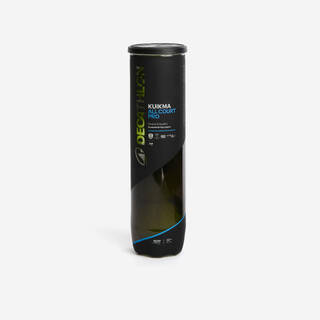




Pressurized Core Construction and Felt Durability for Indian Hard Courts
Tennis balls engineered for Indian club and academy play demand pressurized rubber core construction that maintains consistent bounce height across concrete and synthetic hard courts. Artengo tennis balls feature internal pressure chambers rated between 12 to 14 psi, delivering International Tennis Federation (ITF) compliant rebound heights of 135 to 147 cm when dropped from 254 cm onto rigid surfaces. This pressurization ensures uniform ball flight trajectories during baseline rallies and net exchanges, critical for developing stroke mechanics in high-temperature conditions where ambient heat can alter internal gas expansion.
Felt durability directly impacts ball longevity under abrasive Indian hard court surfaces. Premium training balls utilize double-layer woven felt with nylon-reinforced stitching, rated for 4 to 6 hours of intensive play before visible fuzz degradation affects aerodynamic stability. The outer felt layer acts as the primary friction interface, generating topspin and slice rotation through contact with racket string beds. Felt thickness typically ranges from 2.5 to 3.2 mm, with tighter weave densities reducing moisture absorption during humid monsoon sessions. Balls designed for clay or grass courts feature different felt compositions, but hard court variants prioritize abrasion resistance over surface grip, ensuring consistent performance on the concrete and acrylic surfaces dominating Indian tennis infrastructure.
ITF Approval Standards and Ball Compression Ratings for Match Play
Match-grade tennis balls carry ITF Type 1, Type 2, or Type 3 certifications, each defining specific mass, diameter, and deformation tolerances. Type 2 balls (medium speed) suit most Indian playing conditions, with diameters between 6.54 to 6.86 cm and mass ranging from 56.0 to 59.4 grams. Compression ratings measure the force required to deform a ball by 0.635 cm, with approved balls registering between 8.165 to 10.115 kg of forward deformation and 9.525 to 11.475 kg of return deformation. These compression windows ensure predictable ball response during high-velocity serves and groundstrokes, allowing players to calibrate swing speeds and contact points with precision.
Training balls often feature reduced compression cores (Stage 1, Stage 2, or Stage 3 classifications) designed for junior development programs. Stage 3 foam balls compress 75% more than standard balls, slowing court speed and extending rally durations for young learners. Stage 2 balls operate at 50% reduced compression, bridging the gap between foam trainers and full-pressure match balls. Coaches utilize these graduated compression systems to build stroke confidence before transitioning students to regulation ITF-approved balls. Decathlon's Artengo range includes both full-pressure tournament balls and multi-stage training variants, accommodating skill progression from beginner academies to competitive club circuits.
Pressurized Tube Packaging vs Pressureless Construction for Extended Shelf Life
Pressurized tennis balls ship in hermetically sealed metal or composite tubes maintaining internal atmospheres at 14 psi, preventing premature pressure loss before first use. Once the tube seal breaks, pressurized balls begin gradual deflation, losing approximately 1 to 2 psi per month depending on storage conditions. High-humidity environments accelerate pressure decay as moisture penetrates the rubber core through microscopic felt pores. Players storing balls in air-conditioned spaces or using pressurized storage containers can extend playable lifespan to 4 to 6 weeks post-opening, compared to 2 to 3 weeks in ambient tropical conditions.
Pressureless tennis balls eliminate internal gas chambers, relying instead on solid rubber core construction that hardens over time rather than softening. These balls initially feel heavier and less responsive than pressurized variants but maintain consistent bounce characteristics for 12 to 18 months of regular use. Pressureless designs suit high-volume training environments where ball replacement costs and storage logistics become prohibitive. The trade-off involves slightly muted feedback during contact and reduced spin potential due to firmer core dynamics. Recreational players and coaching academies conducting drill-based sessions often prefer pressureless balls for their economic efficiency, while competitive players reserve pressurized balls for match simulation and tournament preparation.
High-Altitude Performance and Temperature Compensation in Himalayan and Plateau Regions
Tennis balls experience altered flight dynamics at elevations above 1200 meters, where reduced atmospheric pressure decreases air resistance and increases ball velocity. High-altitude balls feature modified internal pressurization (typically 10% lower than sea-level variants) to compensate for thinner air, preventing excessive bounce heights and uncontrollable ball speeds. Players training in hill stations like Ooty, Shimla, or Darjeeling require altitude-specific balls to maintain stroke timing and court positioning developed at lower elevations. The reduced drag coefficient at altitude also amplifies topspin and slice rotation effects, demanding recalibrated swing paths and follow-through mechanics.
Temperature fluctuations between morning and afternoon sessions create significant pressure differentials inside sealed ball cores. A ball stored at 15°C and played at 35°C experiences internal pressure increases of 8 to 10%, raising bounce height by 3 to 5 cm and accelerating court speed. Professional players warm match balls to ambient court temperature 30 minutes before play to stabilize internal pressure. Conversely, air-conditioned indoor facilities operating at 18 to 22°C reduce ball liveliness, requiring players to generate additional racket head speed to achieve equivalent depth and pace. Understanding these thermodynamic principles allows players to adjust shot selection and tactical approaches based on environmental conditions rather than attributing performance variations to inconsistent technique.
Artengo Ball Selection Matrix: Recreational, Club, and Competition Grade Specifications
Artengo structures its tennis ball lineup across three performance tiers aligned with player skill levels and usage intensity. Recreational balls prioritize durability and cost efficiency for casual weekend play, featuring single-layer felt and slightly lower compression ratings (7.5 to 9.0 kg forward deformation). These balls maintain acceptable bounce consistency for 3 to 4 hours of play, suitable for social doubles matches and beginner stroke development. Club-grade balls introduce double-layer felt construction and tighter ITF compliance tolerances, extending playable lifespan to 5 to 7 hours while delivering more predictable spin response and trajectory control.
Competition-grade Artengo balls meet stringent ITF Type 2 specifications with premium wool-nylon felt blends and precision-molded rubber cores. These balls undergo quality control testing for weight variance (within 0.5 grams across a batch), diameter consistency (within 0.15 cm), and compression uniformity (within 0.3 kg deviation). Tournament directors and competitive leagues specify competition-grade balls to ensure fair play conditions where equipment variability does not influence match outcomes. The enhanced felt durability and pressure retention of competition balls justify their selection for district and state-level tournaments, while recreational players can optimize value by matching ball grade to actual playing frequency and skill development goals.
Bulk Packaging Options and Ball Rotation Strategies for Coaching Academies
Tennis coaching academies conducting high-volume training sessions require systematic ball rotation protocols to maintain consistent practice quality. Bulk packaging options (60-ball or 96-ball cases) reduce per-unit costs while ensuring fresh inventory for drill-intensive programs. Coaches typically rotate balls every 8 to 10 hours of court time, demoting older balls to serve practice or ball machine drills where precise bounce characteristics matter less than repetition volume. This tiered rotation system maximizes equipment budgets while preserving newer balls for rally drills and match simulation where stroke feedback accuracy directly impacts skill development.
Pressureless balls dominate academy environments due to their extended lifespan and elimination of pressure-related storage concerns. A single set of pressureless balls can support 40 to 50 hours of training across multiple students before felt degradation necessitates replacement. Academies operating in humid coastal regions benefit particularly from pressureless construction, as these balls resist moisture absorption that accelerates felt breakdown and weight gain in pressurized variants. Coaches managing junior development programs balance ball selection between pressureless training balls for drill work and pressurized match balls for competitive simulation, teaching students to adapt stroke mechanics across different ball response profiles encountered in tournament play.
FAQ (Frequently Asked Questions)
Q1. What is the difference between pressurized and pressureless tennis balls for regular club play?
Pressurized balls contain internal gas chambers at 12 to 14 psi, delivering lively bounce and spin response ideal for match play but losing pressure over 4 to 6 weeks after opening. Pressureless balls use solid rubber cores that maintain consistent bounce for 12 to 18 months, making them cost-effective for high-volume training despite slightly muted feedback. Competitive players prefer pressurized balls for tournaments, while coaching academies favor pressureless variants for drill sessions.
Q2. How long do tennis balls last on Indian hard courts before needing replacement?
Pressurized balls maintain optimal performance for 4 to 6 hours of intensive play on abrasive concrete or acrylic hard courts before felt degradation affects bounce consistency and spin generation. Pressureless training balls extend lifespan to 40 to 50 hours but with firmer initial feel. Humid monsoon conditions accelerate felt moisture absorption, reducing durability by 20 to 30% compared to dry season play.
Q3. Do I need special tennis balls for playing at high-altitude hill stations?
Yes, elevations above 1200 meters require high-altitude balls with 10% reduced internal pressure to compensate for thinner air and decreased atmospheric resistance. Standard sea-level balls at altitude produce excessive bounce heights and uncontrollable speeds due to lower air density. Players training in Ooty, Shimla, or Darjeeling should use altitude-specific balls to maintain proper stroke timing and court positioning.
Q4. What does ITF Type 2 approval mean for tennis ball quality?
ITF Type 2 certification ensures balls meet medium-speed specifications with diameters between 6.54 to 6.86 cm, mass of 56.0 to 59.4 grams, and compression ratings of 8.165 to 10.115 kg forward deformation. These tolerances guarantee consistent bounce height (135 to 147 cm from 254 cm drop) and predictable flight trajectories across different court surfaces. Type 2 balls suit most Indian playing conditions and tournament regulations.
Q5. Should beginners use the same tennis balls as advanced players?
No, beginners benefit from Stage 2 or Stage 3 reduced-compression balls that slow court speed by 50 to 75%, extending rally durations and building stroke confidence. These training balls compress more easily, allowing developing players to generate topspin and depth without advanced swing mechanics. Advanced players require full-pressure ITF-approved balls to experience realistic ball speeds and spin response necessary for competitive match preparation.
Q6. How should I store opened tennis ball tubes to maintain pressure?
Store opened pressurized balls in hermetically sealed containers or pressurized storage tubes maintaining 14 psi internal atmosphere to slow deflation. Keep balls in air-conditioned spaces below 25°C, as high temperatures accelerate pressure loss through rubber core permeability. Proper storage extends playable lifespan from 2 to 3 weeks in ambient conditions to 5 to 6 weeks, though competitive players should use fresh balls for important matches.
Q7. Why do tennis balls feel different between morning and afternoon sessions?
Internal ball pressure increases 8 to 10% when temperature rises from 15°C to 35°C, raising bounce height by 3 to 5 cm and accelerating court speed. Professional players warm match balls to ambient court temperature 30 minutes before play to stabilize pressure. Air-conditioned indoor courts reduce ball liveliness, requiring adjusted swing speeds to achieve equivalent shot depth and pace.
Q8. What is the advantage of double-layer felt construction in tennis balls?
Double-layer felt with nylon-reinforced stitching increases abrasion resistance on hard courts, extending playable lifespan from 3 to 4 hours (single-layer) to 5 to 7 hours before visible fuzz degradation affects aerodynamics. The tighter weave density reduces moisture absorption during humid conditions while maintaining consistent friction interface for topspin and slice generation. Competition-grade balls universally feature double-layer construction for enhanced durability and spin response.
Q9. Can I use the same tennis balls for ball machine practice and match play?
Ball machines subject balls to repetitive high-speed impacts that accelerate felt wear and pressure loss, making them unsuitable for match play after 15 to 20 machine sessions. Coaches implement rotation systems where older balls demoted from rally drills serve ball machine or serve practice roles. Pressureless balls better suit machine use due to their resistance to pressure-related degradation, though felt still requires monitoring for excessive fuzz buildup.
Q10. How do I choose between Artengo recreational, club, and competition-grade tennis balls?
Recreational balls suit casual weekend play with 3 to 4 hour lifespan and single-layer felt, prioritizing cost efficiency over precision. Club-grade balls offer double-layer felt and tighter ITF tolerances for 5 to 7 hour durability, ideal for regular league matches. Competition-grade balls meet stringent weight, diameter, and compression specifications required for district and state tournaments where equipment consistency ensures fair play conditions.