Walking Shoes



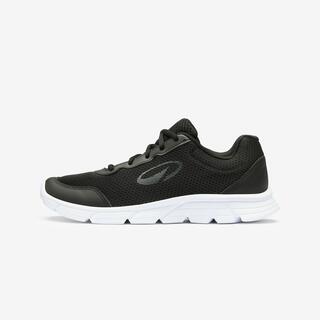


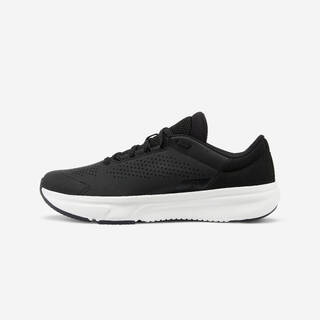


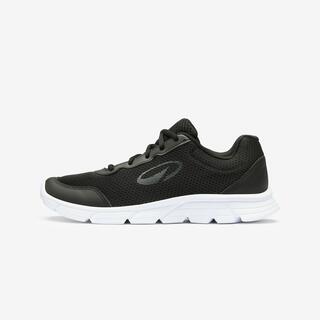
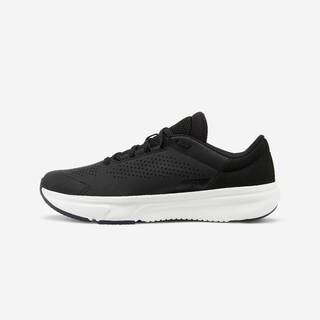


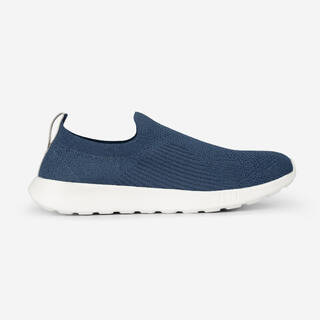


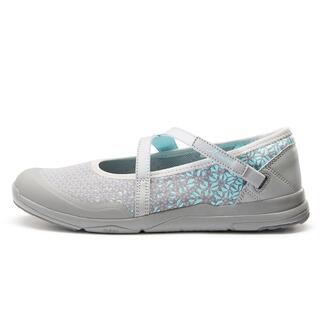


Biomechanical Engineering for Low-Impact Gait Cycles and Indian Urban Terrain
Walking shoes demand fundamentally different midsole compression profiles than running footwear. The gait cycle during walking generates vertical ground reaction forces peaking at 1.2 times body weight, compared to 2 to 3 times during running. This lower impact magnitude requires firmer, more responsive EVA foam densities (typically 55 to 65 Shore A hardness) to prevent excessive energy absorption that creates sluggish transitions. Decathlon's walking range deploys dual-density midsole architectures: a firmer lateral wedge for midfoot stability during the stance phase, and a softer medial column to accommodate natural pronation without overstabilizing the foot's adaptive mechanics.
Indian pavements present unique engineering challenges. Concrete sidewalks in Mumbai, Bangalore, and Delhi retain surface temperatures exceeding 55°C during peak summer months, accelerating EVA foam degradation through thermal cycling. Our walking shoes integrate heat-resistant compound formulations that maintain structural integrity across 500 to 700 kilometers of urban use. The outsole rubber compounds feature higher silica content (18 to 22 percent) for superior wet-surface traction during monsoon conditions, when algae-coated tiles and waterlogged pathways create slip hazards. Lug patterns are engineered with 3mm to 4mm depth and multidirectional siping to channel water away from the contact patch, delivering reliable grip on both dry tar and rain-slicked surfaces.
Anatomical Fit Systems and Heel Counter Lockdown for All-Day Comfort
Proper heel containment prevents the microslippage that causes blisters during extended walking sessions. Our walking shoes employ thermoplastic polyurethane (TPU) heel counters with anatomical curvature that wraps 15 to 20mm higher on the medial side, matching the natural asymmetry of the calcaneus bone. This design eliminates the pressure points common in symmetrical counters while maintaining rearfoot stability during the heel-strike phase. The internal heel cup extends forward to cradle the midfoot, creating a locked-in sensation without constricting the Achilles tendon.
Forefoot volume accommodation addresses the toe splay that occurs during the push-off phase of walking. Indian feet often present wider forefoot dimensions relative to heel width, a morphology not addressed by narrow European lasts. Decathlon walking shoes use semi-curved lasts with 10mm to 12mm additional width in the toe box, allowing the metatarsal heads to spread naturally without lateral compression. Engineered mesh uppers incorporate targeted stretch zones aligned with the first and fifth metatarsophalangeal joints, providing adaptive give during the propulsive phase while maintaining structural support through the midfoot arch region.
Breathability Architecture for High-Humidity Monsoon and Coastal Conditions
Moisture management becomes critical when ambient humidity exceeds 80 percent, a common condition across coastal cities and during the June to September monsoon period. Standard mesh uppers saturate quickly, creating a clammy microclimate that promotes fungal growth and skin maceration. Our walking shoes deploy engineered mesh with open-cell construction and hydrophobic yarn treatments. The mesh aperture size (1.2mm to 1.8mm openings) balances airflow with debris filtration, preventing fine dust ingress common on Indian roads while maintaining ventilation rates of 800 to 1200 cubic centimeters per minute.
Internal moisture evacuation relies on wicking liners that pull perspiration away from skin through capillary action. These polyester-blend liners feature a brushed interior surface (pile height 0.8mm to 1.2mm) that increases surface area contact, accelerating vapor transfer to the outer mesh layer. The footbed incorporates perforated EVA with drainage channels that prevent pooling under the plantar surface. This three-layer moisture management system keeps feet dry during 10,000 to 15,000 step daily routines, even in high-sweat conditions typical of 35°C to 42°C ambient temperatures combined with 70 to 90 percent relative humidity.
Decathlon Passion Brand Technologies: Newfeel Walking-Specific Innovations
Newfeel represents Decathlon's dedicated walking engineering division, developing footwear exclusively for recreational and fitness walking disciplines. The brand's Propulse Motion technology addresses the unique biomechanics of the walking stride through a rockered midsole geometry. This 8-degree toe spring curvature reduces the mechanical work required during the terminal stance phase, when the body's center of mass transitions over the forefoot. Independent gait analysis shows this rocker profile decreases tibialis anterior muscle activation by 12 to 15 percent over 5-kilometer distances, delaying onset of anterior shin fatigue.
Newfeel's Kalensole cushioning system employs a segmented midsole construction with independent compression zones. The heel segment uses firmer 60 Shore A EVA to control the initial impact transient, while the forefoot deploys softer 50 Shore A foam to cushion metatarsal loading during push-off. This zonal approach prevents the mushy, unstable sensation of uniform soft cushioning while still attenuating peak pressures that cause forefoot pain during long walks. The technology proves particularly effective on unforgiving concrete surfaces where inadequate cushioning leads to metatarsalgia and plantar fascia strain after 8,000 to 10,000 steps.
Durability Benchmarks and Outsole Wear Resistance for Extended Mileage
Walking shoes face different abrasion patterns than running footwear due to the prolonged ground contact time during each stride. The heel strike zone experiences concentrated wear as the foot remains in contact with the pavement for 0.6 to 0.8 seconds per step, compared to 0.2 to 0.3 seconds during running. Our outsoles use carbon-reinforced rubber compounds (carbon black content 25 to 30 percent) in high-wear zones, delivering abrasion resistance rated at 150 to 200 cubic millimeters material loss per 40 kilometers under DIN 53516 testing protocols.
Midsole compression set determines long-term cushioning retention. Standard EVA foams lose 20 to 30 percent of their original thickness after 400 to 500 kilometers due to cellular collapse from repeated loading cycles. Decathlon walking shoes incorporate compression-molded EVA with closed-cell architecture and crosslinked polymer chains. This manufacturing process creates foam that retains 85 to 90 percent of its original rebound properties after 600 to 800 kilometers of use. For daily walkers covering 5 to 7 kilometers per session, this translates to 4 to 5 months of consistent cushioning performance before midsole replacement becomes necessary. Upper durability receives equal attention, with reinforced toe caps and abrasion-resistant overlays at flex points to prevent premature material breakdown.
Selection Criteria for Fitness Walking, Urban Commuting, and Light Trail Applications
Fitness walking at paces exceeding 6 kilometers per hour demands responsive cushioning and aggressive heel-to-toe transitions. Shoes for this application feature lower stack heights (22mm to 26mm) and firmer midsole densities that facilitate quick turnover without energy loss. The heel-to-toe drop typically measures 8mm to 10mm, promoting a midfoot strike pattern that reduces braking forces. Urban commuters covering 3 to 5 kilometers daily on flat pavements benefit from maximum cushioning (stack heights 28mm to 32mm) and flexible outsoles that adapt to varied surface textures, from polished mall floors to rough asphalt.
Light trail walking introduces lateral stability requirements absent in pure road walking. Uneven park paths, gravel tracks, and compacted dirt trails demand wider platform geometries and external heel counters that resist inversion moments. Trail-oriented walking shoes incorporate 15 to 20 percent wider midsole bases and deeper lug patterns (5mm to 6mm depth) for loose surface traction. The upper construction shifts to synthetic leather overlays and protective toe bumpers that withstand root strikes and rock contact. These design modifications add 40 to 60 grams per shoe compared to road-specific models but provide essential protection and stability for mixed-terrain walking common in Indian hill stations and nature reserves.
FAQ (Frequently Asked Questions)
Q1. What is the difference between walking shoes and running shoes in terms of cushioning and support?
Walking shoes use firmer EVA foam densities (55 to 65 Shore A) because walking generates lower impact forces (1.2 times body weight) compared to running (2 to 3 times body weight). The firmer midsole prevents excessive compression and maintains ground feel during the longer stance phase of walking. Running shoes employ softer, more compressive foams to absorb higher shock loads, which would feel unstable and sluggish during walking's slower gait cycle.
Q2. How do I choose the right walking shoe size, and should I size up for Indian feet?
Measure your feet in the evening when natural swelling peaks, and allow 8mm to 12mm space between your longest toe and the shoe's end. Indian feet often present wider forefeet relative to heel width, so prioritize width fit over length. Decathlon walking shoes use semi-curved lasts with additional forefoot volume, eliminating the need to size up if width accommodates your metatarsal spread comfortably.
Q3. Can walking shoes handle monsoon conditions and wet pavement grip in Indian cities?
Yes, Decathlon walking shoes incorporate rubber compounds with 18 to 22 percent silica content for wet-surface traction. The outsole lug patterns feature 3mm to 4mm depth with multidirectional siping that channels water away from the contact patch. This design delivers reliable grip on algae-coated tiles and rain-slicked concrete common during June to September monsoon months.
Q4. How many kilometers can I expect from walking shoes before the cushioning breaks down?
Decathlon walking shoes use compression-molded EVA that retains 85 to 90 percent of original rebound properties after 600 to 800 kilometers. For daily walkers covering 5 to 7 kilometers per session, this translates to 4 to 5 months of consistent performance. Outsole wear typically appears before midsole degradation, with carbon-reinforced rubber lasting 150 to 200 cubic millimeters material loss per 40 kilometers under standard abrasion testing.
Q5. What is Newfeel Propulse Motion technology and how does it help during long walks?
Propulse Motion uses an 8-degree toe spring rocker geometry that reduces mechanical work during the terminal stance phase of walking. This curvature decreases tibialis anterior muscle activation by 12 to 15 percent over 5-kilometer distances, delaying anterior shin fatigue. The rockered midsole facilitates smoother transitions as your body's center of mass rolls over the forefoot during push-off.
Q6. Are walking shoes suitable for standing jobs or do I need specialized work footwear?
Walking shoes work well for standing occupations because they provide firmer, more supportive cushioning than running shoes. The 55 to 65 Shore A midsole density prevents excessive compression fatigue during prolonged static loading. However, ensure the shoe has adequate arch support and a contoured footbed, as standing places continuous pressure on the plantar fascia without the dynamic relief provided by walking's gait cycle.
Q7. How do I maintain breathability in walking shoes during hot Indian summers?
Choose models with engineered mesh featuring 1.2mm to 1.8mm aperture openings and hydrophobic yarn treatments. Remove insoles after each walk to accelerate drying, and rotate between two pairs to allow 24 hours of moisture evaporation between uses. Avoid wearing the same pair on consecutive days when ambient temperatures exceed 35°C, as trapped moisture promotes bacterial growth and accelerates material breakdown.
Q8. Can I use walking shoes for light trekking on hill station trails and forest paths?
Road-oriented walking shoes lack the lateral stability and aggressive traction needed for uneven trails. Light trail walking requires 15 to 20 percent wider midsole platforms, external heel counters, and 5mm to 6mm lug depth for loose surface grip. Trail-specific walking shoes also incorporate protective toe bumpers and synthetic leather overlays to withstand root strikes and rock contact common on hill station paths.
Q9. What heel-to-toe drop should I look for in walking shoes for fitness walking versus casual use?
Fitness walking at paces exceeding 6 kilometers per hour benefits from 8mm to 10mm heel-to-toe drops that promote midfoot striking and quick transitions. Casual urban walking suits higher drops (10mm to 12mm) with maximum cushioning for all-day comfort on flat surfaces. Lower drops require stronger calf and Achilles adaptation, so transition gradually if switching from traditional 12mm drop shoes.
Q10. Do walking shoes need arch support or are flat insoles better for natural foot movement?
Most walkers benefit from moderate arch contouring (3mm to 5mm medial posting) that supports the longitudinal arch during the prolonged stance phase without restricting natural pronation. Completely flat insoles can lead to plantar fascia strain during 10,000-plus step routines on hard concrete. However, rigid orthotic-level support is unnecessary unless you have diagnosed biomechanical issues requiring custom correction.