Gym Gloves Belts & Straps










Engineering Load Distribution: Why Lifting Straps, Belts, and Gloves Matter for Indian Gym Training
Heavy compound lifts generate peak grip fatigue and lumbar compression forces that limit training volume long before target muscles reach mechanical failure. Gym gloves, lifting straps, and weightlifting belts serve distinct biomechanical functions. Gloves redistribute barbell pressure across palm surfaces, reducing callus formation and nerve compression during high-rep pulling movements. Lifting straps transfer load from forearm flexors to wrist loops, enabling maximal back and trap engagement during deadlifts and rows when grip strength becomes the limiting factor. Weightlifting belts increase intra-abdominal pressure by 15 to 40 percent, creating a rigid torso cylinder that resists spinal flexion under axial loading.
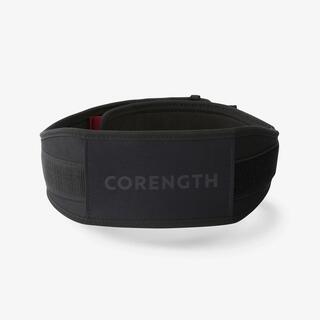
Indian gym environments present specific durability challenges. High ambient temperatures (32 to 40 degrees Celsius in non-air-conditioned facilities) accelerate sweat saturation, degrading synthetic leather and neoprene faster than temperate climates. Domyos gloves use 2 to 3 millimeter neoprene padding with perforated ventilation channels and reinforced double-stitched seams at stress points. Corength lifting belts feature 10 millimeter thick genuine leather or 13 millimeter powerlifting-grade suede with dual prong or lever closure systems rated for 150 kilogram-plus squat and deadlift loads. Straps employ cotton-polyester blends or heavy-duty nylon webbing (25 to 30 millimeter width) with bar-tack reinforcement at loop junctions, tested to 200 kilogram static loads without tearing or slipping.
Proper accessory selection depends on training modality. Bodybuilders performing 12 to 15 rep sets benefit from half-finger gloves with silicone grip dots on palms, maintaining tactile feedback while protecting skin. Powerlifters require 10 to 13 millimeter belts with uniform width front to back, maximizing bracing surface area. Olympic weightlifters prefer tapered 4-inch belts (100 millimeter front, 75 millimeter back) that allow hip flexion during cleans and snatches. Strongman athletes use figure-eight straps for axle deadlifts and farmer's walks, eliminating grip as a variable entirely. Beginners should prioritize wrist wraps and basic palm-padded gloves before investing in specialized straps or competition belts.
Material Science: Neoprene, Leather, and Nylon Durability Under Monsoon Humidity and Sweat Saturation
Gym accessories face accelerated degradation in Indian climates due to combined heat, humidity, and salt-laden perspiration. Neoprene gloves absorb moisture, creating bacterial breeding grounds unless treated with antimicrobial coatings or perforated for airflow. Domyos gloves integrate laser-cut ventilation holes (3 to 5 millimeter diameter) across knuckle zones, reducing sweat pooling by 30 to 40 percent compared to solid neoprene construction. Palm sections use synthetic suede or polyurethane leather with diamond-pattern embossing, increasing surface friction coefficient to 0.6 or higher even when damp.
Lifting belts constructed from genuine leather (cowhide or buffalo hide) require break-in periods of 15 to 25 training sessions before achieving optimal stiffness and contour fit. Suede variants offer superior grip against cotton or polyester workout shirts, preventing belt migration during heavy squats. Lever belts use stainless steel or zinc-alloy mechanisms with spring-loaded releases, eliminating the fumbling associated with double-prong systems between sets. However, lever systems add 150 to 200 grams of weight and require screwdriver adjustments for waist size changes. Single-prong belts balance convenience and adjustability, suitable for athletes experiencing bodyweight fluctuations of 3 to 5 kilograms across training phases.
Lifting straps must resist tensile failure under eccentric loading. Cotton straps provide comfort but stretch under load, reducing mechanical advantage. Nylon webbing (1000 to 1200 denier) maintains dimensional stability up to 180 kilogram pulls, with minimal elongation. Figure-eight straps loop around both wrist and bar simultaneously, distributing force across larger surface areas and eliminating wrap technique variability. Lasso-style straps require proper winding (1.5 to 2 full rotations around bar), with the tail end secured under the lifter's palm. Incorrect wrapping allows bar rotation, defeating the strap's purpose entirely.
Domyos and Corength Sub-Brand Technologies: Grip Patterns, Closure Systems, and Reinforcement Zones
Domyos designs gym gloves for general fitness users performing circuit training, dumbbell work, and machine-based exercises. Models feature 18 to 20 centimeter wrist wraps with hook-and-loop closures, providing adjustable compression without restricting blood flow. Palm padding uses dual-layer construction: a 2 millimeter gel insert absorbs impact forces, while an outer synthetic leather layer resists abrasion from knurled barbell surfaces. Finger openings use elastic binding to prevent edge rolling, maintaining consistent fit across 60 to 90 minute training sessions. Thumb and index finger sections incorporate touchscreen-compatible materials, allowing phone use between sets without glove removal.
Corength targets strength athletes and powerlifters with competition-grade accessories. Powerlifting belts meet International Powerlifting Federation specifications: 10 centimeter width, 13 millimeter maximum thickness, single-prong or lever closure. Suede interiors use buffed split leather, increasing friction coefficient to 0.7 against skin or fabric. Stitching employs heavy-duty polyester thread (bonded nylon core) with 6 to 8 stitches per inch, preventing seam separation under repeated 200 kilogram-plus squat cycles. Lever mechanisms use hardened steel pins and cam systems rated for 50,000 open-close cycles before spring fatigue.
Corength lifting straps feature 50 centimeter lengths with 30 millimeter widths, accommodating wrist circumferences from 15 to 20 centimeters. Neoprene wrist pads (8 to 10 millimeter thickness) distribute pressure across ulnar and radial styloid processes, reducing bone bruising during high-volume deadlift sessions. Bar-tack reinforcement uses X-pattern stitching at loop junctions, creating redundant load paths that prevent catastrophic failure. Some models integrate rubberized grip strips on the underside, increasing bar adhesion by 25 to 30 percent compared to smooth nylon. This proves critical during mixed-grip deadlifts where strap slippage can cause asymmetric loading and lumbar rotation.
Sizing Precision: Wrist Circumference, Palm Width, and Belt Waist Measurements for Indian Body Types
Glove sizing depends on palm width and finger length, not overall hand size. Measure palm width at the widest point across metacarpal heads (typically 7 to 10 centimeters for adult males, 6 to 8 centimeters for females). Small sizes fit 7 to 7.5 centimeter widths, medium covers 7.5 to 8.5 centimeters, large spans 8.5 to 9.5 centimeters, and extra-large accommodates 9.5 centimeters and above. Gloves that are too tight restrict finger flexion and reduce grip strength by 10 to 15 percent. Oversized gloves bunch at knuckles, creating pressure points and reducing tactile feedback on bar positioning.
Lifting belt sizing requires waist measurement at the navel level during normal breathing, not at the narrowest torso point. Indian male lifters typically range from 75 to 95 centimeter waist circumferences, while female athletes measure 65 to 85 centimeters. Belts should allow one finger's width of space when fastened at the middle hole, providing adjustment range for post-meal bloating or weight cuts. Powerlifting belts use 5 to 7 hole spacing at 2.5 centimeter intervals, covering 12 to 15 centimeter size ranges per belt. Athletes experiencing 8 to 10 kilogram bodyweight swings across training cycles may require two belt sizes or opt for lever systems with tool-adjustable buckle positions.
Lifting strap length must accommodate bar diameter and wrist size. Standard Olympic barbells measure 28 to 29 millimeters in diameter, while specialty bars (axle bars, thick-grip bars) reach 50 millimeters. A 45 to 50 centimeter strap provides 1.5 to 2 full wraps around standard bars, sufficient for secure load transfer. Shorter straps (35 to 40 centimeters) suit smaller wrists but limit wrap options. Figure-eight straps require minimal length adjustment since they loop rather than wrap, making them more forgiving for sizing errors. Wrist circumferences below 15 centimeters may experience excessive strap tail length, which can interfere with bar path during pulls.
Training Application Protocols: When to Use Gloves, Straps, or Belts for Compound Lifts and Accessory Work
Gloves serve three primary functions: callus prevention, palm padding, and wrist stabilization. Use gloves during high-rep pulling movements (lat pulldowns, cable rows, pull-ups) where skin friction accumulates across 15 to 25 rep sets. Avoid gloves during heavy barbell lifts (deadlifts, cleans) where direct bar contact improves proprioceptive feedback and grip security. The 2 to 3 millimeter padding layer reduces tactile sensitivity, making it harder to detect bar rolling or slipping during maximal attempts. For dumbbell pressing and machine work, gloves reduce pressure hotspots on palms without compromising control.
Lifting straps eliminate grip as a limiting factor, allowing maximal back and trap recruitment. Deploy straps during working sets of deadlifts, rack pulls, shrugs, and Romanian deadlifts once grip strength fails before target muscle fatigue. Avoid straps during warm-up sets (50 to 70 percent of one-rep max) to maintain natural grip development. Never use straps during Olympic lifts (snatches, cleans) where rapid bar release is required for safety. Straps increase time under tension for posterior chain muscles by 20 to 30 percent compared to raw grip, accelerating hypertrophy in lats, traps, and erectors. However, chronic strap dependence atrophies forearm flexors and reduces crushing grip strength over 12 to 16 week training blocks.
Weightlifting belts should be reserved for working sets above 80 percent of one-rep max on squats, deadlifts, and overhead presses. Wearing belts during warm-ups or accessory exercises prevents the core musculature from developing independent bracing capacity. Tighten belts to the point where deep breathing requires effort but does not cause lightheadedness. This creates 30 to 40 millimeters of mercury intra-abdominal pressure increase, stabilizing the lumbar spine against flexion and extension moments. Remove belts between sets to allow blood pressure normalization and prevent orthostatic intolerance. Athletes with pre-existing hypertension should consult medical professionals before using belts during maximal lifts, as acute blood pressure spikes can reach 300 over 180 millimeters of mercury during heavy squats.
Maintenance and Longevity: Cleaning Protocols, Odor Control, and Storage for Extended Accessory Lifespan
Neoprene and synthetic leather gloves require post-workout cleaning to prevent bacterial colonization and material breakdown. Hand-wash gloves in lukewarm water (30 to 35 degrees Celsius) with mild detergent, avoiding bleach or fabric softeners that degrade neoprene elasticity. Air-dry gloves in shaded, ventilated areas rather than direct sunlight, which causes UV degradation and material stiffening. Never machine-dry gloves, as heat exposure above 60 degrees Celsius melts adhesive bonds between padding layers. Properly maintained gloves last 150 to 200 training sessions before palm padding compresses beyond effective cushioning.
Leather lifting belts develop optimal stiffness and contour through use, but require conditioning to prevent cracking. Apply leather conditioner or mink oil every 30 to 40 training sessions, working product into both grain and flesh sides. This maintains hide suppleness and prevents moisture-induced brittleness. Store belts flat or loosely coiled, never tightly rolled, which creates permanent creases that weaken structural integrity. Suede belts benefit from occasional brushing with stiff nylon bristles to restore nap texture and remove embedded chalk dust. Competition-grade belts last 5 to 8 years under regular powerlifting use (3 to 4 sessions per week) before requiring replacement.
Lifting straps accumulate chalk, sweat salts, and skin oils that reduce grip friction over time. Machine-wash cotton and nylon straps in cold water (20 to 25 degrees Celsius) on gentle cycles every 15 to 20 uses. Avoid fabric softeners, which coat fibers and reduce surface friction coefficient by 20 to 30 percent. Inspect stitching and webbing for fraying or thread separation before each use. Replace straps immediately if bar-tack reinforcement shows loose threads or if webbing exhibits thinning at stress points. A catastrophic strap failure during a 150 kilogram deadlift can cause bar drops resulting in foot injuries or equipment damage. Quality straps cost less than a single physiotherapy session for a crushed toe.
FAQ (Frequently Asked Questions)
Q1. Do I need lifting straps if I can already deadlift 100 kilograms without them?
Straps become necessary when grip strength fails before back muscles reach mechanical failure. If you can complete target rep ranges (6 to 12 reps) at 100 kilograms without grip slippage, straps are optional. However, as loads progress to 120 to 140 kilograms, forearm flexors fatigue faster than lats and traps, limiting back development. Use straps strategically on working sets to maximize posterior chain stimulus while training raw grip during warm-ups and accessory work.
Q2. Should beginners use weightlifting belts or build core strength first without support?
Beginners should develop baseline bracing mechanics during the first 8 to 12 weeks of training before introducing belts. Learn to create intra-abdominal pressure through diaphragmatic breathing and voluntary abdominal contraction during squats and deadlifts at 60 to 75 percent intensity. Once proper technique is established, belts enhance performance on working sets above 80 percent of one-rep max without preventing core strength development. The belt provides external feedback for bracing, not a replacement for internal stabilization.
Q3. How do I choose between 10 millimeter and 13 millimeter thickness for powerlifting belts?
Belt thickness depends on training goals and body composition. A 10 millimeter belt offers sufficient rigidity for general strength training and bodybuilding while allowing greater torso mobility during accessory exercises. A 13 millimeter belt maximizes lumbar support for competition powerlifters attempting maximal singles and doubles, but feels restrictive during high-rep training or dynamic movements. Lighter athletes (under 75 kilograms) often find 13 millimeter belts too rigid, while heavier lifters (over 90 kilograms) benefit from the additional stiffness during 200 kilogram-plus squats.
Q4. Will gym gloves prevent calluses completely or just reduce their severity?
Gloves reduce callus formation by 60 to 70 percent but do not eliminate it entirely. The 2 to 3 millimeter padding distributes pressure across palm surfaces, reducing peak stress concentrations that cause skin thickening. However, repetitive friction still occurs at glove edges and between fingers. Athletes performing 20 to 30 pull-ups per session will develop some callusing regardless of glove use. Proper glove sizing and post-workout hand moisturizing further minimize callus severity compared to bare-hand training.
Q5. Can I use figure-eight straps for Olympic lifts like cleans and snatches?
Never use figure-eight straps for Olympic lifts. These straps lock the bar to your wrists, preventing the rapid release required during failed lift attempts. A missed clean or snatch with figure-eight straps can pull you forward or hyperextend wrists as the bar crashes. Olympic lifters who need grip assistance should use hook grip technique (thumb trapped under fingers) or quick-release lasso straps that unwrap instantly when the bar is dropped. Figure-eight straps are safe only for deadlifts, rows, and shrugs where bar release is controlled.
Q6. How tight should I fasten my lifting belt for maximum bracing effect?
Fasten the belt tight enough that you can barely fit one finger between belt and abdomen during normal breathing. When you take a deep breath and brace, the belt should create noticeable resistance without causing pain or restricting diaphragm expansion. If you cannot take a full breath, the belt is too tight and will limit oxygen delivery during the lift. If the belt shifts or rotates during the movement, it is too loose and provides insufficient bracing feedback. Proper tightness allows maximal intra-abdominal pressure generation while maintaining blood flow and breathing mechanics.
Q7. Do neoprene gloves smell worse than leather gloves after repeated gym sessions?
Neoprene retains moisture and develops odor faster than leather due to its closed-cell foam structure, which traps sweat and bacteria. Leather gloves with perforated palms allow better airflow and dry faster between sessions. However, neoprene gloves with laser-cut ventilation holes and antimicrobial treatments reduce odor accumulation by 40 to 50 percent compared to solid neoprene construction. Washing gloves after every 3 to 4 uses and air-drying them completely prevents bacterial growth regardless of material. Leather requires conditioning to prevent cracking, while neoprene needs no maintenance beyond regular cleaning.
Q8. Should I buy a lever belt or prong belt for powerlifting competitions?
Both lever and prong belts are legal in powerlifting competitions, but each has trade-offs. Lever belts allow faster fastening between attempts (5 to 10 seconds versus 15 to 20 seconds for prongs), critical during the 60-second setup window. However, lever mechanisms add weight and require screwdriver adjustments if waist size changes by more than 2 to 3 centimeters. Single-prong belts offer infinite adjustability and weigh less, making them better for athletes who experience bodyweight fluctuations across training cycles. Competition lifters who maintain stable weight prefer levers for convenience, while those cutting or bulking prefer prongs for flexibility.
Q9. Can I use the same lifting straps for both deadlifts and barbell rows?
Yes, standard lasso-style straps work for both deadlifts and rows, but wrapping technique differs slightly. For deadlifts, wrap straps 1.5 to 2 full rotations around the bar with the tail secured under your palm, creating maximal friction. For barbell rows, use slightly looser wraps (1 to 1.5 rotations) to allow controlled bar release at the bottom of each rep. Figure-eight straps suit deadlifts better due to their locked configuration, while lasso straps provide more versatility across pulling movements. Strap length of 45 to 50 centimeters accommodates both exercises for most wrist sizes.
Q10. How do I prevent my lifting belt from sliding up during heavy squats?
Belt migration occurs when the belt is positioned too high (above the iliac crest) or fastened too loosely. Position the belt so its bottom edge sits 1 to 2 centimeters above your hip bones, covering the lower abdominal region where intra-abdominal pressure is highest. Tighten the belt firmly before unracking the bar, and re-brace at the top of each rep to maintain pressure against the belt. Suede or leather belts with textured interiors grip skin and fabric better than smooth synthetic materials. If migration persists, the belt may be too wide for your torso length, consider a tapered design that narrows at the front.