Tennis Rackets



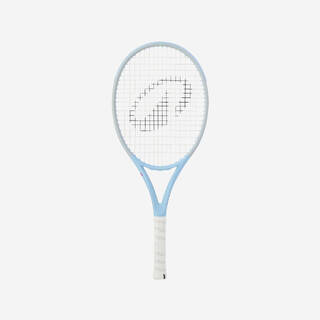


High-Modulus Graphite Composition and Frame Balance Engineering for Indian Court Conditions
Tennis rackets engineered for Indian hard courts, synthetic grass, and clay surfaces demand precise frame balance distribution and material torsional rigidity. Artengo rackets utilize high-modulus graphite composite layups that deliver controlled flex patterns during ball contact, translating stroke energy into directional spin and pace. Frame balance points range from 320mm (head-light for baseline control) to 340mm (head-heavy for serve power), directly influencing swing weight and maneuverability during rapid net exchanges. Indian summer temperatures exceeding 40°C place thermal stress on resin matrix bonds, making UV-stabilized epoxy layering critical for frame longevity across multi-year outdoor play cycles.
Head size geometry varies from 630 sq cm midsize precision frames to 740 sq cm oversize power platforms. Larger sweet spots compensate for off-center ball strikes common in developing stroke mechanics, while compact 95-98 sq inch (613-632 sq cm) heads reward advanced players with surgical shot placement control. Beam width profiles, measured at throat (20-22mm) and tip (24-28mm), govern frame stiffness ratings. Stiffer beams (RA 68-72) return more ball energy but transmit higher vibration loads to the elbow joint, while flexible frames (RA 60-65) absorb shock but require faster swing speeds to generate equivalent pace. Indian club players transitioning from recreational to competitive formats benefit from progressive stiffness ladders that match evolving biomechanical stroke production.
String pattern density (16x19 open vs 18x20 dense) alters spin potential and string durability. Open patterns allow greater string movement during ball contact, snapping back to create topspin rotation exceeding 3000 rpm on modern western forehand grips. Dense patterns restrict lateral string displacement, extending polyester string lifespan by 15-20 hours of play but reducing spin access. Factory pre-strung rackets arrive tensioned between 52-56 lbs, suitable for recreational hitting but requiring customization for tournament-level control. Monsoon humidity causes nylon and multifilament strings to absorb moisture, reducing tension by 2-4 lbs within 48 hours of humid exposure, necessitating climate-controlled storage or post-monsoon restringing protocols.
Artengo TR Series Weight Distribution and Swing Mechanics for Baseline vs Serve-Volley Styles
Artengo TR series rackets segment by weight class and playing style biomechanics. TR100 entry models weigh 270-280g unstrung, offering extended swing paths for junior players and adults building foundational stroke patterns. Lightweight construction reduces shoulder fatigue during two-hour practice blocks on concrete municipal courts, where ground reaction forces already stress lower body joints. TR530 intermediate rackets scale to 290-300g unstrung, adding mass for penetrating groundstrokes against heavy topspin opponents while maintaining enough head speed for defensive slice retrieval.
TR960 advanced competition frames reach 310-320g unstrung weights, demanding developed core stability and rotational torque generation. Heavier static weight increases momentum transfer during ball contact, driving through opponent pace rather than absorbing it. However, Indian club players averaging 12-15 hours weekly court time must balance power gains against cumulative elbow and wrist strain. Grip size selection from L1 (4 1/8 inch, 100mm circumference) to L4 (4 5/8 inch, 118mm circumference) affects lever arm length and injury risk. Undersized grips force excessive wrist flexion to stabilize the racket face, overloading forearm extensor tendons, while oversized grips limit supination range needed for eastern backhand slice execution.
Serve-volley specialists require head-light balance (6-10 points) for rapid racket head acceleration during overhead smashes and reflex volleys inside the service box. Baseline grinders favor even balance or slight head-heaviness (0-4 points) to sustain rally depth past the service line during extended clay court points. All-court players in Indian AITA tournaments benefit from 2-4 point head-light configurations that blend net touch with baseline consistency across mixed surface schedules.
Polyester vs Multifilament String Interaction with Indian Climate and Court Abrasion
String material selection governs spin generation, comfort feedback, and maintenance intervals across India's diverse climate zones. Polyester monofilament strings (co-polyester) maintain tension stability under thermal cycling between 15°C winter mornings and 42°C afternoon court surfaces. Their low friction coefficients and pentagonal or hexagonal cross-sections bite into the ball's felt surface, generating 25-35% more topspin rotation compared to smooth nylon alternatives. However, polyester's stiff molecular structure transmits 40-50% more impact shock to the arm, requiring players with elbow sensitivity to hybrid setups pairing polyester mains (vertical strings) with softer multifilament crosses (horizontal strings).
Multifilament synthetic gut constructions use hundreds of microfibers bonded into a single strand, mimicking natural gut's elastic rebound without the humidity vulnerability. These strings lose tension 15-20% faster than polyester, dropping from 55 lbs to 46 lbs within 10-12 playing hours, but deliver superior comfort for players managing tennis elbow or wrist tendonitis. Coastal players in Mumbai, Chennai, and Kochi face accelerated corrosion on uncoated polyester due to salt-laden air moisture, reducing string lifespan to 8-10 hours before notching and fraying compromise ball control.
Natural gut remains the premium option for professional-level play, offering unmatched tension maintenance and energy return, but requires immediate post-play drying and climate-controlled storage to prevent moisture absorption and fiber breakdown. Indian tournament players often reserve natural gut setups for match play while training with durable polyester to manage equipment costs across 15-20 weekly practice hours.
Junior Development Racket Specifications and Age-Appropriate Length Progressions
Junior tennis development follows racket length progressions aligned with player height and court size transitions. Artengo TR100 junior rackets start at 19 inches (48cm) for players under 90cm height, scaling through 21, 23, 25, and 26-inch increments before reaching full 27-inch adult lengths. Each 2-inch jump corresponds to roughly 10cm height growth, maintaining proper swing plane angles and contact point positioning relative to shoulder height. Undersized rackets for taller juniors collapse swing radius and force cramped biomechanics, while oversized frames extend lever arms beyond muscular control, embedding compensatory wrist and elbow mechanics that require later correction.
Head size ratios increase proportionally with length, from 535 sq cm on 19-inch frames to 645 sq cm on 25-inch models, preserving sweet spot accessibility as stroke speed develops. Aluminum construction dominates junior entry models due to superior impact resistance against fence collisions, cart drops, and bag compression compared to graphite's brittle failure modes. Aluminum's higher density (2.7 g/cm³ vs graphite's 1.8 g/cm³) adds 30-40g static weight but distributes mass toward the handle, creating head-light balance that aids racket recovery speed during rapid fire drill sequences.
Junior players training on full-size courts by age 10-12 transition to 26-inch graphite composite frames weighing 240-260g unstrung. This phase bridges recreational aluminum durability with competitive graphite performance, preparing biomechanical adaptations for adult tournament rackets. Indian academy programs emphasize grip size accuracy during growth spurts, as juniors often continue using undersized L0 or L1 grips past appropriate hand dimensions, limiting stroke development and increasing injury susceptibility during high-volume training blocks.
Vibration Dampening Systems and Elbow Joint Load Management for Extended Play Durations
Impact vibration transmission from ball contact to the elbow joint depends on frame stiffness, string tension, and dampening insert placement. Tennis ball contact generates impact forces lasting 3-5 milliseconds, creating shock waves that propagate through the string bed into the frame hoop and down the shaft to the handle. Undampened rackets transmit vibration frequencies between 120-180 Hz, resonating with forearm soft tissue and potentially aggravating lateral epicondylitis (tennis elbow) during multi-hour sessions on unforgiving hard courts.
Artengo rackets integrate elastomer dampening inserts positioned between the two center main strings below the throat, absorbing high-frequency oscillations before they reach the grip. These rubber or silicone nodes reduce perceived vibration amplitude by 18-25% without altering ball contact feedback needed for shot precision. Players with existing elbow inflammation benefit from pairing vibration dampeners with lower string tensions (48-52 lbs) and multifilament string materials, creating a cumulative shock absorption system that reduces peak impact loads by 30-35% compared to stiff polyester at 58 lbs tension.
Grip material composition adds a final vibration filtration layer. Synthetic polyurethane replacement grips with 1.6-1.8mm thickness provide cushioning without excessive diameter increase, while thin 0.5mm overgrips prioritize tackiness for humid palm conditions but offer minimal shock absorption. Indian players logging 12-15 weekly court hours should replace base grips every 40-50 playing hours as polyurethane cells compress and lose rebound properties, reducing vibration dampening effectiveness and increasing cumulative joint stress across training cycles.
Pre-Strung vs Unstrung Frame Selection and Customization Pathways for Skill Progression
Pre-strung rackets arrive factory-tensioned with synthetic gut or basic multifilament strings at 54-56 lbs, ready for immediate recreational play. This configuration suits beginners establishing stroke consistency and club players prioritizing convenience over customization. Factory string jobs use automated machines calibrating tension within ±2 lbs variance, adequate for recreational ball control but lacking the precision required for competitive tournament setups. Pre-strung inventory also enables immediate on-court testing, critical for Indian buyers without access to specialized pro shop stringing services in tier 2 and tier 3 cities.
Unstrung frames target intermediate to advanced players investing in personalized string and tension specifications. Professional stringing machines apply consistent pull tension across all string crossings, achieving ±0.5 lb accuracy that preserves intended string bed stiffness and spin potential. Custom jobs allow hybrid setups pairing polyester mains (for spin and durability) with multifilament crosses (for comfort), tension differentials between mains and crosses (e.g., 52 lbs mains, 50 lbs crosses), and specialty string patterns optimizing specific shot production.
Indian tournament players should budget for restringing every 15-20 playing hours to maintain optimal tension windows, as polyester loses 8-12% tension within the first 24 hours post-stringing before stabilizing. Climate-controlled storage between sessions slows tension decay, while leaving rackets in car trunks during summer accelerates polymer creep and premature string bed collapse. Players transitioning from pre-strung convenience to custom stringing should document baseline tension and string type, then adjust in 2 lb increments across subsequent jobs to identify personal performance and comfort thresholds without drastic specification jumps that disrupt stroke timing.
FAQ (Frequently Asked Questions)
Q1. What racket weight should I choose as a beginner playing on Indian hard courts?
Beginners should start with rackets weighing 270-285g unstrung (roughly 285-300g strung). Lighter frames reduce shoulder and elbow fatigue during the 60-90 minute sessions needed to develop consistent stroke mechanics. Indian municipal hard courts generate higher ground reaction forces than clay, so lighter rackets help you focus on footwork and contact point positioning without cumulative joint stress during the learning phase.
Q2. How does head size affect my game and which size suits intermediate players?
Head size directly impacts sweet spot dimensions and power generation. Oversize frames (680-740 sq cm) forgive off-center hits but reduce control precision, while midsize frames (613-645 sq cm) reward clean contact with surgical shot placement. Intermediate players developing consistent ball striking should use 645-680 sq cm heads, balancing enough forgiveness for variable contact points with sufficient control for directional shot making during competitive rallies.
Q3. What grip size should I use and how do I measure my hand correctly?
Measure from the middle crease of your palm to the tip of your ring finger. This distance in millimeters corresponds to grip sizes: 100-105mm = L1, 105-110mm = L2, 110-115mm = L3, 115-120mm = L4. Correct sizing allows your index finger to fit snugly in the gap between your thumb and fingers when gripping the handle. Undersized grips cause excessive wrist flexion and forearm strain, while oversized grips limit wrist snap needed for topspin generation and slice control.
Q4. Should I choose polyester or multifilament strings for playing in Indian summer heat?
Polyester strings maintain tension stability under thermal cycling between morning and afternoon court temperatures, losing only 8-10% tension across 15 playing hours. They generate 25-35% more topspin than multifilament but transmit higher impact shock to your elbow. Multifilament strings offer superior comfort and arm-friendly feedback but lose 15-20% tension within 10 hours and require more frequent restringing. If you have elbow sensitivity, hybrid setups with polyester mains and multifilament crosses provide spin access with reduced vibration transmission.
Q5. How often should I restring my racket if I play 3 times per week?
Playing 3 times weekly (roughly 6-9 hours) means you should restring every 4-6 weeks to maintain optimal tension windows. Polyester strings lose 8-12% tension in the first 24 hours after stringing, then stabilize before gradually creeping over subsequent sessions. Once tension drops below 85% of initial stringing (e.g., from 55 lbs to 47 lbs), you lose intended string bed stiffness, spin potential, and control precision, making restringing necessary for consistent performance.
Q6. What is the difference between head-light and head-heavy racket balance?
Head-light balance (6-10 points) concentrates mass toward the handle, enabling faster racket head acceleration for volleys, serves, and defensive reactions at net. Head-heavy balance (0-4 points head-heavy) adds mass in the hoop, increasing momentum transfer during groundstrokes for penetrating pace from the baseline. All-court players benefit from 2-4 points head-light configurations that blend net maneuverability with baseline power, suitable for mixed playing styles across Indian tournament formats.
Q7. Can I use the same racket for both hard court and clay court play?
Yes, modern graphite rackets perform across surface types, but string and tension adjustments optimize performance. Hard courts generate faster ball speeds and higher impact forces, benefiting from slightly higher tensions (54-58 lbs) for control. Clay courts slow ball pace and increase rally length, where lower tensions (50-54 lbs) add depth and reduce arm fatigue during extended points. If you regularly switch surfaces, maintain two identical rackets strung at different tensions rather than constantly adjusting a single setup.
Q8. What frame stiffness rating should I choose to avoid tennis elbow?
Frame stiffness ratings below RA 65 transmit less vibration to your elbow joint, absorbing more impact shock within the frame structure itself. Rackets rated RA 60-64 suit players with existing elbow sensitivity or those logging 12-15 weekly court hours. Stiffer frames (RA 68-72) return more ball energy but require developed stroke mechanics and conditioned arm strength to handle increased vibration loads. Pair flexible frames with multifilament strings at 50-54 lbs tension for maximum shock absorption if managing elbow inflammation.
Q9. How do I know when my racket needs replacement beyond just restringing?
Inspect the frame for hairline cracks near the throat or along the beam edges, especially after fence impacts or bag compression. Graphite frames develop micro-fractures that compromise torsional rigidity, causing the racket to feel unstable during off-center hits even with fresh strings. If you notice increased vibration, loss of power despite new strings, or visible frame deformation, replacement is necessary. Recreational players typically replace frames every 2-3 years, while competitive players logging 15-20 weekly hours may need annual replacement due to cumulative structural fatigue.
Q10. What are the key differences between Artengo TR100, TR530, and TR960 racket models?
TR100 models target beginners with 270-280g weights, larger 680-710 sq cm heads, and aluminum or entry-level graphite construction for durability and forgiveness. TR530 intermediate rackets weigh 290-300g with 645-680 sq cm heads, using mid-grade graphite composites for improved control and spin access. TR960 advanced frames reach 310-320g with 630-660 sq cm heads, employing high-modulus graphite layups and tighter beam profiles (21-23mm) for surgical shot placement and maximum feedback, suited for tournament-level players with developed stroke mechanics and physical conditioning.