Tennis Shoes


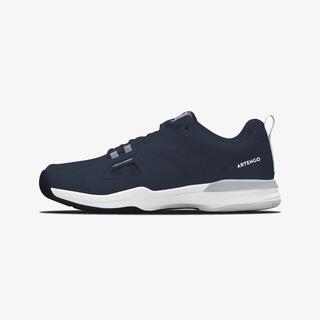


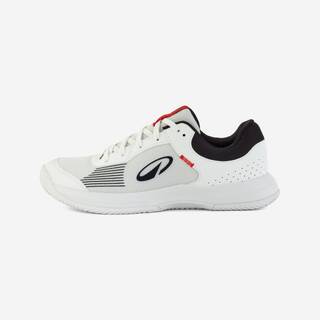
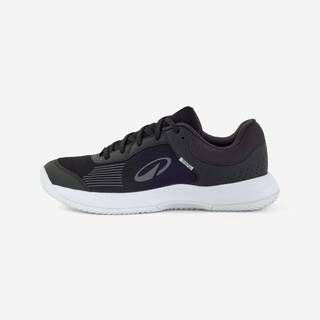


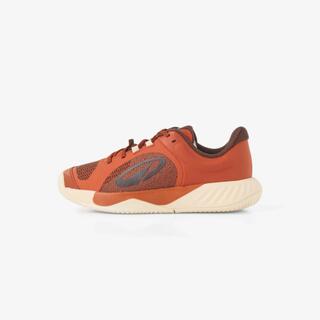


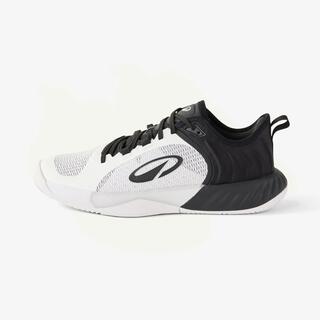


Court Surface Outsole Engineering: Clay, Hard Court, and Grass Tread Patterns
Tennis footwear demands surface-specific outsole geometry to manage lateral torque and directional pivots. Hard court shoes deploy modified herringbone tread patterns with shallow lug depths (1.5 to 2 mm) to maximize contact patch area on acrylic and concrete surfaces, reducing slip during explosive baseline rallies. Clay court variants integrate deeper, wider-spaced chevron lugs (3 to 4 mm) that bite into crushed brick and allow controlled slide deceleration without ankle rollover. Grass court outsoles use dense, low-profile pimple configurations that penetrate turf without tearing natural fibers, though these remain niche in India where hard courts dominate public and club facilities.
Indian municipal courts typically feature painted concrete or synthetic acrylic overlays that generate high surface friction and abrasive wear. Outsole rubber compounds must balance durability against grip coefficients. Non-marking carbon-infused rubber blends (durometer hardness 60 to 65 Shore A) resist chunking under repetitive toe drag during serves while maintaining lateral traction. Decathlon's Artengo tennis range engineers court-specific tread geometries tested across Chennai's summer heat (surface temperatures exceeding 50°C) and monsoon humidity, where moisture film reduces friction coefficients by 15 to 20 percent. Selecting the correct outsole pattern for your primary court surface directly impacts movement efficiency and shoe lifespan.
Midsole Cushioning Systems: EVA Foam Density and Heel-to-Toe Drop Biomechanics
Tennis imposes repetitive impact forces equivalent to 2.5 to 3 times body weight during split-step landings and directional changes. Midsole foam must attenuate these shock loads without collapsing under multi-directional stress. Dual-density EVA constructions layer softer foam (compression set 15 to 20 percent) in the heel crash pad for initial impact absorption, transitioning to firmer foam (compression set 8 to 12 percent) in the midfoot and forefoot to maintain court feel and energy return during push-off phases. Heel-to-toe drop measurements (typically 8 to 10 mm for tennis) influence Achilles tendon loading angles and calf muscle engagement during rapid deceleration.
Indian club players logging 8 to 12 hours weekly on hard courts require midsoles that resist thermal degradation and compression fatigue. EVA foam loses 10 to 15 percent of its rebound properties after 300 to 400 hours of play, particularly under high ambient temperatures where polymer chains soften. Artengo tennis shoes integrate compression-molded EVA with cross-linked polymer additives that extend durability thresholds. Players exceeding 75 kg body weight should prioritize models with thicker midsole stacks (18 to 22 mm heel height) to distribute plantar pressures across broader surface areas, reducing metatarsal stress during extended baseline exchanges.
Upper Construction: Engineered Mesh Breathability and Lateral Containment Systems
Tennis uppers must reconcile ventilation demands with lateral lockdown during aggressive side-to-side movements. Single-layer engineered mesh (200 to 240 denier polyester) provides maximum airflow for moisture evacuation, critical during India's pre-monsoon humidity spikes where sweat saturation compromises internal grip. However, mesh alone cannot resist the lateral shear forces (up to 1.2 times body weight) generated during wide court coverage. Reinforcement overlays in thermoplastic polyurethane (TPU) or synthetic leather anchor the midfoot and heel counter, preventing medial collapse during crossover steps.
Artengo tennis footwear employs targeted TPU caging across high-stress zones: medial arch bridges to counter pronation drift, lateral sidewalls to prevent ankle inversion, and toe bumpers to absorb drag abrasion during serve follow-throughs. Internal heel counters molded from rigid EVA or TPU extend 40 to 50 mm vertically to lock the calcaneus bone, minimizing heel slippage inside the shoe during rapid directional changes. Players with wider forefeet (D to 2E widths) should verify toe box dimensions, as narrow European lasts can compress the transverse metatarsal arch and trigger neuromas during prolonged play. Proper upper fit allows 8 to 10 mm of toe clearance in the standing position, accommodating forefoot splay under load.
Torsional Stability and Midfoot Shank Plates for Multi-Directional Agility
Tennis footwork demands torsional rigidity through the midfoot to prevent arch collapse during lateral lunges and recovery steps. Thermoplastic shank plates embedded between the midsole and outsole layers resist twisting forces that can strain plantar fascia ligaments and tibialis posterior tendons. These plates, typically 1.5 to 2 mm thick and extending from the heel through the midfoot, allow controlled forefoot flexion during toe-off while blocking excessive midfoot rotation during cutting maneuvers.
Indian players transitioning from running shoes to tennis-specific models often underestimate the importance of lateral stability features. Running footwear prioritizes forward propulsion with flexible midsoles and minimal sidewall support, unsuitable for tennis's multi-planar loading patterns. Artengo designs integrate external TPU stability frames that wrap the lateral and medial sidewalls, creating a cradle effect that centers the foot during rapid weight transfers. Court testing in Bangalore's indoor facilities (where polished acrylic surfaces amplify slip risk) validates these stability systems under controlled conditions. Players experiencing medial ankle soreness or midfoot fatigue should assess whether their current shoes provide adequate torsional control, as insufficient support accelerates overuse injuries during high-volume training blocks.
Sizing Protocols and Break-In Periods for Indian Foot Morphology
Accurate tennis shoe sizing accounts for forefoot expansion under load and sock thickness variations. Indian athletes should measure foot length in the afternoon when pedal edema peaks, adding 8 to 12 mm clearance beyond the longest toe to accommodate forward slide during deceleration phases. Width measurements across the metatarsal heads determine whether standard D widths suffice or if 2E or 4E variants prevent lateral compression. Artengo tennis shoes follow European sizing standards (typically running true to size), but players accustomed to Indian or US sizing should cross-reference conversion charts and prioritize actual foot measurements over habitual size labels.
New tennis shoes require 3 to 5 hours of break-in play to allow upper materials to conform to individual foot contours and midsole foams to achieve optimal compression cycles. Avoid wearing untested shoes in competitive matches, as stiff heel counters and unformed toe boxes increase blister risk during high-intensity rallies. Players should lace shoes using lock lacing techniques (runner's loop) at the top eyelet to secure the heel and prevent forward slide, particularly important on India's fast hard courts where sudden stops generate high anterior shear forces. Regularly inspect outsole wear patterns: excessive lateral edge abrasion indicates overpronation or improper court movement mechanics, while premature toe drag wear suggests dragging the back foot during serves, both addressable through technique adjustments or orthotic interventions.
Maintenance Protocols for Extended Durability in Indian Climate Conditions
Tennis shoes accumulate court dust, sweat salts, and UV degradation that accelerate material breakdown. After each session, brush outsoles with stiff-bristled tools to remove embedded clay or concrete particles that abrade tread patterns during subsequent play. Wipe uppers with damp microfiber cloths to extract sweat salts (sodium chloride concentrations in Indian sweat average 900 to 1100 mg/L) that corrode synthetic fibers and delaminate adhesive bonds between upper and midsole layers. Air-dry shoes in shaded, ventilated spaces, avoiding direct sunlight that degrades EVA foam and causes premature yellowing of rubber compounds.
Store tennis footwear in cool, low-humidity environments (below 60 percent relative humidity) to prevent mold growth inside mesh uppers and maintain midsole foam elasticity. Rotating between two pairs extends total lifespan by allowing midsole foams to fully decompress between sessions (EVA requires 24 to 48 hours to recover 90 percent of its original thickness). Replace shoes after 300 to 400 hours of court time or when outsole tread depth reduces below 1 mm, as worn outsoles compromise traction and increase slip-related injury risk. Indian players training on abrasive municipal courts may reach replacement thresholds 20 to 30 percent faster than those using maintained club surfaces, making rotation strategies and proactive replacement essential for consistent performance and joint health.
FAQ (Frequently Asked Questions)
Q1. What is the difference between hard court and clay court tennis shoes for Indian playing conditions?
Hard court shoes use shallow herringbone tread patterns (1.5 to 2 mm lug depth) for maximum grip on concrete and acrylic surfaces common in India, while clay court shoes feature deeper chevron lugs (3 to 4 mm) for controlled sliding on crushed brick. Since 90 percent of Indian public and club courts are hard surface, prioritize hard court-specific outsoles with durable carbon-infused rubber compounds that resist abrasive wear from painted concrete.
Q2. How do I choose the correct tennis shoe size to prevent blisters and toe jamming?
Measure your foot length in the afternoon when swelling peaks, then add 8 to 12 mm clearance beyond your longest toe to accommodate forward slide during stops. Check width across the metatarsal heads, as narrow European lasts can compress wider Indian feet. Use lock lacing at the top eyelet to secure your heel and prevent forward movement inside the shoe during rapid directional changes.
Q3. How long do tennis shoes last on Indian hard courts before needing replacement?
Expect 300 to 400 hours of play before midsole cushioning degrades and outsole tread wears below 1 mm depth. Indian municipal courts with abrasive concrete surfaces accelerate wear by 20 to 30 percent compared to maintained club acrylic, so inspect outsoles monthly. Replace shoes when you notice reduced shock absorption, visible midsole compression, or smooth outsole patches that compromise traction.
Q4. Can I use running shoes for tennis to save on buying sport-specific footwear?
Running shoes lack the lateral stability features and torsional rigidity required for tennis's multi-directional movements. Tennis footwear integrates TPU sidewall caging, midfoot shank plates, and reinforced heel counters to resist lateral shear forces up to 1.2 times body weight during cutting maneuvers. Using running shoes increases ankle inversion risk and midfoot strain during aggressive court coverage.
Q5. What midsole cushioning thickness should heavier players choose for hard court tennis?
Players exceeding 75 kg body weight should select models with 18 to 22 mm heel stack heights and dual-density EVA foam to distribute impact forces (2.5 to 3 times body weight during landings) across broader plantar surface areas. Thicker midsoles reduce metatarsal stress during extended baseline rallies, particularly on India's unforgiving concrete courts that offer minimal natural shock absorption.
Q6. How do I maintain tennis shoes to prevent premature wear in humid monsoon conditions?
After each session, brush outsoles to remove embedded court particles and wipe uppers with damp cloths to extract sweat salts that corrode synthetic materials. Air-dry in shaded, ventilated spaces (never direct sunlight) and store below 60 percent humidity to prevent mold growth. Rotate between two pairs to allow midsole foams 24 to 48 hours to decompress fully between uses.
Q7. What heel-to-toe drop measurement works best for tennis footwork biomechanics?
Tennis shoes typically feature 8 to 10 mm heel-to-toe drops that balance Achilles tendon loading during rapid decelerations with forefoot responsiveness during push-off phases. This moderate drop supports the split-step landing position and allows efficient weight transfer during multi-directional movements, unlike running shoes with 10 to 12 mm drops optimized for forward propulsion only.
Q8. Do Artengo tennis shoes accommodate wider Indian foot shapes compared to international brands?
Artengo models follow European D-width standards but offer specific designs with roomier toe boxes to accommodate wider forefeet common among Indian players. Measure your metatarsal width and verify toe box dimensions, ensuring 8 to 10 mm clearance in standing position. Players requiring 2E or 4E widths should test fit before purchase, as narrow lasts compress the transverse metatarsal arch and trigger discomfort during prolonged play.
Q9. What break-in period should I allow before wearing new tennis shoes in competitive matches?
Allocate 3 to 5 hours of practice play to allow upper materials to conform to your foot contours and midsole foams to achieve optimal compression cycles. Stiff heel counters and unformed toe boxes increase blister risk during high-intensity rallies if worn untested in competition. Use this break-in period to adjust lacing techniques and verify that no pressure points develop during explosive lateral movements.
Q10. How do I identify if my tennis shoes provide adequate lateral stability for aggressive court coverage?
Check for TPU sidewall caging that wraps medial and lateral edges, rigid heel counters extending 40 to 50 mm vertically, and midfoot shank plates that resist twisting during cutting maneuvers. If you experience medial ankle soreness or midfoot fatigue after intense sessions, your current shoes likely lack sufficient torsional control. Proper stability systems prevent arch collapse during lateral lunges and reduce overuse injury risk during high-volume training.