Cycle Locks and Padlocks

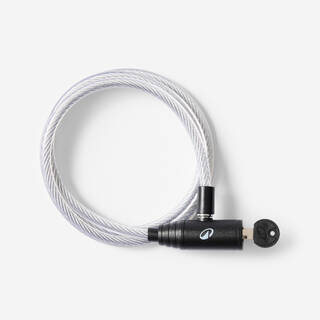
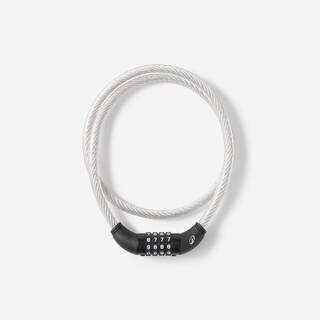
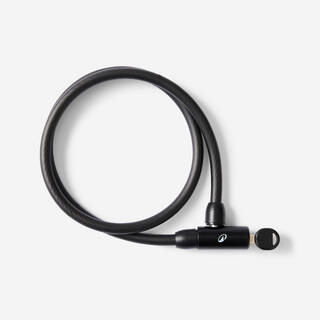
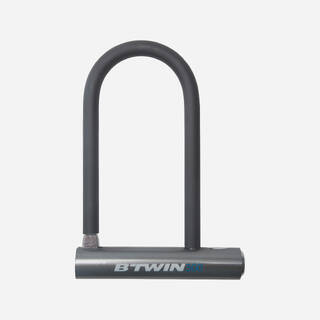

Hardened Steel Shackle Locks for High-Theft Urban Environments
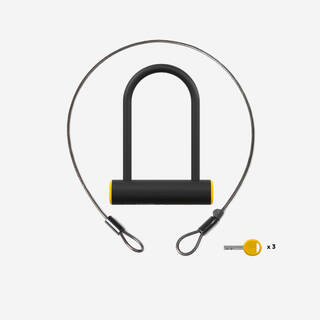
Indian metro parking zones demand lock shackles manufactured from case-hardened boron alloy steel or manganese steel rated above 10mm diameter. Thinner cable locks (under 8mm) fail against bolt cutters within seconds. Rockrider U-locks deploy 13mm to 16mm diameter shackles forged through induction hardening, achieving Rockwell C scale ratings above HRC 50. This metallurgical treatment creates a brittle-resistant outer shell while maintaining a ductile core, resisting angle grinder sparks for 60 to 90 seconds before penetration. Urban cyclists parking near railway stations, college campuses, or metro pillars require this shackle thickness to deter opportunistic theft.
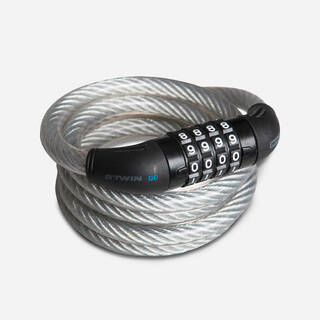
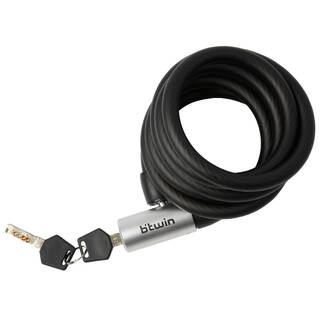
Cable locks serve secondary roles. Braided steel cables coated in PVC sheaths (12mm to 15mm outer diameter) loop through front wheels, saddles, or helmet straps. However, their tensile strength rarely exceeds 2,000 Newtons, making them vulnerable to leveraged cutting tools. Pairing a primary U-lock (securing rear triangle and frame to an immovable post) with a secondary cable (looping front wheel and accessories) creates a dual-barrier system. This layered approach increases theft time beyond the critical 3-minute window most thieves operate within. Rockrider combination locks eliminate key loss risks, using resettable 4-digit codes with 10,000 possible permutations.
Weather-Sealed Cylinder Mechanisms for Monsoon and Coastal Salt Exposure
Monsoon humidity and coastal salt spray corrode internal lock cylinders within 8 to 12 months if unprotected. Premium U-locks integrate rubber dust covers over keyways, preventing water ingress into pin tumbler mechanisms. Stainless steel pins and brass cylinder housings resist oxidation better than zinc alloy internals. Rockrider locks designed for Indian conditions feature double-sealed keyways with silicone gaskets, maintaining smooth key insertion even after prolonged outdoor exposure. Cyclists in Mumbai, Chennai, or Kochi face accelerated corrosion; locks without weather sealing jam within a single monsoon season.
Combination padlocks eliminate metal-on-metal key cylinder wear but require different maintenance protocols. Rotating dials accumulate dust and grit inside number wheels, causing misalignment. Periodic flushing with isopropyl alcohol (not WD-40, which attracts more dirt) clears debris without degrading internal springs. Locks stored outdoors under direct sun experience thermal expansion in metal components, creating temporary binding. Parking cycles under covered stands or using neoprene lock covers mitigates UV degradation of plastic housings and dial numbers. Combination mechanisms rated for 5,000+ rotation cycles maintain crisp detent clicks across 2 to 3 years of daily use.
Compact Folding Locks and Frame-Mounted Brackets for Commuter Portability
Folding plate locks balance security with packability. Articulated steel plates (5mm to 6mm thickness) connected via riveted joints fold into 20cm x 8cm bundles, fitting inside frame-mounted brackets or backpack side pockets. Each plate segment measures 30mm width, providing 85cm to 100cm total extended length when unfolded. This length accommodates locking the frame and rear wheel to standard street poles (10cm to 15cm diameter). Folding locks weigh 900g to 1,200g, lighter than equivalent-security U-locks (1,400g to 1,800g) but heavier than cable locks (400g to 600g).
Frame bracket integration matters for daily commuters. Rockrider bracket mounts use rubberized clamps securing to seat tubes or down tubes without scratching paint. Quick-release mechanisms allow single-handed lock removal while riding, critical when approaching parking zones in traffic. Poorly designed brackets rattle on rough roads, loosening bolts over time. Look for brackets with anti-vibration foam inserts and stainless steel bolts (M5 x 20mm threading) torqued to 4-5 Nm. Locks stored horizontally on top tubes interfere with knee clearance during pedaling; vertical seat tube mounting keeps the lock below saddle height, maintaining ergonomic leg swing.
Chain Locks with Fabric Sleeves for Multi-Bike Securing and Paint Protection
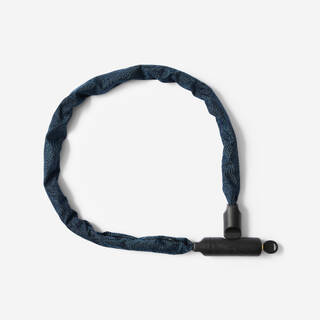
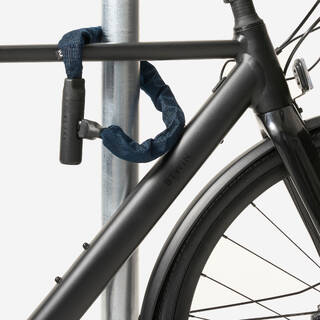
Hardened steel chain links (8mm to 10mm link diameter) wrapped in nylon or polyester sleeves prevent frame paint scratches while offering flexible locking geometry. Chain locks extend 90cm to 120cm, long enough to loop through two cycles simultaneously or secure a bike to irregularly shaped objects like tree trunks or staircase railings. Each chain link undergoes through-hardening, not just surface case-hardening, making the entire link structure resistant to bolt cutter jaws. However, chains heavier than 1,500g become cumbersome for solo riders; they suit families locking multiple bikes at parks or apartment complexes.
Fabric sleeve durability determines long-term usability. Cheap polyester sleeves (below 300D denier rating) abrade within 6 months, exposing bare metal that scratches carbon frames or aluminum tubing. Rockrider chain locks use 600D ripstop nylon sleeves with reinforced stitching at stress points. These sleeves also dampen rattling noise when chains are coiled and stored in panniers during rides. Padlock shackles securing chain ends must match chain link thickness; a 10mm chain paired with a 6mm padlock shackle creates a weak point. Integrated chain locks with built-in locking mechanisms eliminate this mismatch, though they weigh 200g to 300g more than separate chain-and-padlock setups.
Security Rating Standards and Theft Deterrence Time Benchmarks
European Sold Secure ratings (Bronze, Silver, Gold, Diamond) and ART Foundation ratings (1-star to 5-star) quantify attack resistance time. A Gold-rated U-lock withstands hand tools (bolt cutters, hacksaws) for 3 to 5 minutes and power tools (angle grinders) for 1 to 2 minutes under controlled testing. Indian buyers lack localized theft data, so these European benchmarks provide comparative guidance. Cycles parked in high-visibility areas (storefront windows, security camera zones) benefit from visible deterrents; thieves avoid locks requiring noisy power tools in public spaces.
Locking technique amplifies hardware security. The Sheldon Method positions the U-lock shackle through the rear triangle (seat tube and seat stay junction) and around a fixed post, leaving minimal internal shackle space. This tight fit prevents leverage attacks using car jacks or pry bars. Locking only the front wheel (which detaches via quick-release skewers) allows thieves to steal the frame and rear wheel. Always secure the rear triangle, as replacing a rear wheel costs less than replacing an entire frame. Cable locks looped through both wheels and the U-lock create a complete security perimeter, though this setup adds 400g to 600g of carried weight during rides.
Smart Locks with Bluetooth Connectivity and GPS Tracking Integration
Bluetooth-enabled smart locks eliminate physical keys, using smartphone apps to trigger motorized shackle releases. Internal lithium-ion batteries (1,200mAh to 1,500mAh capacity) power electronic mechanisms for 6 to 12 months per charge, recharged via USB-C ports. These locks log unlock timestamps and locations, useful for tracking who accessed a shared family bike. However, Bluetooth range limits (10m to 15m) require proximity unlocking; riders cannot remotely unlock bikes from inside buildings. Smart locks weigh 1,100g to 1,400g due to motor assemblies and battery packs, comparable to heavy-duty U-locks.
GPS tracking modules embedded in lock bodies or hidden inside seat posts transmit real-time location data via 2G/4G cellular networks. Monthly subscription fees (typically required for cellular data plans) add ongoing costs beyond initial hardware purchase. GPS accuracy in dense urban canyons (narrow streets between tall buildings) degrades to 20m to 50m radius, insufficient for pinpointing exact parking spots. These systems excel in post-theft recovery, alerting owners when bikes move beyond geofenced zones. Battery life for GPS-enabled locks drops to 30 to 60 days due to constant cellular transmission. Riders in areas with poor 2G coverage (rural highways, Himalayan foothills) experience connectivity gaps, rendering GPS tracking intermittent.
FAQ (Frequently Asked Questions)
Q1. What lock thickness is needed to resist bolt cutters in Indian metro parking areas?
U-lock shackles must measure 13mm to 16mm diameter in hardened boron or manganese steel to resist handheld bolt cutters. Thinner cable locks below 10mm diameter are severed within seconds. Rockrider U-locks use 13mm shackles with HRC 50+ hardness ratings, providing 60 to 90 seconds of angle grinder resistance in high-theft zones like railway stations or college campuses.
Q2. How do I prevent lock cylinders from jamming during monsoon season?
Choose locks with rubber dust covers over keyways and stainless steel internal pins. Apply silicone-based lubricant (not oil-based WD-40) to cylinder mechanisms before monsoon onset. Combination locks avoid metal key cylinders entirely but require periodic cleaning with isopropyl alcohol to remove dust from rotating dials. Locks without weather sealing corrode and jam within 8 to 12 months in high-humidity coastal cities.
Q3. Can folding locks secure my cycle as effectively as U-locks?
Folding locks with 5mm to 6mm thick hardened steel plates offer comparable security to mid-range U-locks while weighing 300g to 600g less. They extend 85cm to 100cm when unfolded, accommodating frame and rear wheel locking to standard poles. However, riveted joints between plates create potential weak points under sustained pry bar attacks. Pair folding locks with secondary cable locks for wheels and accessories in very high-theft environments.
Q4. What is the correct way to lock my cycle to prevent frame theft?
Use the Sheldon Method by positioning the U-lock shackle through the rear triangle (where seat tube meets seat stay) and around an immovable post, leaving minimal shackle space inside. Never lock only the front wheel, which detaches via quick-release. Loop a secondary cable through both wheels and connect it to the U-lock. This setup secures the frame and all removable components within a 3-minute theft deterrence window.
Q5. Do smart locks with Bluetooth work reliably in Indian urban conditions?
Bluetooth smart locks function within 10m to 15m range and require smartphone proximity for unlocking. Internal batteries last 6 to 12 months per USB-C charge. They eliminate key loss risks but add 200g to 400g weight compared to mechanical locks. Bluetooth connectivity remains stable in open parking areas but may experience interference near dense metal structures or underground parking garages with concrete shielding.
Q6. How long do chain locks with fabric sleeves last before the sleeve wears out?
Chain locks using 600D ripstop nylon sleeves with reinforced stitching maintain integrity for 2 to 3 years of daily use. Cheaper polyester sleeves below 300D denier abrade within 6 months, exposing bare metal that scratches frames. Replace sleeves when fraying exposes more than 10cm of bare chain links. Store chain locks coiled inside panniers rather than draped over handlebars to reduce UV degradation and fabric wear from road vibration.
Q7. What security rating should I look for when buying a cycle lock in India?
European Sold Secure Gold ratings or ART Foundation 3-star ratings indicate locks withstand hand tools for 3 to 5 minutes and power tools for 1 to 2 minutes. Indian buyers lack localized theft resistance standards, so these European benchmarks provide comparative guidance. Cycles parked overnight or in low-visibility areas require Gold-rated U-locks with 13mm+ shackles. Daytime parking in high-traffic zones permits Silver-rated folding locks or heavy-duty cable locks.
Q8. Can I use the same lock for my mountain bike and road bike?
Yes, if the lock's extended length accommodates both frame geometries. Road bikes with sloping top tubes and compact rear triangles fit inside 23cm x 13cm U-lock openings. Mountain bikes with suspension linkages and wider tire clearances may require 25cm x 15cm U-lock dimensions. Folding locks (85cm to 100cm extended length) and chain locks (90cm to 120cm) adapt to varied frame shapes more easily than fixed-dimension U-locks.
Q9. How do I maintain combination locks to prevent number wheel misalignment?
Flush rotating dials with isopropyl alcohol every 3 months to remove dust and grit accumulation. Avoid petroleum-based lubricants that attract dirt. Store locks indoors or under neoprene covers to prevent thermal expansion from direct sun exposure, which causes temporary binding. Test combination codes weekly to detect early misalignment. Quality combination mechanisms rated for 5,000+ cycles maintain crisp detent clicks across 2 to 3 years of daily use.
Q10. Are GPS-enabled locks worth the subscription cost for cycle tracking?
GPS locks excel in post-theft recovery by transmitting real-time location via cellular networks, but require monthly data subscriptions. Battery life drops to 30 to 60 days due to constant transmission. GPS accuracy degrades to 20m to 50m radius in dense urban areas with tall buildings. These systems suit high-value cycles (above enthusiast-grade) parked in areas with reliable 2G/4G coverage. Riders in rural zones with poor cellular reception experience intermittent tracking gaps.