Dumbbells and Dumbbell Sets







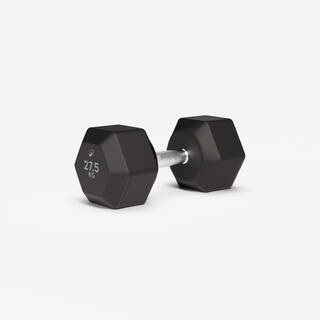
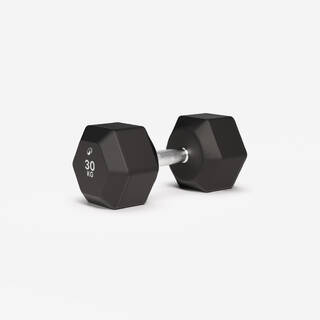



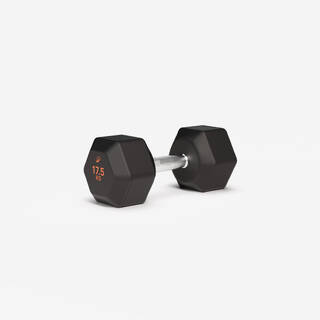


Cast Iron, Rubber-Coated, and Vinyl Hex Dumbbells: Material Durability for Indian Home Gyms
Dumbbells in India face unique environmental stressors. High humidity during monsoons accelerates rust formation on bare cast iron, while intense summer heat softens low-grade vinyl coatings. Decathlon's Domyos and Corength ranges address these conditions through three core material architectures. Cast iron hex dumbbells offer maximum density (7.2 g/cm³) and compact footprints, ideal for apartment storage. Rubber-coated variants feature 3 to 5 mm thick virgin rubber layers that absorb floor impacts and protect tile or hardwood surfaces common in Indian homes. Vinyl-dipped models use PVC compounds rated for thermal stability up to 50°C, preventing coating separation during prolonged balcony or terrace storage.
Hexagonal head geometry prevents rolling on uneven floors, a critical safety feature for compact workout spaces. Cast iron cores are sand-cast in single-piece molds, eliminating weld seams that crack under repeated drops. Rubber coatings are compression-molded, not glued, ensuring bond integrity across the full weight range from 1 kg to 50 kg per dumbbell. Grip handles maintain 28 to 32 mm diameters with medium-depth knurling (0.8 mm peak-to-valley), balancing secure palm contact against callus formation during high-rep training. Corrosion-resistant chrome plating on handles extends lifespan in coastal cities like Mumbai or Chennai, where salt-laden air penetrates indoor spaces.
Fixed Weight vs Adjustable Dumbbell Systems: Load Progression and Space Efficiency
Fixed-weight dumbbells deliver immediate load certainty. No collar adjustments, no plate shifts mid-set. This matters during explosive movements like dumbbell snatches or push presses, where grip focus must remain on bar control, not hardware stability. Domyos fixed hex sets span 2.5 kg increments from 5 kg to 30 kg, enabling precise progressive overload for hypertrophy cycles. Each pair occupies roughly 15 cm of rack depth, so a full 5 to 30 kg set requires approximately 1.2 meters of linear storage. For studios or shared apartment gyms, this footprint becomes prohibitive.
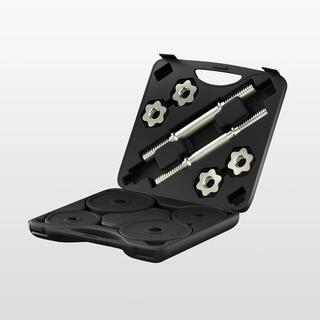
Adjustable dumbbell systems compress an entire weight range into two handles and interchangeable plates. Corength adjustable models use spin-lock collars with M20 threading, tightening to 25 Nm torque to prevent plate migration. Plate diameters range from 15 cm (smaller 1.25 kg plates) to 28 cm (10 kg plates), matching Olympic disc standards for compatibility with existing home setups. Load changes take 20 to 30 seconds per dumbbell, acceptable for strength routines with 2 to 3 minute rest intervals but inefficient for circuit training. Maximum per-handle capacity reaches 20 kg (40 kg total), sufficient for most pressing and rowing movements but limiting for advanced lifters performing single-leg Romanian deadlifts or goblet squats exceeding bodyweight loads.
Grip Ergonomics and Handle Knurling: Palm Contact Mechanics for Indian Hand Sizes
Indian male hand breadth averages 8.2 to 8.9 cm, female 7.1 to 7.8 cm, per anthropometric studies. Standard 28 mm handle diameters suit these dimensions, but knurling depth directly impacts grip security versus skin abrasion. Domyos employs medium-depth diamond knurling (0.8 mm), offering tactile feedback without shredding palms during 15 to 20 rep sets. Smooth chrome handles, common in budget ranges, become slippery under sweat saturation, forcing over-gripping that fatigues forearm flexors prematurely. This shifts fatigue from target muscles (deltoids, pectorals) to grip limiters, reducing training volume.
Handle length matters for double-hand grips. Goblet squats and two-hand overhead presses require 12 to 15 cm of usable handle space to accommodate overlapping thumbs and fingers. Shorter 10 cm handles force awkward pinch grips that destabilize loads. Corength adjustable handles extend to 18 cm, providing clearance even when maximum plates are loaded. Contoured handles with slight hourglass profiles (narrowing from 32 mm ends to 28 mm centers) guide hand placement to optimal balance points, reducing wrist torque during single-arm rows or Arnold presses. Vinyl grips add 2 mm of cushioning, beneficial for high-volume accessory work but potentially masking proprioceptive feedback needed for strict form in compound lifts.
Weight Tolerance Standards and Load Accuracy: ISO Compliance for Progressive Training
Advertised dumbbell weights must match actual mass within defined tolerances. ISO 20957 fitness equipment standards permit plus or minus 3 percent variance for dumbbells under 10 kg, and plus or minus 2 percent for heavier loads. A labeled 10 kg dumbbell may legally weigh 9.7 to 10.3 kg. For progressive overload programs adding 2.5 kg per week, cumulative tolerance errors across multiple dumbbells distort periodization. Decathlon's Domyos range undergoes batch weighing, with production lots tested via calibrated scales traceable to national metrology standards. This ensures a 12.5 kg dumbbell measures 12.35 to 12.65 kg, not 11.8 or 13.2 kg.
Adjustable systems introduce additional variance. Spin-lock collars weigh 150 to 200 grams each, and users must account for this when calculating total load. A 2.5 kg handle plus two 5 kg plates plus two 180-gram collars equals 12.86 kg, not 12.5 kg. Precision matters for strength athletes tracking one-rep max percentages or bodybuilders manipulating training volumes. Corength includes collar weights in product specifications, enabling accurate load logging. Plate hole diameters (28 to 30 mm) must match handle shaft diameters (25 to 28 mm) with minimal radial play. Excessive clearance (over 2 mm) allows plates to rattle and shift, altering center of mass during dynamic movements like dumbbell cleans.
Floor Protection and Noise Dampening: Rubber Coating Thickness for Apartment Training
Dropping a 20 kg cast iron dumbbell from waist height (approximately 1 meter) generates impact forces exceeding 2,000 Newtons on tile or marble floors, risking cracks and neighbor complaints in multi-story buildings. Rubber coatings attenuate these forces through viscoelastic deformation. Domyos applies 4 to 5 mm thick rubber layers with Shore A hardness ratings of 60 to 70, balancing impact absorption against excessive bounce. Thinner 2 mm coatings, common in budget imports, compress fully on first impact, transmitting residual force directly to flooring.
Noise reduction matters equally. Uncoated cast iron produces 85 to 90 dB sound pressure levels on hard surfaces, comparable to a motorcycle engine. Rubber coatings reduce this to 60 to 65 dB, equivalent to normal conversation. For early morning or late evening training in shared housing, this difference prevents disturbances. Hexagonal shapes further limit rolling and secondary impacts. Corength rubber hex dumbbells include flat contact patches spanning 8 to 10 cm per side, distributing impact forces over larger surface areas compared to round dumbbells that concentrate loads on narrow contact points. Paired with 10 mm EVA foam gym mats, total impact force transmission drops below damage thresholds for engineered wood and ceramic tile flooring common in Indian apartments.
Starter Sets vs Individual Pairs: Matching Dumbbell Selection to Training Experience and Goals
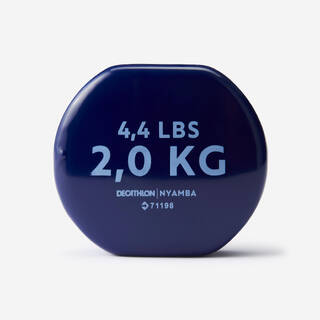
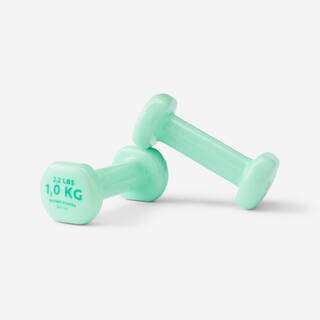
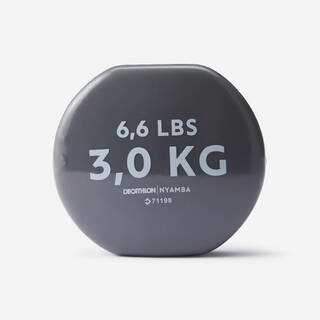
Beginners benefit from starter sets spanning 2 kg to 10 kg in 2 kg increments. This range covers isolation exercises (lateral raises with 2 to 4 kg), compound accessory movements (goblet squats with 8 to 10 kg), and initial progressive overload phases. Domyos 3-pair sets (4 kg, 6 kg, 8 kg) fit this profile, providing enough load variety for 8 to 12 week linear progression programs without overwhelming storage capacity. Vinyl coatings in multiple colors (blue, pink, grey) aid quick weight identification during circuit training, eliminating the need to read embossed numbers mid-set.
Intermediate and advanced lifters require heavier individual pairs. Single-arm dumbbell rows, Bulgarian split squats, and chest presses demand 15 kg to 30 kg per hand for adequate mechanical tension. Purchasing individual pairs allows targeted expansion. A lifter strong in pressing but weaker in pulling can buy 25 kg dumbbells for rows while continuing to use 20 kg for presses, optimizing budget allocation. Corength rubber hex dumbbells are sold individually from 12.5 kg upward, enabling precise customization. Competitive bodybuilders and strength athletes may eventually require 35 kg to 50 kg dumbbells for low-rep strength phases, weights where adjustable systems reach structural limits and fixed dumbbells become necessary despite higher per-unit costs and storage demands.
FAQ (Frequently Asked Questions)
Q1. What is the difference between cast iron, rubber-coated, and vinyl dumbbells for home use in India?
Cast iron dumbbells offer maximum density and compact size but rust in humid conditions and damage floors when dropped. Rubber-coated models feature 4 to 5 mm protective layers that absorb impacts, reduce noise to 60-65 dB, and resist corrosion in coastal or monsoon climates. Vinyl dumbbells use PVC coatings rated for thermal stability up to 50°C, suitable for balcony storage, but thinner coatings (under 3 mm) wear faster under repeated floor contact.
Q2. Should I buy fixed-weight dumbbells or an adjustable dumbbell set for apartment training?
Fixed dumbbells provide immediate load certainty and stability during explosive movements, but a 5 to 30 kg set requires 1.2 meters of storage space. Adjustable systems compress the same range into two handles and plates, saving space, but load changes take 20 to 30 seconds and spin-lock collars may loosen during high-rep sets. For limited space and moderate training intensity, adjustable sets work well. For circuit training or advanced lifters needing quick weight changes, fixed pairs are more efficient.
Q3. What weight range should beginners start with for dumbbell training?
Beginners should start with 2 to 10 kg dumbbells. Isolation exercises like lateral raises and bicep curls typically use 2 to 4 kg, while compound movements like goblet squats and chest presses require 6 to 10 kg. A starter set with three pairs (4 kg, 6 kg, 8 kg) covers most beginner programs for 8 to 12 weeks of linear progression before heavier weights become necessary.
Q4. How do I prevent dumbbells from damaging tile or marble floors in my apartment?
Use rubber-coated hex dumbbells with 4 to 5 mm thick coatings, which absorb impact forces exceeding 2,000 Newtons when dropped from waist height. Pair these with 10 mm EVA foam gym mats to distribute loads over larger surface areas. Hexagonal shapes prevent rolling and secondary impacts. Avoid uncoated cast iron, which produces 85 to 90 dB noise levels and concentrates forces on narrow contact points that crack tiles.
Q5. What is the maximum weight capacity of adjustable dumbbell sets?
Most adjustable dumbbell systems reach 20 kg per handle (40 kg total per pair) using spin-lock collars and standard plates. This capacity suits pressing, rowing, and squatting movements for intermediate lifters. Advanced athletes performing single-leg deadlifts or heavy goblet squats exceeding bodyweight may require fixed dumbbells in the 25 to 50 kg range, as adjustable systems face structural limits and collar stability issues at higher loads.
Q6. How does handle diameter and knurling affect grip during high-rep dumbbell workouts?
Standard 28 to 32 mm handle diameters suit Indian hand sizes (male 8.2-8.9 cm breadth, female 7.1-7.8 cm). Medium-depth knurling (0.8 mm peak-to-valley) provides secure grip without shredding palms during 15 to 20 rep sets. Smooth chrome handles become slippery under sweat, forcing over-gripping that fatigues forearms prematurely. Contoured handles with slight hourglass profiles reduce wrist torque during single-arm movements.
Q7. Are there weight tolerance standards for dumbbells sold in India?
ISO 20957 fitness equipment standards permit plus or minus 3 percent variance for dumbbells under 10 kg and plus or minus 2 percent for heavier loads. A labeled 10 kg dumbbell may legally weigh 9.7 to 10.3 kg. Decathlon's Domyos range undergoes batch weighing with calibrated scales, ensuring a 12.5 kg dumbbell measures 12.35 to 12.65 kg. For progressive overload programs, this accuracy prevents cumulative tolerance errors that distort periodization.
Q8. Can I use adjustable dumbbells for explosive exercises like snatches or push presses?
Adjustable dumbbells with spin-lock collars can loosen during explosive movements if not tightened to 25 Nm torque. Plate shifting mid-set destabilizes loads and increases injury risk. Fixed dumbbells eliminate this concern, maintaining consistent balance throughout dynamic lifts. If using adjustable systems for explosive work, verify collar tightness before each set and avoid maximum loads where radial play exceeds 2 mm between plates and handle shafts.
Q9. What is the best dumbbell storage solution for small apartments?
Vertical dumbbell racks with three to four tiers occupy 60 cm width and 40 cm depth, storing 6 to 8 pairs while keeping weights off the floor. Adjustable systems reduce this to two handles on a compact stand. For minimal footprint, store dumbbells under beds or in closets using rubberized trays that prevent rolling. Avoid stacking dumbbells directly on top of each other, as this damages coatings and creates instability when retrieving lower weights.
Q10. How do I maintain rubber-coated dumbbells in humid monsoon conditions?
Wipe dumbbells with a dry cloth after each use to remove sweat and moisture. Store in ventilated areas away from direct water exposure. Rubber coatings resist corrosion, but prolonged water pooling degrades adhesive bonds between rubber and cast iron cores. Inspect handles monthly for chrome pitting in coastal cities. Apply thin coats of silicone spray to chrome surfaces if rust spots appear. Avoid storing dumbbells in closed plastic bags, which trap humidity and accelerate degradation.