Exercise Bike & Spin Bike
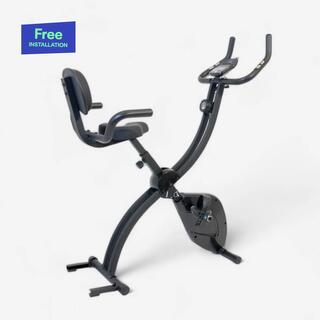


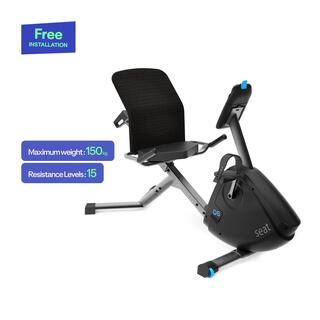
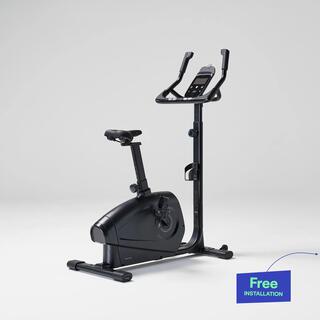

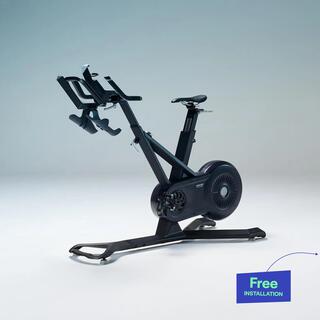

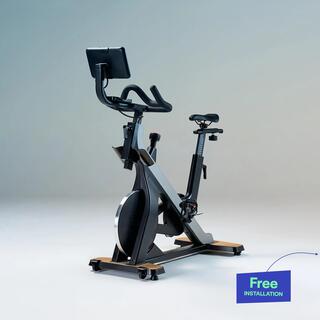

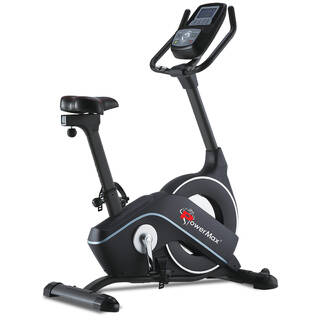
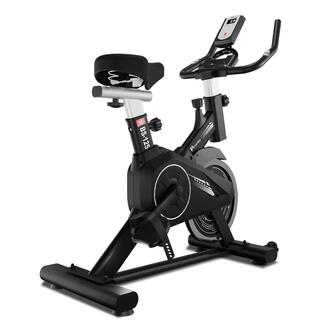
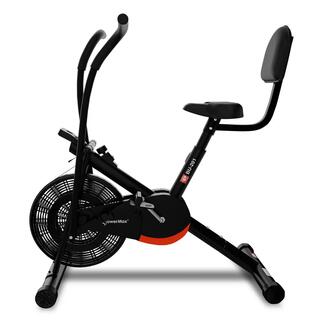
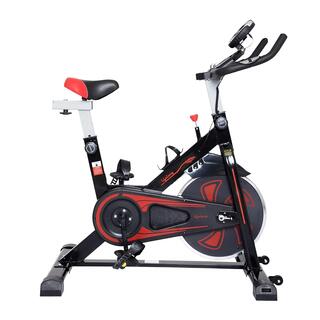
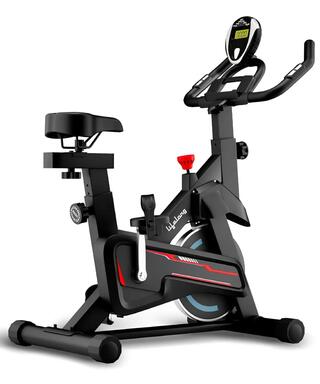
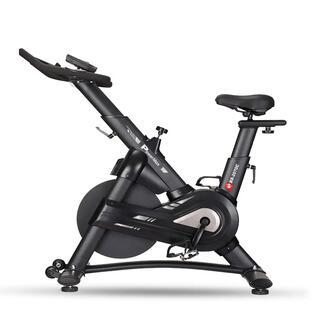
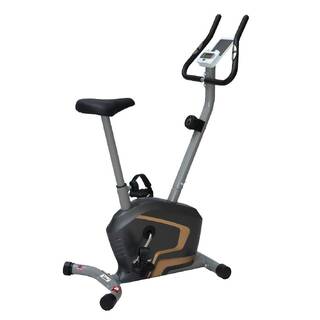

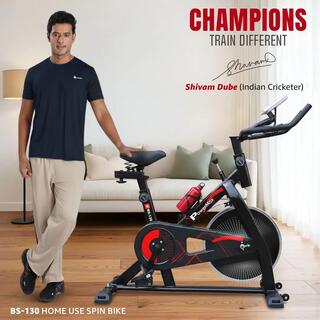
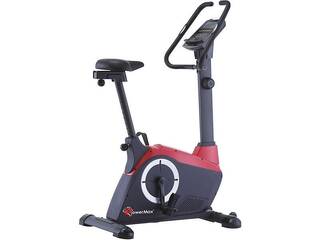
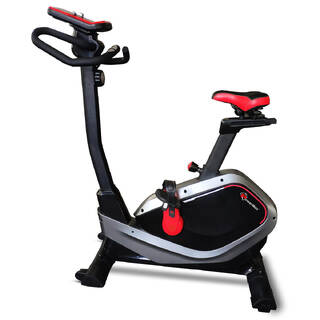
Heavy-Gauge Steel Frames and Flywheel Inertia Engineering for Smooth Pedaling Resistance
Spin bikes built for Indian home gyms demand robust structural integrity. Domyos spin bikes use heavy-gauge tubular steel frames with reinforced weld joints, supporting maximum user loads between 100 kg and 150 kg depending on model specification. Frame geometry mirrors competitive road cycling positions: aggressive forward lean angles between 15 and 20 degrees, adjustable saddle height ranges spanning 70 cm to 100 cm vertical clearance, and handlebar reach adjustments accommodating torso lengths from 45 cm to 60 cm. This precision fit replicates outdoor cycling biomechanics indoors.
Flywheel mass directly governs pedaling smoothness. Entry-level spin bikes feature 6 kg to 8 kg flywheels suitable for moderate-intensity interval training. Advanced models deploy 13 kg to 18 kg flywheels, generating higher rotational inertia that eliminates dead spots in the pedal stroke and sustains momentum through standing climbs. Heavier flywheels require greater initial force to accelerate but deliver consistent resistance feel across cadence ranges from 60 rpm recovery spins to 120 rpm sprint intervals. Belt-drive systems using multi-rib poly-V belts reduce maintenance compared to chain drives, operating silently without lubrication needs in high-humidity monsoon conditions.
Magnetic resistance systems on premium Domyos models offer stepless adjustment through electromagnetic eddy current braking. Turn a tension knob to move neodymium magnets closer to the flywheel, increasing resistance without physical friction contact. This contactless braking eliminates wear on resistance pads, extending service life beyond 5,000 hours of use. Manual friction resistance bikes use felt or leather brake pads pressed against the flywheel rim, delivering tactile feedback preferred by cyclists replicating outdoor hill climbs. Pad replacement intervals depend on training volume but typically occur after 800 to 1,200 hours under high-resistance sprint protocols.
Pedal Systems, Cleat Compatibility, and Power Transfer Efficiency for Road Cyclists
Dual-sided pedal platforms on Domyos spin bikes accommodate both clipless cycling shoes and standard athletic footwear. One pedal face features SPD-compatible cleat mounts (two-bolt mounting pattern), locking road cycling shoes into fixed positions that eliminate heel lift and maximize power transfer efficiency. Rigid carbon or nylon sole plates on cycling shoes prevent energy loss through midfoot flex, channeling 95% of leg drive directly into crank rotation. The opposite pedal face uses toe cage straps or flat platforms for users training in running shoes or cross-trainers.
Cleat engagement improves pedal stroke mechanics by enabling pull-through force during the upstroke phase. Cyclists generate power across the entire 360-degree crank revolution rather than only the downstroke quadrant. This circular pedaling pattern recruits hamstrings and hip flexors alongside quadriceps, distributing workload across larger muscle groups and delaying fatigue onset during 45-minute to 90-minute endurance sessions. Cleat float adjustment (typically 4 to 6 degrees of rotational freedom) prevents knee strain by allowing natural foot alignment throughout the pedal cycle.
Crank arm lengths on spin bikes range from 165 mm to 175 mm, matching standard road bike dimensions. Shorter cranks (165 mm to 170 mm) suit riders under 170 cm tall or those with hip mobility restrictions, reducing peak hip flexion angles at the top of the pedal stroke. Longer cranks (170 mm to 175 mm) provide leverage advantages for taller riders but require greater hip and ankle flexibility. Q-factor (lateral distance between pedal attachment points) measures 150 mm to 155 mm on quality spin bikes, replicating road bike stance width to maintain natural knee tracking and prevent IT band friction.
Adjustable Resistance Profiles for HIIT Protocols, Endurance Zones, and FTP Threshold Training
Spin bike resistance systems must support diverse training intensities. Magnetic resistance models offer 8 to 32 discrete resistance levels, each incrementally increasing braking torque. Level 1 to 8 settings replicate flat road cruising at 20 to 25 km/h, suitable for active recovery rides maintaining heart rates in Zone 2 (60% to 70% max HR). Mid-range levels 9 to 16 simulate rolling terrain with 2% to 4% gradient climbs, targeting tempo efforts at 75% to 85% functional threshold power (FTP). Maximum resistance levels 17 to 32 generate standing climb forces equivalent to 8% to 12% gradients, used in 20-second to 2-minute sprint intervals.
Friction resistance bikes provide infinite adjustment across the full resistance spectrum. Tightening the tension knob gradually increases brake pad pressure against the flywheel, allowing micro-adjustments that match specific wattage targets during structured workouts. This analog control benefits experienced cyclists executing precise FTP tests (20-minute sustained efforts at maximum sustainable power output) or replicating outdoor race simulations with variable terrain profiles. Emergency stop levers on friction systems apply full braking force instantly, halting flywheel rotation within one pedal revolution for safety during high-cadence sprints.
Training protocols for Indian apartment gyms must account for noise transmission through concrete floors. Belt-drive spin bikes generate 50 to 60 decibels during moderate pedaling (equivalent to normal conversation volume), while chain-drive models produce 65 to 75 decibels with metallic clattering audible through walls. Rubber stabilizer feet with 8 mm to 12 mm thickness dampen vibrations, and optional floor protection mats (6 mm EVA foam or 10 mm recycled rubber) further isolate impact forces. Bikes positioned on upper floors benefit from vibration-dampening mats to prevent disturbance in units below during early morning or late evening training sessions.
Console Tracking, Cadence Monitoring, and Heart Rate Integration for Structured Interval Workouts
Digital consoles on mid-tier to premium Domyos spin bikes display real-time metrics: elapsed time, distance covered (calculated from flywheel rotations), current speed (km/h), estimated calorie expenditure, and instantaneous cadence (rpm). Cadence sensors use magnetic reed switches or optical encoders mounted near the crank arm, detecting each pedal revolution with accuracy within plus or minus 2 rpm. Maintaining target cadences between 80 and 100 rpm during endurance rides optimizes cardiovascular efficiency, while sprint intervals at 110 to 130 rpm develop neuromuscular power and fast-twitch muscle fiber recruitment.
Heart rate monitoring through handlebar contact sensors or wireless chest strap telemetry (5.3 kHz analog transmission compatible with Polar and Garmin devices) enables zone-based training. Zone 2 endurance rides (60% to 70% max HR) build aerobic base fitness over 60 to 120 minutes. Zone 4 threshold intervals (85% to 95% max HR) improve lactate clearance capacity through 8-minute to 12-minute sustained efforts. Zone 5 VO2 max intervals (95% to 100% max HR) consist of 2-minute to 5-minute all-out efforts with equal rest periods, maximizing oxygen uptake capacity and anaerobic power output.
Console-free spin bikes suit athletes using external cycling computers or smartphone apps. Bluetooth-enabled cadence sensors and power meter pedals transmit data to Zwift, TrainerRoad, or Decathlon Coach apps, integrating spin bike sessions into comprehensive training plans. Power meter pedals measure actual wattage output (force applied to pedals multiplied by cadence), providing objective intensity metrics independent of resistance settings or flywheel weight. Tracking power output across training blocks reveals fitness progression: a 10-watt FTP increase over 8 weeks indicates improved aerobic capacity and muscular endurance.
Compact Footprints, Transport Wheels, and Floor Protection for Indian Apartment Home Gyms
Spin bike dimensions range from 100 cm to 130 cm length, 50 cm to 60 cm width, and 110 cm to 130 cm height with adjustments at maximum extension. Compact models occupy 0.5 to 0.65 square meters of floor space, fitting into 2.4 m x 2.4 m bedroom corners or 1.8 m x 2.1 m balcony alcoves common in Indian urban apartments. Clearance zones require 30 cm to 50 cm on all sides for safe mounting and dismounting, plus overhead ceiling clearance of 200 cm minimum to accommodate standing climb positions without head contact with ceiling fans or light fixtures.
Front-mounted transport wheels enable single-person relocation. Tilt the bike forward onto its front stabilizer bar, lifting the rear frame off the floor, then roll on 5 cm to 7 cm diameter wheels across tile, marble, or laminate flooring. Total bike weights range from 28 kg for entry models to 55 kg for heavy-duty commercial-grade frames. Heavier bikes provide superior stability during standing sprints (reducing lateral rocking motion) but require two-person lifting for stair navigation in buildings without elevator access.
Floor protection mats prevent scratches on polished marble or vitrified tile surfaces and absorb sweat drips during high-intensity intervals. Mats measuring 120 cm x 60 cm x 6 mm (EVA foam) or 150 cm x 75 cm x 10 mm (recycled rubber) extend beyond bike footprints, catching water bottle spills and providing non-slip surfaces for pre-ride stretching. Rubber mats withstand repeated cleaning with disinfectant sprays (essential in high-humidity monsoon months when bacteria proliferate on sweat-soaked surfaces) without degrading or emitting odors. Mat edges with beveled transitions prevent tripping hazards and allow smooth rolling of transport wheels during bike repositioning.
Domyos Spin Bike Model Differentiation: Entry-Level vs Performance-Grade Specifications
Domyos entry-level spin bikes feature 6 kg to 9 kg flywheels, friction resistance systems, and basic consoles displaying time, speed, distance, and calories. These models support maximum user weights of 100 kg to 110 kg, suitable for beginners establishing consistent training routines with 3 to 4 weekly sessions of 30 to 45 minutes. Saddle and handlebar adjustments use pop-pin locking mechanisms with 2.5 cm incremental height changes. Frame construction uses 2 mm wall thickness tubular steel with powder-coat finishes resistant to sweat corrosion. Warranty coverage typically extends 2 years on frame structure and 1 year on wear components (brake pads, pedal bearings, console electronics).
Performance-grade Domyos spin bikes deploy 13 kg to 18 kg flywheels with magnetic resistance offering 16 to 32 levels. Consoles integrate Bluetooth connectivity for app synchronization, ANT+ compatibility with external sensors, and backlit LCD screens visible in low-light conditions. Maximum user load ratings increase to 130 kg to 150 kg through reinforced frame joints and 3 mm wall thickness tubing. Micro-adjustable seat posts and handlebar stems use threaded collars with 5 mm continuous adjustment ranges, enabling precise fit replication of outdoor road bike geometry. Premium pedals feature sealed cartridge bearings (rated for 10,000 km equivalent indoor mileage) and dual-sided SPD cleat mounts plus toe cages.
Commercial-grade models incorporate self-generating consoles (powered by pedaling motion, eliminating battery replacements), automotive-grade sealed bearings in crank assemblies and flywheel hubs, and corrosion-resistant stainless steel hardware throughout. These bikes withstand 8 to 12 hours daily use in studio environments, supporting 20 to 30 user sessions per day. Frame warranties extend to 5 years, reflecting structural durability under continuous high-intensity loading. For home users training 5 to 7 days weekly with 60 to 90 minute sessions, commercial-grade bikes provide long-term reliability and eliminate mid-life component replacements common in entry-level models after 2 to 3 years of intensive use.
FAQ (Frequently Asked Questions)
Q1. What flywheel weight should I choose for spin bike training in a small apartment?
Choose 6 kg to 9 kg flywheels for moderate-intensity training 3 to 4 times weekly. These lighter flywheels accelerate quickly for interval workouts and generate less momentum, making emergency stops safer in confined spaces. Select 13 kg to 18 kg flywheels if you train 5 to 7 days weekly with long endurance rides, as heavier flywheels maintain smoother pedaling at high cadences above 100 rpm.
Q2. How do magnetic resistance and friction resistance systems differ in maintenance needs?
Magnetic resistance systems require zero maintenance because neodymium magnets create braking force without physical contact, eliminating wear over 5,000+ hours of use. Friction resistance bikes need brake pad replacements every 800 to 1,200 hours depending on training intensity, as felt or leather pads compress against the flywheel and gradually thin. Magnetic systems cost more initially but save on long-term consumable part expenses.
Q3. Can I use regular running shoes on a spin bike or do I need cycling shoes with cleats?
Dual-sided pedals on Domyos spin bikes accept both options. Running shoes work with toe cage straps or flat pedal platforms for casual training. Cycling shoes with SPD cleats lock into pedal mounts, improving power transfer efficiency by 12% to 18% through pull-up force during the upstroke phase. Start with running shoes, then upgrade to cleated shoes after establishing consistent training routines for 8 to 12 weeks.
Q4. What maximum user weight rating do I need for safe spin bike operation?
Match the bike's maximum load rating to your body weight plus a 15 kg to 20 kg safety margin. A 75 kg rider should select bikes rated for 100 kg minimum. Users between 90 kg and 110 kg require 130 kg to 150 kg rated frames with reinforced weld joints and 3 mm wall thickness tubing. Standing climb intervals generate impact forces 1.5 to 2 times body weight, making adequate structural capacity critical for frame longevity.
Q5. How much floor space and ceiling clearance does a spin bike require in an Indian apartment?
Allocate 0.5 to 0.65 square meters for the bike footprint plus 30 cm to 50 cm clearance on all sides for mounting and dismounting. Ceiling height needs 200 cm minimum to accommodate standing climb positions without head contact with fans or fixtures. Bikes measure 100 cm to 130 cm length and 110 cm to 130 cm height at maximum saddle extension.
Q6. Do belt-drive spin bikes work better than chain-drive models for monsoon humidity conditions?
Belt-drive systems using poly-V belts eliminate rust and corrosion issues in high-humidity environments, operating maintenance-free without lubrication. Chain drives require monthly cleaning and re-lubrication to prevent oxidation during monsoon months. Belt drives also generate 10 to 15 decibels less noise (50 to 60 dB vs 65 to 75 dB), making them better suited for apartment buildings with shared walls.
Q7. What cadence range should I maintain during different types of spin bike workouts?
Endurance rides target 80 to 100 rpm for optimal cardiovascular efficiency over 45 to 90 minutes. Tempo intervals use 90 to 105 rpm at moderate resistance to build lactate threshold capacity. Sprint intervals demand 110 to 130 rpm for 20 to 60 seconds to develop neuromuscular power and fast-twitch muscle recruitment. Recovery spins stay between 60 and 75 rpm at minimal resistance.
Q8. How do I prevent floor damage and reduce vibration noise in upper-floor apartments?
Place 6 mm EVA foam or 10 mm recycled rubber mats under the bike, extending 10 cm to 15 cm beyond the frame footprint. Mats absorb vibrations and protect marble or tile from scratches. Tighten all frame bolts to manufacturer torque specifications (typically 15 to 20 Nm) every 3 months to eliminate rattling. Position bikes away from shared walls, and avoid high-intensity standing sprints after 10 PM in multi-story buildings.
Q9. What warranty coverage should I expect on Domyos spin bike frames and components?
Entry-level models carry 2-year frame warranties and 1-year coverage on wear parts like brake pads, pedals, and console electronics. Performance-grade bikes extend frame warranties to 3 years with 2-year component coverage. Commercial-grade models offer 5-year frame warranties reflecting heavy-duty construction. Warranty claims require proof of purchase and exclude damage from improper assembly, outdoor storage, or exceeding maximum user weight ratings.
Q10. Can I integrate a Domyos spin bike with cycling apps like Zwift or TrainerRoad?
Bikes with Bluetooth-enabled consoles transmit cadence and speed data to compatible apps. Add external Bluetooth cadence sensors or power meter pedals for full integration with structured training platforms. Power meters measure actual wattage output, enabling precise FTP testing and zone-based interval workouts. Console-free spin bikes require aftermarket sensors but offer lower initial investment for athletes already owning cycling computers or using smartphone training apps.