Fishing Hooks & Lures



Hook Sharpness, Wire Gauge, and Corrosion Resistance for Indian Saltwater and Freshwater Conditions
Hook penetration starts with needle-point geometry and wire diameter. Thin wire hooks (0.4 to 0.6 mm gauge) penetrate soft-mouthed species like tilapia and rohu with minimal striking force, while heavy wire designs (0.8 to 1.2 mm gauge) withstand the jaw crush of catfish, murrel, and coastal barramundi. Chemically sharpened points maintain cutting edges through multiple hooksets, reducing the need for field resharpening on riverbanks or boat decks. Forged shanks add lateral strength without increasing wire diameter, preventing hook straightening under sudden drag runs.
Saltwater exposure in the Arabian Sea, Bay of Bengal, and brackish estuaries accelerates oxidation on untreated carbon steel. Electroplated nickel finishes provide short-term rust resistance for occasional coastal trips, while black nickel and vanadium coatings extend corrosion protection through 15 to 20 immersion cycles in high-salinity environments. Stainless steel hooks eliminate rust entirely but reduce point sharpness due to harder alloy composition. Rinse hooks in freshwater after every saltwater session and store in silica gel pouches to preserve point integrity and eye strength.
Eye construction determines knot security and line abrasion. Turned-down eyes align the hook point with the shank axis for improved hookset angles on bottom-feeding species, while straight eyes suit topwater lures and surface presentations. Ringed eyes with smooth, deburred inner edges prevent monofilament and braided line fraying during prolonged fights. Match hook eye diameter to line breaking strength: 0.8 mm eyes handle 4 to 8 kg test lines, while 1.2 mm eyes support 10 to 15 kg braids used for mahseer and trevally in fast currents.
Lure Action Mechanics: Wobble Frequency, Diving Depth, and Retrieve Speed Tuning
Lure swimming action derives from body shape, lip angle, and internal weight distribution. Wide-bodied crankbaits generate high-frequency wobbles (8 to 12 oscillations per second) that trigger reaction strikes from aggressive predators in murky reservoir water. Slender minnow profiles produce tight, subtle vibrations suited to clear lake conditions where fish inspect lures closely before committing. Lipless designs sink at controlled rates (0.3 to 0.5 meters per second) for vertical jigging in deep channels, while shallow-diving lips angled at 30 to 45 degrees deflect off submerged rocks and timber without snagging.
Diving depth correlates directly with lip size and retrieve speed. Short, rounded lips keep lures in the 0.5 to 1.5 meter zone for targeting surface-feeding species during dawn and dusk feeding windows. Extended square lips drive crankbaits down to 3 to 5 meter depths where thermoclines concentrate baitfish schools in summer heat. Increase retrieve speed by 20 to 30 percent to force deeper dives, or slow cadence to maintain shallower running lanes. Internal rattle chambers with tungsten or brass beads emit low-frequency vibrations (200 to 400 Hz) that attract predators from 10 to 15 meter distances in low-visibility monsoon runoff.
Weight transfer systems use sliding tungsten balls that shift rearward during casting for increased distance, then roll forward on retrieve to stabilize swimming posture. Fixed-weight lures maintain consistent balance but sacrifice 15 to 20 percent casting range compared to magnetic or gravity-assisted designs. Suspend-dot tuning stickers adjust buoyancy in 0.1 gram increments, allowing anglers to fine-tune lure suspension in the strike zone during pauses. Test new lures in clear water beside the boat or shore to observe action at different retrieve speeds before committing to full casts.
Soft Plastic Rigging: Offset Hooks, Weedless Configurations, and Scent Retention
Offset shank hooks create a Z-bend that embeds soft plastic worms, grubs, and creature baits flush against the hook body for true weedless presentation through dense hydrilla beds and submerged vegetation. Bury the hook point 2 to 3 mm into the plastic back to form a skin-hooking setup that deflects weeds on entry but exposes the point on hookset compression. Wide gap designs (5 to 7 mm throat opening) accommodate thick-bodied swimbaits and paddle-tail grubs without restricting hook point exposure during the strike. Straight shank hooks suit nose-hooked rigging for vertical drop-shot presentations where the lure hangs horizontally below a fixed weight.
Screw-lock spring wire keepers grip soft plastics at the hook eye, preventing bait slide-down during aggressive retrieves or multiple casts. Barbed keeper pins pierce the plastic head and lock into molded grooves, extending bait life through 10 to 15 casts before requiring replacement. Soft plastics infused with salt increase density for faster sink rates and release amino acid scent trails that mask human odor and trigger feeding responses in pressured waters. Store scented baits in sealed bags separated by flavor profile to prevent cross-contamination between garlic, shrimp, and anise formulations.
Hook size must match soft plastic length and target species jaw structure. A 10 cm worm pairs with 2/0 to 3/0 hooks for bass and peacock bass, while 15 cm swimbaits require 4/0 to 5/0 wide gap hooks to ensure adequate bite coverage. Downsize one hook size in clear water or during cold fronts when fish strike short and mouth baits tentatively. Upsize one size when targeting toothy species like barramundi or when fishing heavy cover that demands forceful hooksets to drive points through plastic and into bone.
Treble Hook Replacement, Split Ring Strength, and Lure Tuning for Balanced Swimming
Factory treble hooks on imported hard baits often use thin wire and dull points that bend or break during fights with powerful Indian species. Upgrade to forged trebles with short shanks and chemically sharpened points rated for 8 to 12 kg breaking strength. Match treble size to lure body length: size 6 trebles suit 7 to 9 cm crankbaits, while size 2 or 1 trebles balance 12 to 15 cm jerkbaits without overweighting the tail and killing action. Oversized trebles increase hookup ratios but create excessive drag that reduces casting distance and disrupts lure wobble frequency.
Split rings connect trebles to lure body hardware and must withstand sudden shock loads during aggressive strikes. Stainless steel rings with 1.2 mm wire diameter and 15 kg rated strength prevent ring opening under maximum drag pressure. Inspect split ring gaps for proper closure with zero visible separation between wire ends. Replace any ring showing deformation, corrosion pitting, or gap spread wider than 0.3 mm. Use split ring pliers to open rings perpendicular to the gap axis, preventing ring twisting and metal fatigue that leads to mid-fight failures.
Lure tuning corrects off-center swimming caused by manufacturing inconsistencies or impact damage. Tie the lure to 50 cm of line and retrieve it beside the boat or in a swimming pool. If the lure tracks left, use needle-nose pliers to bend the line tie eye slightly right. If the lure rolls right, adjust the eye left in 1 to 2 mm increments. Retest after each adjustment until the lure swims straight down the centerline. Bent lips or cracked bodies cannot be tuned and require replacement to restore proper hydrodynamics and vibration output.
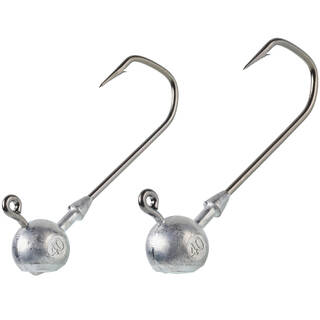
Jig Head Weight Selection, Hook Gap, and Bottom Contact Sensitivity for Structure Fishing
Jig head weight determines sink rate and bottom contact sensitivity in current and depth variables. Light jigs (3 to 7 grams) maintain slow fall speeds (0.2 to 0.3 meters per second) for suspending presentations in shallow flats and weed edges. Medium jigs (10 to 14 grams) cut through moderate current in rivers and tidal zones while maintaining bottom contact feel through braided line. Heavy jigs (18 to 28 grams) punch through wind drift and reach depths of 8 to 12 meters in reservoirs and coastal drop-offs where predators ambush baitfish along structure transitions.
Hook gap width on jig heads affects soft plastic rigging and hookset efficiency. Standard gap jigs (4 to 5 mm throat opening) suit slender grubs and finesse worms for light-biting species. Wide gap jigs (6 to 8 mm opening) accommodate bulky creature baits and paddle-tail swimbaits, ensuring the hook point clears plastic thickness during jaw penetration. Keeper barbs molded into the jig collar lock soft plastics in place, while smooth collars allow quick bait changes but require super glue reinforcement for extended casting sessions.
Head shape alters jig behavior on bottom contact and during retrieve. Round heads create erratic darting action on lift-and-drop retrieves, mimicking wounded baitfish. Football-shaped heads provide stability on rocky bottoms, preventing tip-overs that foul the hook in crevices. Stand-up jigs use flattened bases and 90-degree line ties to position soft plastics vertically, imitating defensive crayfish postures that trigger predatory strikes. Paint finishes and 3D eyes add visual attraction in clear water, while unpainted lead heads rely purely on scent and vibration in stained or turbid conditions.
Caperlan Terminal Tackle Systems: Pre-Rigged Leaders, Snap Swivels, and Quick-Change Connectors
Caperlan engineered terminal tackle eliminates on-water rigging complexity through pre-tied fluorocarbon leaders and corrosion-resistant hardware. Snap swivels with ball-bearing rotation prevent line twist during lure retrieves and live bait presentations, maintaining line strength and casting accuracy through extended fishing sessions. Rated breaking strengths from 5 to 20 kg match light spinning setups to heavy offshore trolling applications. Stainless steel snaps open and close with one-hand operation for rapid lure changes without retying knots, reducing downtime between casts and maximizing water coverage during peak feeding windows.
Pre-rigged leaders feature chemically sharpened hooks on 30 to 50 cm fluorocarbon sections with loop-to-loop or snap connections. Fluorocarbon's 1.42 refractive index closely matches water, rendering leaders nearly invisible to fish in clear lakes and rivers. Abrasion resistance withstands contact with submerged timber, rock edges, and gill plates during fights. Store leaders in protective sleeves to prevent tangling and hook point damage during transport. Inspect knot integrity before each trip and replace any leader showing fraying, discoloration, or reduced breaking strength after multiple fish captures.
Quick-change clips use spring-loaded wire gates that secure lures without knots, allowing anglers to swap between topwater poppers, diving crankbaits, and soft plastic rigs in under 10 seconds. Clip weight and size must match lure mass to prevent interference with swimming action. Micro clips (10 mm length, 3 kg rating) suit ultralight finesse lures, while heavy-duty clips (18 mm length, 12 kg rating) handle large swimbaits and trolling plugs. Remove clips when fishing ultra-clear water or targeting line-shy species that inspect terminal tackle before striking.
FAQ (Frequently Asked Questions)
Q1. Which hook size should I use for freshwater fishing in Indian rivers and lakes targeting species like rohu, catla, and murrel?
Use size 6 to 4 hooks for rohu and catla with soft mouths, and size 2 to 1/0 hooks for murrel and catfish with stronger jaw structures. Match hook gap width to bait size, ensuring the point extends beyond the bait profile for solid hooksets. Thin wire hooks penetrate easier on light-biting species, while forged heavy wire hooks prevent straightening during powerful runs in current.
Q2. How do I prevent hooks and lures from rusting after saltwater fishing in coastal areas?
Rinse all hooks, lures, and split rings in freshwater immediately after each saltwater session to remove salt crystals and organic residue. Dry tackle completely with absorbent cloth, then store in ventilated boxes with silica gel packets to control humidity. Apply thin coats of reel oil or corrosion inhibitor spray to hook points and metal hardware every 3 to 5 trips to extend service life in high-salinity environments.
Q3. What is the difference between offset hooks and straight shank hooks for soft plastic rigging?
Offset hooks feature a Z-bend in the shank that allows soft plastics to sit flush against the hook body, creating weedless presentations for fishing through dense vegetation. Straight shank hooks keep baits rigged in line with the hook point, ideal for drop-shot and nose-hooked presentations where the lure hangs horizontally. Offset designs work best in heavy cover, while straight shanks excel in open water and vertical techniques.
Q4. How do I choose the correct jig head weight for different water depths and current speeds?
Use 3 to 7 gram jigs in shallow water (0.5 to 2 meters) with minimal current for slow, controlled presentations. Select 10 to 14 gram jigs for moderate depths (3 to 5 meters) and mild current to maintain bottom contact. Deploy 18 to 28 gram jigs in deep water (6 to 12 meters) or strong current where lighter weights lose bottom feel and drift excessively. Increase weight by 5 to 7 grams when wind or current prevents proper lure control.
Q5. Can I replace factory treble hooks on crankbaits with larger sizes to improve hookup rates?
You can upsize trebles by one size (e.g., size 6 to size 4) without significantly affecting lure action, but larger hooks add weight and drag that may kill wobble frequency and reduce casting distance. Oversized rear trebles can foul with the front hook during casts or strikes. Test replacement trebles in clear water to verify the lure maintains proper swimming action before fishing, and ensure split rings have adequate strength ratings to handle upgraded hook sizes.
Q6. What lure diving depth should I target for fishing in Indian reservoirs during summer months?
Target 3 to 5 meter depths during summer when thermoclines push baitfish and predators into cooler, oxygen-rich zones below the surface layer. Use crankbaits with extended square lips or weighted jigs to reach these depths. Focus on early morning and late evening when fish move shallower (0.5 to 2 meters) to feed in cooler surface temperatures. Adjust lure running depth by varying retrieve speed and rod tip angle throughout the day as fish relocate vertically.
Q7. How often should I sharpen fishing hooks, and what method works best for maintaining needle-point sharpness?
Inspect hook points after every 5 to 10 casts or whenever you feel reduced penetration during hooksets. Use a fine-grit diamond file or ceramic sharpening stone, stroking from the hook bend toward the point at a 15 to 20 degree angle. Make 3 to 5 light passes per side to restore cutting edges without removing excessive metal. Replace hooks that show significant point blunting, corrosion pitting, or shank bending rather than attempting to reshape damaged wire.
Q8. Are scented soft plastics more effective than unscented versions in pressured fishing spots?
Scented soft plastics release amino acid and salt-based attractants that trigger feeding responses in fish that have seen multiple lures, particularly in heavily fished urban lakes and pay ponds. Scent trails mask human odor transferred during rigging and can extend strike windows by 2 to 3 seconds as fish hold baits longer before rejecting them. In pristine waters with minimal fishing pressure, unscented plastics perform equally well since visual and vibration cues dominate predator triggering mechanisms.
Q9. What is the advantage of using fluorocarbon leaders compared to monofilament for lure fishing?
Fluorocarbon leaders have a refractive index (1.42) nearly identical to water, making them virtually invisible to fish in clear conditions where monofilament's higher visibility can reduce strikes. Fluorocarbon resists abrasion better than monofilament when contacting rocks, timber, and gill plates, extending leader life through multiple fish captures. It also sinks faster due to higher density, keeping lures in the strike zone longer during retrieves. Use 30 to 50 cm fluorocarbon sections between main line and lure for optimal stealth and durability.
Q10. How do I tune a crankbait that swims off-center or rolls to one side during retrieves?
Retrieve the lure beside you in clear, calm water to observe its tracking behavior. If it veers left, use needle-nose pliers to gently bend the line tie eye to the right in 1 to 2 mm increments. If it rolls right, adjust the eye left. Make small adjustments and retest after each bend until the lure swims straight down the centerline. Avoid over-bending, which can crack the lip attachment point or permanently damage the lure body.