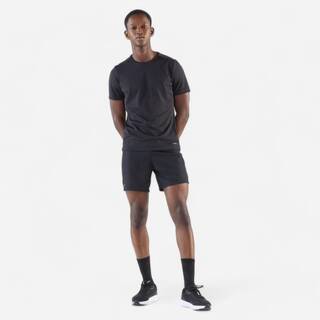
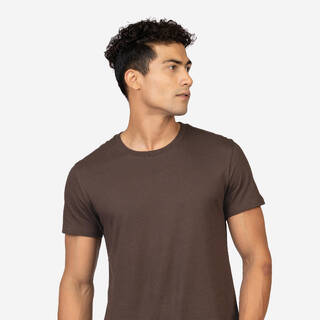
Men Gym Tshirt







Engineering Moisture Transport in High-Humidity Training Environments
Indian gym environments present unique thermal management challenges. Indoor spaces with limited airflow, combined with ambient temperatures exceeding 30°C and relative humidity above 70% during monsoon months, create intense sweat saturation conditions. Men's gym t-shirts engineered for these conditions utilize circular knit construction with hydrophilic fiber treatments that accelerate moisture wicking from skin to fabric surface. The critical specification is fabric GSM (grams per square meter). Training t-shirts typically range from 100 to 140 GSM, balancing lightweight breathability against durability through repeated wash cycles.
Domyos technical t-shirts employ polyester filament yarns with cross-sectional channels that increase surface area for moisture evaporation. This capillary action pulls sweat away from the torso and disperses it across a broader fabric plane, accelerating evaporation rates by 40 to 60 percent compared to standard cotton jersey. For high-intensity interval training or heavy compound lifts generating core body temperature spikes, look for mesh panel integration across the upper back and underarm gussets. These ventilation zones align with primary sweat gland concentrations, creating convective airflow even in static indoor conditions.
Fabric weight directly impacts drying speed and workout comfort. Ultralight 100-115 GSM constructions suit cardio-dominant sessions where movement generates natural airflow. Mid-weight 120-140 GSM blends offer greater opacity and structural integrity for strength training, preventing transparency issues during overhead presses or lat pulldowns. The polyester-elastane blend ratio matters: 5 to 10 percent elastane provides four-way mechanical stretch without compromising moisture transport efficiency. This elasticity accommodates shoulder abduction during lateral raises and maintains shape recovery after repeated laundering.
Flatlock Stitching and Anti-Chafing Construction for Extended Training Sessions
Friction-induced skin irritation becomes a performance limiter during 60 to 90-minute training blocks. Traditional overlocked seams create raised ridges that generate repetitive abrasion against skin, particularly across the shoulder blade region during rowing movements or along the lower hem during running intervals. Men's gym t-shirts built for serious training volume utilize flatlock offset stitching, where seam allowances lie flat against the fabric plane rather than stacking vertically. This construction reduces seam thickness by approximately 60 percent, minimizing contact friction.
Raglan sleeve construction offers biomechanical advantages over set-in sleeves. The diagonal seam line from underarm to collar follows the natural shoulder girdle movement pattern, eliminating the restrictive horizontal seam that crosses the deltoid muscle belly. During overhead pressing, Olympic lifting, or medicine ball slams, raglan cuts allow unrestricted glenohumeral joint rotation through full range of motion. Domyos training shirts incorporate this pattern across multiple product lines, from basic crew necks to compression-fit base layers.
Hem construction affects garment stability during dynamic movements. A dropped rear hem with curved side vents prevents the shirt from riding up during deadlifts, kettlebell swings, or box jumps. This extended coverage maintains core temperature regulation while eliminating the distraction of constant shirt adjustment. Reinforced shoulder tape across the collar seam distributes tension loads, preventing neck seam failure after repeated overhead bar work or weighted carries. These structural details extend garment lifespan beyond 100 wash cycles when maintained according to care specifications.
Compression Fit Profiles Versus Relaxed Training Cuts
Fit architecture serves distinct training methodologies. Compression-fit t-shirts with 15 to 20 percent elastane content apply graduated pressure across major muscle groups, supporting proprioceptive feedback during compound movements. This snug contact reduces muscle oscillation during plyometric exercises and provides tactile awareness of scapular positioning during pressing patterns. The compression layer sits within 2 to 4 millimeters of skin surface, creating a second-skin effect without restricting thoracic expansion during deep breathing between heavy sets.
Relaxed athletic fits prioritize airflow and unrestricted movement for CrossFit-style metcons, circuit training, or functional fitness classes involving rapid transitions between movement patterns. These cuts provide 8 to 12 centimeters of ease through the chest and waist, allowing the fabric to move independently from the body. This separation creates air pockets that enhance convective cooling when combined with high-velocity movements like burpees, box step-ups, or battle rope intervals. The looser silhouette also accommodates layering over compression base layers during winter months or early morning outdoor training sessions.
Sleeve length impacts shoulder mobility and aesthetic preference. Standard short sleeves terminate at mid-bicep, providing full deltoid coverage while maintaining arm freedom. Cap sleeves with minimal coverage suit bodybuilders or physique athletes prioritizing visual muscle definition. Dropped shoulder seams in oversized fits create a contemporary streetwear aesthetic while maintaining technical performance features. Domyos offers multiple fit profiles within the same fabric technology platform, allowing athletes to select based on training style rather than compromising on moisture management or durability specifications.
Odor Control Through Silver Ion Treatment and Antimicrobial Fiber Integration
Bacterial proliferation in sweat-saturated fabrics creates persistent odor issues, particularly in polyester constructions that lack cotton's natural antimicrobial properties. High-performance gym t-shirts incorporate silver ion treatments bonded at the molecular level during yarn production. Silver ions (Ag+) disrupt bacterial cell wall synthesis, inhibiting the growth of odor-causing microbes like Staphylococcus epidermidis and Corynebacterium species. This treatment remains effective through 50-plus wash cycles, maintaining freshness during multi-day training blocks or travel scenarios where immediate laundering isn't feasible.
Polygiene technology represents an alternative antimicrobial approach using recycled silver chloride particles embedded in fabric fibers. This treatment targets the metabolic processes that produce volatile sulfur compounds responsible for characteristic gym odor. Unlike topical sprays that wash away after a few cycles, fiber-integrated treatments maintain efficacy throughout the garment's functional lifespan. For athletes training twice daily or participating in back-to-back sessions, this built-in odor resistance eliminates the need for mid-day shirt changes.
Fabric construction also influences odor retention. Open-weave mesh panels dry faster, reducing the moist environment where bacteria thrive. Synthetic-natural fiber blends (80 percent polyester, 20 percent cotton) combine moisture transport efficiency with cotton's inherent antimicrobial properties. However, pure synthetic constructions with proper antimicrobial treatment outperform blends in long-term odor control, particularly in high-humidity Indian climates where natural fibers remain damp longer between training sessions.
Durability Specifications for Heavy Training Volume and Industrial Laundering
Training apparel faces mechanical stress from weighted bar friction, floor contact during core work, and abrasion against gym equipment upholstery. Fabric tensile strength, measured in denier for woven fabrics or GSM for knits, determines resistance to tearing and pilling. Men's gym t-shirts built for serious training volume utilize double-knit construction or interlock knits that create a denser fabric structure compared to single jersey knits. This construction increases fabric weight to 140-160 GSM while maintaining breathability through engineered pore spacing.
Colorfast dyeing processes prevent fading through repeated wash cycles and high-UV exposure during outdoor training or commutes. Solution-dyed polyester, where pigment is added during fiber extrusion rather than applied topically, offers superior color retention compared to piece-dyed fabrics. This matters for athletes maintaining a consistent training wardrobe or teams requiring uniform appearance standards. Dark colors (navy, black, charcoal) show less visible salt residue from dried sweat compared to lighter tones, though they absorb more radiant heat during outdoor sessions.
Seam strength exceeds fabric strength in well-engineered garments. Reinforced stress points at shoulder seams, underarm gussets, and hem junctions utilize bar tack stitching or double-needle construction to distribute load forces. These reinforcements prevent seam failure during dynamic movements like rope climbs, pull-ups, or weighted carries where fabric experiences multi-directional tension. Domyos training shirts undergo wash testing protocols simulating 100-plus cycles at 40°C with standard detergents, ensuring dimensional stability and maintaining shape retention without excessive shrinkage or fabric relaxation.
Selecting Technical Specifications Based on Training Discipline and Session Intensity
Strength-focused athletes prioritizing powerlifting, Olympic lifting, or bodybuilding require different fabric specifications than endurance or functional fitness athletes. Heavy barbell work generates friction across the upper back during squats and along the chest during bench pressing. Thicker 140-160 GSM fabrics with reinforced shoulder panels withstand this abrasion while providing enough structure to prevent bunching under lifting belts. The slightly heavier weight also offers better opacity, eliminating transparency concerns during deep squat positions or overhead lockouts.
High-intensity interval training and CrossFit-style workouts demand maximum breathability and unrestricted mobility. Lighter 100-120 GSM constructions with mesh panel integration across the back and sides accelerate heat dissipation during metabolic conditioning blocks. Raglan sleeve cuts and dropped hems accommodate the full range of motion required for thrusters, snatches, and gymnastics movements. These lighter weights dry faster between rounds, reducing the cooling effect of wet fabric during rest intervals that can impact subsequent work capacity.
Yoga and mobility-focused training benefits from compression-fit t-shirts with four-way stretch capabilities. The 15-20 percent elastane content allows fabric to move with the body through complex movement patterns while maintaining coverage during inversions or deep hip flexion. The compression element provides proprioceptive feedback useful for body awareness during balance work or isometric holds. For hot yoga or Bikram practice in heated environments exceeding 38°C, ultralight 100 GSM constructions with maximum ventilation prevent overheating while managing extreme sweat volumes generated during 90-minute sessions.
FAQ (Frequently Asked Questions)
Q1. What GSM weight should I choose for gym t-shirts if I train in non-air-conditioned gyms during Indian summers?
For high-heat, high-humidity training environments, select 100-120 GSM ultralight constructions with mesh ventilation panels. These weights maximize airflow and moisture evaporation while maintaining durability through regular training cycles. Avoid fabrics above 140 GSM in non-climate-controlled spaces, as the increased density traps heat and slows sweat evaporation, reducing thermal comfort during intense sessions.
Q2. How does polyester moisture wicking compare to cotton for heavy sweating during strength training?
Polyester with hydrophilic fiber treatment wicks moisture 40-60 percent faster than cotton, pulling sweat from skin to fabric surface for rapid evaporation. Cotton absorbs moisture but retains it within the fiber structure, staying wet longer and creating a cooling effect that can be uncomfortable between sets. For high-sweat-volume training, polyester or polyester-elastane blends maintain drier skin contact and prevent the heavy, saturated feeling cotton develops during extended sessions.
Q3. What is the difference between compression fit and regular fit gym t-shirts for training performance?
Compression fits with 15-20 percent elastane apply graduated pressure to muscles, supporting proprioception and reducing muscle oscillation during explosive movements. Regular athletic fits prioritize airflow with 8-12 cm of ease, creating air pockets that enhance cooling during high-velocity exercises. Choose compression for heavy lifting and controlled movements; select regular fits for metabolic conditioning, circuit training, or workouts requiring rapid positional changes.
Q4. How many wash cycles can I expect from a quality gym t-shirt before it loses shape or performance?
Well-constructed gym t-shirts with flatlock stitching, reinforced stress points, and quality polyester blends maintain performance through 100-plus wash cycles at 40°C. Silver ion antimicrobial treatments remain effective for 50-plus washes. Fabric pilling and elastane degradation typically appear after 80-100 cycles with proper care (cold water wash, air drying, no fabric softener). Heavier 140-160 GSM constructions generally outlast ultralight 100-115 GSM fabrics in long-term durability testing.
Q5. Do raglan sleeves actually improve shoulder mobility compared to standard set-in sleeves?
Yes. Raglan construction places the seam line diagonally from underarm to collar, following natural shoulder movement patterns rather than crossing the deltoid muscle belly horizontally. This eliminates the restrictive seam that limits glenohumeral joint rotation during overhead pressing, Olympic lifts, and throwing movements. The diagonal seam distributes tension across a larger surface area, reducing stress concentration and improving long-term seam durability during high-repetition upper body work.
Q6. What causes gym t-shirts to retain odor even after washing, and how can I prevent it?
Odor retention occurs when bacteria colonize polyester fibers and produce volatile sulfur compounds that survive standard wash cycles. Select t-shirts with silver ion or Polygiene antimicrobial treatments bonded at the fiber level, which inhibit bacterial growth through 50-plus washes. Wash in cold water immediately after training, avoid fabric softeners that coat fibers and trap bacteria, and air dry rather than using high heat that can set odors into synthetic fabrics.
Q7. Should I size up or down for gym t-shirts if I want a fitted look without restriction?
Order your standard chest measurement size for athletic fits designed with 4-6 cm of ease. These provide a fitted silhouette without compression restriction. For true compression fits, order your exact size as the 15-20 percent elastane content is engineered to stretch and conform to your measurements. Sizing up in compression styles eliminates the graduated pressure benefit. For relaxed training fits, sizing up one increment provides the oversized aesthetic while maintaining technical performance features.
Q8. How does fabric weight affect visibility of sweat marks during training?
Lighter fabrics (100-115 GSM) show sweat saturation more visibly as moisture darkens the thin material quickly. Heavier constructions (140-160 GSM) have greater opacity and mask moisture visibility better, though they dry slower. Dark colors (navy, black, charcoal) minimize visible sweat marks compared to light grays or bright colors. Mesh panel integration disperses moisture across a larger surface area, reducing concentrated wet spots on solid fabric sections.
Q9. Can I use gym t-shirts for outdoor running or do I need specific running apparel?
Gym t-shirts work for moderate-pace outdoor running, but dedicated running shirts offer specific advantages. Running apparel typically uses lighter 100-115 GSM fabrics optimized for sustained forward motion and airflow, with reflective elements for low-light visibility. Gym t-shirts in the same weight range perform adequately for outdoor cardio, though they may lack reflective safety features and extended rear hems designed for running-specific biomechanics. For serious road running volume, purpose-built running shirts provide better ventilation placement and visibility features.
Q10. What is the advantage of flatlock stitching over regular seams in gym t-shirts?
Flatlock offset stitching reduces seam thickness by approximately 60 percent compared to traditional overlocked seams, minimizing raised ridges that cause friction against skin. During 60-90 minute training sessions, this construction significantly reduces chafing across shoulder blades, underarms, and along the torso where repetitive movement creates abrasion. Flatlock seams also distribute tension loads more evenly, improving long-term durability at stress points and preventing seam failure during dynamic exercises.