Mountain Bikes



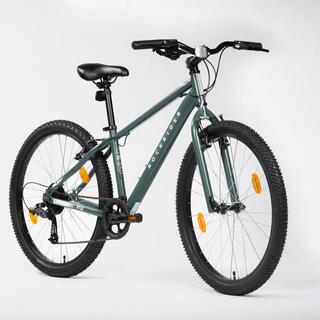


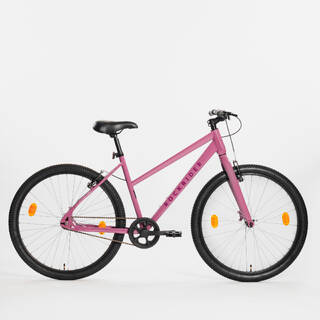

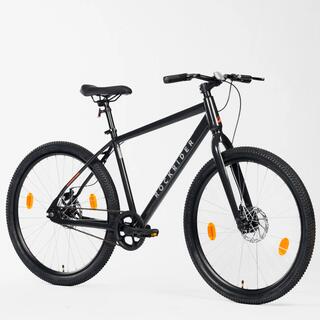
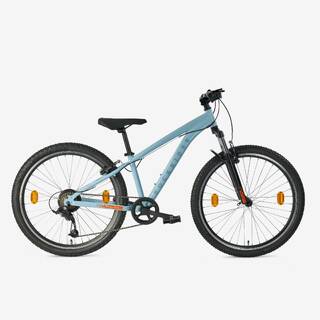
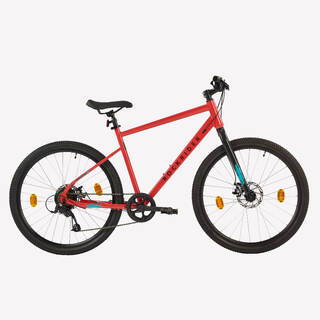

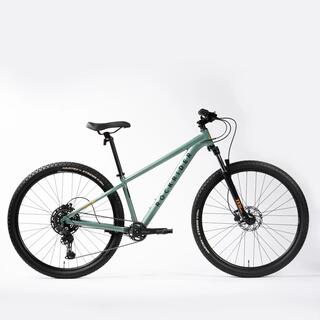
6061 T6 Aluminium Frames and Suspension Fork Travel for Indian Trail Conditions
Rockrider mountain bikes deploy 6061 T6 aluminium alloy frames, delivering a tensile strength of 310 MPa while maintaining a frame weight between 1.8 and 2.2 kg for size M. This alloy composition resists corrosion from monsoon humidity and coastal salt exposure across Kerala, Goa, and Karnataka trails. Triple-butted tubing reduces weight at low-stress zones without compromising torsional rigidity during steep descents on Himalayan fire roads or rocky Western Ghats singletracks.
Suspension fork travel ranges from 80 mm on cross-country hardtails to 120 mm on trail-oriented models. Coil spring forks absorb repetitive impacts on root-laden forest paths near Munnar and Coorg, while air spring variants allow preload adjustment for rider weights between 50 and 100 kg. Lockout mechanisms stabilize the fork during paved climbs on Ooty and Shimla hill roads, preventing energy loss through bobbing. Stanchion diameters of 30 to 32 mm provide lateral stiffness against side loads during sharp switchbacks on Manali and Leh technical sections.
21-Speed to 27-Speed Groupset Gearing Ratios for Gradient Climbing and Plateau Riding
Shimano Tourney and Altus groupsets equip entry and mid-tier Rockrider models with 21-speed (3x7) and 24-speed (3x8) configurations. A 42-34-24T triple chainring paired with an 11-32T or 11-34T cassette generates climbing ratios as low as 0.7, essential for sustained gradients above 12% on Ladakh passes and Spiti Valley ascents. Front derailleur cage clearance accommodates 14-tooth jumps between chainrings, enabling quick shifts during variable terrain transitions on Coorg coffee estate trails.
Higher-tier models integrate 27-speed (3x9) drivetrains with 11-36T cassettes, offering finer cadence control between 70 and 90 RPM on rolling terrain. Indexed shifting with 1.7 mm cable pull ratios ensures crisp gear changes under load, critical when navigating loose gravel descents near Nandi Hills or Lonavala. Chain retention devices and narrow-wide chainring profiles reduce chain drops on rough sections, maintaining drivetrain efficiency across 40 to 60 km weekend trail rides.
Mechanical Disc Brakes and 160 mm Rotor Heat Dissipation for Monsoon Wet Braking
Mechanical disc brake systems with 160 mm rotors deliver consistent stopping power across wet laterite trails during Karnataka and Maharashtra monsoons. Cable-actuated calipers generate clamping forces between 400 and 600 N on semi-metallic pads, maintaining modulation on 15% downhill grades where rim brakes lose friction. Rotor thickness of 1.8 mm dissipates heat from prolonged braking on 8 to 10 km descents, preventing brake fade that occurs above 180°C operating temperatures.
Dual-piston caliper designs distribute pad pressure evenly across the rotor surface, reducing judder and extending pad life to 800-1200 km in dry conditions and 500-700 km during monsoon riding. Tool-free reach adjustment accommodates hand sizes from small to extra-large, crucial for mixed-gender group rides. Post-mount caliper standards allow rotor upgrades to 180 mm on the front for riders exceeding 85 kg or tackling technical descents on Kodaikanal and Munnar shaded forest routes.
27.5-Inch and 29-Inch Wheel Diameter Selection for Obstacle Rollover and Acceleration Response
27.5-inch (650b) wheels balance nimble handling with rollover capability on tight forest singletracks and urban trail parks. A 584 mm bead seat diameter generates a contact patch length of 110-130 mm with 2.10 to 2.25-inch tire widths, improving grip on loose soil and embedded rock sections common to Rajasthan and Madhya Pradesh trails. Lower rotational inertia allows quicker acceleration out of hairpin turns, beneficial for technical climbs on Panchgani and Mahabaleshwar plateau edges.
29-inch wheels prioritize momentum retention and obstacle clearance on cross-country routes exceeding 30 km. The 622 mm bead seat diameter rolls over 50-80 mm roots and rocks with 15-20% less vertical deflection compared to smaller wheels, reducing rider fatigue on all-day epics through Uttarakhand pine forests. Tire clearance accommodates 2.20 to 2.40-inch widths, providing flotation over sandy patches near Rann of Kutch desert trails and Thar border tracks. Increased gyroscopic stability aids straight-line tracking on fast gravel descents, though requires wider turning radii on switchback-heavy climbs.
Knobby Tread Patterns and Dual-Compound Rubber for Laterite Soil and Rocky Trail Traction
Rockrider mountain bike tires feature aggressive knob spacing of 8-12 mm center-to-center, designed for loose-over-hard conditions prevalent on Deccan Plateau trails and Aravalli hill routes. Center knobs with 4-5 mm heights reduce rolling resistance on hardpack sections, while shoulder knobs at 6-8 mm heights bite into soft soil during cornering. Dual-compound rubber construction places a harder 60a durometer compound at the tread center for durability over 2000-2500 km, with softer 50a durometer side knobs enhancing grip on off-camber turns.
Tire casing construction ranges from 30 TPI (threads per inch) on budget models to 60 TPI on performance variants, balancing puncture resistance against supple ride quality. Sidewall protection layers guard against thorns and sharp laterite edges common to Karnataka and Tamil Nadu forest trails. Tubeless-ready beads on select models allow conversion to tubeless setups, reducing pinch flat risk on rocky descents and enabling lower pressures (1.5-1.8 bar) for improved traction without sacrificing rim protection on technical rock gardens near Hampi and Badami.
Frame Geometry Stack and Reach Measurements for Climbing Efficiency and Descending Stability
Rockrider hardtail geometry employs stack heights between 580 and 620 mm across size S to XL, positioning the handlebars to maintain a 15-20 degree torso angle during seated climbing. This upright posture distributes weight over the rear wheel, preventing front-end lift on steep 18-22% gradient sections found on Nilgiri and Palni hill climbs. Reach measurements from 380 mm (size S) to 460 mm (size XL) ensure proper weight distribution without overextending the rider's arms during technical rock step navigation.
Head tube angles between 68 and 70 degrees provide stable steering at speeds above 30 km/h on fast gravel descents, while maintaining adequate responsiveness for tight trail switchbacks. Chainstay lengths of 430-445 mm balance rear-wheel traction during climbs with quick handling characteristics. Bottom bracket drop of 60-70 mm lowers the center of gravity for cornering stability without excessive pedal strikes on uneven terrain. Standover clearance of 70-90 mm allows safe dismounts on technical sections, critical for beginner and intermediate riders developing trail confidence on Bangalore and Pune outskirts.
FAQ (Frequently Asked Questions)
Q1. What frame size should I choose for my height when buying a Rockrider mountain bike?
Riders between 155-165 cm typically fit size S, 165-175 cm suit size M, 175-185 cm require size L, and above 185 cm need size XL. Inseam measurement is equally critical: measure from crotch to floor and ensure 70-90 mm standover clearance when straddling the top tube. Test ride if possible, as torso and arm length ratios affect reach comfort during 2-3 hour rides on technical trails.
Q2. Can Rockrider mountain bikes handle monsoon riding on muddy forest trails in Kerala and Karnataka?
Yes, mechanical disc brakes maintain stopping power in wet conditions, and knobby tire treads with 8-12 mm spacing clear mud effectively. However, clean and lubricate the drivetrain after every monsoon ride, as laterite soil mixed with water forms an abrasive paste that accelerates chain and cassette wear. Apply wet lube formulations and inspect brake pad thickness monthly during heavy monsoon use.
Q3. What is the difference between 27.5-inch and 29-inch wheel mountain bikes for Indian trail conditions?
27.5-inch wheels accelerate faster and handle tighter turns on technical singletracks common to Western Ghats forests, making them ideal for riders under 170 cm or those prioritizing agility. 29-inch wheels roll over rocks and roots more easily, maintain momentum better on long cross-country rides above 30 km, and suit taller riders (above 175 cm) tackling Himalayan fire roads and plateau trails with sustained climbs.
Q4. How often should I service the suspension fork on a Rockrider mountain bike?
Perform basic cleaning and inspection after every 10-15 rides: wipe stanchions clean, check for oil leaks, and cycle the fork through its travel. Complete a lower leg service (replacing foam rings and adding fresh oil) every 50 hours of riding or every 6 months in dusty conditions like Rajasthan and Ladakh. Full damper and spring servicing requires professional attention annually or after 100-150 hours of aggressive trail use.
Q5. Are Rockrider mountain bikes suitable for beginners learning to ride on Bangalore and Pune trails?
Absolutely. Entry-level Rockrider hardtails with 21-speed drivetrains and 80-100 mm suspension forks provide stable handling for learning basic climbing and descending techniques. The upright geometry reduces back strain during 1-2 hour rides, and mechanical disc brakes offer predictable stopping power. Start on groomed trails at Turahalli Forest (Bangalore) or Pashan Lake (Pune) before progressing to technical sections.
Q6. What tire pressure should I use for rocky trails versus loose soil riding?
For rocky trails with embedded stones (Hampi, Badami), run 2.0-2.2 bar (29-32 psi) to prevent pinch flats and maintain rim protection. For loose soil and sand (coastal trails, Thar desert edges), reduce pressure to 1.5-1.8 bar (22-26 psi) to increase the tire contact patch and improve traction. Adjust based on rider weight: add 0.2 bar for every 10 kg above 75 kg body weight.
Q7. Can I upgrade a Rockrider mountain bike with better components over time?
Yes, most Rockrider frames accept standard component upgrades. You can replace the fork with air-sprung models (100-120 mm travel), upgrade to hydraulic disc brakes, install a 1x drivetrain (single front chainring with 11-42T or 11-50T cassette), and fit tubeless-ready wheels. Ensure compatibility with existing standards: check bottom bracket type (square taper vs Hollowtech II), headset size (1-1/8 inch straight vs tapered), and rear axle spacing (135 mm quick-release vs 142 mm thru-axle).
Q8. How do I maintain my mountain bike chain and drivetrain in dusty Rajasthan and Ladakh conditions?
Clean the chain every 150-200 km using a degreaser and stiff brush, then apply dry lube formulations that attract less dust than wet lubes. Wipe excess lube after application to prevent dust accumulation. Inspect chain wear with a chain checker tool every 500 km: replace at 0.5% wear (single-speed) or 0.75% wear (multi-speed) to prevent premature cassette and chainring damage. Carry a quick-link and multi-tool for trailside chain repairs during multi-day Ladakh expeditions.
Q9. What is the maximum rider weight limit for Rockrider mountain bike frames?
Most Rockrider aluminium frames support rider weights up to 100-110 kg including gear and backpack load. Exceeding this limit stresses frame welds and increases spoke breakage risk, especially on rough descents. Heavier riders should opt for models with reinforced rear triangles, upgrade to stronger wheelsets with 32 or 36 spokes, and run slightly higher tire pressures (add 0.3-0.5 bar) to prevent rim dents on rock impacts.
Q10. Which Rockrider mountain bike models are best for Himalayan high-altitude trails above 3000 meters?
Choose models with 27-speed drivetrains and low climbing gears (24T front chainring with 34-36T rear cog) to manage steep gradients at reduced oxygen levels. Air-sprung forks perform better than coil springs in sub-zero temperatures common to Ladakh and Spiti passes. Ensure mechanical disc brakes are properly adjusted, as hydraulic systems can experience fluid viscosity changes above 4000 meters. Carry spare brake pads, tubes, and a portable pump for multi-day self-supported rides on remote Himalayan routes.