Swimming Goggles & Masks


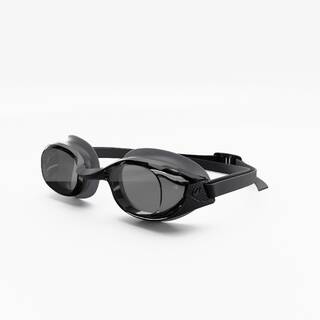


Nabaiji Swimming Goggles: Polycarbonate Lens Technology for Indian Pool and Open Water Conditions
Nabaiji swimming goggles anchor Decathlon's water sports portfolio with injection-molded polycarbonate lenses engineered for impact resistance and optical clarity across chlorinated indoor pools and high-UV outdoor environments. Polycarbonate offers superior shatter resistance compared to standard acrylic, critical for training sessions where accidental contact with pool walls or lane ropes occurs. Lens curvature follows hydrodynamic profiles that minimize frontal drag while maintaining peripheral vision across 180-degree lateral fields, allowing swimmers to track competitors during flip turns and open water navigation.
Indian swimmers face dual optical challenges: indoor pools with sodium vapor lighting that distorts color perception, and outdoor venues with intense UV indices exceeding 10 during summer months. Nabaiji goggles address this through selective lens tints. Clear lenses transmit 90 percent visible light for low-light indoor training. Smoke or mirrored coatings reduce transmission to 15-20 percent, cutting glare off water surfaces in open water swims across Goa beaches or Bangalore lakes. Anti-fog coatings use hydrophilic treatments that spread condensation into transparent micro-layers rather than vision-blocking droplets, maintaining clarity through 45-minute continuous swim sets.
Seal geometry determines leak resistance and comfort duration. Nabaiji employs dual-density silicone gaskets: a soft inner layer conforms to orbital bone contours without excessive suction pressure, while a firmer outer rim maintains structural integrity against water ingress at speeds exceeding 1.5 meters per second. This dual-shore hardness prevents the red ring marks common with single-density seals during extended wear. Adjustable silicone straps feature ladder-lock buckles with 8-12 length settings, accommodating head circumferences from 52 to 62 centimeters without hair snagging during removal.
Anti-Fog Durability and Chlorine Resistance: Material Science for High-Frequency Training
Anti-fog performance degrades through two mechanisms: mechanical abrasion from improper cleaning, and chemical breakdown from chlorine exposure. Factory-applied hydrophilic coatings on Nabaiji lenses withstand 80-120 swim sessions before requiring reactivation, provided swimmers rinse goggles in fresh water immediately post-swim and air-dry without towel contact. Chlorine concentrations in Indian pools typically range from 1 to 3 parts per million, sufficient to oxidize unprotected coatings within 30 sessions. Nabaiji's molecular bonding process embeds anti-fog agents into the polycarbonate surface rather than applying topical sprays, extending functional lifespan by 40 percent compared to aftermarket treatments.
Silicone gasket longevity depends on plasticizer retention. Low-grade silicone loses flexibility after 6 months of chlorine exposure, causing seal failure and water leakage. Nabaiji uses platinum-cured silicone with minimal plasticizer content, maintaining shore hardness values between 30A and 50A (durometer scale) across 18-month usage cycles. This formulation resists the hardening and cracking common in cheaper peroxide-cured silicones. Strap elasticity follows similar durability profiles, with woven silicone cores that prevent overstretching beyond 120 percent original length, ensuring consistent tension across repeated donning and doffing cycles.
Fit Profiles for Competitive Swimmers, Triathletes, and Recreational Users
Goggle fit architecture divides into three orbital seal geometries: low-profile racing models, mid-volume training goggles, and full-face masks. Low-profile designs like Nabaiji's competition range use minimal gasket surface area (12-15 square centimeters per eye) to reduce drag, ideal for swimmers targeting sub-30-second 50-meter sprint times. These create higher suction pressure (approximately 0.2 bar) for watertight seals but limit wear duration to 60-90 minutes before discomfort. Mid-volume training goggles increase gasket contact area to 18-22 square centimeters, distributing pressure across broader orbital zones for 2-hour comfort during endurance sets.
Nose bridge adjustability addresses the anatomical variance in Indian facial structures. Fixed-bridge goggles accommodate only narrow anthropometric ranges, causing either excessive temple pressure or nasal gaps. Nabaiji's interchangeable nose pieces offer 3-5 size options spanning 14mm to 22mm bridge widths, allowing precise fit customization. Swimmers should select bridges where gaskets contact the orbital bone perimeter without resting on the eyeball itself, verified by gentle pressure testing before water entry. Incorrect bridge sizing causes 70 percent of reported leak issues, not gasket defects.
Full-face snorkeling masks serve recreational swimmers and beginners uncomfortable with traditional goggle-and-nose-clip combinations. These integrate polycarbonate visors with silicone skirts that seal around the entire face perimeter, enabling natural nasal breathing. However, full-face designs increase frontal area by 40 percent compared to goggles, unsuitable for lap swimming or competitive training. Decathlon's Subea and Nabaiji full-face masks incorporate dry-top snorkel valves and purge chambers, designed for surface swimming in calm waters rather than pool training.
Prescription and Optical Diopter Options for Vision-Corrected Swimming
Swimmers requiring vision correction face two pathways: prescription goggles with ground optical lenses, or contact lenses worn under standard goggles. Nabaiji offers pre-ground diopter lenses in 0.5-step increments from -1.0 to -8.0 for myopia, and +1.0 to +4.0 for hyperopia. These use the same polycarbonate base material as non-prescription models but incorporate spherical curvature corrections. Diopter accuracy remains within ±0.25 diopters across the lens surface, sufficient for training but not matching the precision of daily eyewear. Swimmers with astigmatism exceeding 1.0 diopter or requiring progressive lenses must use contact lenses, as cylindrical corrections are not available in swimming goggle formats.
Optical considerations include vertex distance (the gap between lens and cornea) and peripheral distortion. Swimming goggles position lenses 12-15mm from the eye, compared to 12mm for standard eyeglasses, requiring slight prescription adjustments for high corrections beyond -6.0 diopters. Peripheral distortion increases with diopter strength due to the curved lens geometry necessary for hydrodynamic shaping. Swimmers should test prescription goggles during controlled pool sessions before open water use, as depth perception and distance judgment adapt over 3-5 sessions.
Mirrored Coatings and UV Protection for Open Water and Outdoor Pool Swimming
Mirrored lens coatings use vacuum-deposited metallic layers (typically aluminum or chromium) that reflect 60-80 percent of incident light, reducing visible light transmission to 10-15 percent. This proves essential for open water swimming in Indian coastal regions where solar reflection off wave surfaces creates glare intensities exceeding 50,000 lux, compared to 500 lux in indoor pools. Mirrored coatings also provide psychological advantages in competitive racing by concealing eye position from opponents, preventing tactical reads during drafting or sprint finishes.
UV protection follows two mechanisms: polycarbonate's inherent UV absorption (blocking 99.9 percent of UVB and 95 percent of UVA without coatings), and additional UV400-rated treatments that eliminate residual long-wave UVA. Indian swimmers training in outdoor 50-meter pools or open water venues face cumulative UV exposure equivalent to 2-3 hours of unprotected sun exposure per training session. Chronic exposure without UV-blocking goggles contributes to photokeratitis (corneal sunburn) and long-term cataract risk. Nabaiji's outdoor-specific models integrate UV400 protection across all tint options, including clear lenses for low-light dawn or dusk sessions.
Photochromic lenses that darken in sunlight remain uncommon in swimming goggles due to the rapid transition speeds required when moving between shaded and sunlit pool sections. Chemical photochromic reactions require 30-60 seconds for full activation, too slow for lap swimming where lighting changes occur every 25-50 meters. Fixed-tint lenses with appropriate visible light transmission percentages offer more reliable optical performance across varied conditions.
Maintenance Protocols and Storage to Maximize Goggle Lifespan
Post-swim rinsing removes chlorine residues and organic contaminants that degrade silicone and anti-fog coatings. Swimmers should immerse goggles in fresh water for 30 seconds immediately after pool exit, followed by air drying in ventilated goggle cases. Never store wet goggles in sealed bags, as trapped moisture promotes bacterial growth and accelerates silicone degradation. Avoid direct sunlight during drying, as UV exposure breaks down silicone plasticizers and causes yellowing in clear gaskets.
Anti-fog reactivation uses two methods: saliva application or commercial anti-fog sprays. Saliva contains surfactants that temporarily restore hydrophilic properties, effective for single sessions but requiring reapplication. Commercial sprays use polyvinyl alcohol or glycerin-based formulas that bond to lens surfaces for 5-10 sessions. Apply sprays to dry lenses, spread evenly with fingertips, then rinse briefly before use. Never use abrasive cleaners, paper towels, or clothing to wipe lenses, as these create microscopic scratches that scatter light and destroy anti-fog treatments.
Strap tension should allow one-finger insertion between strap and head when worn, preventing excessive suction while maintaining seal integrity. Overtightened straps cause headaches and red marks without improving leak resistance. Inspect gaskets monthly for micro-tears along seal edges, particularly at stress points where silicone meets the frame. Replace goggles when gaskets lose elasticity or develop permanent compression set (visible flattening when not worn), typically after 12-18 months of regular use or 200-250 swim sessions.
FAQ (Frequently Asked Questions)
Q1. How do I know which size swimming goggles to buy?
The best way is to try them on. Press the goggles gently against your face without the strap—they should create suction and stay in place briefly. For children, always choose goggles specifically designed for kids, as adult sizes won't seal properly on smaller faces. Many goggles come with adjustable nose bridges and straps to help you customise the fit.
Q2. Why do my goggles fog up and how can I prevent it?
Fogging happens when warm air from your face meets the cooler lens surface. All goggles come with anti-fog coating, but it wears down over time. To extend its life, never touch the inside of the lenses, rinse with cool water after each use, and avoid wiping them. If fogging persists despite care, it's time for new goggles. Some swimmers use anti-fog sprays as a temporary solution.
Q3. What's the difference between swimming goggles and swimming masks?
Goggles cover only your eyes with separate eye cups, while masks cover both your eyes and nose in one piece. Masks are popular for snorkelling and recreational swimming because they offer wider vision and feel less restrictive. Goggles are preferred for lap swimming and competition because they're more streamlined and allow you to breathe through your nose if needed.
Q4. Can I use the same goggles for pool and open-water swimming?
You can, but dedicated open-water goggles offer advantages. They typically have larger lenses for better peripheral vision, tinted or polarised lenses to reduce sun glare, and more secure straps. Pool goggles often have clear lenses optimised for indoor lighting. If you do both regularly, having two pairs optimised for each environment enhances your experience.
Q5. How often should I replace my swimming goggles?
This depends on usage and care. With proper maintenance, good-quality goggles last 6-12 months of regular use. Replace them when the anti-fog coating stops working, the gaskets become hard or cracked, the straps lose elasticity, or they start leaking despite proper fit. Competitive swimmers often replace goggles more frequently to ensure peak performance.
Q6. Are prescription swimming goggles worth it?
Absolutely, if you need vision correction. Prescription goggles let you see clearly without wearing contact lenses in the water, which is more hygienic and comfortable. They're available in various strengths and are especially valuable for swimmers who train regularly or need to see clearly for safety in open water. The investment pays off in comfort and convenience.
Q7. My child complains that goggles hurt. What should I do?
First, ensure you're using goggles designed for children—adult goggles won't fit properly. Check that the straps aren't too tight; a proper seal comes from fit, not pressure. Let your child adjust the straps themselves so they can find a comfortable tension. Consider trying different styles, as some children prefer masks over traditional goggles. Wider, softer gaskets are generally more comfortable for sensitive faces.
Q8. Can I swim in the sea with regular swimming goggles?
Yes, regular goggles work in the sea, but rinse them thoroughly with fresh water afterward as saltwater is more corrosive than pool water. For frequent ocean swimming, consider goggles with UV protection and possibly tinted lenses to reduce glare. Ensure the straps are secure, as waves can dislodge poorly-fitted goggles.
Q9. What colour lens should I choose for my swimming goggles?
Clear lenses work well for indoor pools and low-light conditions. Tinted lenses (blue, grey, or smoke) reduce brightness for outdoor swimming. Mirrored lenses offer maximum glare reduction and are popular for open-water swimming and bright conditions. Amber or yellow lenses can enhance contrast in overcast conditions. Choose based on where you'll swim most often.
Q10. How tight should swimming goggles be?
Goggles should feel snug but not painful. You shouldn't feel pressure points or pinching. The seal should be watertight without over-tightening the straps. If you have red marks that last more than 30 minutes after swimming or get headaches, your goggles are too tight. Adjust the straps gradually until you find the sweet spot between comfort and a good seal.
Q11. How do I choose between clear, smoke, and mirrored lens tints for swimming goggles in Indian conditions?
Clear lenses suit indoor pools with artificial lighting, transmitting 85-90 percent visible light for maximum visibility during early morning or evening sessions. Smoke lenses reduce transmission to 20-30 percent for outdoor pools with moderate sunlight. Mirrored coatings block 80-85 percent of light, essential for open water swimming in high-glare coastal environments or midday outdoor training where solar reflection off water exceeds 40,000 lux. Match lens tint to your primary training environment rather than owning multiple pairs.
Q12. Why do my swimming goggles fog up after a few laps despite having anti-fog coating?
Anti-fog degradation occurs from touching the lens interior with fingers, which transfers skin oils that repel the hydrophilic coating, or from improper rinsing that leaves chlorine residues. Reactivate coatings by applying a small amount of saliva to dry lenses, spreading evenly, then rinsing briefly before swimming. For permanent restoration, use glycerin-based anti-fog sprays applied to completely dry lenses. Factory coatings typically last 80-120 sessions with proper care, requiring reactivation or replacement beyond this threshold.
Q13. What nose bridge size should I select for Nabaiji goggles to prevent leaks?
Correct nose bridge width positions gaskets on the orbital bone surrounding your eyes, not on the eyeball or upper cheek. Hold goggles against your face without the strap and press gently. Proper fit creates light suction that holds goggles in place for 3-5 seconds without strap tension. If goggles fall immediately, try a smaller bridge. If you feel pressure on your eyeballs rather than bone, increase bridge size. Most Indian swimmers require 16-20mm bridges, with women typically using 16-18mm and men 18-20mm ranges.
Q14. Can I wear contact lenses under swimming goggles for vision correction?
Yes, soft contact lenses can be worn under goggles, but use daily disposable lenses rather than monthly types to minimize infection risk from pool water exposure. Ensure goggles create a watertight seal before diving, as water ingress can dislodge lenses or introduce bacteria. Alternatively, Nabaiji prescription goggles offer diopter corrections from -1.0 to -8.0 for nearsightedness in 0.5-step increments, eliminating contact lens risks. Prescription goggles prove more reliable for regular training but lack astigmatism correction beyond spherical diopters.
Q15. How tight should I adjust swimming goggle straps to prevent water leakage?
Straps should sit snug enough to maintain gasket contact with orbital bones but loose enough to insert one finger between strap and head when worn. Overtightening does not improve seal quality and causes headaches, red marks, and premature gasket compression. Leak prevention depends on correct nose bridge sizing and gasket placement on bone structure, not strap tension. Test seal by pressing goggles gently against your face without the strap. If they hold via suction for several seconds, strap tension is supplementary, not primary, for waterproofing.
Q16. What is the lifespan of swimming goggles with regular chlorine pool exposure?
Nabaiji goggles using platinum-cured silicone gaskets maintain seal integrity for 12-18 months or 200-250 swim sessions under normal chlorinated pool conditions (1-3 ppm chlorine concentration). Anti-fog coatings degrade faster, lasting 80-120 sessions before requiring reactivation treatments. Replace goggles when gaskets develop permanent compression set (visible flattening), lose elasticity, or show micro-tears along seal edges. Rinse goggles in fresh water immediately after each swim and air-dry in ventilated cases to maximize lifespan. Avoid storing in direct sunlight or sealed wet bags.
Q17. Do full-face snorkeling masks work for lap swimming in pools?
Full-face masks enable natural breathing through the nose and mouth, ideal for recreational surface swimming and snorkeling in calm open water. However, they increase frontal drag area by 40 percent compared to traditional goggles, making them unsuitable for lap swimming or competitive training. The larger profile disrupts streamlined body position during freestyle and backstroke. Use Nabaiji or Subea full-face masks for leisure swimming, beach snorkeling, or beginner comfort, but transition to low-profile goggles for structured training and technique development.
Q18. How do I prevent red marks and discomfort around my eyes after wearing goggles?
Red orbital marks result from excessive strap tension or incorrect nose bridge sizing that forces gaskets onto soft facial tissue instead of orbital bone. Loosen straps until you can insert one finger between strap and head. Test different nose bridge widths to position gaskets on bone perimeter. Low-profile racing goggles with minimal gasket area create higher localized pressure, suitable only for 60-90 minute sessions. For training exceeding 90 minutes, switch to mid-volume goggles with larger gasket surface area (18-22 square centimeters per eye) that distribute pressure across broader zones.
Q19. Are mirrored swimming goggles allowed in competitive swimming events in India?
Yes, mirrored and tinted goggles comply with Swimming Federation of India and FINA regulations for all competitive events, including state and national championships. Mirrored coatings provide no performance-enhancing properties beyond glare reduction, making them legal across all age groups and competition levels. Many elite swimmers prefer mirrored lenses to conceal eye direction from competitors during tactical racing. Choose mirrored options for outdoor competitions or psychological preference, but ensure goggles meet general equipment standards (no electronic components, no sharp edges).
Q20. What is the difference between Nabaiji and Subea goggles at Decathlon?
Nabaiji focuses on pool swimming and competitive training, offering low-profile racing goggles, prescription diopter options, and mid-volume training models optimized for chlorinated water and lap swimming hydrodynamics. Subea specializes in snorkeling and open water equipment, including full-face masks with integrated snorkels, wider-field recreational goggles, and diving masks with tempered glass lenses for deeper freediving. Choose Nabaiji for pool training, fitness swimming, and competitions. Select Subea for beach snorkeling, open water exploration, and recreational surface swimming where natural breathing and panoramic vision take priority over speed.