Taping and Strapping

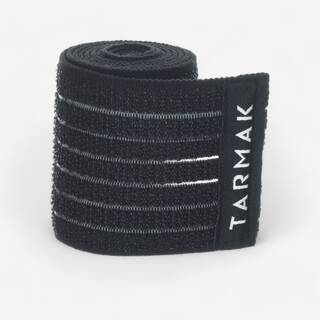
Athletic Taping and Strapping: Engineered Support for High-Impact Indian Sports Conditions
Athletic taping and strapping systems deliver targeted compression, joint stabilization, and soft tissue support across cricket, football, badminton, running, and gym training. These medical-grade adhesive tapes and elastic wraps use zinc oxide backing, cotton rayon blends, and synthetic elastane weaves to limit excessive joint motion while preserving functional range. Indian athletes face unique demands: high-humidity monsoon conditions that challenge adhesive bonding, dusty outdoor turfs that require robust skin adherence, and prolonged training sessions in 35-40°C heat where breathability prevents maceration. Proper taping technique attenuates stress on ligaments during lateral cuts, dampens vibrational loads on tendons during repetitive jumping, and supports muscle fascia during explosive sprinting.
Decathlon's taping portfolio spans rigid strapping tapes (38mm and 50mm widths) for ankle and wrist immobilization, elastic cohesive bandages for dynamic compression without adhesive residue, and kinesiology tapes with wave-pattern acrylic adhesive for lymphatic drainage facilitation. Rigid zinc oxide tapes deliver 0-5% stretch, locking joints in neutral anatomical positions to limit inversion or hyperextension. Elastic cohesive wraps provide 150-180% elongation, conforming to muscle contours during eccentric loading phases. Kinesiology tapes use longitudinal elasticity (40-60% recoil) and breathable cotton weave to lift epidermis microscopically, theoretically reducing interstitial pressure and enhancing proprioceptive feedback. Adhesive strength is measured in peel force (N/cm): quality sports tapes maintain 2.5-4 N/cm bond even after sweat saturation, critical for Indian summer tournaments where perspiration rates exceed 1.5 liters per hour.
Rigid Strapping Tape: Zinc Oxide and Cotton Rayon Constructions for Joint Immobilization
Rigid strapping tape uses non-elastic zinc oxide or cotton rayon backings coated with hypoallergenic rubber-based or acrylic adhesives. These tapes deliver zero stretch (0-5% elongation under load), creating mechanical blocks against unwanted joint motion. A standard 38mm x 13.7m roll provides sufficient length for ankle figure-eight straps, heel locks, and stirrup techniques that restrict subtalar inversion during court sports. The 50mm width suits knee collateral ligament support and wrist hyperextension prevention in racket sports. Adhesive peel strength ranges from 2.8 to 3.5 N/cm on clean, dry skin, but Indian conditions demand higher tack formulations: monsoon humidity increases skin moisture by 40-60%, reducing bond efficacy unless pre-tape adhesive sprays or underwraps are applied.
Application technique determines effectiveness. Ankle taping for lateral stability requires three anchor strips around the lower leg, followed by alternating stirrups from medial to lateral malleolus, and completed with figure-eight locks and heel locks. This layered structure limits talar tilt beyond 10-15 degrees, the threshold where anterior talofibular ligament strain escalates. Rigid tape should never constrict circulation: a two-finger gap under proximal anchors ensures venous return. Indian athletes training on hard concrete courts or synthetic turfs benefit from prophylactic ankle taping, as these surfaces generate ground reaction forces 20-30% higher than natural grass, increasing ligamentous stress during deceleration. Remove tape within 24 hours to prevent skin irritation; zinc oxide adhesives can cause contact dermatitis if left beyond 48 hours in humid environments.
Elastic Cohesive Bandages: Self-Adherent Compression Without Adhesive Residue
Elastic cohesive bandages (also called self-adherent wraps) use latex or latex-free elastic fibers woven with cohesive coatings that bond to themselves without adhering to skin or hair. These wraps deliver 150-180% stretch, providing dynamic compression that adapts to muscle pump action during exercise. A 7.5cm x 4.5m roll suits forearm, calf, and thigh applications, while 10cm widths accommodate quadriceps and hamstring wrapping. Compression gradient is user-controlled: 50% stretch applies light compression (15-20 mmHg), suitable for edema management post-training, while 75% stretch delivers moderate compression (20-30 mmHg) for active muscle support during running or cycling. Unlike rigid tape, cohesive bandages permit full joint range of motion, making them ideal for dynamic sports where complete immobilization would hinder performance.
Indian gym athletes and runners use cohesive wraps for calf compression during long-distance road runs on tar surfaces, where repetitive impact generates cumulative microtrauma in soleus and gastrocnemius muscles. The wrap's elastic recoil assists venous return, reducing metabolic waste accumulation and delaying onset of muscle fatigue. Cohesive bandages resist sweat saturation better than adhesive tapes: their open-weave polyester or cotton construction wicks moisture outward, maintaining grip integrity even after 90-minute football matches in 38°C heat. Reusability is a key advantage. A single cohesive wrap withstands 15-20 applications if hand-washed in cold water and air-dried flat, whereas adhesive tapes are single-use consumables. Store rolls in cool, dry conditions (below 25°C) to prevent cohesive coating degradation, which manifests as reduced self-stick and premature unraveling during application.
Kinesiology Tape: Wave-Pattern Adhesive and Longitudinal Elasticity for Proprioceptive Feedback
Kinesiology tape (K-tape) features 100% cotton weave with 40-60% longitudinal elasticity and wave-pattern acrylic adhesive that mimics skin's natural stretch properties. The tape's elastic recoil theoretically lifts the epidermis by 1-2mm, creating microscopic space between dermis and fascia to reduce interstitial fluid pressure and enhance lymphatic drainage. This mechanism remains debated in sports science literature, but anecdotal reports from badminton and tennis players suggest improved proprioceptive awareness when K-tape is applied along muscle bellies or across joint lines. Standard rolls measure 5cm x 5m, pre-cut into I-strips, Y-strips, or X-strips for targeted applications: I-strips run parallel to muscle fibers for linear support, Y-strips bracket muscle groups for broader coverage, and X-strips cross joint spaces to enhance mechanoreceptor stimulation.
Application requires 10-25% stretch for lymphatic facilitation (lifting technique) or 50-75% stretch for mechanical support (compression technique). Indian runners apply K-tape along the Achilles tendon with 15% stretch to dampen vibrational loads during heel strike, or across the patellar tendon with 50% stretch to support eccentric quadriceps loading during downhill running. The tape's breathable cotton weave tolerates high-humidity monsoon conditions better than synthetic tapes, allowing moisture vapor transmission rates above 1500 g/m²/24h. Adhesive longevity spans 3-5 days if applied to clean, oil-free skin and allowed to activate via body heat for 30 minutes post-application. Pat dry after showers rather than rubbing to preserve adhesive bond. Remove by saturating with oil or adhesive remover and peeling slowly in the direction of hair growth to prevent skin stripping, especially critical for athletes with sensitive skin exposed to UV radiation during outdoor training.
Pre-Taping Protocols and Skin Preparation for Indian Climate Conditions
Effective taping begins with meticulous skin preparation. Indian athletes must account for elevated sweat rates (1.2-1.8 L/hour in summer heat), dust accumulation on outdoor training surfaces, and natural skin oils that compromise adhesive bonding. Cleanse the target area with isopropyl alcohol wipes (70% concentration) to remove oils, dirt, and residual sunscreen. Allow skin to dry completely for 2-3 minutes; applying tape to damp skin reduces peel strength by 40-50%. Shave dense hair using a safety razor 24 hours before taping to prevent folliculitis and improve adhesive contact area. For athletes with sensitive skin or history of contact dermatitis, apply a thin layer of pre-tape underwrap (foam or thin cotton adhesive bandage) as a protective barrier, though this reduces direct skin adherence and may require more aggressive tape tension.
Pre-tape adhesive sprays enhance bond strength in high-humidity conditions. These aerosol formulations deposit a tacky resin layer that increases peel force by 30-40%, critical for monsoon season matches where ambient humidity exceeds 80%. Apply spray in a well-ventilated area, holding the canister 15-20cm from skin, and allow 60 seconds for solvent evaporation before tape application. Position the joint in its functional mid-range during taping: ankle at 90-degree dorsiflexion, wrist in slight extension (10-15 degrees), knee in 20-degree flexion. Taping in extreme positions creates excessive tension when the joint moves through its full range, leading to circulation compromise or premature tape failure. Post-application, activate adhesive by rubbing the tape surface briskly to generate friction heat, which softens acrylic adhesives and improves molecular bonding to skin. Indian athletes training in 40°C heat achieve this activation naturally within 5-10 minutes of warm-up.
Taping Techniques for Common Indian Sports: Cricket, Badminton, Football, and Gym Training
Cricket fast bowlers require wrist and finger strapping to manage repetitive hyperextension loads during ball release. Apply 25mm rigid tape around the wrist in a figure-eight pattern, anchoring at the distal forearm and crossing the dorsal wrist to limit extension beyond 60 degrees. Finger buddy taping (taping an injured finger to an adjacent healthy finger using 12mm tape) provides collateral support for jammed or sprained interphalangeal joints without restricting grip on the ball. Badminton players face high rates of ankle inversion injuries during lunging and rapid directional changes on indoor courts. A closed basket-weave ankle taping technique using 38mm rigid tape combines vertical stirrups and horizontal figure-eights to create a lattice that resists inversion while permitting plantarflexion for explosive jumps.
Football players on synthetic turf pitches benefit from prophylactic knee taping using elastic cohesive wraps or K-tape applied in an X-pattern across the patella to enhance proprioceptive feedback during cutting maneuvers. Gym athletes performing heavy squats or deadlifts use 50mm rigid tape to support the wrist in neutral alignment, preventing hyperextension under barbell loads exceeding 100kg. Thumb taping for volleyball and basketball players uses a spica technique: anchor tape at the wrist, spiral around the thumb's metacarpophalangeal joint, and return to the wrist, limiting ulnar deviation that stresses the ulnar collateral ligament. All techniques require practice: improper tension causes either inadequate support (too loose) or neurovascular compromise (too tight). Indian sports physiotherapists recommend athletes learn self-taping under supervision, practicing on non-dominant limbs first to develop tactile feedback for appropriate tension.
FAQ (Frequently Asked Questions)
Q1. How do I know which type of taping or strapping is right for me?
The type of taping or strapping you need depends on your specific activity, injury, or condition. Rigid straps are best for joint support during high-impact activities, while elastic bandages are ideal for compression and swelling management. Kinesiology tapes are great for muscle support and recovery. Our staff can help you choose the right product based on your needs.
Q2. Can I wear taping or strapping all day?
It's generally not recommended to wear taping or strapping for extended periods, as it can restrict blood flow and cause discomfort. Follow the product instructions and remove the taping or strapping after the recommended duration or when you're done with your activity.
Q3. How do I properly apply kinesiology tape?
Applying kinesiology tape correctly is essential for its effectiveness. First, clean and dry the area where you'll be applying the tape. Then, apply the tape in a stretched position, following the muscle contours. Refer to the product instructions or seek guidance from a professional for proper application techniques.
Q4. Can taping and strapping be used for injury recovery?
Yes, taping and strapping can be beneficial for injury recovery. Elastic bandages and kinesiology tapes can provide compression and support, promoting blood flow and reducing swelling. However, it's always best to consult a healthcare professional for proper treatment and guidance.
Q5. How often should I replace my taping and strapping products?
The lifespan of taping and strapping products can vary depending on the frequency of use and proper maintenance. As a general rule, replace rigid straps and elastic bandages every few months, and kinesiology tapes after each use or when they lose their adhesiveness.
Q6. Can I use taping and strapping for preventive purposes?
Absolutely! Taping and strapping can be used as a preventive measure to support joints, muscles, and tendons during physical activity. Rigid straps and kinesiology tapes can help reduce the risk of sprains, strains, and other injuries, especially in high-impact sports or activities.
Q7. Are there any precautions I should take when using taping and strapping?
Yes, there are a few precautions to keep in mind. Avoid applying taping or strapping too tightly, as it can restrict blood flow and cause discomfort. If you experience numbness, tingling, or increased pain, remove the taping or strapping immediately. Consult a healthcare professional if you have any underlying medical conditions or concerns.
Q8. Can I use taping and strapping during pregnancy?
While taping and strapping can provide support and relief during pregnancy, it's essential to consult with your healthcare provider first. They can advise you on the appropriate types and application methods to ensure your safety and comfort.
Q9. How do I care for my taping and strapping products?
Proper care and maintenance can extend the lifespan of your taping and strapping products. Clean them gently with a damp cloth after use, store them in a cool, dry place away from direct sunlight, and avoid excessive stretching or folding. Follow the product instructions for specific care guidelines.
Q10. Can I use taping and strapping for sports other than the ones they're designed for?
While taping and strapping products are often designed with specific sports or activities in mind, many of them can be versatile and used for various purposes. However, it's always best to consult with a professional or refer to the product instructions to ensure proper usage and effectiveness.
Q11. What is the difference between rigid strapping tape and kinesiology tape for ankle support?
Rigid strapping tape uses non-elastic zinc oxide or cotton rayon (0-5% stretch) to mechanically block ankle inversion and limit joint motion, ideal for preventing re-injury during high-impact sports. Kinesiology tape offers 40-60% longitudinal elasticity, allowing full range of motion while theoretically enhancing proprioceptive feedback and lymphatic drainage. Use rigid tape for acute instability or prophylactic immobilization, and K-tape for chronic conditions or when maintaining mobility is essential.
Q12. How long can I keep athletic tape on my skin in Indian summer humidity?
Rigid zinc oxide tape should be removed within 24 hours to prevent skin maceration and contact dermatitis, especially in humid conditions where sweat accumulation softens adhesive and traps moisture. Kinesiology tape can remain applied for 3-5 days if properly dried after showers and applied to clean, oil-free skin. Elastic cohesive bandages should be removed after each training session and reapplied fresh to maintain compression efficacy and prevent bacterial growth in sweat-saturated fabric.
Q13. Do I need to shave my legs before applying sports tape?
Shaving dense hair 24 hours before taping improves adhesive contact area and reduces pain during tape removal. Use a safety razor with shaving gel to prevent razor burn, and allow skin to recover overnight before applying tape. Athletes with light hair may skip shaving but should cleanse skin thoroughly with isopropyl alcohol to remove oils. For sensitive skin, apply a thin foam underwrap as a protective barrier, though this slightly reduces adhesive bond strength.
Q14. Can I reuse elastic cohesive bandages after washing them?
Yes, elastic cohesive bandages withstand 15-20 applications if hand-washed in cold water with mild detergent and air-dried flat. Avoid machine washing or tumble drying, as heat degrades the cohesive coating and reduces self-stick properties. Inspect wraps before each use for fraying edges or loss of elasticity (inability to stretch to 150% original length). Store in a cool, dry place below 25°C to prevent cohesive deterioration.
Q15. How tight should I apply compression tape for calf support during running?
Apply elastic cohesive wraps at 50% stretch for light compression (15-20 mmHg) suitable for long-distance running, or 75% stretch for moderate compression (20-30 mmHg) during interval training. You should be able to slide one finger under the proximal edge of the wrap without difficulty. If you experience numbness, tingling, or skin color changes (pale or bluish), the wrap is too tight and must be loosened immediately to restore circulation.
Q16. Which taping technique works best for badminton ankle injuries on indoor courts?
A closed basket-weave technique using 38mm rigid strapping tape provides optimal lateral stability for badminton. Start with anchor strips around the lower leg and foot, then apply alternating vertical stirrups (medial to lateral) and horizontal figure-eights, finishing with heel locks. This lattice structure limits inversion beyond 10-15 degrees while permitting plantarflexion for explosive lunges. Apply tape 20-30 minutes before play to allow adhesive activation.
Q17. Does kinesiology tape actually reduce muscle soreness after gym workouts?
Research on K-tape's efficacy for delayed-onset muscle soreness (DOMS) shows mixed results. Some athletes report subjective relief, possibly due to enhanced proprioceptive feedback or placebo effect. The tape's elastic recoil may assist lymphatic drainage by creating microscopic space between skin and fascia, theoretically reducing interstitial fluid pressure. For objective muscle support during heavy lifting, use rigid strapping tape or elastic cohesive wraps that deliver measurable compression.
Q18. Can I apply sports tape directly over sunscreen or moisturizer?
No, oils and lotions create a barrier that reduces adhesive peel strength by 40-50%. Cleanse skin with 70% isopropyl alcohol wipes to remove sunscreen, moisturizer, and natural skin oils before taping. Allow skin to dry completely for 2-3 minutes. If you must use sunscreen, apply it to untaped areas only, or use spray-on sunscreen after tape application, avoiding direct contact with tape edges.
Q19. What width of rigid tape should I use for wrist support during cricket bowling?
Use 25mm rigid strapping tape for wrist applications, as it conforms better to the joint's contours and allows precise figure-eight patterns. The 38mm width is too bulky for wrist anatomy and may restrict grip. Apply tape in a spiral from the distal forearm, cross the dorsal wrist, and anchor on the palmar side to limit hyperextension beyond 60 degrees while preserving flexion needed for ball release.
Q20. How do I remove athletic tape without damaging skin after a long match?
Saturate the tape with baby oil, coconut oil, or commercial adhesive remover and let it soak for 2-3 minutes to dissolve the adhesive bond. Peel slowly in the direction of hair growth, supporting the skin with your other hand to prevent stretching. Never rip tape off quickly, as this can cause skin tears or remove the stratum corneum. For zinc oxide tape, use warm water to soften adhesive before applying oil.