Towels and Bathrobes







Microfiber Construction and Fast-Dry Engineering for High-Humidity Monsoon Conditions
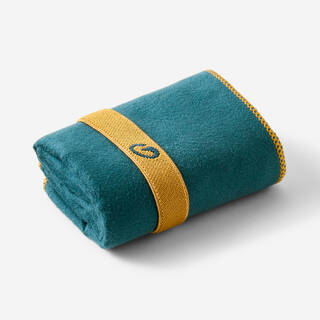
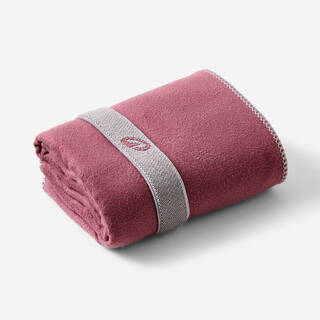
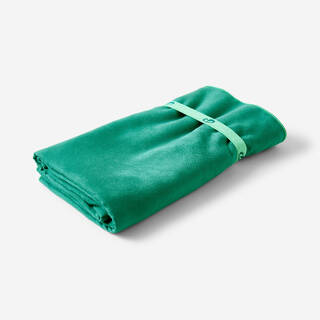
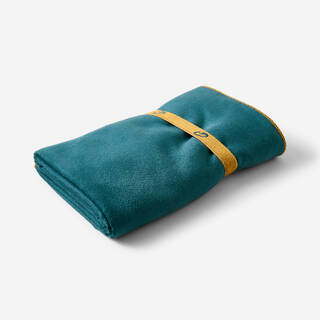
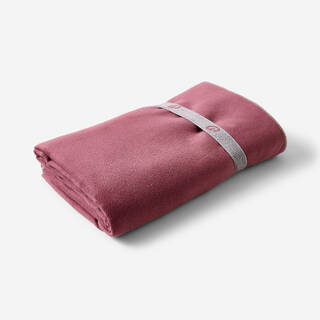
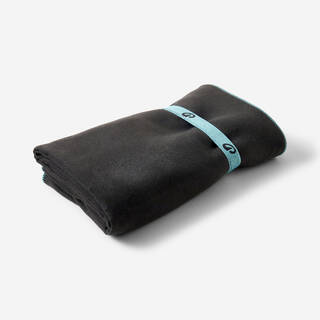
Decathlon's microfiber towel range uses ultra-fine polyester and polyamide fibers engineered at 80 GSM to 150 GSM weights, delivering rapid moisture absorption rates up to 4 times their dry weight. These synthetic fibers wick water through capillary action across a dense surface area of approximately 200,000 fibers per square inch, enabling evaporation rates 3 to 5 times faster than conventional cotton terry. In coastal Mumbai or Kolkata monsoon humidity exceeding 85 percent, microfiber towels dry within 2 to 3 hours on indoor racks compared to 8 to 12 hours for standard cotton.
Nabaiji swimming towels feature a dual-layer microfiber construction with a looped terry side for initial water removal and a smooth microfiber reverse for quick-dry performance. This bi-component design allows swimmers to towel off poolside, fold the towel into a compact roll (compression ratio of 4:1), and store it in a gym bag without mildew formation during the commute home. The polyamide blend resists chlorine degradation and salt-water exposure, maintaining structural integrity through 100-plus wash cycles at 40°C without fiber breakdown or odor retention.
Cotton Terry Weave Specifications and Absorbency Metrics for Post-Workout Recovery
Traditional cotton terry towels in the Domyos fitness range use 100 percent combed cotton with a 400 to 500 GSM density, woven in a looped pile structure that creates surface pockets for moisture absorption. The terry weave consists of uncut loops standing 3 to 5 mm above the base fabric, providing a plush hand-feel and high absorbency capacity of 7 to 10 times the towel's dry weight. This construction suits post-shower use in gym locker rooms or home bathrooms where immediate drying speed is secondary to softness and skin comfort.
Decathlon sources cotton from BCI-certified farms, ensuring fiber length consistency of 28 to 32 mm staple cotton for reduced pilling and lint shedding. The double-stitched hemming uses polyester thread for edge durability, preventing fraying after repeated machine washing at 60°C. For Indian households with hard water (TDS levels above 300 ppm), cotton terry maintains absorbency better than bamboo or modal blends, which can develop mineral buildup and stiffness over time. Pre-shrunk finishing ensures dimensional stability within 2 to 3 percent shrinkage after the first wash cycle.
Compact Travel Towel Dimensions and Packing Efficiency for Trekking and Multi-Day Expeditions
Quechua and Forclaz trekking towels are engineered in compact sizes: 40x80 cm (small), 60x120 cm (medium), and 80x130 cm (large), with packed volumes ranging from 150 cm³ to 600 cm³ when rolled and secured with an elastic band. The lightweight microfiber fabric at 80 to 100 GSM reduces backpack load to 50 to 150 grams per towel, critical for multi-day Himalayan treks where every 100 grams of gear weight impacts energy expenditure over 15 to 20 km daily distances at altitudes above 3,000 meters.
These travel towels include a snap-loop corner attachment for hanging on tent guy-lines, backpack straps, or hostel hooks, enabling air-dry positioning in confined spaces. The microfiber weave resists bacterial growth and odor formation even when packed damp for 6 to 8 hours during transit between campsites. Sand-resistant properties make them suitable for Goa or Andaman beach trips, where fine silica particles (0.1 to 0.5 mm diameter) shake off easily rather than embedding in fiber loops like cotton terry. UV resistance ratings ensure color fastness through 50-plus hours of direct high-altitude sun exposure without significant fading.
Bathrobe Fabric Weights and Thermal Insulation for Post-Swim and Cold-Weather Use
Nabaiji bathrobes use a 300 to 400 GSM cotton terry or fleece-lined microfiber construction, providing thermal insulation after pool sessions or open-water swims in cooler months. The full-length design (110 to 130 cm from shoulder to hem) covers the torso and upper legs, reducing convective heat loss in air-conditioned changing rooms or outdoor poolside areas where ambient temperatures drop to 15 to 20°C during early morning winter training sessions. The shawl collar and tie-belt closure create an adjustable fit that accommodates layering over swimwear without restricting shoulder mobility.
Hooded poncho-style towels in the Nabaiji range feature a 500 to 600 GSM cotton terry weight with a kangaroo front pocket for hand warming and a loose-fit design that pulls over the head without fastenings. This construction suits young swimmers (ages 6 to 14) transitioning from pool to car, providing full-body coverage and eliminating the need for separate towel wrapping. The oversized hood dimensions (30 to 35 cm depth) accommodate wet hair without dripping onto shoulders, and the hemline falls to mid-thigh for modesty during outdoor changing at beach or lake swim venues.
Antimicrobial Treatments and Odor-Control Technologies for Extended Multi-Use Cycles
Select Nabaiji and Domyos towels incorporate silver ion or zinc pyrithione antimicrobial treatments embedded in the fiber matrix during manufacturing. These agents inhibit bacterial colonization (Staphylococcus aureus and E. coli) and fungal growth (Candida albicans) on damp fabric surfaces, reducing odor formation during the 4 to 6 hour window between gym use and home laundering. Lab testing demonstrates a 99.9 percent reduction in bacterial colony-forming units (CFU) after 24 hours compared to untreated cotton controls.
The antimicrobial finish withstands 30 to 50 wash cycles at 40°C before efficacy drops below 90 percent, making it suitable for athletes training 4 to 5 times per week who rotate between 2 to 3 towels. This technology is particularly valuable in hot, humid Indian climates (Chennai, Hyderabad summers) where towels stored in closed gym bags can develop mildew within 8 to 12 hours. Quick-dry microfiber combined with antimicrobial treatment extends usable time between washes to 2 to 3 sessions for light workouts, reducing water consumption and detergent use over the towel's 2 to 3 year lifespan.
Care Instructions and Wash Cycle Durability for Long-Term Fabric Integrity
Decathlon towels are tested for 100-plus industrial wash cycles at 60°C with standard detergent (pH 9 to 11) to simulate 2 to 3 years of regular home use. Cotton terry maintains 85 to 90 percent of original absorbency after this cycle count, while microfiber retains 90 to 95 percent of fast-dry performance. Avoid fabric softeners on microfiber towels, as silicone-based conditioners coat fibers and reduce capillary wicking by 30 to 40 percent, negating the quick-dry advantage. For cotton terry, fabric softener use is acceptable but reduces absorbency by 10 to 15 percent per application.
Machine drying at low to medium heat (50 to 70°C drum temperature) is safe for both cotton and microfiber, though air-drying extends fabric lifespan by reducing thermal stress on fiber bonds. Microfiber towels should never be ironed or exposed to temperatures above 110°C, as polyester fibers melt and lose structural integrity. For households using top-load washing machines with central agitators, place towels in a mesh laundry bag to prevent excessive mechanical abrasion that can fray edges or pull loops in terry weaves. Hard water staining (calcium carbonate deposits) can be removed with a vinegar rinse (100 ml white vinegar in final rinse cycle) every 10 to 15 washes to restore absorbency and softness.
FAQ (Frequently Asked Questions)
Q1. What is the difference between cotton and microfiber towels?
Cotton towels are soft, absorbent, and durable, but can be heavier and take longer to dry. Microfiber towels are lightweight, quick-drying, and highly absorbent, making them ideal for travel or active use. However, they may not be as plush as cotton towels.
Q2. How often should I replace my towels and bathrobes?
The lifespan of towels and bathrobes depends on the quality of the material, frequency of use, and proper care. As a general guideline, replace bath towels every 2-3 years, hand towels every 1-2 years, and bathrobes every 3-5 years, or sooner if they show signs of wear or discoloration.
Q3. Can I use fabric softener on my towels and bathrobes?
It's generally recommended to avoid using fabric softeners on towels and bathrobes, as they can reduce absorbency and leave a waxy residue on the fibers. Stick to a mild detergent and occasional vinegar rinses to keep them fresh and fluffy.
Q4. What is the best way to store towels and bathrobes?
Store towels and bathrobes in a cool, dry place, away from direct sunlight and moisture. Fold or roll them neatly to prevent creasing and ensure they maintain their shape and softness.
Q5. Are Decathlon's towels and bathrobes suitable for sensitive skin?
Yes, many of our towels and bathrobes are made from natural, hypoallergenic materials like cotton and bamboo, making them gentle on sensitive skin. We also offer options free from harsh chemicals or dyes.
Q6. Can I use towels and bathrobes for purposes other than bathing?
Absolutely! Towels and bathrobes are versatile products with various uses. Towels can be used for cleaning, as picnic blankets, or as beach towels, while bathrobes make cozy loungewear or can be worn as a lightweight robe during travel.
Q7. How do I choose the right size towel or bathrobe?
When selecting towel or bathrobe sizes, consider your body size and intended use. Larger sizes offer more coverage and coziness, while smaller sizes are more compact for travel or active use. Refer to our size guides for accurate measurements.
Q8. Are Decathlon's towels and bathrobes machine washable?
Yes, most of our towels and bathrobes are machine washable for easy care and maintenance. Always check the care instructions on the product label for specific washing and drying recommendations.
Q9. Can I monogram or personalize Decathlon's towels and bathrobes?
While we don't offer monogramming or personalization services directly, many of our towels and bathrobes are suitable for embroidery or customization through third-party services. Just be mindful of the care instructions to ensure the personalization lasts.
Q10. Do Decathlon's towels and bathrobes come with any warranties or guarantees?
At Decathlon, we stand behind the quality of our products. Many of our towels and bathrobes come with manufacturer warranties or guarantees against defects in materials or workmanship. Check the product details for specific warranty information.
Q11. What is the difference between microfiber and cotton towels for swimming and gym use?
Microfiber towels at 80 to 150 GSM dry 3 to 5 times faster than cotton terry and pack into 1/4 the volume, ideal for gym bags and travel. Cotton terry at 400 to 500 GSM offers superior softness and absorbency (7 to 10 times dry weight) but takes 8 to 12 hours to air-dry in humid conditions. Microfiber suits active athletes needing quick-dry performance between training sessions, while cotton terry works best for post-shower home use where drying time is not critical.
Q12. How do I prevent my towels from developing a musty smell in monsoon season?
Hang towels immediately after use in a well-ventilated area, avoiding closed gym bags for more than 2 to 3 hours. Wash towels every 2 to 3 uses at 60°C with detergent, and add 100 ml white vinegar to the rinse cycle every 10 washes to remove bacterial buildup and mineral deposits from hard water. Antimicrobial-treated towels from Nabaiji reduce odor formation by 99.9 percent during the damp storage window, and microfiber dries within 2 to 3 hours even in 85 percent humidity.
Q13. What size towel should I choose for trekking and camping trips?
A 60x120 cm microfiber towel at 100 to 120 grams provides full-body coverage for most adults while packing into 300 to 400 cm³, fitting easily in a backpack side pocket. For multi-day Himalayan treks, the 40x80 cm size at 50 to 70 grams works for face and upper body drying, saving pack weight. Larger 80x130 cm towels suit base camp use or car camping where weight is not a constraint.
Q14. Can I use fabric softener on my Decathlon microfiber towels?
No, fabric softeners coat microfiber with silicone-based compounds that block capillary wicking channels, reducing absorbency and fast-dry performance by 30 to 40 percent. Wash microfiber towels with standard detergent only at 40°C, and air-dry or tumble dry on low heat without softener sheets. For cotton terry towels, fabric softener is acceptable but will decrease absorbency by 10 to 15 percent per use.
Q15. How long do Decathlon towels last with regular gym and swimming use?
Microfiber towels maintain 90 to 95 percent of fast-dry performance through 100-plus wash cycles at 60°C, equating to 2 to 3 years of use with 3 to 4 washes per week. Cotton terry towels retain 85 to 90 percent of absorbency over the same cycle count. Avoid chlorine bleach and high-heat ironing, which degrade fibers prematurely. Proper care (air-drying, vinegar rinses for hard water) extends lifespan to 3 to 4 years.
Q16. Are Nabaiji bathrobes suitable for outdoor pool use in winter months?
Yes, Nabaiji bathrobes at 300 to 400 GSM provide thermal insulation after swims in 15 to 20°C ambient temperatures, reducing convective heat loss during the transition from pool to changing room. Hooded poncho styles at 500 to 600 GSM offer full-body coverage for children and teens, eliminating the need for separate towel wrapping. The tie-belt or pull-over design accommodates layering over wet swimwear without restricting movement.
Q17. What is the best way to dry towels quickly in a small apartment without a balcony?
Hang microfiber towels on a foldable indoor drying rack near a ceiling fan or open window, achieving 2 to 3 hour dry times even in 80 percent humidity. Avoid stacking wet towels, which traps moisture and extends drying to 10-plus hours. For cotton terry, use a clothesline across the bathroom with a dehumidifier or exhaust fan running to reduce ambient moisture. Microfiber's 80 to 100 GSM weight dries 3 to 5 times faster than 400 GSM cotton in confined indoor spaces.
Q18. Can I use the same towel for swimming and gym workouts?
Microfiber towels work well for both applications due to fast-dry performance and compact packing, but maintain separate towels for hygiene. Chlorine exposure from pool water (1 to 3 ppm free chlorine) gradually degrades fibers, reducing lifespan by 20 to 30 percent compared to gym-only use. If using one towel for both, rinse thoroughly after pool sessions to remove chlorine residue, and wash every 2 uses at 60°C to prevent bacterial cross-contamination between environments.
Q19. How do I remove hard water stains and restore absorbency to my cotton towels?
Add 100 to 150 ml white vinegar to the fabric softener dispenser during the rinse cycle, running a hot wash at 60°C without detergent. The acetic acid in vinegar dissolves calcium carbonate and magnesium deposits (common in water with TDS above 300 ppm) that coat fibers and block absorbency. Repeat this treatment every 10 to 15 washes, and avoid fabric softener, which compounds mineral buildup. For severe staining, soak towels in a 1:4 vinegar-to-water solution for 2 to 3 hours before washing.
Q20. What is the packed size difference between cotton and microfiber travel towels?
A 60x120 cm microfiber towel at 100 GSM compresses to approximately 300 cm³ (roughly the size of a 500 ml water bottle) and weighs 100 to 120 grams. An equivalent cotton terry towel at 400 GSM packs to 1,200 to 1,500 cm³ and weighs 400 to 500 grams, taking 4 times the backpack space. For trekking, cycling tours, or hostel travel, microfiber's 4:1 compression ratio and lighter weight make it the practical choice for minimizing luggage volume.