Outdoor Wildlife Trekking Knives & Multi-tool

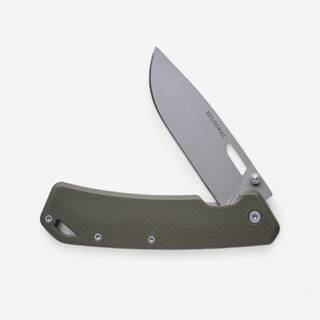


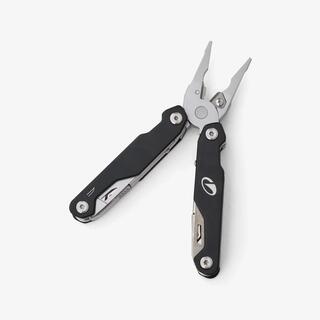


Quechua Multi-Tools and Fixed Blade Knives for Himalayan and Western Ghats Trekking
Quechua multi-tools and trekking knives are engineered for high-altitude expeditions, monsoon forest navigation, and extended backcountry camping across Indian terrain. Fixed blade models feature full-tang 420J2 stainless steel construction, offering corrosion resistance against humid coastal air and monsoon moisture saturation. Blade thickness ranges from 2.5mm to 3.5mm, providing structural rigidity for batoning firewood, cutting paracord, and processing wild edibles without tip flex or edge roll. Drop-point and clip-point blade geometries balance piercing capability with controlled slicing strokes, critical when field-dressing game or preparing shelter cordage under low-light conditions.
Multi-tool variants integrate 10 to 15 functional implements within compact folding frames, including needle-nose pliers, wire cutters, Phillips and flathead screwdriver bits, can openers, and serrated saw blades. Stainless steel construction across all tool surfaces prevents rust formation during multi-day treks through Meghalaya cloud forests or Ladakh high-desert environments. Locking mechanisms employ liner-lock or frame-lock systems, securing primary blade deployment under load-bearing tasks. Ergonomic grip scales use textured thermoplastic elastomer (TPE) or rubberized coatings, maintaining hand traction even when wet from river crossings or sweat accumulation during steep ascents. Weight distribution centers around 150g to 250g for multi-tools, and 180g to 300g for fixed blades with full-tang handles, ensuring packability without compromising structural integrity.
Blade Steel Composition and Edge Retention for Prolonged Field Use
420J2 and 440C stainless steel alloys dominate Quechua knife construction, selected for balanced hardness and corrosion resistance. 420J2 steel achieves Rockwell hardness ratings between 52 and 55 HRC, offering sufficient edge retention for general camp tasks while remaining easy to resharpen with portable diamond stones or ceramic rods. This hardness range prevents brittle fracture when prying or twisting during improvised repairs, a common scenario during multi-day treks where gear failure demands field fixes. Carbon content in 420J2 sits around 0.35%, with chromium content exceeding 12%, forming a passive oxide layer that resists rust in high-humidity environments like monsoon-season Western Ghats trails.
Higher-grade 440C steel, found in premium Quechua fixed blades, contains 0.95% to 1.20% carbon and 16% to 18% chromium, pushing Rockwell hardness to 58 to 60 HRC. This composition extends edge retention by 30% to 40% compared to 420J2, reducing resharpening frequency during extended expeditions. Edge geometry follows convex or Scandinavian grinds, with primary bevel angles between 20 and 25 degrees, optimizing cutting efficiency through fibrous materials like jute rope, bamboo stakes, and green hardwood. Factory edge sharpness typically measures between 15 and 20 degrees per side, delivering out-of-box slicing performance suitable for food preparation and cordage work without immediate honing.
Ergonomic Handle Design and Grip Security Across Wet and Dusty Conditions
Handle construction prioritizes tactile control during fatigue and environmental stress. Quechua fixed blade knives employ full-tang designs where blade steel extends through the entire handle length, sandwiched between contoured grip scales. This construction eliminates handle separation failures common in partial-tang designs, critical when applying lateral force during shelter stake carving or trap construction. Grip scales use micarta, G10 fiberglass laminate, or TPE rubber, each selected for specific friction characteristics. Micarta offers superior durability and maintains grip texture even after prolonged UV exposure and abrasion, ideal for multi-season use across Rajasthan desert heat and Sikkim alpine cold.
TPE rubber scales provide maximum wet-grip security, essential during monsoon treks where continuous rain and sweat create slippery handling conditions. Textured patterns include diamond knurling, horizontal grooves, and raised stippling, increasing surface contact area by 25% to 35% compared to smooth handles. Finger choils and thumb ramps machined into blade spines allow precise control during detail work like featherstick carving for fire starting or notching tent stakes. Handle length ranges from 95mm to 120mm, accommodating Indian hand sizes while maintaining compact pack profiles. Lanyard holes drilled through handle tangs accept 550 paracord lanyards, preventing accidental drops during river crossings or steep descents where hand fatigue compromises grip strength.
Sheath Systems and Carry Options for Multi-Day Backcountry Access
Quechua fixed blade knives ship with ballistic nylon or Kydex thermoplastic sheaths, each offering distinct retention and weather protection. Ballistic nylon sheaths use 1000D Cordura fabric with internal plastic stiffeners, providing abrasion resistance against backpack frame contact and rock scrapes during scrambling. MOLLE-compatible webbing loops and belt loops allow vertical or horizontal mounting on pack hip belts, shoulder straps, or tactical vests, positioning the knife for rapid access without removing the pack. Snap closures or Velcro retention straps secure the knife during inverted positions or high-impact activities like trail running or boulder hopping.
Kydex sheaths mold precisely to blade contours, offering audible click retention that confirms secure seating. This rigid construction prevents accidental blade exposure during falls or pack compression, critical for safety in group trekking scenarios. Drainage holes machined into sheath bottoms allow water egress after river crossings or rain exposure, preventing moisture-driven corrosion inside the sheath cavity. Multi-tool belt pouches use ballistic nylon with internal elastic retention bands, organizing tools vertically to prevent rattling and component loosening during movement. Clip-on carabiners or D-ring attachments enable quick transfer between belt loops, backpack straps, and tent guy-line anchor points, maintaining tool accessibility across camp setup and breakdown phases.
Maintenance Protocols for Stainless Steel Blades in Indian Monsoon and Desert Climates
Stainless steel blades require periodic maintenance despite inherent corrosion resistance. After each use, wipe blades clean with dry cotton cloth to remove organic residues, sap, and moisture. For stubborn sap or resin buildup from pine or teak wood processing, apply isopropyl alcohol or mineral spirits to a cloth and scrub along the blade flat, avoiding edge contact that could dull the cutting surface. Rinse with clean water and dry thoroughly before sheathing. In monsoon environments where daily humidity exceeds 80%, apply a thin film of food-grade mineral oil or silicone lubricant to blade surfaces every three to five days, creating a hydrophobic barrier that repels moisture penetration into microscopic surface pits.
Edge resharpening follows a three-stage progression: coarse diamond stone (400 grit) for edge repair and chip removal, medium ceramic stone (1000 grit) for primary bevel refinement, and fine leather strop loaded with chromium oxide compound for final polishing. Maintain consistent 20-degree angles using angle guides or visual reference markers. Multi-tool hinges and pivot points accumulate dust and grit in Rajasthan or Ladakh desert conditions. Disassemble tools quarterly, flush pivot areas with compressed air or a stiff brush, and apply PTFE-based dry lubricant to prevent grit adhesion while maintaining smooth deployment action. Avoid petroleum-based lubricants that attract dust particles and create abrasive paste inside pivot mechanisms.
Selecting Blade Length and Tool Configuration for Trek Duration and Activity Type
Blade length selection depends on primary use case and legal carry restrictions. Fixed blades between 75mm and 100mm suit general camp tasks like food preparation, cordage cutting, and light wood processing, while maintaining legal compliance in most Indian states where blade length restrictions apply to public carry. Blades exceeding 100mm, ranging to 150mm, provide leverage for batoning firewood and processing larger diameter branches, necessary for extended winter treks in Himachal Pradesh or Uttarakhand where sustained campfires are essential for warmth and cooking.
Multi-tool selection balances implement variety against weight penalty. Basic 10-function tools weighing 150g include essential pliers, knife blade, screwdrivers, and can opener, suitable for weekend treks with pre-packed meals and minimal gear repairs. Advanced 15-function tools reaching 250g add wire cutters, saw blades, file surfaces, and awl punches, supporting multi-week expeditions where equipment failure demands field fabrication of replacement parts or shelter modifications. Compact keychain multi-tools weighing under 50g serve as backup implements for day hikes, offering basic cutting and fastener manipulation without dedicated sheath carry. Evaluate tool lockout mechanisms: models with individual blade locks prevent accidental closure during use, critical when applying pressure during prying or cutting tasks that could cause finger injuries if the tool collapses unexpectedly.
FAQ (Frequently Asked Questions)
Q1. What is the difference between a trekking knife and a multi-tool?
A trekking knife is primarily designed for cutting tasks, featuring a single blade and a sturdy handle. A multi-tool, on the other hand, combines several tools into one compact package, such as pliers, screwdrivers, knives, and more, making it a versatile option for various outdoor tasks.
Q2. What factors should I consider when choosing a trekking knife or multi-tool?
When choosing a trekking knife or multi-tool, consider factors such as intended use, blade material and construction, handle ergonomics, size and weight, and any additional features you might need for your specific outdoor activities.
Q3. How do I properly maintain my trekking knife or multi-tool?
Proper maintenance includes keeping your tools clean and dry, regularly sharpening the blades, storing them properly when not in use, and following any specific care instructions provided by the manufacturer.
Q4. Are there any safety considerations when using trekking knives or multi-tools?
Yes, safety should always be a top priority. Use the appropriate tool for the task, keep them secured and out of reach of children, follow local regulations, exercise caution when handling sharp blades, and consider taking a knife safety or outdoor skills course.
Q5. Can I bring a trekking knife or multi-tool on a flight?
Generally, trekking knives and multi-tools with blades are not allowed in carry-on luggage on flights. However, you may be able to pack them in your checked baggage, subject to airline and local regulations. Always check with your airline for their specific policies.
Q6. What is the difference between fixed-blade and folding knives?
Fixed-blade knives have a blade that is permanently attached to the handle, offering increased strength and durability. Folding knives have a blade that folds into the handle, making them more compact and portable.
Q7. How do I choose the right blade material for my needs?
Stainless steel and high-carbon steel are popular choices for their durability and edge retention. Stainless steel is more resistant to corrosion, while high-carbon steel holds an edge better but requires more maintenance.
Q8. Can I get my trekking knife or multi-tool sharpened at Decathlon?
While we don't offer sharpening services in-store, our knowledgeable staff can recommend quality sharpening stones or provide guidance on where to get your tools professionally sharpened in your area.
Q9. Do you offer any warranty or after-sales support for trekking knives and multi-tools?
Yes, at Decathlon, we stand behind the quality of our products. Many of our trekking knives and multi-tools come with manufacturer warranties, and our friendly staff is always available to assist you with any after-sales support or inquiries you may have.
Q10. Can I customize or engrave my trekking knife or multi-tool?
While we don't offer customization or engraving services directly, some of our products may be suitable for customization through third-party services. Our staff can provide guidance on the best options based on the specific product and your requirements.
Q11. What blade steel is best for monsoon trekking in Western Ghats and Northeast India?
420J2 stainless steel with 12% chromium content offers reliable corrosion resistance in high-humidity environments. The passive oxide layer prevents rust formation during multi-day exposure to rain and sweat. For extended expeditions, 440C steel with 16% to 18% chromium provides superior edge retention and rust resistance, though it requires more effort to resharpen in the field.
Q12. Can I carry a trekking knife on domestic flights within India?
No. CISF and BCAS regulations prohibit all knives and bladed tools in cabin baggage on Indian domestic and international flights. Pack knives in checked luggage only, secured inside hard-sided cases to prevent baggage handler injuries. Inform airline staff during check-in to avoid security delays.
Q13. How do I prevent blade rust after crossing rivers during Himalayan treks?
Immediately after water exposure, dry the blade thoroughly with an absorbent cloth. Apply a thin layer of food-grade mineral oil or silicone spray to all steel surfaces, including the tang and pivot points on multi-tools. Store the knife outside the sheath until completely dry to prevent moisture trapping that accelerates corrosion inside the sheath cavity.
Q14. What is the difference between full-tang and partial-tang knife construction?
Full-tang knives extend blade steel through the entire handle length, providing maximum structural strength for batoning and prying tasks. Partial-tang designs insert blade steel partially into the handle, reducing weight but increasing risk of handle separation under lateral stress. For backcountry reliability, full-tang construction is preferred for fixed blade knives used in demanding field conditions.
Q15. How often should I resharpen my trekking knife during a two-week expedition?
Inspect edge sharpness daily by testing on paper or paracord. For 420J2 steel under moderate use (food prep, cordage cutting), resharpen every four to six days using a portable diamond stone. 440C steel maintains edge geometry longer, requiring resharpening every seven to ten days. Carry a compact sharpening system with coarse and fine grits to address both edge repair and final honing.
Q16. Are multi-tools suitable for processing firewood during winter camping?
Multi-tool saw blades handle small-diameter branches up to 30mm effectively, but lack the leverage for larger firewood processing. For sustained winter camping requiring substantial wood processing, pair a multi-tool with a dedicated fixed blade knife (100mm to 150mm) for batoning and splitting tasks. The multi-tool serves backup and precision functions like gear repairs and food preparation.
Q17. What handle material provides the best grip during wet monsoon conditions?
TPE rubber and textured G10 fiberglass laminate offer superior wet-grip security. TPE remains tacky when saturated, while G10 maintains friction through aggressive surface texturing. Avoid smooth wood or plain stainless steel handles that become slippery when wet. Micarta provides balanced performance across wet and dry conditions with excellent long-term durability against UV degradation.
Q18. How do I clean sap and resin buildup from knife blades after processing pine wood?
Apply isopropyl alcohol or mineral spirits to a cotton cloth and scrub blade flats in circular motions. Avoid abrasive pads that scratch stainless steel surfaces and create corrosion initiation sites. For stubborn buildup, heat the blade gently over a camp stove flame to soften resin, then wipe immediately with an oiled cloth. Rinse with clean water and dry completely before storage.
Q19. What is the legal blade length limit for carrying knives in Indian national parks?
Blade length regulations vary by state and park jurisdiction. Most Indian states restrict public carry of blades exceeding 100mm without valid reason. Inside national parks and wildlife sanctuaries, carry knives solely for camping utility, not as weapons. Store knives inside backpacks during transit and use only at designated campsites. Consult specific park regulations before entry, as some protected areas impose stricter restrictions.
Q20. Can I use a trekking knife for self-defense against wildlife in Indian forests?
Knives are ineffective and legally problematic for wildlife defense in India. The Wildlife Protection Act prohibits harming protected species, and using a knife against animals can result in criminal charges. For safety in bear or leopard territory, carry noise-making devices like whistles or air horns, maintain proper food storage protocols, and trek in groups. Prevention through awareness and avoidance is the only legal and effective wildlife safety strategy.