Kayaks

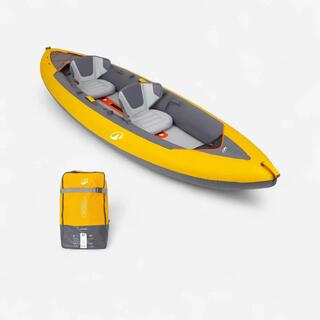


Inflatable Kayak Construction: Drop-Stitch Technology and PVC Layering for Backwater and Coastal Paddling
Itiwit inflatable kayaks use drop-stitch construction, a high-pressure air chamber technology where thousands of polyester threads connect the top and bottom PVC layers. This creates a rigid, flat floor that maintains structural integrity under loads up to 210 kg, eliminating the flex and instability common in basic tube-style inflatables. The drop-stitch floor allows paddlers to stand for fishing or scouting, a critical advantage in shallow Kerala backwaters or Goa estuaries where spotting submerged rocks or wildlife requires elevated sight lines.
The outer shell consists of 1100 Dtex reinforced PVC with double-layer lamination on high-wear zones like the keel and bow. This denier rating provides puncture resistance against sharp laterite rocks in Karnataka rivers and barnacle-encrusted jetty pilings in Mumbai harbour. The seams use high-frequency welding instead of glued joints, creating airtight bonds that withstand UV degradation during storage on apartment balconies or rooftop racks under direct sunlight. Inflation pressure reaches 10 PSI in the main chambers and 15 PSI in the drop-stitch floor, delivering the stiffness needed for efficient forward paddling without energy loss through hull deformation.
Sit-On-Top vs Sit-Inside Hull Profiles: Stability, Self-Bailing, and Monsoon Water Management
Sit-on-top kayaks feature an open cockpit with molded footwells and thigh braces, positioning the paddler's center of gravity above the waterline. This design offers superior initial stability, making them ideal for beginners navigating the choppy waters of Mandovi River or learning paddle strokes in Powai Lake. The self-bailing scupper holes drain water automatically, a critical feature during monsoon paddling when sudden downpours or wave splash can fill the cockpit. The elevated seating also allows easy re-entry after capsizing, you simply climb back on without needing to pump out water or perform complex rescue techniques.
Sit-inside kayaks enclose the paddler's lower body within a cockpit, lowering the center of gravity and improving secondary stability during edging maneuvers or rough water crossings. The enclosed hull protects against wind chill and spray, essential for early morning paddles in Nainital Lake or high-altitude Himalayan reservoirs where air temperatures drop below 10°C. However, sit-inside designs require a spray skirt to prevent water ingress, and capsizing necessitates wet-exit skills and bilge pump use. For Indian flatwater conditions, touring kayaks with sit-inside cockpits typically measure 3.5 to 4.2 meters in length, offering better tracking and glide efficiency over distances exceeding 5 kilometers compared to the shorter, wider sit-on-top recreational models.
Paddle Shaft Materials and Blade Geometry: Aluminium vs Fiberglass and Asymmetric Dihedral Designs
Kayak paddles use either aluminium shafts with polypropylene blades or fiberglass-reinforced shafts with nylon-composite blades. Aluminium paddles weigh between 900 and 1100 grams, providing durability for rental fleets or beginner use where paddles frequently contact rocks or boat hulls. The heavier swing weight increases fatigue over multi-hour sessions, but the material resists bending under aggressive strokes or accidental impacts against concrete ghats. Fiberglass paddles reduce weight to 700 to 850 grams, decreasing shoulder strain during 10-kilometer tours on Vembanad Lake or extended coastal paddles along Andaman shorelines.
Blade geometry follows either symmetrical or asymmetric profiles. Asymmetric blades have a shorter upper edge and longer lower edge, reducing flutter and providing smoother water entry during the catch phase of each stroke. The dihedral ridge running down the blade's center splits water flow evenly to both sides, stabilizing the blade and preventing it from twisting in your hands. Blade surface area ranges from 600 to 750 square centimeters, with larger blades generating more power per stroke but requiring greater upper body strength. For flatwater touring, a 220 to 230 cm paddle length suits paddlers between 165 and 180 cm tall, while whitewater or surf kayaking demands shorter 200 to 210 cm paddles for quicker, more aggressive strokes in turbulent water.
Itiwit Modular Kayak Systems: Detachable Seats, Adjustable Footrests, and Accessory Mounting Rails
Itiwit inflatable kayaks integrate modular seating systems with adjustable backrests and inflatable cushions that provide lumbar support during extended paddling sessions. The seat base attaches via D-ring clips or Velcro straps, allowing you to reposition it forward or backward to optimize weight distribution for solo paddling or when carrying gear in the stern storage area. The backrest height adjusts through a ratchet strap system, accommodating torso lengths from 70 to 90 cm and preventing the slouched posture that causes lower back fatigue after two hours on the water.
Footrests use either fixed molded wells or adjustable bungee systems that tension against the balls of your feet, creating the leg drive needed for efficient torso rotation during each paddle stroke. This bracing point transfers power from your core muscles rather than relying solely on arm strength, reducing shoulder strain and increasing stroke efficiency by approximately 20 percent compared to paddling without proper foot contact. The gunwale rails feature elastic bungee cords for securing dry bags, water bottles, or fishing rod holders, while some models include molded recesses for action camera mounts or GPS units. Drain plugs located at the stern allow complete water evacuation after use, preventing mold growth during storage in humid coastal climates or monsoon conditions.
Transport, Inflation, and Storage: High-Pressure Pumps, Carry Bags, and Apartment-Friendly Compactness
Inflatable kayaks pack into carry bags measuring 80 to 100 cm in length and weighing 12 to 18 kg when deflated, fitting inside car boots or on two-wheeler pillion seats for transport to launch sites. This compactness eliminates the need for roof racks or trailers required by rigid hard-shell kayaks, making them practical for urban paddlers in Delhi, Pune, or Bangalore who lack dedicated vehicle storage. The included high-pressure double-action pump inflates the kayak in 8 to 12 minutes, with each pump stroke delivering air on both the upstroke and downstroke to reduce inflation time and physical effort.
Storage requires a cool, dry space away from direct sunlight to prevent PVC degradation. Thoroughly dry the kayak before folding to avoid mildew formation, particularly critical in high-humidity regions like Kerala or West Bengal where moisture remains trapped in fabric folds. Store the kayak loosely rolled rather than tightly compressed to prevent permanent creases in the PVC layers. The material tolerates temperature ranges from 5°C to 50°C, but prolonged exposure above 40°C (common on metal rooftops during summer) can soften the PVC and weaken seam bonds. For apartment storage, the deflated kayak occupies approximately 0.15 cubic meters of space, fitting under beds or in overhead cupboards without requiring dedicated garage or shed areas.
Flatwater Touring vs Whitewater Rapids: Hull Rocker, Tracking Skegs, and Water Classification Ratings
Flatwater touring kayaks feature minimal rocker (the upward curve of the hull from bow to stern), creating a longer waterline that improves tracking and glide efficiency on calm lakes, backwaters, or slow-moving rivers. The hull typically includes a removable tracking skeg or fin mounted beneath the stern, which prevents the kayak from weathervaning (turning into the wind) during crosswind conditions on open water bodies like Chilika Lake or Hussain Sagar. These kayaks measure 3.8 to 4.5 meters in length with narrow beam widths of 65 to 75 cm, prioritizing speed and straight-line tracking over maneuverability.
Whitewater kayaks have pronounced rocker, allowing the bow and stern to lift over waves and obstacles while the center section remains in contact with the water. This design enables quick pivoting and edging maneuvers needed to navigate rapids, eddies, and hydraulic features in rivers like the Ganges near Rishikesh or the Teesta in Sikkim. Whitewater models are shorter (2.5 to 3.2 meters) with wider beams (70 to 85 cm) for enhanced stability in turbulent water. River difficulty follows the International Scale of River Difficulty, ranging from Class I (easy moving water with small waves) to Class V (extremely difficult rapids with violent water and complex routes). Recreational inflatable kayaks suit Class I and II conditions, while technical whitewater requires specialized hard-shell designs with reinforced hulls and outfitting for combat rolls and bracing strokes.
FAQ (Frequently Asked Questions)
Q1. What is the weight capacity of Itiwit inflatable kayaks, and can they handle two adults plus gear?
Itiwit inflatable kayaks have maximum load capacities ranging from 150 kg for single-person models to 210 kg for tandem designs. A typical two-person kayak can support two adults totaling 140 to 160 kg plus an additional 30 to 40 kg of camping gear, fishing equipment, or dry bags. Exceeding the rated capacity reduces freeboard (the distance between the waterline and the top of the hull), increasing the risk of water ingress over the gunwales in choppy conditions or when paddling through boat wakes.
Q2. How do I repair a puncture in the PVC hull, and what repair kit components are included?
The included repair kit contains PVC patches, high-strength adhesive, and sandpaper for surface preparation. Clean and dry the punctured area, roughen it with sandpaper to improve adhesion, apply a thin layer of glue to both the hull and patch, wait 5 minutes for the adhesive to become tacky, then press the patch firmly for 30 seconds. Allow 12 hours for full curing before re-inflating. For field repairs during multi-day trips, carry extra patches and ensure the adhesive tube remains sealed to prevent it from drying out in hot, humid conditions.
Q3. Can inflatable kayaks be used in saltwater, and how do I prevent corrosion on metal components?
Itiwit inflatable kayaks are fully compatible with saltwater use in coastal areas, estuaries, or tidal zones. The PVC material resists saltwater degradation, but metal components like D-rings, buckles, and valve stems require freshwater rinsing after each saltwater session to prevent corrosion. Aluminum paddles develop a protective oxide layer that resists further corrosion, but stainless steel hardware should be inspected regularly and treated with silicone spray if surface rust appears.
Q4. What is the difference between a high-pressure inflatable kayak and a basic pool float design?
High-pressure inflatable kayaks use drop-stitch construction and inflate to 10 to 15 PSI, creating a rigid platform that resists flexing under paddle strokes and maintains directional stability. Basic pool floats use simple tube construction with inflation pressures below 2 PSI, resulting in a soft, unstable surface unsuitable for propulsion or tracking. The reinforced PVC and welded seams in kayaks also provide puncture resistance and UV durability that recreational pool floats lack.
Q5. How long does it take to inflate and deflate an Itiwit kayak, and do I need an electric pump?
Using the included double-action manual pump, a single-person kayak inflates in 8 to 10 minutes, while tandem models require 10 to 12 minutes. Deflation takes 3 to 5 minutes after opening the valves and manually pressing air out of the chambers. Electric pumps reduce inflation time to 4 to 6 minutes but require a 12V car outlet or portable battery pack, adding weight and cost. Manual pumps are reliable, require no power source, and double as emergency backup pumps if valve failures occur.
Q6. Are inflatable kayaks stable enough for beginners who have never paddled before?
Sit-on-top inflatable kayaks offer high initial stability due to their wide beam (typically 80 to 90 cm) and low center of gravity, making them suitable for first-time paddlers learning basic strokes on calm water. The open cockpit design allows easy entry and exit without the confined feeling of sit-inside models. Beginners should practice in shallow, protected areas like lake coves or slow river sections before progressing to open water where wind and currents require more advanced paddle techniques.
Q7. What paddle length should I choose based on my height and the kayak width?
For recreational sit-on-top kayaks with beam widths of 80 to 90 cm, paddlers between 160 and 175 cm tall should use 220 to 230 cm paddles, while those between 175 and 190 cm tall need 230 to 240 cm paddles. Narrower touring kayaks (65 to 75 cm beam) allow shorter paddles, reducing the length by 10 cm. Taller paddlers or those with longer torsos may prefer an additional 5 to 10 cm of paddle length to maintain proper blade immersion depth without excessive reaching or shoulder strain.
Q8. Can I use an inflatable kayak for fishing, and what accessories improve stability for casting?
Inflatable kayaks work well for flatwater fishing in lakes, backwaters, or slow rivers. Sit-on-top models with wide beams (85 cm or greater) provide the stability needed for standing while casting or fighting fish. Add-on accessories like fishing rod holders that mount to the gunwale rails, anchor trolley systems for positioning in current, and elevated seats improve comfort during extended fishing sessions. Ensure your gear stays within the kayak's load capacity, as tackle boxes, coolers, and catch bags add significant weight.
Q9. How do I store an inflatable kayak during the monsoon season to prevent mold and material degradation?
After each use, rinse the kayak with freshwater to remove dirt, sand, or organic matter, then allow it to air dry completely in a shaded, ventilated area for 4 to 6 hours. Wipe down the interior chambers with a dry cloth to remove trapped moisture. Store the kayak loosely rolled in its carry bag in a cool, dry location away from direct sunlight and heat sources. In high-humidity regions, place silica gel packets inside the storage bag to absorb residual moisture and prevent mildew growth on the PVC surfaces.
Q10. What safety equipment is required for kayaking in Indian rivers and coastal waters?
Always wear a properly fitted personal flotation device (PFD) with a minimum 50N buoyancy rating, which keeps your head above water if you capsize. Carry a whistle attached to your PFD for signaling in emergencies, a bilge pump or sponge for removing water from the cockpit, and a paddle leash to prevent losing your paddle in currents or wind. For coastal or open water paddling, add a waterproof VHF radio or mobile phone in a dry bag, a tow rope for assisting other paddlers, and a basic first aid kit. Check local regulations, as some states require additional safety gear or permits for river navigation.