Winter jackets and parkas




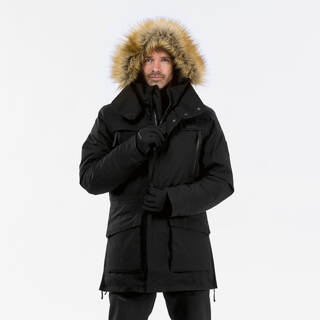


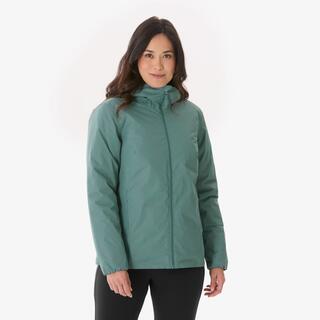

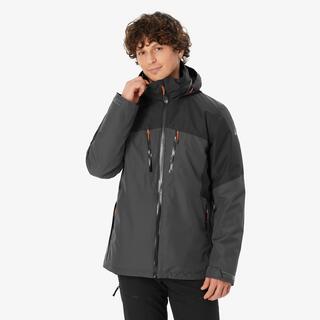
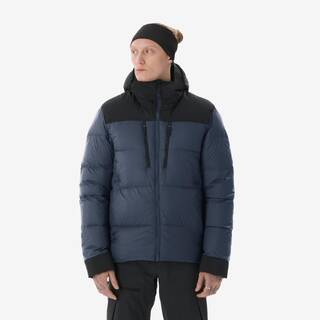



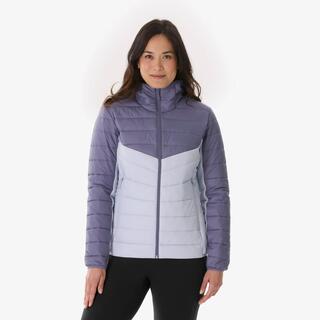
Synthetic Insulation vs Down Fill: Choosing Thermal Retention for Indian Altitude and Monsoon Humidity
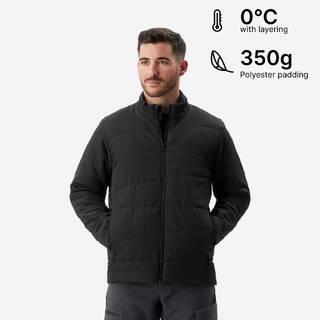
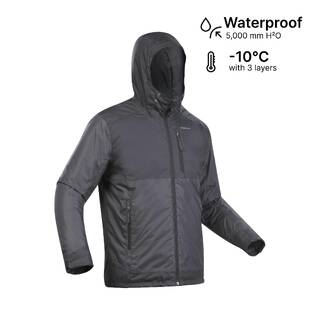
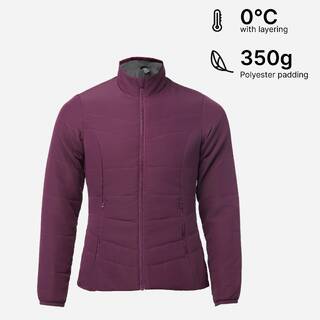
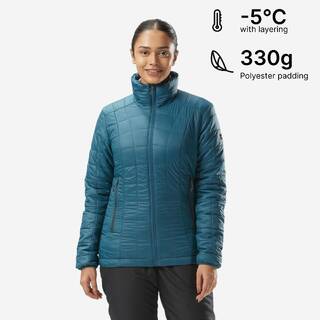
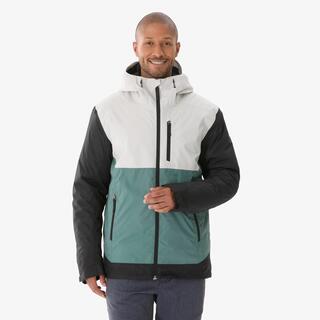
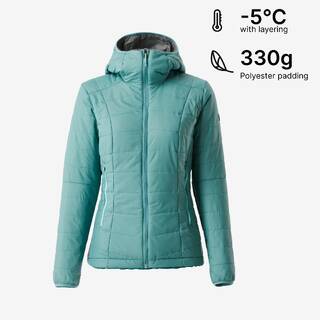
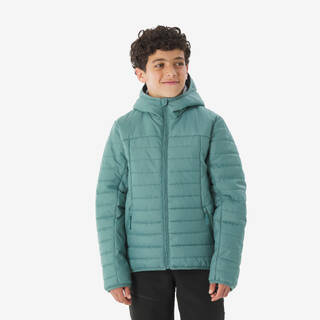
Synthetic polyester insulation maintains thermal performance when exposed to high-humidity monsoon conditions or unexpected rain at altitude. Unlike down fill, which clumps and loses loft when wet, synthetic wadding retains approximately 80 percent of its insulating capacity even after saturation. This matters across Himalayan treks where morning frost transitions to midday sleet, or during winter camping in Spiti Valley where condensation accumulates inside tents overnight. Decathlon's Quechua range deploys hollow-fiber polyester insulation in jackets rated for temperatures down to minus 10 degrees Celsius, with fill weights ranging from 120 grams per square meter in lightweight shells to 240 grams per square meter in expedition parkas.
Down insulation delivers superior warmth-to-weight ratios for dry, sub-zero environments. A 650-fill-power down jacket compresses into a smaller pack volume than equivalent synthetic insulation, critical for multi-day treks where backpack weight discipline determines endurance. However, down requires rigorous moisture management. Outer shell fabrics must feature durable water repellent (DWR) coatings with hydrostatic head ratings above 5,000 millimeters to prevent moisture ingress. Quechua expedition parkas combine responsibly sourced 90/10 down-to-feather ratios with ripstop polyester shells rated at 10,000 millimeters hydrostatic head, balancing compressibility with weather resistance across Ladakh passes and Roopkund base camps.
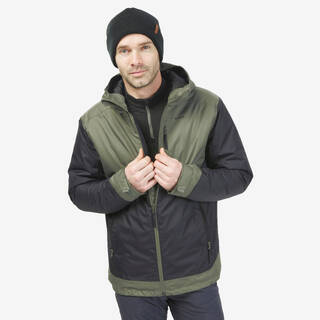
Hybrid construction optimizes both technologies. Strategic placement of synthetic insulation in high-sweat zones like underarms and lower back prevents moisture accumulation, while down fill in the torso and hood maximizes core warmth without bulk. This architecture suits variable Indian mountain weather, where afternoon sun exposure triggers perspiration before evening temperatures plummet. Baffle construction also dictates thermal efficiency. Box-wall baffles eliminate cold spots by preventing insulation migration, whereas sewn-through baffles reduce weight but create thermal bridges at stitch lines. Quechua technical parkas employ trapezoidal baffle geometry to lock insulation in place during active movement.
Shell Fabric Engineering: Ripstop Denier, Abrasion Resistance, and Wind Tunnel Stability
Outer shell durability determines jacket lifespan across rocky scrambles and dense forest navigation. Ripstop polyester fabrics rated between 40 and 70 denier balance tear resistance with packability. Lower denier counts (40D) suit ultralight alpine missions where every gram matters, while 70-denier shells withstand repeated contact with granite outcrops and thorny undergrowth common in Western Ghats winter treks. Ripstop grid patterns, woven at 5-millimeter intervals, arrest tear propagation by distributing stress across reinforced threads. Quechua trekking jackets integrate ripstop construction in high-abrasion zones including shoulders (where backpack straps rub), elbows, and lower hem.
Wind resistance requires tight weave densities and laminated membrane technology. A shell fabric's ability to block wind is measured in cubic feet per minute (CFM) air permeability. Jackets rated below 5 CFM provide effective windproofing for exposed ridgeline traverses where gusts exceed 40 kilometers per hour. Decathlon's Forclaz range incorporates windproof membranes bonded to shell fabrics, creating a barrier that prevents convective heat loss without adding stiff, crinkly layers. This matters during winter ascents of Kedarkantha or Brahmatal, where sustained winds strip body heat faster than ambient temperature alone.
Durable water repellent (DWR) coatings determine how long a jacket sheds light rain and snow before fabric saturation occurs. Factory-applied fluorocarbon-free DWR treatments cause water to bead and roll off the shell surface, maintaining breathability by keeping outer fabric pores open. DWR effectiveness degrades with use, dirt accumulation, and UV exposure. Reapplication after every 20 to 30 wear cycles restores performance. Quechua jackets specify DWR longevity ratings, indicating how many wash cycles the coating withstands before requiring retreatment. For Indian conditions involving dust, diesel exhaust in urban approaches, and high UV at altitude, DWR maintenance becomes non-negotiable.
Fit Architecture for Layering Systems: Base Layer Compatibility and Range of Motion
Winter jacket fit must accommodate a three-layer system without restricting shoulder rotation or arm extension. Base layers (merino wool or synthetic wicking fabrics) sit against skin, mid-layers (fleece or lightweight synthetic insulation) trap dead air, and outer shells block wind and precipitation. A properly sized jacket allows 8 to 10 centimeters of ease across the chest when wearing all three layers, preventing fabric tension that creates cold spots and limits mobility during ice axe swings or trekking pole plants. Quechua jackets specify 'slim fit' for single-layer use and 'regular fit' for full layering systems, with sizing charts accounting for Indian body proportions.
Articulated sleeves and gusseted underarms enable overhead reach without lifting the jacket hem and exposing the lower back. Pre-shaped elbow darts reduce fabric bunching when arms bend, critical during technical moves on mixed terrain. Raglan sleeve construction eliminates shoulder seams that chafe under backpack straps, distributing fabric stress across a diagonal line from neck to underarm. Forclaz mountaineering parkas integrate these ergonomic features, tested across Himalayan expeditions where repetitive motion over 8 to 10 hour trekking days reveals any fit compromise.
Adjustable hem drawcords and Velcro cuff closures seal out drafts and lock in warmth. Elastic cuff inserts with thumb loops prevent sleeves from riding up when layering gloves, while dual-adjust hem systems (internal drawcord plus external toggle) allow independent torso and hip adjustments. This matters when wearing a climbing harness or hip belt, which requires jacket hem clearance to prevent fabric bunching. Hood volume and brim projection also affect fit. A helmet-compatible hood must accommodate a climbing or ski helmet without restricting peripheral vision, featuring wire-reinforced brims that hold shape in wind. Quechua expedition parkas specify hood compatibility with specific helmet models.
Pocket Configuration and Storage Architecture for Multi-Day Alpine Missions
Pocket placement dictates accessibility when wearing a backpack with loaded hip belt and sternum strap. Chest pockets positioned above harness or hip belt sit in the 'accessible zone', allowing map, GPS, or energy bar retrieval without removing the pack. Internal mesh pockets secure items like goggles or electronics against body warmth, preventing battery drain in sub-zero temperatures. Quechua technical jackets feature asymmetric pocket layouts, with larger left chest pockets sized for standard topographic maps (1:50,000 scale folded to 15 by 20 centimeters), and right chest pockets dimensioned for smartphones in protective cases.
Handwarmer pockets must sit above hip belt height to remain functional under load. Fleece-lined pockets add thermal comfort during rest breaks, while zippered closures prevent item loss during scrambles or falls. Internal dump pockets, accessed via zippered openings in handwarmer pockets, create secure storage for valuables like permits or cash without adding external bulk. This dual-access architecture suits Indian trekking permits and identification requirements. Forclaz parkas integrate RFID-blocking internal pockets, protecting contactless cards and passports during international alpine expeditions or domestic travel to restricted border areas.
Sleeve pockets and pass-through openings enable layered access. A jacket with pass-through hand pockets allows access to mid-layer or base layer pockets without unzipping the shell, useful for retrieving items stored in fleece or down jacket pockets underneath. Sleeve pockets, sized for ski pass cards or lift tickets, serve as quick-access storage for trail markers or emergency whistle lanyards. Ventilation zippers double as storage access points in some designs, with mesh-backed pit zips opening to reveal small stash pockets. Quechua multi-day trekking parkas specify total storage volume in liters, accounting for all pocket capacity combined.
Thermal Regulation and Ventilation: Pit Zips, Mesh Linings, and Moisture Vapor Transmission
Core temperature management prevents both hypothermia and dangerous overheating during high-output alpine ascents. Two-way front zippers allow bottom-up ventilation, exhausting rising heat without exposing the chest to wind. Pit zips, extending from mid-torso to underarm, dump excess heat during steep climbs where metabolic output spikes. A 40-centimeter pit zip opening increases airflow by approximately 30 percent compared to front-zip-only ventilation, critical during winter approaches to Himalayan base camps where sustained uphill grades generate sweat saturation. Quechua mountaineering jackets feature YKK AquaGuard pit zips with two-way sliders, enabling partial opening for fine-tuned temperature control.
Mesh liner fabrics create an air gap between shell and insulation, allowing moisture vapor to escape while maintaining thermal dead air space. This matters in high-humidity conditions where perspiration condenses on shell interiors, wetting insulation from the inside. Polyester mesh rated at 40 to 60 grams per square meter provides structure without adding significant weight, with open-weave construction facilitating vapor transmission. Forclaz jackets specify moisture vapor transmission rates (MVTR) in grams per square meter per 24 hours, with ratings above 10,000 grams indicating high breathability suitable for aerobic mountain activities.
Back vent panels, hidden beneath backpack contact zones, exhaust heat without creating wind entry points. These chimney-effect vents leverage rising warm air, pulling moisture away from the body during sustained exertion. Storm flaps behind front zippers prevent wind-driven rain or snow from penetrating zipper teeth, with internal flaps adding a second barrier. Quechua expedition parkas integrate laminated storm flaps that eliminate stitching holes, creating a continuous waterproof barrier. Collar height and chin guard design also affect comfort. Fleece-lined chin guards prevent zipper abrasion during extended wear, while collar heights between 8 and 10 centimeters protect the neck without obstructing peripheral vision or interfering with helmet straps.
Temperature Ratings, Comfort Ranges, and Acclimatization for Indian Himalayan Zones
Jacket temperature ratings indicate the lowest ambient temperature at which the garment maintains thermal comfort during low-activity rest periods. A jacket rated to minus 10 degrees Celsius assumes the wearer is stationary, wearing a base layer and mid-layer, in dry conditions with wind speeds below 10 kilometers per hour. Active movement generates metabolic heat, effectively extending the comfort range by 5 to 10 degrees. Quechua jackets specify both 'comfort' and 'limit' temperatures, with comfort ratings indicating sustained warmth and limit ratings marking short-duration survivability. For Indian Himalayan treks, a minus 10-degree comfort rating suits most winter conditions between 3,000 and 5,000 meters elevation, covering popular routes like Kedarkantha, Har Ki Dun, and Sandakphu.
Altitude acclimatization affects thermoregulation. At elevations above 4,000 meters, reduced oxygen availability increases basal metabolic rate as the body works harder to maintain core temperature. This physiological response means a jacket that feels adequate at 3,000 meters may prove insufficient at 5,000 meters, even at the same ambient temperature. Expedition parkas rated to minus 20 degrees Celsius become necessary for high-altitude base camps like Everest Base Camp (5,364 meters) or technical climbs above 6,000 meters. Forclaz expedition-grade parkas integrate extended torso lengths and drop-tail hems that cover the lower back and upper glutes, preventing heat loss through the gap between jacket and pants during seated rest at altitude.
Wind chill dramatically reduces effective temperature. A 20-kilometer-per-hour wind at minus 5 degrees Celsius creates an effective temperature of minus 13 degrees Celsius, stripping body heat through convective loss. Windproof shells mitigate this effect, but exposed skin on face and hands remains vulnerable. Integrated balaclavas or detachable hood extensions protect the lower face, while extended cuffs with elastic or Velcro closures seal wrist gaps. Quechua technical parkas specify wind resistance ratings in kilometers per hour, indicating the maximum sustained wind speed the shell blocks without air penetration. For exposed ridgeline traverses common on routes like Roopkund or Kuari Pass, wind resistance above 50 kilometers per hour becomes essential.
FAQ (Frequently Asked Questions)
Q1. What is the difference between a winter jacket and a parka?
A winter jacket is typically a shorter, more lightweight option designed for moderate cold weather and active pursuits. A parka, on the other hand, is a longer, heavier coat that provides superior insulation and weather protection, making it ideal for extremely cold temperatures and harsh winter conditions.
Q2. How do I choose the right insulation for my winter jacket or parka?
The choice between down and synthetic insulation depends on your specific needs and activities. Down insulation offers superior warmth-to-weight ratio and compressibility, making it ideal for activities like hiking, camping, and skiing. Synthetic insulation, on the other hand, performs better in wet conditions and is often more affordable, making it a great choice for casual wear or activities where you may get wet.
Q3. What is the difference between waterproof and water-resistant jackets?
A waterproof jacket is designed to completely block water from penetrating the outer fabric, making it ideal for activities in heavy rain or snow. Water-resistant jackets, on the other hand, are treated to repel water but may eventually become saturated in prolonged exposure to moisture. Water-resistant jackets are a good choice for light precipitation or activities where you may encounter occasional moisture.
Q4. How do I determine the right fit for a winter jacket or parka?
The right fit is crucial for both warmth and mobility. Your winter jacket or parka should allow for layering underneath while still providing a comfortable, unrestricted range of motion. Pay attention to features like adjustable cuffs, hems, and hoods to customize the fit to your body. It's also a good idea to try on jackets with the layers you plan to wear underneath.
Q5. Can I wear my winter jacket or parka for outdoor activities like hiking or skiing?
Absolutely! Many of Decathlon's winter jackets and parkas are designed with active pursuits in mind. Look for features like breathable fabrics, articulated elbows, and gusseted underarms that allow for unrestricted movement. Additionally, consider the level of insulation and weather protection you'll need based on the intensity of your activity and the climate.
Q6. How do I care for a down-insulated jacket or parka?
Down insulation requires special care to maintain its loft and warmth. When washing a down jacket or parka, use a gentle, technical cleaner or mild detergent and avoid harsh chemicals or bleach. After washing, tumble dry on low heat with a few clean tennis balls to restore the loft of the down. Proper storage is also important – store your down jacket in a cool, dry place and avoid compressing it for extended periods.
Q7. Can I wear my winter jacket or parka in the rain or snow?
It depends on the specific jacket or parka. Waterproof jackets are designed to completely block water from penetrating the outer fabric, making them ideal for heavy rain or snow. Water-resistant jackets, on the other hand, are treated to repel water but may eventually become saturated in prolonged exposure to moisture. Check the product details to determine the level of water protection your jacket or parka offers.
Q8. How long should a winter jacket or parka last?
With proper care and maintenance, a high-quality winter jacket or parka from Decathlon can last for many seasons. Factors like the materials, insulation, and frequency of use will all impact the lifespan of your outerwear. Following the care instructions, avoiding excessive compression during storage, and repairing any damages promptly can help extend the life of your jacket or parka.
Q9. Can I layer my winter jacket or parka with other Decathlon products?
Absolutely! Decathlon's winter jackets and parkas are designed to be layered with our other apparel and accessories for maximum warmth and versatility. Consider pairing your jacket or parka with a base layer, mid-layer, and accessories like gloves, hats, and scarves for complete cold-weather protection.
Q10. What is Decathlon's return policy for winter jackets and parkas?
At Decathlon, we stand behind the quality of our products. If you're not completely satisfied with your winter jacket or parka purchase, you can return it within 365 days for a full refund or exchange, no questions asked. We want you to feel confident in your purchase and enjoy the great outdoors in comfort and style.
Q11. What insulation weight do I need for winter treks between 3,000 and 4,500 meters in Himachal and Uttarakhand?
For winter treks in this elevation band, synthetic insulation between 180 and 240 grams per square meter provides adequate warmth for temperatures ranging from minus 5 to minus 15 degrees Celsius. Quechua jackets with 200-gram synthetic fill handle most conditions on routes like Kedarkantha and Brahmatal when layered over a merino base layer and fleece mid-layer. If camping overnight above 4,000 meters, consider 240-gram fill or down insulation rated to minus 20 degrees Celsius.
Q12. How do I maintain DWR coating on my winter jacket after monsoon storage or repeated use in dusty conditions?
Wash the jacket in cold water with technical fabric detergent (no fabric softener), then tumble dry on low heat or iron on synthetic setting with a cloth barrier. Heat reactivates DWR coatings. For heavily degraded coatings after 25 to 30 wear cycles, apply spray-on or wash-in DWR treatment following manufacturer instructions. Store jackets in breathable garment bags, never compressed in stuff sacks long-term, to maintain loft and coating integrity.
Q13. Can I use the same winter jacket for Himalayan treks and daily winter commutes in North Indian cities?
Yes, but prioritize versatility in insulation weight and ventilation features. A 160 to 180-gram synthetic jacket with pit zips handles both urban winters (5 to 15 degrees Celsius) and moderate altitude treks. Heavier expedition parkas (240-gram fill or down) prove too warm for city use and lack ventilation for active trekking. Quechua offers modular systems where a lightweight shell pairs with a removable insulated liner, allowing independent use based on conditions.
Q14. What fit size should I choose if I plan to layer a fleece and base layer underneath for high-altitude trekking?
Select one size larger than your standard shirt size to accommodate layering without restricting movement. Measure chest circumference while wearing your thickest mid-layer, then add 10 centimeters for ease. Quechua sizing charts specify 'regular fit' models designed for layering, with increased chest and shoulder room. Test arm mobility by reaching overhead and forward to ensure the hem does not lift excessively, exposing your lower back.
Q15. How does ripstop denier rating affect durability for treks involving scrambles over rocky terrain?
Ripstop fabrics between 50 and 70 denier withstand abrasion from granite, basalt, and limestone common on Indian Himalayan routes. Lower 40-denier shells save weight but tear more easily under backpack friction or during falls. The ripstop grid pattern (reinforced threads every 5 millimeters) prevents small tears from propagating into large rips. Forclaz technical jackets use 70-denier ripstop in shoulder and elbow zones where contact occurs most frequently.
Q16. Are down jackets practical for monsoon-tail treks in October and November when unexpected rain is common?
Down insulation loses thermal performance when wet, making synthetic fill safer for October and November treks where residual monsoon showers occur. If choosing down, ensure the shell has a hydrostatic head rating above 8,000 millimeters and carry a waterproof pack cover or dry bag. Hybrid jackets with synthetic insulation in moisture-prone areas (underarms, lower back) and down in the torso offer a compromise. Quechua expedition parkas specify water-resistant down treatments that maintain loft longer when damp.
Q17. What hood features are necessary for winter camping and high-altitude base camps?
A helmet-compatible hood with wire-reinforced brim, single-pull adjustment system, and fleece-lined collar provides maximum protection. The brim should project 6 to 8 centimeters beyond your face to shield from wind-driven snow. Hoods must rotate with head movement without blocking peripheral vision, critical for navigation on technical terrain. Quechua mountaineering parkas feature detachable hoods for versatility, allowing removal during warmer approach days and reattachment at altitude.
Q18. How do I prevent condensation buildup inside my jacket during high-output ascents in sub-zero temperatures?
Open pit zips and front vents before you begin sweating, not after. Moisture vapor transmission depends on maintaining a temperature gradient between inside and outside the jacket. Wear a moisture-wicking base layer (merino wool or synthetic) to pull sweat away from skin. Remove or open your mid-layer during steep climbs, then re-layer during rest breaks. Forclaz jackets with mesh liners facilitate faster vapor escape, reducing interior condensation during aerobic activity.
Q19. What is the difference between Quechua trekking jackets and Forclaz mountaineering parkas in terms of technical specifications?
Quechua trekking jackets prioritize versatility for elevations below 5,000 meters, with synthetic insulation (120 to 200 grams per square meter), regular fit for layering, and temperature ratings to minus 10 degrees Celsius. Forclaz mountaineering parkas target technical alpine use above 5,000 meters, featuring higher insulation weights (240 grams synthetic or 650-fill down), helmet-compatible hoods, reinforced high-wear zones, and ratings to minus 20 degrees Celsius. Forclaz models also include crampon-resistant lower hems and harness-compatible pocket placement.
Q20. Can I repair small tears in ripstop fabric myself, or does it require professional servicing?
Small tears under 3 centimeters are field-repairable using adhesive ripstop repair tape or patches. Clean the area with isopropyl alcohol, apply the patch with firm pressure, and allow 24 hours to cure. For tears along seams or through insulation, professional repair ensures waterproof integrity. Carry repair tape in your first aid kit for emergency fixes during multi-day treks. Decathlon service centers offer seam sealing and fabric patching for larger damage.