Cricket Bat Tennis

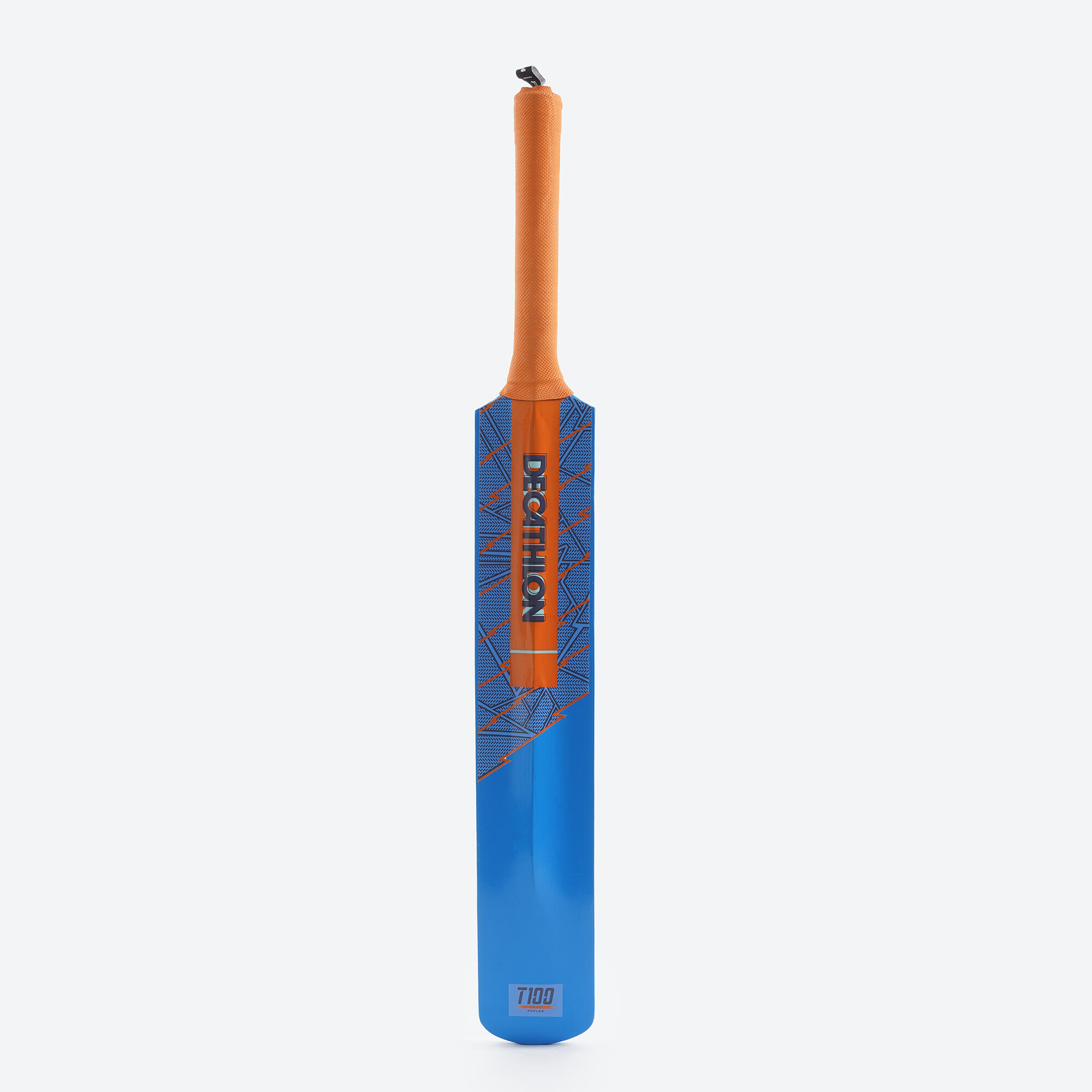
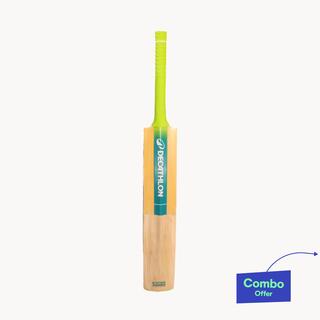
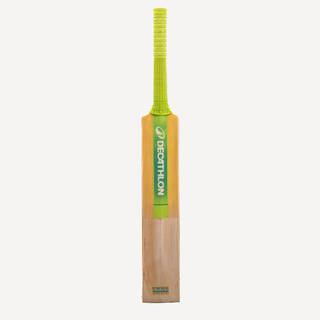
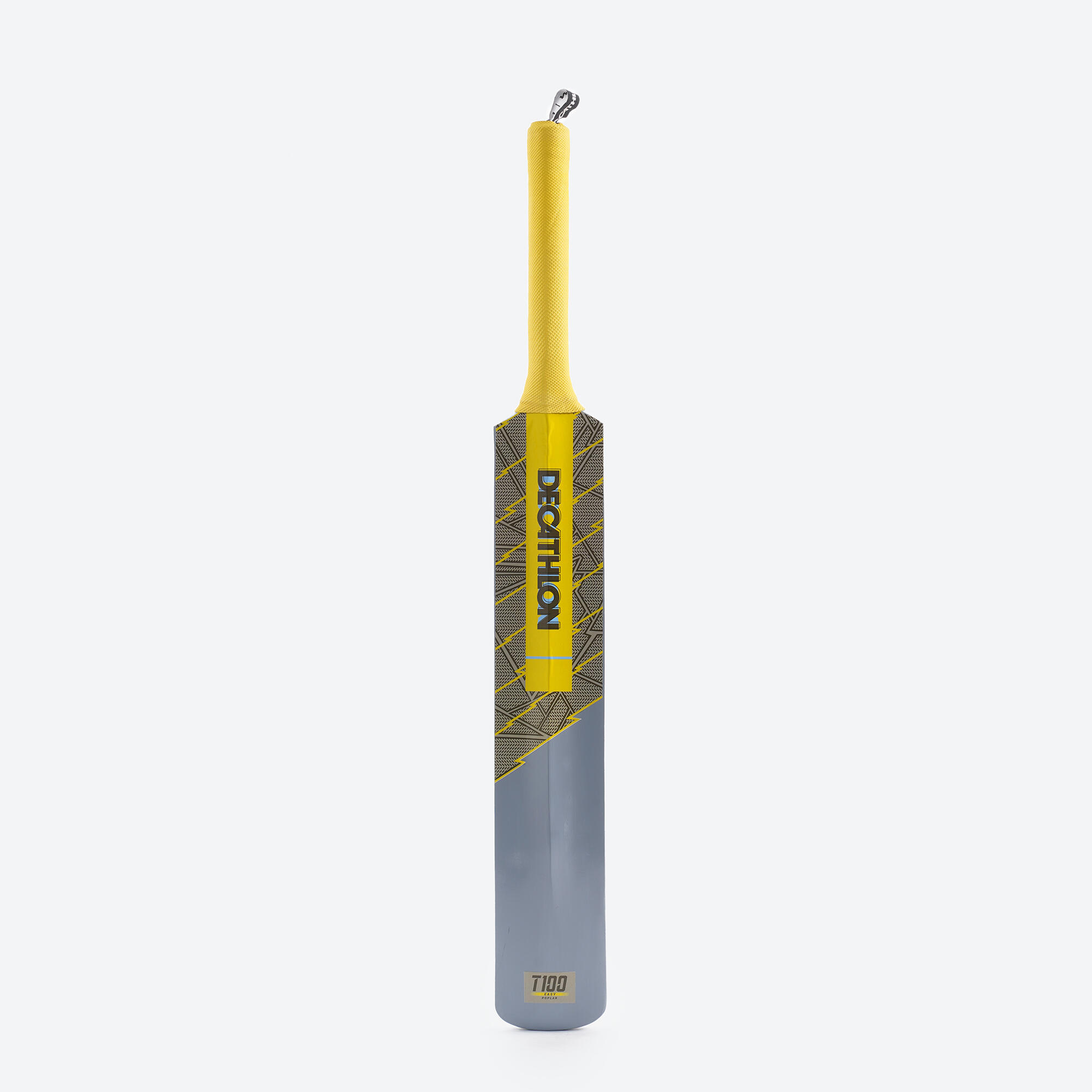

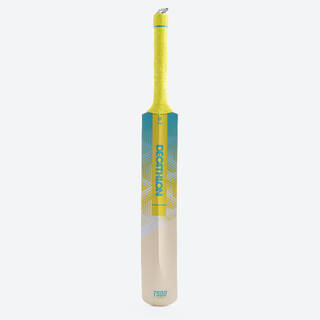
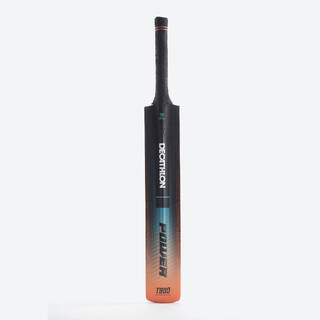
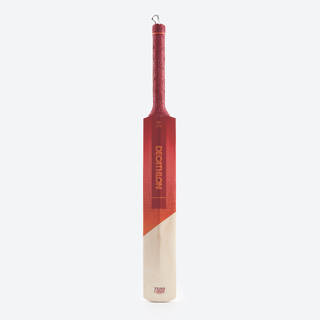
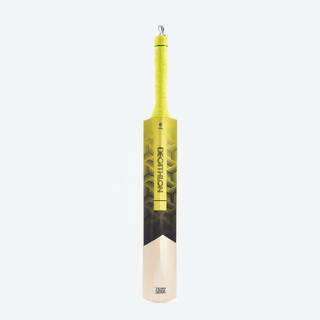
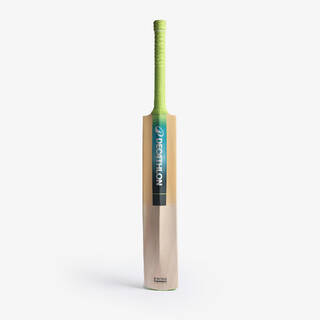
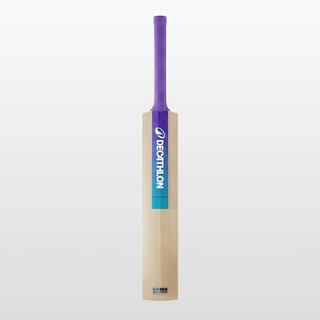
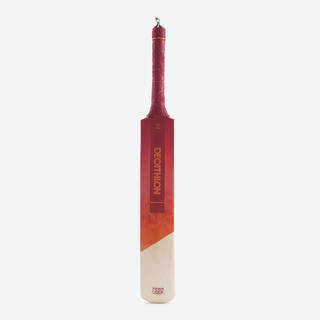

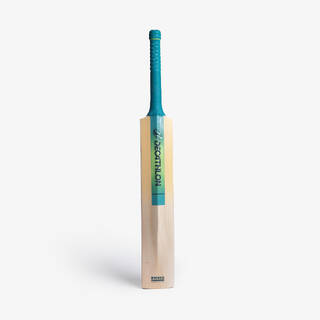
Engineered Lamination and Core Density: How Tennis Ball Cricket Bats Balance Weight and Rebound Velocity
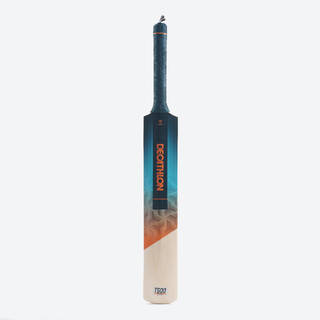
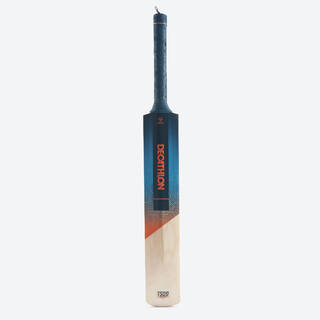
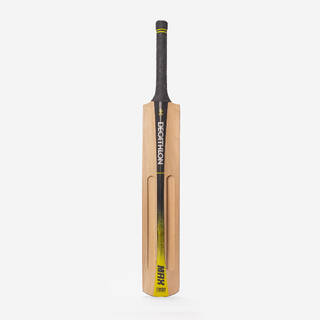
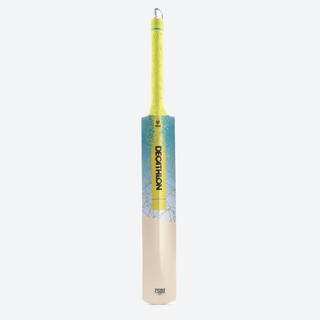
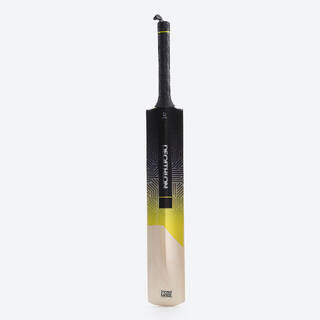
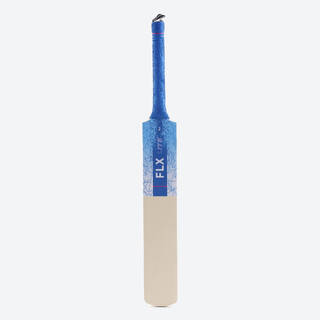
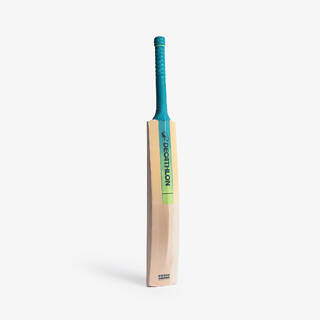
Tennis ball cricket bats operate in a fundamentally different impact physics regime than leather ball willow. The lighter, hollow construction of a tennis ball (56 to 59 grams) compresses on contact rather than transferring kinetic energy through a rigid leather seam. Decathlon's Kipsta tennis ball bats use multi-ply Kashmir willow or poplar laminations with controlled moisture content (12 to 14 percent), bonded under hydraulic press to create a face density that maximizes rebound coefficient without excessive weight. A typical adult short handle bat weighs 900 to 1100 grams, distributing mass toward the mid-to-lower blade for controlled drives on concrete pitches and asphalt street surfaces.
Core density matters because tennis balls deform 30 to 40 percent on impact, creating a dwell time (contact duration) of approximately 5 to 7 milliseconds. Softer poplar cores absorb shock and reduce hand sting, ideal for beginners learning timing on uneven colony grounds. Harder Kashmir willow faces deliver higher exit velocities for experienced players executing lofted shots over boundary ropes. Kipsta engineering teams calibrate blade thickness (38 to 42 mm at the sweet spot) to prevent cracking under repeated tennis ball compression while maintaining a pickup weight that allows rapid bat speed through the hitting zone. Indian gully cricket conditions, where players face deliveries on dusty, variable-bounce surfaces, demand this exact balance of forgiveness and power transfer.
Handle Geometry and Grip Diameter: Matching Bat Dimensions to Indian Youth and Adult Hand Anthropometry
Handle construction directly influences shot control and wrist rotation speed. Kipsta tennis ball bats feature round cane handles (25 to 28 mm diameter at the top hand position) wrapped in two-piece rubber grips with chevron traction patterns. The round profile allows free wrist articulation for square cuts and pull shots, critical when playing cross-batted strokes against pace bowlers on hard tar wickets. Short handle lengths (970 to 1000 mm total bat length) suit players 5 feet 2 inches to 5 feet 8 inches, while long handle variants (1020 to 1050 mm) accommodate taller athletes requiring extended reach for fuller-length deliveries.
Grip diameter affects fatigue accumulation during extended colony matches lasting 15 to 20 overs per side. Thinner grips (1.6 to 1.8 mm rubber thickness) provide direct feedback and faster bat speed but transmit more vibration on mistimed shots. Thicker replacement grips (2.0 to 2.4 mm) dampen sting and suit players with larger palm spans (above 19 cm measured from wrist crease to middle fingertip). Decathlon stocks both factory-fitted grips and aftermarket chevron or octopus-pattern replacements, allowing customization as hand strength develops. Youth players transitioning from size 5 to size 6 bats benefit from adding a secondary overwrap to increase handle circumference by 3 to 4 mm, preventing the bat from twisting in sweaty palms during humid monsoon sessions.
Blade Profile Engineering: Sweet Spot Placement for Low-Bounce Concrete and High-Bounce Matting Wickets
Sweet spot location (the zone of maximum coefficient of restitution) sits 150 to 200 mm above the toe on Kipsta tennis ball bats, lower than leather ball willow profiles. This placement aligns with the typical impact height when driving tennis balls that bounce knee to thigh high on concrete pitches. The blade face uses a slight convex curve (2 to 3 mm crown) to reduce edge thickness and lower rotational inertia, enabling faster bat speed through the arc. Edge thickness measures 28 to 34 mm, thick enough to generate power on cross-seam hits but thin enough to avoid excessive swing weight that fatigues forearms during long innings.
Toe reinforcement becomes critical for street cricket where bats frequently contact rough asphalt and gravel. Kipsta applies a polyurethane toe guard extending 40 to 50 mm up the blade face, bonded with flexible adhesive that absorbs ground impact shock. This guard prevents the bottom three willow plies from delaminating when players drag the bat while running between wickets or when the toe strikes embedded stones during defensive prods. The shoulder (upper blade curve) uses a rounded profile rather than a square edge, reducing air resistance during the downswing and allowing late adjustments when facing spin bowlers who vary flight and dip. Indian tape ball formats, where bowlers wrap electrical tape around tennis balls to generate reverse swing, demand this aerodynamic efficiency to counter late movement in the air.
Moisture Resistance and Seasonal Storage: Protecting Laminated Wood in High-Humidity Coastal and Monsoon Climates
Kashmir willow and poplar absorb atmospheric moisture at rates of 1 to 2 percent per 10 percent increase in relative humidity. During monsoon months (June to September), coastal cities like Mumbai and Chennai experience sustained 80 to 90 percent humidity, causing unprotected bat blades to swell and warp. Kipsta tennis ball bats receive a factory application of raw linseed oil (two coats, 24-hour cure between layers) that penetrates 0.5 to 1.0 mm into the wood grain, forming a hydrophobic barrier. Players in high-humidity zones should reapply linseed oil every 25 to 30 playing hours, focusing on the toe, edges, and any exposed wood where the original coating has worn through.
Proper storage prevents the most common failure mode: handle-splice separation. The splice joint (where cane handle inserts into the blade) uses marine-grade epoxy rated for shear strength of 18 to 22 MPa. Storing bats horizontally in a cool, dry space (below 30 degrees Celsius, 50 to 60 percent relative humidity) prevents gravitational stress on this joint. Leaning bats vertically against walls in direct sunlight causes uneven heating, with the face reaching 45 to 50 degrees Celsius while the back remains cooler, inducing thermal stress cracks. Decathlon recommends padded bat covers with moisture-wicking polyester linings for players who transport gear on two-wheelers, where road vibration and exhaust heat accelerate wood fatigue. Off-season maintenance includes light sanding (180-grit) of any surface roughness and a fresh oil coat before the next playing cycle begins.
Youth Progression Sizing: Transitioning from Size 4 Harrow to Full Adult Dimensions Based on Height and Strength Metrics
Correct bat sizing directly impacts shot mechanics and injury risk. Kipsta offers five standard sizes: Harrow (size 4, for players 4 feet 6 inches to 4 feet 10 inches), size 5 (4 feet 10 inches to 5 feet 2 inches), size 6 (5 feet 2 inches to 5 feet 6 inches), short handle adult (5 feet 6 inches to 5 feet 10 inches), and long handle adult (above 5 feet 10 inches). These measurements correlate to standing reach and wrist-to-ground clearance, ensuring the bat toe sits 10 to 15 cm above the ground when the player assumes a normal batting stance. Undersized bats force excessive bending and lumbar strain, while oversized bats cause late shot execution and mistimed hits.
Weight progression follows a similar logic. Size 5 bats weigh 750 to 850 grams, allowing young players (ages 10 to 12) to complete a full forward defensive stroke without forearm fatigue. Size 6 models increase to 850 to 950 grams, matching the strength development of adolescents entering growth spurts. Adult short handle bats at 900 to 1100 grams suit most recreational players, while long handle variants reach 1050 to 1200 grams for taller athletes who generate bat speed through longer lever arms. Parents should assess bat suitability by having the child hold the bat horizontal at arm's length for 20 seconds. If the bat tip drops more than 10 degrees, the weight exceeds current strength levels. Upgrading every 18 to 24 months aligns with typical youth growth rates of 5 to 7 cm per year, ensuring equipment matches physical development and prevents the compensation patterns that lead to elbow and shoulder overuse injuries.
Kipsta Design Philosophy: Balancing Affordability with Multi-Season Durability for Community and School Cricket Programs
Kipsta engineers tennis ball cricket bats for a target lifespan of 150 to 200 playing hours under normal recreational use. This durability threshold accounts for the realities of Indian street cricket: shared equipment among 8 to 12 players per team, storage in non-climate-controlled sheds, and use on abrasive concrete surfaces. The brand prioritizes impact-resistant lamination over cosmetic finish, using food-grade adhesives that maintain bond integrity at temperatures from 5 to 45 degrees Celsius. Face stickers use UV-stable inks that resist fading under direct sunlight, important for players who practice in open maidan grounds during peak afternoon hours.
Decathlon's supply chain allows frequent restocking of popular sizes (5, 6, and short handle adult), ensuring availability during peak demand periods before school tournaments and summer vacation leagues. The product range includes entry-level poplar bats for beginners learning basic strokes, mid-tier Kashmir willow models for club players, and premium variants with extended sweet spots for advanced batsmen. This tiered approach lets players invest according to skill level and playing frequency, upgrading as technique and commitment increase. Kipsta also designs bats with standardized handle dimensions, making aftermarket grips, toe guards, and repair kits universally compatible across the range. Community cricket programs benefit from this parts interchangeability, reducing long-term maintenance costs and extending the useful life of shared equipment inventories.
FAQ (Frequently Asked Questions)
Q1. What is the difference between Kashmir willow and poplar tennis ball cricket bats?
Kashmir willow offers higher wood density (420 to 480 kg per cubic meter) and better rebound velocity, making it suitable for experienced players who generate high bat speed. Poplar is lighter (380 to 420 kg per cubic meter) with softer grain structure that absorbs shock, ideal for beginners learning timing and reducing hand sting on mistimed shots. Kashmir willow lasts 180 to 220 playing hours with proper maintenance, while poplar typically provides 120 to 150 hours before sweet spot compression becomes noticeable.
Q2. How do I choose between short handle and long handle tennis ball cricket bats?
Short handle bats (970 to 1000 mm total length) suit players between 5 feet 2 inches and 5 feet 8 inches, providing optimal balance and control for front-foot drives and pull shots. Long handle variants (1020 to 1050 mm) are designed for taller players above 5 feet 8 inches who need extended reach for fuller-length deliveries. The correct size allows you to assume a comfortable stance with the bat toe 10 to 15 cm above the ground and enables full extension on cover drives without overreaching.
Q3. Can tennis ball cricket bats be used for leather ball or hard ball cricket?
No. Tennis ball bats use softer wood laminations (Kashmir willow or poplar) with lower density than English willow, designed for the compression characteristics of hollow tennis balls. Using them against leather balls (156 to 163 grams with a cork core) will cause immediate face cracking and delamination due to impact forces 2.5 to 3 times higher than tennis ball collisions. Leather ball cricket requires purpose-built English willow or premium Kashmir willow bats with thicker blade profiles and reinforced edges.
Q4. How often should I oil my tennis ball cricket bat?
Apply raw linseed oil every 25 to 30 playing hours or once per month during active playing seasons. Use a clean cloth to apply a thin coat (approximately 5 ml) to the face, edges, and toe, allowing 24 hours for absorption before the next session. In high-humidity coastal areas or during monsoon months, increase frequency to every 20 playing hours to prevent moisture ingress that causes warping and splice separation.
Q5. What bat size should I buy for a 12-year-old child who is 5 feet tall?
A size 5 bat is appropriate for most 12-year-olds at 5 feet height, with typical bat length of 850 to 900 mm and weight between 750 and 850 grams. Verify fit by having the child hold the bat in a normal stance with the bottom hand at hip height. The toe should clear the ground by 10 to 15 cm, and the child should be able to hold the bat horizontal at arm's length for 20 seconds without the tip dropping more than 10 degrees.
Q6. Why does my bat make a hollow sound after a few months of use?
A hollow sound indicates wood compression in the sweet spot area from repeated tennis ball impacts. This occurs naturally after 80 to 120 playing hours as the softer wood fibers compact under cyclic loading. While the bat remains usable, rebound velocity decreases by 8 to 12 percent. You can extend performance by applying a thin coat of linseed oil and allowing 48 hours of rest between playing sessions to let wood fibers recover, but eventual replacement becomes necessary when sweet spot compression exceeds 2 mm depth.
Q7. How do I prevent toe damage when playing on rough concrete pitches?
Apply a polyurethane toe guard extending 40 to 50 mm up the blade face, available as an aftermarket accessory at Decathlon stores. Clean the toe area with fine sandpaper (180-grit), apply the guard using the included adhesive, and clamp for 24 hours. Additionally, avoid dragging the bat while running between wickets and practice a slightly elevated backlift that prevents the toe from scraping the ground during your stance. Replace the toe guard every 40 to 50 playing hours or when you notice edge lifting.
Q8. What is the ideal bat weight for an adult recreational player?
Most adult recreational players perform best with bats weighing 950 to 1100 grams, providing a balance between power generation and bat speed. If you play primarily on matting wickets with true bounce, a lighter bat (950 to 1000 grams) allows quicker reactions to pace bowling. For slower concrete pitches where you have more time, a heavier bat (1050 to 1100 grams) generates higher exit velocity on lofted shots. Test by completing 10 full cover drives; if you feel forearm fatigue or struggle to maintain bat speed through the arc, reduce weight by 50 to 100 grams.
Q9. Can I repair a cracked tennis ball cricket bat or should I replace it?
Surface cracks less than 3 cm long and 1 mm deep can be repaired using wood adhesive and clamping for 24 hours, followed by light sanding and oiling. Deeper cracks extending into the blade core or cracks near the splice joint compromise structural integrity and cannot be safely repaired. If cracks appear in the sweet spot or if you notice handle movement (more than 2 mm play when twisting), replacement is necessary to prevent mid-shot failure that can cause hand injuries.
Q10. How should I store my cricket bat during the off-season?
Store bats horizontally in a cool, dry location with 50 to 60 percent relative humidity and temperatures below 30 degrees Celsius. Apply a fresh coat of linseed oil before storage and wrap in a breathable cotton cloth to prevent dust accumulation while allowing moisture evaporation. Avoid plastic covers that trap humidity and cause mold growth. Keep bats away from direct sunlight, heaters, and damp basement areas. Inspect every 4 to 6 weeks during extended storage, reapplying oil if the wood appears dry or checking for warping that indicates improper storage conditions.