Lights


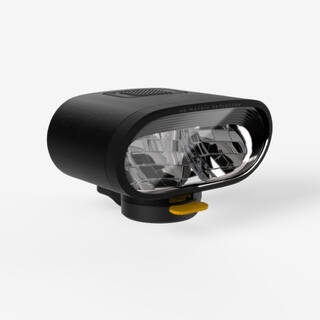
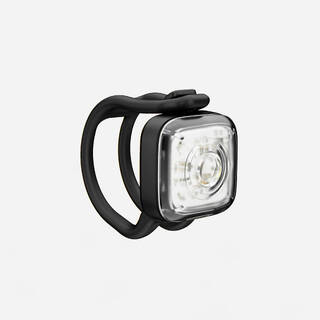
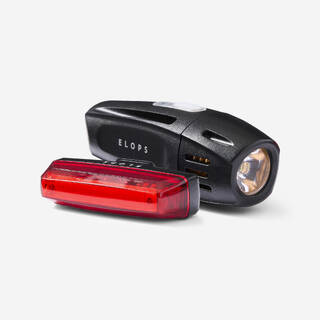
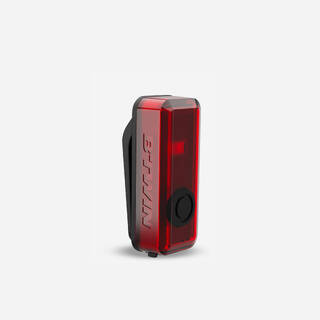
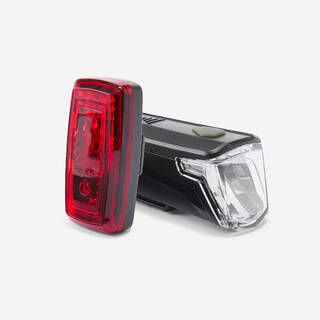
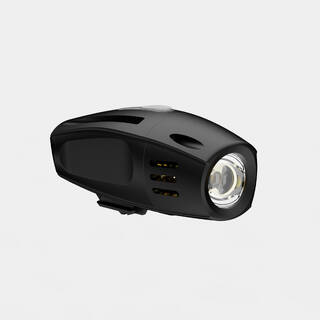

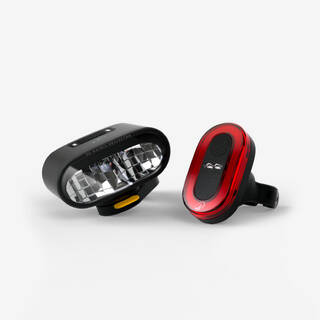
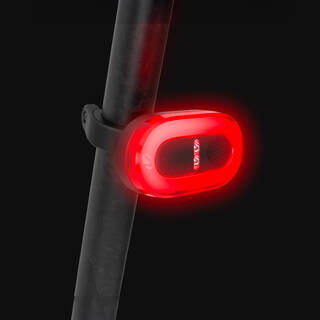
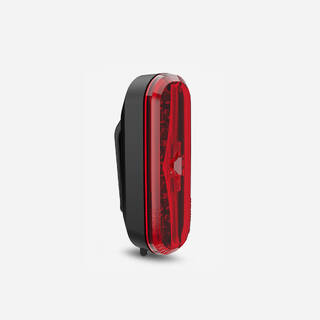
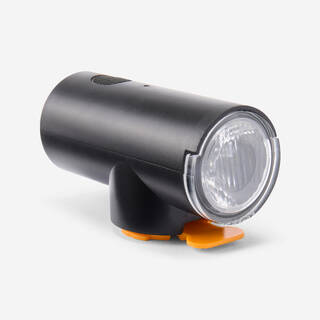
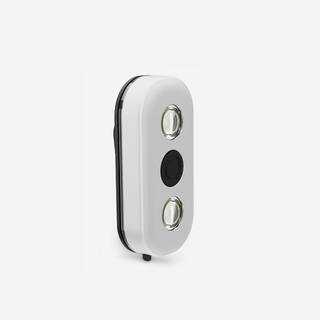
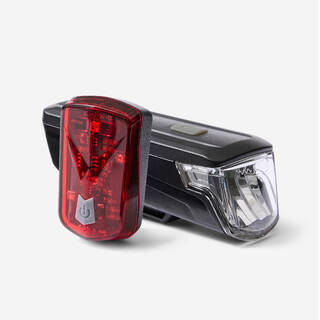
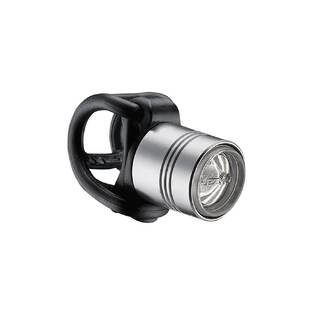
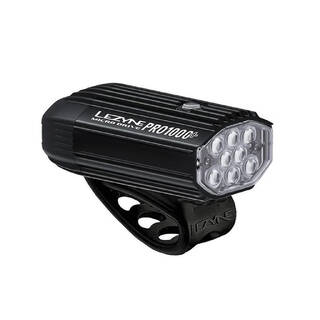
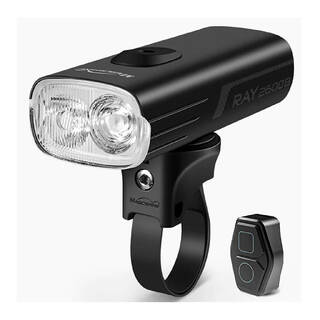
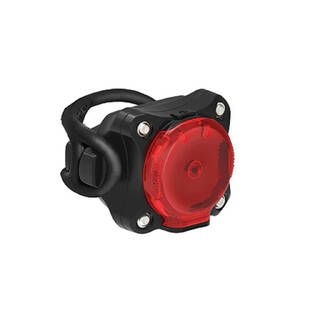
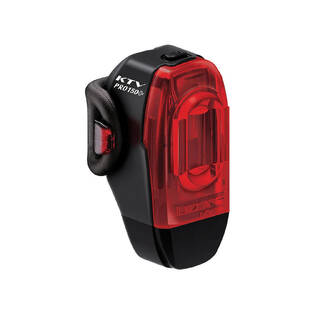
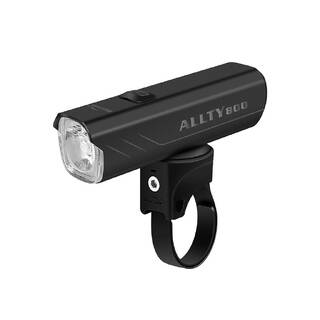
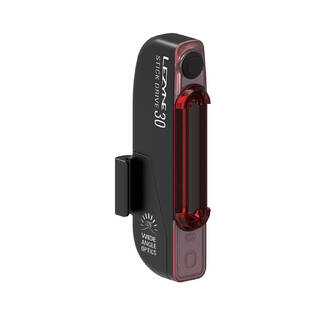
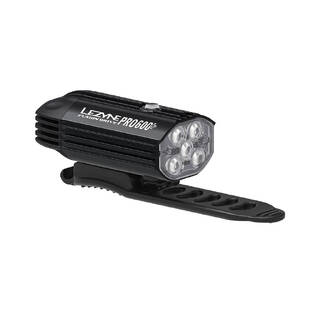
High-Lumen LED Output and Beam Distance Ratings for Indian Trail and Road Visibility
Lighting output defines safety margins. Decathlon lights deliver calibrated lumen ranges from compact 20-lumen rear blinkers to powerful 1200-lumen front beams engineered for unlit rural roads and forest trails. Beam distance specifications matter: a 200-lumen front light projects 50 to 80 meters on flat tarmac, while 800-lumen models push visibility beyond 150 meters, critical for descending Himalayan switchbacks or navigating potholed state highways after dusk. Optical lens designs focus beam patterns into wide flood zones for peripheral awareness or concentrated spot beams for long-range penetration through dust and fog.
Indian cycling conditions demand adaptive brightness. Monsoon spray reduces effective visibility by 30 to 40 percent compared to dry nights. Multi-mode systems toggle between steady high beams (maximum lumen draw), eco modes (extended runtime at reduced output), and rapid flash patterns (200 to 300 flashes per minute) that trigger peripheral vision detection in dense traffic. USB rechargeable lithium-ion cells eliminate disposable battery waste, with charge cycles rated for 500 to 800 full discharges before capacity degrades below 80 percent. Runtime specifications scale inversely with output: expect 2 to 3 hours at maximum lumens, extending to 8 to 12 hours in eco or flash modes.
IPX4 to IPX7 Water Resistance and Dust Ingress Protection for Monsoon Reliability
Ingress Protection (IP) ratings quantify environmental sealing. IPX4-rated lights withstand splashing water from any direction, suitable for light drizzle and road spray. IPX6 and IPX7 models survive direct high-pressure jet streams and temporary submersion up to 1 meter depth for 30 minutes, essential for monsoon cloudbursts in Kerala, Goa, or Northeast hill states. Sealed O-ring gaskets and silicone port covers prevent moisture ingress into battery compartments and LED driver circuits. Dust resistance (first IP digit) ranges from IP5X (dust-protected, limited ingress) to IP6X (dust-tight, zero particle penetration), critical for Rajasthan desert rides or construction-zone commuting where fine particulates clog vents and corrode contacts.
Temperature cycling accelerates seal degradation. Lights stored in 45-degree Celsius car trunks during Delhi summers, then exposed to 15-degree night rides, experience thermal expansion and contraction that stresses rubber seals. Quality housings use UV-stabilized polycarbonate shells and anodized aluminium heat sinks that dissipate LED junction temperatures below 70 degrees Celsius, preventing thermal runaway and maintaining consistent lumen output across 2 to 4 hour rides.
Tool-Free Quick-Release Mounts and Universal Handlebar Compatibility Across MTB and Road Bikes
Mounting systems determine usability across multi-bike households. Decathlon lights feature silicone strap mounts with ratchet tensioners that fit 22mm to 35mm diameter handlebars, stem caps, and seatposts without tools. Installation takes 10 to 15 seconds: loop the strap, engage the buckle, and twist-lock the light body into the cradle. This universal fit accommodates Rockrider MTB flat bars (31.8mm), Triban road bike drop bars (23.8mm compact bend), and Elops city bike swept-back handlebars (25.4mm). Quick-release mechanisms allow single-hand removal when parking in public spaces or transitioning between bikes.
Vibration damping prevents beam scatter. Rigid plastic clamps transmit high-frequency road buzz (8 to 12 Hz from concrete expansion joints, 15 to 20 Hz from gravel washboard) directly into light housings, causing LED filament micro-fractures and lens rattle. Silicone cradles absorb 60 to 70 percent of shock loads, stabilizing beam alignment within plus or minus 2 degrees over 50 km rough terrain. Helmet mounts use adjustable elastic straps and pivoting ball joints for precise aiming: tilt the beam 10 to 15 degrees downward to illuminate the road 3 to 5 meters ahead without blinding oncoming traffic.
Rear Light Visibility Angles and Side Illumination for Urban Intersection Safety
Rear light detection angles prevent side-impact collisions. Standard single-LED designs emit 180-degree rear-facing cones, invisible to perpendicular traffic at intersections. Decathlon rear lights integrate side-firing LEDs or wraparound lens designs that project 270-degree visibility arcs, ensuring drivers on cross streets detect cyclists 40 to 60 meters away when approaching T-junctions or roundabouts. Red wavelength LEDs (620 to 630 nanometers) penetrate smog and dust better than white or blue spectrums, maintaining recognition distance in polluted metros like Delhi, Mumbai, or Kolkata.
Flash patterns influence cognitive response times. Steady red beams blend into background brake lights and street signage. Pulsing patterns (1.5 to 2 Hz frequency) trigger motion-detection pathways in peripheral vision, reducing driver reaction lag by 0.3 to 0.5 seconds compared to static lights. Decathlon models offer programmable sequences: slow pulse for daylight visibility enhancement, rapid strobe for night alertness, and rotating patterns that alternate between steady and flash to maximize attention capture without inducing epileptic triggers (avoiding 3 Hz frequencies). Battery life in flash mode extends 3 to 4 times longer than steady mode due to 30 to 40 percent duty cycle operation.
Integrated Power Banks and USB-C Fast Charging for Multi-Device Expedition Use
High-capacity front lights double as emergency power sources. Models with 5000 to 10000 mAh lithium-polymer cells include USB output ports delivering 5V/2A current, sufficient to recharge smartphones, GPS bike computers, or action cameras during multi-day Himalayan tours or Western Ghats bikepacking routes. Dual USB-C ports enable simultaneous charging and discharging: plug the light into a wall adapter while drawing power to charge a phone, useful in single-outlet budget guesthouses. Fast-charge input (9V/2A or 12V/1.5A) replenishes 80 percent capacity in 2 to 3 hours, compared to 6 to 8 hours for standard 5V/1A chargers.
Battery management systems prevent over-discharge damage. Lithium cells degrade rapidly if drained below 2.5 volts per cell. Integrated protection circuits cut power at 10 to 15 percent remaining capacity, preserving cell chemistry for 500-plus charge cycles. LED indicators display real-time capacity: green (70 to 100 percent), amber (30 to 70 percent), red (below 30 percent), and flashing red (critical, below 10 percent). This feedback prevents mid-ride blackouts on unlit roads. Removable battery packs allow carrying spares for extended range: swap a depleted 2600 mAh cell for a fresh unit in 5 seconds without tools, extending total runtime to 12 to 16 hours across multiple charge units.
Reflective Vest Integration and Wearable Light Clips for Pedestrian and Runner Visibility
Body-worn lights expand 360-degree detection zones. Clip-on LED units attach to backpack straps, belt loops, or shoe heels using spring-loaded carabiners or magnetic clasps. Runners benefit from chest-mounted strobes that project forward-facing beams (100 to 200 lumens) for trail navigation while rear-facing red LEDs alert traffic during road shoulder runs. Lightweight designs (30 to 50 grams) avoid bounce during 5 to 10 km runs, with silicone grips preventing rotation on sweat-dampened fabric. Dual-mode switches toggle between white forward light for path illumination and red rear flash for vehicle warning.
Reflective elements amplify passive visibility. Decathlon vests combine 3M Scotchlite retroreflective strips (returning 70 to 80 percent of incident light to the source) with integrated LED strips powered by coin cell batteries (CR2032, 220 mAh capacity, 40 to 60 hour runtime). This layered approach ensures detection even if active LEDs fail: reflective material remains effective across 200 to 300 meter headlight ranges on highways. Adjustable elastic straps fit over winter jackets (chest circumferences 90 to 120 cm) or summer singlets (70 to 90 cm), with quick-release buckles for rapid donning in low-light parking areas or trailheads.
FAQ (Frequently Asked Questions)
Q1. What is the difference between a headlamp and a torch?
A headlamp is a hands-free lighting solution that is worn on the head, allowing you to have both hands free for activities like hiking, climbing, or camping. A torch, on the other hand, is a handheld light that you carry with you. Headlamps are often preferred for activities where you need to keep your hands free, while torches can be more versatile for general use or situations where you need a more powerful, focused beam of light.
Q2. How do I choose the right lumen output for my needs?
The lumen output of a light refers to its brightness. Higher lumen outputs provide brighter illumination but may also drain the battery faster. For general outdoor activities like camping or hiking, a light with 100-300 lumens should be sufficient. For more demanding activities like caving or long-distance hiking, you may want a light with 500 lumens or more. Consider the intended use and balance brightness with battery life.
Q3. Are Decathlon's lights water-resistant?
Many of Decathlon's lights are designed with water-resistance in mind, making them suitable for use in wet or damp conditions. However, the level of water resistance can vary between models. Be sure to check the product specifications to determine the water resistance rating and ensure it meets your needs.
Q4. How long do the batteries typically last in Decathlon's lights?
Battery life can vary significantly depending on the type of light, lumen output, and usage patterns. As a general guideline, most of our headlamps and lanterns can provide several hours to several days of runtime on a single set of batteries, while bike lights and torches may have shorter runtimes due to their higher lumen outputs. Always check the product specifications for estimated battery life and consider investing in rechargeable options for extended use.
Q5. Can I use Decathlon's bike lights for other activities?
While our bike lights are primarily designed for cycling, many of them can be used for other outdoor activities as well. Their compact size, bright output, and water-resistant designs make them suitable for activities like hiking, camping, or even as emergency lights. However, keep in mind that bike lights are typically designed for shorter runtimes and may not be the best choice for extended use.
Q6. What is the difference between a lantern and a torch?
A lantern is designed to provide ambient, area lighting, making it ideal for illuminating a campsite, tent, or outdoor living space. Lanterns typically have a wider, more diffused beam pattern and are often designed to be hung or placed on a flat surface. A torch, on the other hand, is a handheld light that provides a more focused, directional beam of light, making it better suited for tasks that require targeted illumination, such as hiking or searching for objects.
Q7. Can I use Decathlon's lights for indoor activities?
While our lights are primarily designed for outdoor use, many of them can also be used indoors for various purposes. Headlamps can be useful for tasks like home repairs, attic or basement exploration, or even reading in bed. Lanterns can provide ambient lighting for power outages or outdoor gatherings, while torches can be used for general indoor lighting or as emergency lights. Just be mindful of the lumen output and beam pattern to ensure the light is suitable for your intended indoor use.
Q8. How do I properly dispose of or recycle old batteries from Decathlon's lights?
At Decathlon, we are committed to promoting sustainable practices and minimizing our environmental impact. When it comes to disposing of or recycling old batteries from our lights, we recommend following local regulations and guidelines for proper battery disposal or recycling. Many municipalities have specific programs or collection points for recycling batteries, which helps prevent harmful materials from ending up in landfills or the environment.
Q9. Can I use Decathlon's lights for professional or industrial applications?
While our lights are designed for outdoor and recreational use, they may not be suitable for professional or industrial applications that require specialized lighting solutions. Our lights are primarily intended for personal use and may not meet the specific requirements or certifications needed for professional or industrial settings. If you have specific lighting needs for professional or industrial purposes, we recommend consulting with a specialist or exploring lighting solutions specifically designed for those applications.
Q10. What lumen output is sufficient for unlit rural roads versus well-lit city commuting in India?
Unlit rural roads and highways require 600 to 1200 lumens for safe speeds above 25 km/h, projecting beams 100 to 150 meters ahead to detect potholes, livestock, or pedestrians. Well-lit urban streets need 200 to 400 lumens primarily for visibility to other road users rather than path illumination. Use higher outputs in monsoon or fog when ambient moisture scatters light and reduces effective range by 30 to 40 percent.
Q11. How long do rechargeable bike lights last on a single charge during daily commutes?
Runtime depends on mode selection and battery capacity. A 2000 mAh front light runs 2 to 3 hours at maximum 800 lumens, 4 to 6 hours in medium 400-lumen mode, and 8 to 12 hours in eco or flash modes. Daily 30 to 45 minute commutes require recharging every 3 to 5 days in high mode, or weekly in eco mode. Rear lights with 500 to 800 mAh cells last 6 to 10 hours in flash mode, sufficient for 10 to 15 commutes before recharging.
Q12. Can bike lights withstand heavy monsoon rains in Kerala, Goa, or Northeast hill states?
Lights rated IPX6 or IPX7 survive direct high-pressure water jets and temporary submersion, suitable for torrential monsoon downpours and river crossings. IPX4 models handle splashing and light rain but may fail in sustained cloudbursts. Check O-ring seals and silicone port covers before monsoon season, replacing cracked gaskets to maintain water-tightness. Anodized aluminium housings resist corrosion better than plastic shells in high-humidity coastal environments.
Q13. Do helmet-mounted lights provide better visibility than handlebar-mounted lights for night trail riding?
Helmet mounts aim light where you look, illuminating corners and obstacles before the bike reaches them, critical for technical singletrack with tight switchbacks. Handlebar lights project fixed beams that lag head movements by 0.5 to 1 second during rapid direction changes. Combine both: handlebar light (600 to 800 lumens) for long-range path illumination, helmet light (300 to 500 lumens) for targeted spot checks of roots, rocks, or trail markers.
Q14. How do I prevent bike lights from being stolen when parking in public areas or office complexes?
Use quick-release mounts that allow 5 to 10 second removal and pocket storage when leaving the bike unattended. Avoid permanent bolt-on mounts in theft-prone areas. Some riders use secondary cable locks threaded through light mounts and frame tubes, but this adds 30 to 60 seconds to locking routines. Store lights in backpacks or desk drawers rather than leaving them visible on parked bikes, even in gated apartment complexes.
Q15. What is the difference between steady beam and flashing modes for front and rear lights?
Steady beams provide constant illumination for navigating unlit roads, essential when riding above 20 km/h where you need continuous path visibility. Flashing modes (1 to 3 Hz pulse rates) enhance daytime conspicuity and extend battery life by 3 to 4 times through reduced duty cycles. Use steady front beams at night for safe navigation, flash modes during dawn or dusk for added visibility. Rear lights should flash in all conditions to trigger motion-detection in driver peripheral vision.
Q16. Can I use the same lights for road cycling, mountain biking, and daily commuting?
Universal mounting systems fit 22mm to 35mm diameter handlebars across road bikes, MTBs, and city bikes. However, optimize lumen output and beam patterns: road cycling needs narrow spot beams (800 to 1200 lumens) for high-speed visibility, MTB trail riding requires wide flood patterns (600 to 1000 lumens) for peripheral obstacle detection, and commuting prioritizes 360-degree conspicuity with moderate output (300 to 500 lumens front, 50 to 100 lumens rear).
Q17. How do I maintain bike lights to ensure they last through multiple monsoon seasons?
Rinse lights with fresh water after monsoon rides to remove salt spray (coastal areas) or mud particulates that corrode seals and contacts. Dry USB ports and charging contacts with compressed air or lint-free cloth. Store lights at 40 to 60 percent charge in cool, dry locations (avoid 45-degree car trunks). Inspect O-ring gaskets every 6 months, applying silicone grease to maintain pliability. Replace cracked lenses or corroded battery terminals immediately to prevent moisture ingress and short circuits.
Q18. Are there specific lights designed for early morning or late evening runners on Indian roads?
Clip-on chest lights (100 to 200 lumens) project forward beams for uneven footpath navigation while integrated rear red LEDs alert traffic from behind. Lightweight units (30 to 50 grams) attach to hydration vest straps or shirt collars without bounce. Shoe-mounted heel lights provide low-level ankle visibility, particularly effective in foggy conditions where elevated lights scatter in moisture. Combine body-worn lights with reflective vests for 360-degree detection across 200 to 300 meter vehicle headlight ranges.
Q19. Do higher-priced lights offer significantly better performance than budget models for casual weekend riders?
Premium lights deliver higher lumen outputs (1000-plus versus 300 to 500), longer runtimes (8 to 12 hours versus 3 to 5 hours), and superior water sealing (IPX7 versus IPX4). Casual riders doing 10 to 20 km weekend rides on moderately lit roads gain sufficient safety from mid-range 400 to 600 lumen models. Invest in higher outputs if regularly riding unlit rural roads, touring multi-day routes, or commuting year-round through monsoons where reliability and extended runtime justify the added durability and capacity.