Men Hiking Shoes


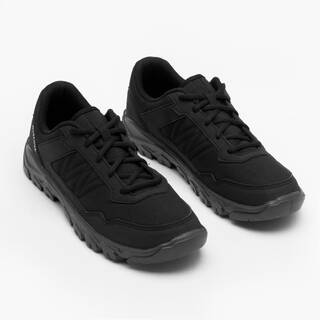

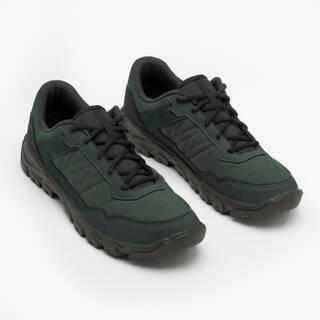
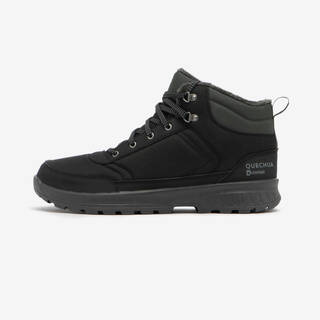
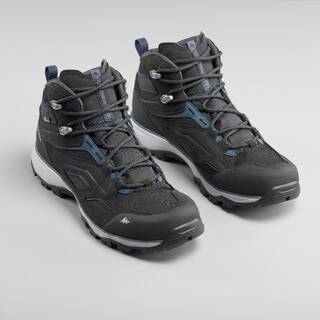
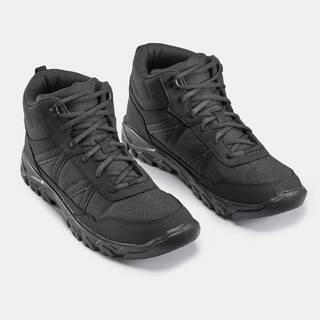
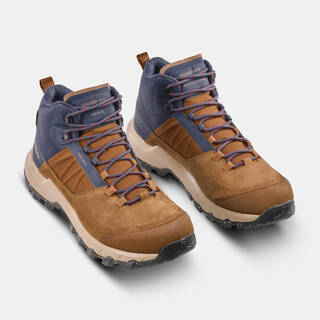
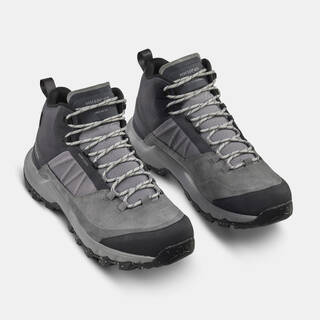
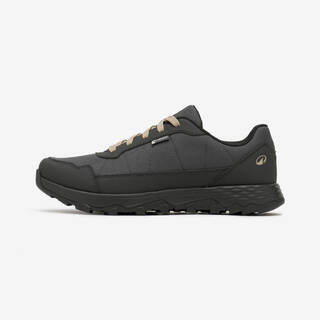
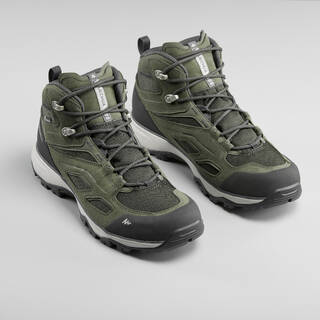
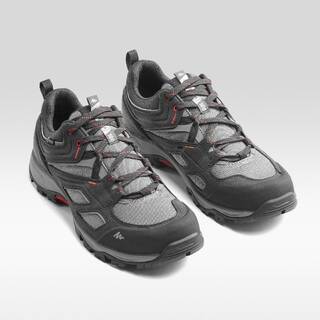
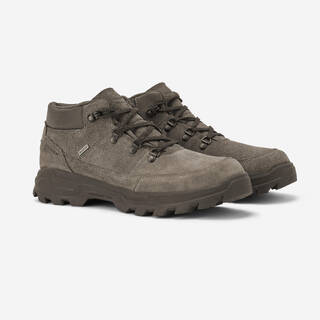
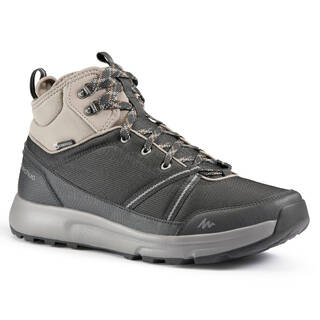
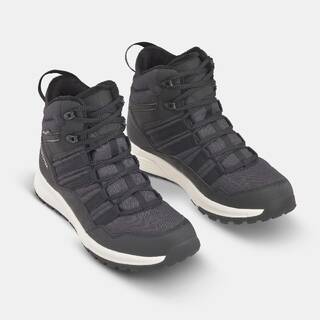
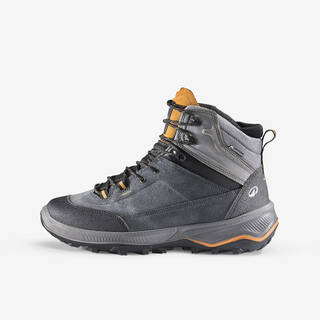
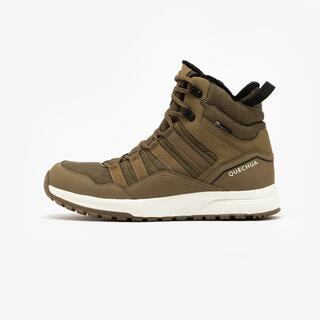
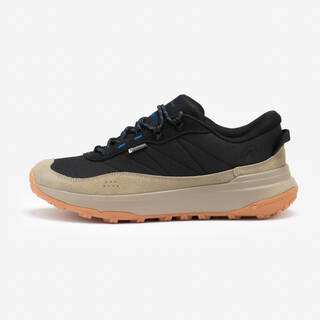
Quechua and Forclaz Men's Hiking Shoes: Engineered for Indian Mountain Terrain and Monsoon Trails
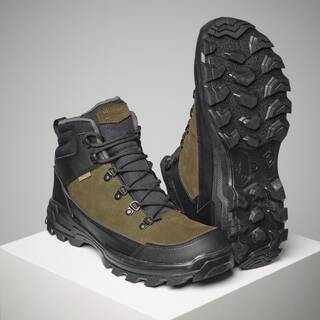
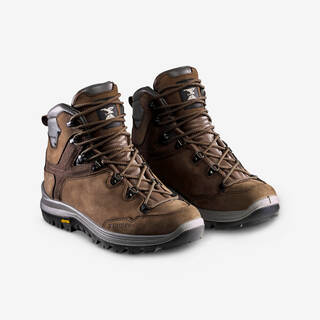
Decathlon's men's hiking shoes are built under two primary passion brands: Quechua for accessible day hikes and weekend treks, and Forclaz for multi-day expeditions across technical Himalayan passes and Western Ghats monsoon trails. Both lines prioritize outsole grip, ankle support architecture, and waterproof membrane integration tailored to India's diverse elevation profiles. Quechua models deploy EVA midsoles with Shore A durometer ratings between 50 and 60, balancing shock absorption on rocky descents with responsive energy return on uphill climbs. Forclaz boots incorporate dual-density polyurethane midsoles, offering firmer heel stability for loaded backpacking while retaining forefoot flexibility for uneven boulder scrambles.
Outsole lug depth separates trail-ready shoes from casual hikers. Quechua day hiking shoes feature 3.5 to 4.5mm lugs with multidirectional tread patterns, engineered for dry forest paths and compacted dirt trails common in Nainital, Coorg, and Munnar hill stations. Forclaz trekking boots extend lug depth to 5 to 6mm, incorporating deeper channels that self-clear wet mud and maintain bite on moss-covered stones during monsoon ascents. The rubber compound itself uses a blend of natural and synthetic elastomers, calibrated for optimal grip coefficients between 10°C high-altitude mornings and 35°C midday sun exposure on exposed ridgelines. Heel brake zones add angular lugs that dig into steep descents, reducing forward slide on loose scree and preventing toe-box compression injuries.
Waterproof Membrane Technology: Hydrostatic Head Ratings and Breathable Vapor Transmission for Humid Conditions
Waterproof hiking shoes in Decathlon's range carry hydrostatic head ratings from 5,000mm for light rain protection up to 15,000mm for full submersion resistance during river crossings and heavy monsoon downpours. These ratings measure the water column height a fabric can withstand before leakage occurs. Mid-cut Quechua models integrate a waterproof breathable membrane bonded between the outer textile and inner lining, creating a moisture barrier while allowing perspiration vapor to escape. This construction prevents the sweat saturation common in non-breathable rubber boots, which can lead to blisters and fungal growth during multi-hour treks in Kerala's 80 percent humidity or Meghalaya's cloud forest microclimates.
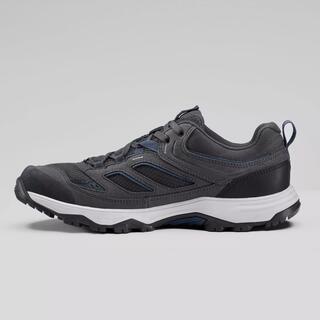
Breathability is quantified through Moisture Vapor Transmission Rate (MVTR), measured in grams per square meter per 24 hours. Forclaz waterproof boots achieve MVTR values between 8,000 and 12,000 g/m²/24h, ensuring adequate vapor escape even when wearing thick merino wool trekking socks. Gusseted tongue construction seals the lacing zone against water ingress, while taped internal seams eliminate needle-hole leakage. For non-waterproof variants, Quechua employs open-mesh panels in the midfoot and toe-box, maximizing airflow for dry-season Ladakh treks or summer Aravalli range day hikes where stream crossings are minimal and ventilation becomes the priority.
Ankle Support Mechanics: Mid-Cut vs High-Cut Collar Heights and Lateral Stability Systems
Ankle collar height directly influences lateral stability and injury risk on uneven terrain. Low-cut hiking shoes (collar height below the ankle bone) suit well-conditioned hikers on maintained trails, offering maximum ankle mobility for fast-paced approaches. Mid-cut designs (collar height 2 to 4cm above the ankle bone) provide a balance of support and freedom, using padded collars and internal heel counters to resist inversion sprains when stepping on angled rocks or root systems. High-cut boots (collar height 6 to 8cm above the ankle bone) lock the ankle joint through a combination of stiff leather or synthetic uppers and lace-through hooks that cinch the collar tight, essential for carrying 12 to 18kg backpacks on multi-day Hampta Pass or Valley of Flowers expeditions.
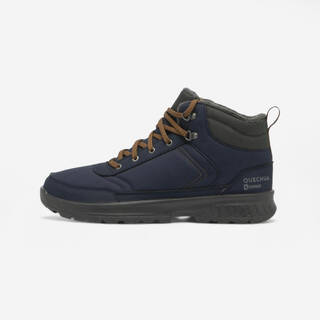
Decathlon's Forclaz high-cut boots incorporate thermoplastic polyurethane (TPU) heel counters molded into the rear quarter, creating a rigid cup that prevents rearfoot collapse during side-hill traverses. This construction works in tandem with external ankle support straps or webbing overlays that wrap the midfoot, distributing load across a wider surface area and reducing pressure points. Quechua mid-cut shoes use injected EVA heel wedges that extend up the Achilles region, offering moderate support without the weight penalty of full leather construction. The trade-off lies in break-in time: high-cut leather boots require 20 to 30 kilometers of walking to soften and conform to individual foot shapes, while synthetic mid-cut models are trail-ready within the first 5 kilometers.
Midsole Cushioning and Rock Plate Protection: EVA Foam Densities and Forefoot Shielding for Sharp Terrain
Midsole cushioning in hiking footwear must balance impact absorption with ground feel and stability. Quechua day hiking shoes use single-density EVA foam with compression set values around 20 percent, meaning the foam retains 80 percent of its original thickness after repeated loading cycles. This provides adequate cushioning for 8 to 12 kilometer day hikes on forest trails and gravel paths, absorbing the repetitive heel strikes that generate impact forces equivalent to 2 to 3 times body weight. Forclaz trekking boots upgrade to dual-density midsoles, pairing a softer EVA layer (Shore A 45 to 50) in the heel for shock absorption with a firmer polyurethane layer (Shore A 60 to 65) in the midfoot for torsional rigidity and arch support under load.
Rock plates are thin, semi-rigid inserts embedded between the midsole and outsole, shielding the forefoot from sharp stones, thorns, and roots. Forclaz models integrate thermoplastic rock plates spanning the entire forefoot zone, preventing bruising when stepping on pointed granite edges common in Himachal Pradesh and Uttarakhand boulder fields. These plates are perforated or flexed at the metatarsal break line to maintain natural toe-off mechanics, avoiding the stiff, clunky feel of older mountaineering boots. Quechua shoes targeting less technical trails omit full rock plates to save weight, instead using reinforced rubber zones in high-impact areas like the toe cap and heel. The result is a lighter shoe (300 to 350 grams per shoe in size 8 UK) suitable for fast-paced hill station loops where trail surfaces are predictable.
Upper Construction Materials: Leather vs Synthetic Durability, Abrasion Resistance, and Monsoon Drying Times
Leather uppers in Forclaz boots offer superior abrasion resistance and long-term durability, critical for repeated contact with rocky outcrops and thorny scrub vegetation. Full-grain leather (1.6 to 2.0mm thickness) resists tearing and maintains structural integrity through 400 to 600 kilometers of trekking, though it adds weight (450 to 550 grams per shoe in size 8 UK) and requires regular conditioning with wax or oil to prevent cracking in dry climates. Split-grain or suede leather reduces weight while retaining moderate abrasion resistance, common in Quechua mid-range models targeting weekend trekkers. The downside is extended drying time: a fully saturated leather boot can take 18 to 24 hours to dry in humid conditions, increasing blister risk if worn damp over consecutive trekking days.
Synthetic uppers use polyester or nylon weaves with polyurethane coatings, delivering faster drying times (4 to 6 hours in open air) and lighter weights (280 to 380 grams per shoe). Quechua synthetic hiking shoes integrate ripstop nylon with denier ratings between 300D and 600D, balancing tear resistance with breathability. Reinforced toe caps and heel counters use thermoplastic overlays that add structure without the bulk of leather, suitable for monsoon treks where rapid drying between rain showers is essential. However, synthetic materials show accelerated wear on high-friction zones like the toe rand and lacing eyelets, typically degrading after 300 to 400 kilometers of mixed-terrain use. Hybrid constructions combine leather in high-wear areas (toe, heel) with synthetic mesh in low-stress zones (tongue, collar), optimizing durability, weight, and breathability for all-season Indian trekking conditions.
Fit Profiles and Sizing for Indian Foot Shapes: Last Width, Toe Box Volume, and Break-In Protocols
Decathlon hiking shoes are built on lasts (the foot-shaped molds used in manufacturing) designed to accommodate a range of foot widths and arch profiles common among Indian trekkers. Quechua models use a medium-width last with a D-width forefoot (approximately 10cm across at the ball of the foot in size 8 UK), suitable for average to slightly narrow feet. Forclaz boots offer a slightly wider forefoot and higher instep volume, accommodating thicker trekking socks and higher-volume feet without causing pressure points on the dorsal midfoot. Toe box shape is rounded rather than tapered, allowing toes to splay naturally during descents and preventing black toenails caused by repeated toe-box impacts on steep downhill sections.
Proper sizing requires a thumb's width (approximately 1 to 1.5cm) of space between the longest toe and the shoe's front when standing, accounting for foot swelling during long treks and the forward slide that occurs on descents. Trying shoes in the evening when feet are slightly swollen mimics on-trail conditions more accurately than morning fittings. Break-in protocols vary by construction: synthetic Quechua shoes require minimal break-in (5 to 10 kilometers of walking), while full-leather Forclaz boots need 20 to 30 kilometers to soften and conform. Walking indoors on carpet for 30-minute sessions over several days accelerates this process without committing to a full trail outing. Lacing techniques also influence fit: using a heel-lock lacing pattern (threading laces through the top eyelets in a loop before tying) pulls the heel back into the counter, reducing lift and preventing blisters on the Achilles tendon during long ascents.
FAQ (Frequently Asked Questions)
Q1. What footwear to wear for hiking?
Footwear is the most essential accessory on a hike. If its a hot weather and the duration of hike is less, choose a sandal with correct grip based on the terrain. If the duration is longer, check if you need waterproofing, cold protection, ankle support and the weight of the shoe. Quechua has segregated the hiking shoes based on terrain, which are nature, mountain and snow.
Q2. Can you run in hiking shoes?
Running as an exercise needs flexibility and better grips on hiking trails. We have a specific shoe for such an exercise, which is called Fast Hiking. The fast hiking shoe, ensures better fit, grip and flexibility.
Q3. What is the difference between Quechua and Forclaz hiking shoes for men?
Quechua hiking shoes target day hikes and weekend treks on maintained trails, using lighter EVA midsoles and 3.5 to 4.5mm outsole lugs suitable for dry forest paths and hill station loops. Forclaz boots are engineered for multi-day expeditions and technical Himalayan terrain, incorporating dual-density polyurethane midsoles, deeper 5 to 6mm lugs for monsoon grip, and reinforced ankle collars for loaded backpacking stability. Forclaz models also feature higher waterproof ratings (up to 15,000mm hydrostatic head) and full rock plate protection for sharp boulder fields.
Q4. How do I choose between waterproof and non-waterproof hiking shoes for Indian treks?
Waterproof shoes with membranes rated 5,000mm or higher suit monsoon treks, river crossings, and high-altitude snow patches in regions like Himachal Pradesh, Uttarakhand, and Meghalaya. Non-waterproof mesh variants excel in dry-season Ladakh treks, Aravalli range hikes, and summer Deccan plateau trails where ventilation prevents sweat saturation and blisters. If trekking year-round across varied climates, a waterproof mid-cut boot offers versatility, though carrying a non-waterproof backup for dry stretches optimizes comfort.
Q5. What outsole lug depth do I need for monsoon trekking in the Western Ghats?
Monsoon trails in the Western Ghats demand 5 to 6mm lug depth with multidirectional tread patterns that self-clear wet mud and maintain bite on moss-covered stones. Forclaz trekking boots deliver this specification, using rubber compounds calibrated for wet-surface grip coefficients. Shallower 3.5 to 4.5mm lugs found in Quechua day hiking shoes lose traction on slick laterite and clay-rich soils common in Coorg, Lonavala, and Amboli Ghat during heavy rains.
Q6. How much space should I leave in the toe box when sizing hiking shoes?
Leave a thumb's width (approximately 1 to 1.5cm) of space between your longest toe and the shoe's front when standing. This accounts for foot swelling during long treks and forward slide on steep descents, preventing black toenails and toe-box bruising. Try shoes in the evening when feet are naturally swollen, and wear the same thickness of trekking socks you'll use on trails to ensure accurate fit assessment.
Q7. Do leather hiking boots require special care in humid Indian climates?
Leather boots need regular conditioning with wax or oil every 30 to 50 kilometers of trekking to prevent cracking and maintain waterproofing, especially in dry climates like Ladakh or Rajasthan. In humid regions, fully saturated leather takes 18 to 24 hours to dry, so carrying a synthetic backup pair for consecutive wet days reduces blister risk. After monsoon treks, stuff boots with newspaper to absorb moisture and dry in shaded, ventilated areas rather than direct sun, which can stiffen and crack the leather.
Q8. What is the break-in period for Forclaz high-cut trekking boots?
Forclaz high-cut leather boots require 20 to 30 kilometers of walking to soften and conform to individual foot shapes. Accelerate break-in by wearing boots indoors on carpet for 30-minute sessions over several days, gradually increasing duration. Synthetic Forclaz models break in faster (5 to 10 kilometers), while full-grain leather boots need more time but deliver superior long-term durability and abrasion resistance for technical Himalayan routes.
Q9. Can I use day hiking shoes for multi-day treks with a 12kg backpack?
Day hiking shoes with low to mid-cut collars and single-density EVA midsoles lack the ankle support and load-bearing stability needed for 12kg or heavier backpacks on multi-day treks. Forclaz high-cut boots with dual-density midsoles, TPU heel counters, and reinforced ankle collars distribute load across a wider surface area and prevent rearfoot collapse on uneven terrain. Using under-supported footwear with heavy loads increases inversion sprain risk and accelerates midsole compression, reducing cushioning effectiveness.
Q10. How do rock plates in hiking shoes protect feet on rocky trails?
Rock plates are semi-rigid thermoplastic inserts embedded between the midsole and outsole, shielding the forefoot from sharp stones, thorns, and roots that can bruise the plantar surface. Forclaz boots use perforated rock plates spanning the entire forefoot zone, maintaining natural toe-off mechanics while preventing impact injuries on granite boulder fields in Himachal Pradesh and Uttarakhand. Quechua shoes targeting less technical trails use reinforced rubber zones instead of full plates to save weight.
Q11. What is the expected lifespan of Quechua synthetic hiking shoes on Indian trails?
Quechua synthetic hiking shoes typically deliver 300 to 400 kilometers of mixed-terrain use before showing accelerated wear on high-friction zones like the toe rand, lacing eyelets, and outsole lugs. Lifespan extends on softer forest trails and shortens on abrasive granite or basalt rock common in Deccan plateau and Himalayan routes. Hybrid constructions with leather reinforcements in high-wear areas can push durability to 500 kilometers, while full-leather Forclaz boots reach 600 kilometers or more with proper maintenance.
Q12. Should I size up for thicker trekking socks in winter Himalayan treks?
Yes, if planning to wear thick merino wool or synthetic insulated socks for high-altitude winter treks, size up by half a size to accommodate increased sock volume without compressing the forefoot. Forclaz boots offer slightly higher instep volume and wider forefoot lasts that better accommodate thick socks, while maintaining the necessary thumb's width of toe space. Trying boots with your intended sock thickness during fitting ensures accurate sizing and prevents midfoot pressure points during long ascents.