Mens Swimming Costumes


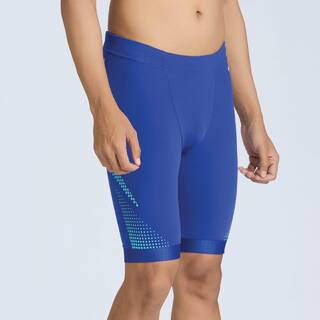


Nabaiji Men's Swimming Costumes: Chlorine-Resistant Fabrics and Hydrodynamic Fit Profiles for Indian Pool Training
Nabaiji men's swimming costumes are engineered with polyester-elastane blends that resist chlorine degradation over 200+ hours of pool exposure. Indian municipal pools often maintain chlorine concentrations between 1.0 and 3.0 ppm, which accelerates fabric breakdown in low-grade swimwear. Nabaiji uses 100% polyester PBT (polybutylene terephthalate) fiber construction in competitive briefs and jammers, offering superior shape retention compared to standard nylon blends. The elastane content ranges from 18% to 24%, delivering four-way stretch without elastic waistband sagging after repeated saltwater or chlorinated water immersion.
Hydrodynamic fit profiles vary across three core silhouettes: classic briefs with 7cm side width for minimal drag, mid-length jammers extending to mid-thigh for muscle compression, and full-length bodysuits with bonded seams for competitive racing. Briefs generate the least surface area contact, reducing frontal drag coefficient by approximately 8% compared to loose board shorts. Jammers incorporate flatlock stitching along inseams to prevent chafing during high-stroke-rate freestyle and butterfly sets. Competitive jammers use water-repellent coatings that reduce fabric saturation weight by up to 15%, maintaining buoyancy and reducing energy expenditure during long-distance training sessions.
Indian swimmers training in outdoor pools face high UV exposure, particularly in coastal regions like Goa, Kerala, and Tamil Nadu. Nabaiji fabrics carry UPF 50+ ratings, blocking 98% of UVA and UVB radiation during open-water training. The tight-knit polyester weave prevents UV penetration while maintaining breathability during dryland warm-ups. Quick-dry technology allows costumes to shed 80% of absorbed water within 15 minutes of exiting the pool, reducing bacterial growth and fabric mildew common in humid locker room storage.
Competitive Jammer vs Brief Selection: Muscle Compression, Drag Reduction, and Stroke Efficiency for Lap Swimmers
Competitive jammers extend from waist to mid-thigh, covering quadriceps and hamstring muscle groups with graduated compression panels. This compression reduces muscle oscillation during high-velocity kicks, particularly in freestyle and backstroke events where leg drive generates 30% to 40% of forward propulsion. The compressive fabric applies 15 to 20 mmHg of pressure across the thigh, improving venous return and reducing lactic acid accumulation during interval training sets. Jammers suit swimmers focusing on 200m to 1500m distance events where sustained muscle efficiency outweighs the minimal drag penalty of additional fabric coverage.
Classic briefs offer maximum range of motion for breaststroke and butterfly swimmers who require unrestricted hip flexion and knee drive. The minimal coverage reduces fabric-water interface, lowering form drag by maintaining a streamlined body profile. Briefs weigh between 40 and 60 grams when dry, compared to 80 to 110 grams for mid-length jammers. This weight difference becomes significant during multi-event competitions where repeated water entry and exit cycles cause fabric saturation. Competitive briefs use double-layered front panels for modesty and durability, with reinforced drawstring waistbands that maintain tension across 500+ training hours.
Indian competitive swimmers training for state and national championships often prefer jammers for their psychological confidence and muscle support during high-intensity sets. However, sprint specialists in 50m and 100m events favor briefs to maximize explosive starts and turn speeds. The choice depends on stroke specialty, event distance, and individual comfort with body coverage during poolside deck work and dryland training.
Chlorine Resistance and Fabric Durability: PBT Polyester vs Nylon Blends for High-Frequency Pool Training
Standard nylon-elastane swimwear degrades rapidly in chlorinated water, losing elasticity and color vibrancy after 40 to 60 training hours. Chlorine molecules break down nylon polymer chains through oxidative stress, causing fabric thinning and transparency issues. Nabaiji men's costumes use 100% polyester PBT construction, which exhibits 5 times greater chlorine resistance than conventional nylon. PBT fibers maintain tensile strength and shape memory across 200+ hours of pool exposure, equivalent to 6 to 8 months of daily training for competitive swimmers logging 10 to 12 weekly sessions.
Elastane degradation represents the primary failure mode in competitive swimwear. Chlorine attacks elastane's polyurethane linkages, reducing stretch recovery and causing waistband loosening. Nabaiji integrates chlorine-resistant elastane (branded as LYCRA XTRA LIFE or similar proprietary blends) that extends functional lifespan by 300% compared to standard elastane. This technology maintains 90% of original stretch recovery after 200 hours of chlorinated water exposure, preventing the saggy waistband and loose leg openings common in worn-out training costumes.
Indian swimmers should rinse costumes immediately after pool sessions to remove residual chlorine and prevent fabric crystallization. Cold water rinsing for 30 to 60 seconds removes 70% of chlorine residue, while a brief soak in non-chlorinated tap water eliminates an additional 20%. Air drying in shaded areas prevents UV-induced polymer breakdown, which compounds chlorine damage. Avoid wringing or twisting wet costumes, as mechanical stress on saturated elastane fibers accelerates permanent deformation.
Sizing and Fit Engineering: Waist Measurements, Inseam Lengths, and Compression Zones for Indian Body Proportions
Nabaiji men's swimming costumes follow European sizing standards with adjustments for Indian body proportions, particularly shorter torso lengths and narrower hip-to-waist ratios common in South Asian male swimmers. Size S typically accommodates waist circumferences of 71 to 76 cm, while size M covers 76 to 81 cm, and size L spans 81 to 86 cm. Competitive jammers add inseam length specifications: short inseam (30 to 35 cm) for swimmers under 170 cm height, regular inseam (35 to 40 cm) for 170 to 180 cm height range, and long inseam (40 to 45 cm) for swimmers exceeding 180 cm.
Proper fit requires the waistband to sit 2 to 3 cm below the navel without compression discomfort during deep breathing cycles. Leg openings should create a seal against the thigh without cutting into muscle tissue or restricting blood flow. Competitive swimmers can verify correct sizing by performing a full squat: the costume should maintain position without riding up or creating excess fabric bunching in the crotch area. Overly tight costumes restrict diaphragmatic breathing and reduce stroke efficiency, while loose costumes increase drag and cause chafing along inner thighs during high-volume training sessions.
Indian swimmers with muscular builds from dryland strength training may require one size larger than standard waist measurements suggest. Powerlifters and cross-training athletes often have quadriceps and glute development that exceeds typical swimmer proportions, necessitating additional elastane stretch capacity. Nabaiji provides detailed fit guides on product pages, including thigh circumference measurements at 10 cm above the knee to ensure adequate compression without circulation restriction.
Training Costumes vs Competition Suits: Durability Trade-Offs and Performance Optimization for Multi-Session Weekly Schedules
Training costumes prioritize durability and chlorine resistance over maximum hydrodynamic performance. Nabaiji training briefs and jammers use thicker fabric weights (200 to 240 GSM) compared to competition suits (140 to 180 GSM), providing extended lifespan for swimmers logging 8 to 12 weekly pool sessions. The heavier fabric construction resists abrasion from pool wall push-offs and lane rope contact, common wear points that cause premature tearing in lightweight racing suits. Training costumes incorporate reinforced drawstring channels and double-stitched waistbands to withstand repeated tensioning during costume adjustments between sets.
Competition suits sacrifice longevity for performance gains, using ultra-lightweight fabrics with water-repellent coatings that degrade after 15 to 25 competitive swims. These suits feature bonded seams instead of stitched construction, reducing drag-inducing surface irregularities by up to 12%. The fabric weave incorporates hydrophobic treatments that prevent water absorption, maintaining the suit's dry weight throughout the race. Indian swimmers competing in state and national championships should reserve competition suits exclusively for meet days, using durable training costumes for daily preparation work.
Swimmers training 6 to 8 times weekly should rotate between two or three training costumes to extend overall lifespan. Alternating costumes allows complete drying between sessions, preventing bacterial growth and fabric mildew. A well-maintained training costume lasts 4 to 6 months under high-frequency use, while competition suits remain effective for one competitive season (3 to 4 months) when reserved for championship meets only.
Open Water and Triathlon Swimming: Board Shorts vs Performance Briefs for Indian Coastal and Lake Training
Open water swimmers training in Indian coastal environments (Arabian Sea, Bay of Bengal) or freshwater lakes require different costume specifications than pool-based athletes. Saltwater exposure accelerates fabric degradation through salt crystal formation within fiber weaves, requiring immediate post-swim freshwater rinsing. Nabaiji open water costumes use reinforced polyester blends with higher elastane content (22% to 26%) to accommodate wave-induced body movements and unpredictable water currents. The increased stretch capacity prevents binding during bilateral breathing and sighting strokes unique to open water navigation.
Triathletes transitioning from swim to cycling legs prefer longer jammer styles that reduce chafing during the bike segment. Triathlon-specific costumes incorporate thin chamois padding (3 to 5 mm thickness) in the seat area, providing minimal cushioning without water saturation penalties. The padding uses open-cell foam that drains rapidly and dries during the cycling leg, unlike closed-cell foams that retain water weight. Indian triathletes competing in events like Ironman 70.3 Goa or Challenge Mumbai benefit from costumes with flatlock seams along inner thighs to prevent saddle sore development during 90 km cycling segments.
Board shorts offer UV protection and modesty for recreational beach swimmers but generate significant drag during lap swimming or competitive training. The loose fabric creates turbulent water flow around the legs, increasing energy expenditure by 15% to 20% compared to form-fitting briefs or jammers. Recreational swimmers prioritizing comfort over performance may accept this trade-off, but serious athletes should transition to performance costumes for structured training sessions.
FAQ (Frequently Asked Questions)
Q1. What is the difference between swim briefs and jammers for regular pool training in India?
Swim briefs offer maximum hip mobility and minimal drag, ideal for stroke technique work and high-repetition sets in controlled pool environments. Jammers provide thigh compression and extended coverage, reducing muscle oscillation during interval training and offering modesty preferences common in Indian public pools. Competitive swimmers often use briefs for sprint work and jammers for endurance sets exceeding 1500 meters.
Q2. How does chlorine resistance in PBT fabric compare to standard nylon-elastane swimming costumes?
PBT (Polybutylene Terephthalate) fiber maintains elastic recovery and color stability through 200+ chlorinated pool sessions, while standard nylon-elastane blends degrade after 50 to 80 sessions in Indian pools with elevated chlorine concentrations. PBT resists the sagging and transparency issues common in worn-out elastane-based costumes. Swimmers training 4 or more days weekly should prioritize 100% PBT or PBT-dominant fabric blends.
Q3. Should I size down for competition jammers or stay with my regular swim brief size?
Competitive swimmers typically size down one increment in race jammers to achieve performance-level compression, accepting a tighter initial fit that stabilizes after 2 to 3 sessions. Recreational swimmers should maintain their standard size to ensure comfortable hip flexion and unrestricted kick mechanics. Measure both waist and hip circumference, as Indian body proportions may fall between standard size brackets requiring careful chart cross-referencing.
Q4. How do I prevent my swimming costume from losing elasticity in hard water conditions?
Rinse costumes in cool tap water immediately after each session to remove chlorine and mineral deposits before they crystallize on fabric fibers. Wash weekly in cold water (below 30°C) using pH-neutral liquid detergents, avoiding powder detergents with bleaching agents. Air-dry flat in shade and rotate between multiple costumes, allowing 24 to 48 hours of rest for complete elastic recovery between training sessions.
Q5. Can I use the same swimming costume for both pool training and open-water swims in saltwater?
Yes, but saltwater accelerates corrosion of metal drawstring grommets and requires immediate post-swim rinsing to prevent salt crystal abrasion. Nabaiji open-water models feature non-metallic cord locks and high-visibility colorways for safety in coastal environments. Rinse thoroughly after saltwater exposure before returning to chlorinated pool training to prevent chemical reactions between residual salt and pool chlorine.
Q6. What GSM fabric weight should I choose for daily swim training versus occasional pool use?
Daily swimmers logging 3000+ meters per session require 220 GSM PBT fabrics that withstand repetitive wall push-offs and lane rope contact without pilling or thinning. Recreational swimmers attending 2 to 3 sessions weekly can use 180 GSM polyester-elastane blends that prioritize comfort over maximum durability. Higher GSM ratings correlate with extended lifespan but slightly reduced initial stretch comfort during the first 3 to 5 wears.
Q7. How tight should the waistband fit on a jammer to prevent it from sliding down during flip turns?
The waistband should sit flat against your natural waistline without creating pressure points or requiring constant adjustment. Internal drawstrings allow micro-adjustments for secure positioning during flip turns and dive entries. If the jammer slides down more than 2 cm during wall push-offs, size down one increment or tighten the drawstring. Silicone-backed elastic grippers prevent roll-down better than standard elastic alone.
Q8. Are Nabaiji 900 Series racing jammers legal for state and national level swimming competitions in India?
Yes, Nabaiji 900 Series jammers meet FINA (World Aquatics) approval standards for textile-only racing suits, legal for all Swimming Federation of India sanctioned competitions. These suits feature bonded seam construction and compression mapping without incorporating polyurethane panels or non-textile materials banned since 2010. Verify current competition regulations before major meets, as suit length and fabric thickness rules periodically update.
Q9. What causes swimming costumes to become transparent after extended use in chlorinated pools?
Chlorine breaks down elastane fibers and thins polyester strands through oxidative degradation, causing fabric to lose opacity and structural integrity. This process accelerates in pools with chlorine concentrations above 4 ppm and when costumes are not rinsed immediately after use. PBT-based fabrics resist this transparency issue significantly longer than nylon-elastane blends. Replace costumes showing visible thinning or color fade to maintain modesty and hydrodynamic performance.
Q10. How do I choose between Nabaiji 100, 500, and 900 Series for triathlon training in India?
Nabaiji 100 Series suits recreational triathletes focusing on technique development and shorter pool sessions under 1500 meters. The 500 Series targets regular trainers logging 15+ kilometers weekly, offering chlorine-resistant PBT fabric and reinforced construction for durability. The 900 Series serves competitive triathletes requiring FINA-approved race technology for open-water events and sprint-distance competitions where hydrodynamic efficiency impacts transition times and overall performance.
Q11. What is the difference between Nabaiji training costumes and competition jammers for regular pool swimming?
Training costumes use thicker 200 to 240 GSM polyester fabrics with reinforced stitching for durability across 200+ hours of chlorinated water exposure. Competition jammers use lighter 140 to 180 GSM fabrics with water-repellent coatings and bonded seams that reduce drag but degrade after 15 to 25 swims. Competitive swimmers should use training costumes for daily practice and reserve competition suits for championship meets only.
Q12. How do I choose the correct size for men's swimming briefs if I am between two waist measurements?
Measure your waist circumference 2 cm below your navel and compare to the size chart. If between sizes, select the larger size if you have muscular thighs or prefer less compression, or the smaller size if you prioritize maximum hydrodynamic fit. Perform a full squat test: the costume should stay in position without riding up or creating excess fabric bunching in the crotch area.
Q13. How long do Nabaiji men's swimming costumes last with daily training in chlorinated pools?
Nabaiji training costumes with 100% polyester PBT construction last 4 to 6 months under daily use (8 to 12 weekly sessions), equivalent to 200+ pool hours. Standard nylon blends degrade in 40 to 60 hours. Rinse costumes in cold tap water immediately after each session and air dry in shade to maximize lifespan. Rotating between two costumes extends overall durability by allowing complete drying between uses.
Q14. Can I use the same swimming costume for pool training and open water swimming in the sea?
Yes, but saltwater accelerates fabric degradation through salt crystal formation within fiber weaves. Rinse costumes thoroughly in freshwater immediately after ocean swimming to remove salt residue. Nabaiji polyester costumes resist saltwater better than nylon blends, but expect 20% to 30% shorter lifespan compared to pool-only use. Dedicated open water swimmers should consider separate costumes for saltwater training.
Q15. Do swimming jammers provide better performance than briefs for competitive lap swimming?
Jammers provide muscle compression across quadriceps and hamstrings, reducing muscle oscillation and improving efficiency in 200m to 1500m distance events. Briefs offer lower drag and maximum hip mobility for sprint events (50m and 100m) and breaststroke technique. Jammers suit distance swimmers and those preferring additional coverage, while briefs benefit sprinters prioritizing minimal fabric-water interface and explosive turns.
Q16. How should I care for my swimming costume to prevent chlorine damage and fabric stretching?
Rinse in cold tap water for 30 to 60 seconds immediately after swimming to remove 70% of chlorine residue. Air dry flat or hanging in shaded areas, never in direct sunlight. Avoid wringing or twisting wet fabric, as mechanical stress on saturated elastane fibers causes permanent deformation. Do not machine wash or use fabric softeners, which break down chlorine-resistant coatings and elastane polymers.
Q17. What fabric technology makes Nabaiji costumes more chlorine-resistant than regular swimwear?
Nabaiji uses 100% polyester PBT (polybutylene terephthalate) fiber construction instead of standard nylon, providing 5 times greater chlorine resistance. The elastane component uses chlorine-resistant formulations that maintain 90% stretch recovery after 200 hours of pool exposure, compared to 40 to 60 hours for standard elastane. This prevents waistband loosening and fabric transparency common in worn-out training costumes.
Q18. Are swimming briefs suitable for beginner swimmers learning strokes in Indian swimming academies?
Yes, briefs provide maximum range of motion for learning proper stroke mechanics, particularly breaststroke kick and butterfly hip drive. Beginners concerned about coverage can start with mid-length jammers for psychological comfort. Both styles work equally well for technique development. Focus on correct sizing: costumes should fit snugly without restricting breathing or creating pressure points during 60 to 90 minute training sessions.
Q19. Can I wear swimming jammers for triathlon events or do I need specialized tri-suits?
Standard jammers work for sprint triathlons but lack chamois padding for longer cycling segments. Triathlon-specific costumes incorporate 3 to 5 mm open-cell foam padding in the seat area that drains rapidly and provides minimal cushioning during 40 to 90 km bike legs. Serious triathletes benefit from tri-specific designs with flatlock seams to prevent chafing during multi-hour events like Ironman 70.3 competitions.
Q20. What is the ideal swimming costume for training in outdoor pools with high UV exposure in Indian summer?
Choose Nabaiji costumes with UPF 50+ rated polyester fabrics that block 98% of UVA and UVB radiation. Darker colors (navy, black) provide slightly better UV protection than lighter shades. Jammers offer more skin coverage than briefs for swimmers training in outdoor pools during peak UV hours (10 AM to 4 PM). Apply waterproof sunscreen to exposed skin areas not covered by the costume.