Hiking Shoes

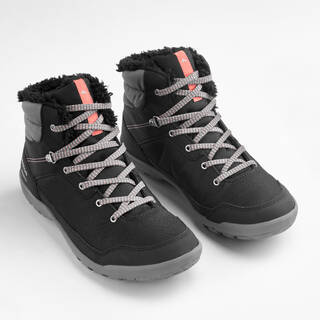

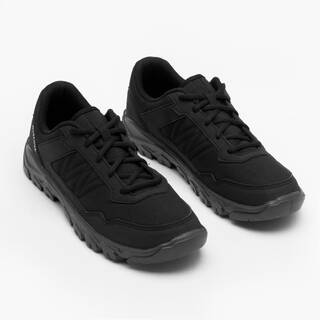

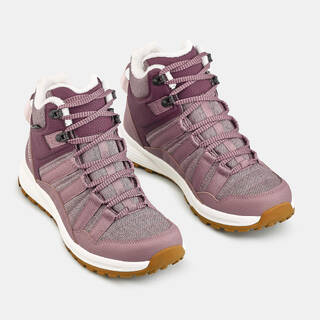
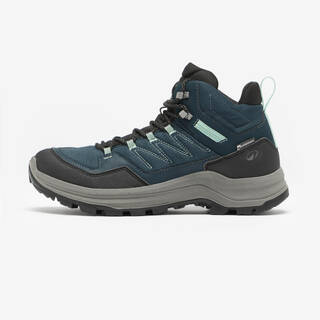
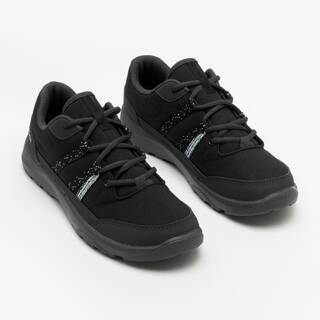
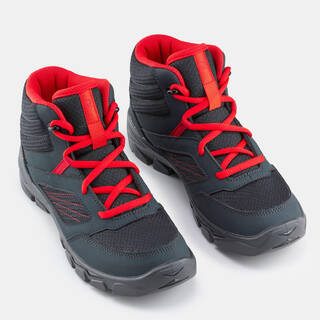
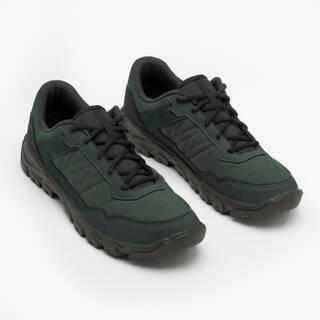
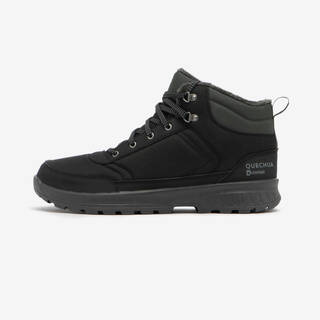
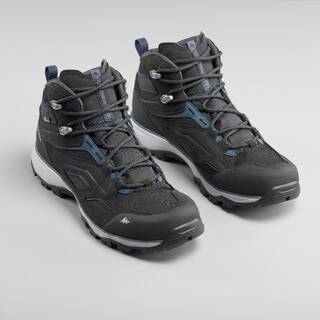
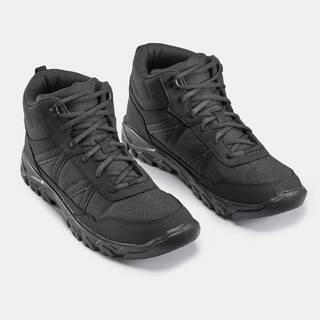
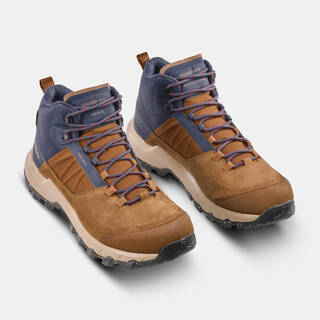
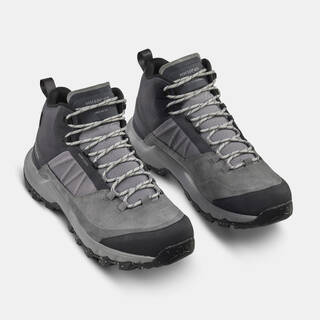
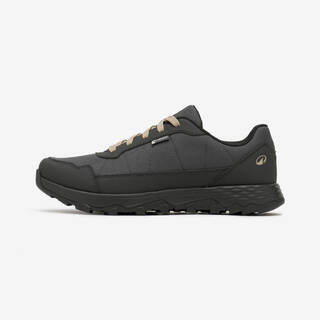
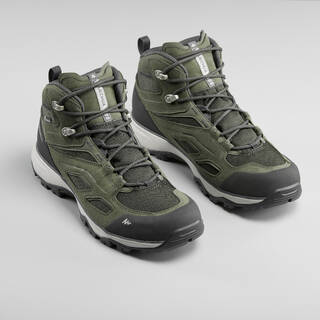
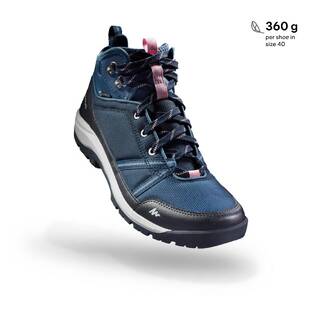
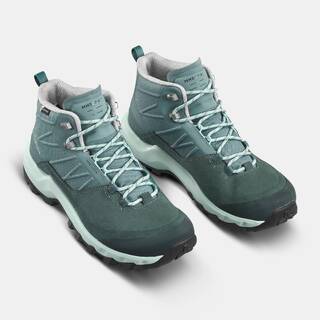
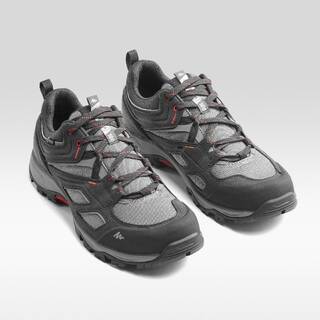
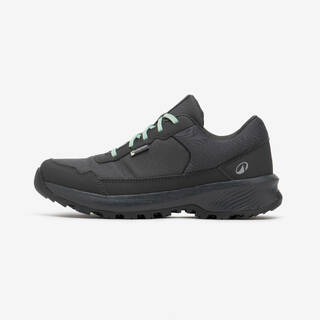
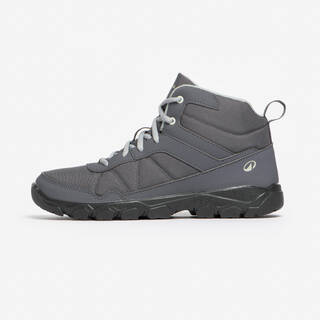
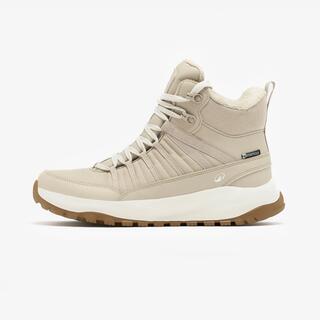
Engineered Hiking Footwear for Indian Terrain: Quechua MH Series and Forclaz Trek Platforms
Hiking shoes for Indian trails demand specialized construction that addresses three critical environmental stressors: high-humidity monsoon saturation, abrasive laterite and granite surfaces, and rapid elevation changes from coastal plains to Himalayan foothills. Decathlon's Quechua MH (Mountain Hiking) range and Forclaz Trek series deploy multi-density EVA midsoles with shore hardness ratings between 45C and 55C, calibrated to absorb repetitive impact forces equivalent to 1.5 to 2 times body weight during descents on rocky switchbacks. The outsole rubber compounds feature 4mm to 5mm lug depth with directional tread patterns, engineered through wet traction testing on moss-covered granite and loose scree common to Western Ghats and Kumaon trails.
Upper construction separates beginner-friendly synthetic leather reinforcements from advanced breathable mesh panels with hydrophobic treatments. Entry-level MH100 models use polyurethane-coated synthetic overlays that resist abrasion from boulder scrambles and thorny undergrowth, while mid-tier MH500 boots integrate ripstop nylon with targeted ventilation zones at the forefoot and ankle collar. High-cut ankle designs provide lateral stability through TPU heel counters and padded scree collars, critical when navigating uneven root systems in Kodaikanal forests or loose shale on Roopkund approaches. Tongue gussets with waterproof membranes prevent stream crossings and sudden downpours from saturating the footbed, maintaining dry internal microclimates during 6 to 8 hour trekking days.
Waterproofing Standards and Breathability Metrics for Monsoon and High-Altitude Conditions
Indian hiking footwear must balance waterproof membrane integrity with moisture vapor transmission to prevent internal condensation during humid ascents. Quechua's proprietary waterproof membranes achieve hydrostatic head ratings between 8,000mm and 10,000mm, tested under simulated monsoon immersion protocols where boots remain submerged for 2-hour cycles. This specification ensures trail runners crossing swollen monsoon streams in Meghalaya or navigating waterlogged forest floors in Silent Valley maintain dry feet without membrane delamination. Breathability is quantified through MVTR (Moisture Vapor Transmission Rate) values reaching 8,000 to 10,000 g/m²/24h, allowing perspiration vapor to escape while blocking external water ingress.
Seam-sealed construction at critical stress points (toe cap junction, heel counter attachment, and tongue gusset interfaces) uses thermally bonded tape with peel strength exceeding 8N/cm, preventing moisture wicking through needle punctures common in traditionally stitched boots. For high-altitude treks above 3,500 meters where temperature swings between daytime solar heating and sub-zero night conditions stress material flexibility, Forclaz boots incorporate cold-crack resistant rubber compounds that maintain pliability down to negative 15 degrees Celsius. This prevents outsole hardening and loss of ground contact on frozen morning trails during winter Himalayan expeditions.
Midsole Cushioning Architecture: EVA Compression Sets and Long-Distance Fatigue Mitigation
Midsole engineering directly influences energy return and joint load distribution across multi-day treks carrying 8 to 12 kg backpacks. Dual-density EVA construction places softer 40C shore hardness foam at the heel strike zone to attenuate initial ground reaction forces, transitioning to firmer 55C density foam at midfoot and forefoot for propulsion efficiency during toe-off phases. This graduated cushioning prevents premature compression set (permanent foam deformation) that occurs after 300 to 400 kilometers on budget single-density midsoles, extending functional lifespan to 600 to 800 kilometers before noticeable cushioning degradation.
Decathlon's lab testing simulates repetitive loading cycles equivalent to 2 million steps, measuring energy return percentages and compression recovery rates. High-performance Forclaz models achieve 55 to 60 percent energy return, reducing cumulative fatigue during long descents where quadriceps absorb eccentric loading. Removable EVA insoles with anatomical arch support (available in low, medium, and high arch profiles) allow customization for individual foot biomechanics, addressing overpronation tendencies common among first-time trekkers transitioning from urban footwear. The insole-midsole interface uses textured bonding surfaces to prevent slippage inside the shoe during steep descents, maintaining consistent underfoot feel.
Outsole Traction Systems: Lug Geometry and Rubber Compound Selection for Mixed Terrain
Outsole performance separates confident scrambling from tentative footing on India's diverse hiking surfaces. Quechua hiking shoes deploy 4mm lug depth for moderate trails with packed earth and occasional rock exposure, while aggressive 5mm to 6mm lugs on Forclaz boots handle loose scree, wet clay, and moss-covered boulders in monsoon conditions. Lug spacing follows biomechanical research: wider 8mm to 10mm gaps between lugs allow mud shedding on Sahyadri laterite trails, preventing clay buildup that reduces ground contact area by 30 to 40 percent after just 2 kilometers of muddy trekking.
Rubber durometer hardness balances durability against grip. Softer 60A durometer compounds maximize friction on wet granite through molecular adhesion, critical for monsoon treks in Kodachadri or Kudremukh where rainfall exceeds 4,000mm annually. Harder 70A compounds resist abrasion on volcanic basalt trails in Lonavala or quartzite ridges in Aravalli ranges, extending outsole life beyond 800 kilometers. Heel brake zones feature reverse lug angles that dig into steep descents, preventing forward sliding on 30 to 40 degree slopes common during Valley of Flowers or Hampta Pass descents. Forefoot flex grooves at the metatarsal break point allow natural foot articulation without compromising lateral stability during off-camber traverses.
Fit Profiles and Sizing Calibration for Indian Foot Morphology and Sock Layering
Proper hiking boot fit accounts for foot volume expansion during prolonged activity and accommodates thicker trekking socks without pressure points. Decathlon sizing follows European standards with Indian-specific last modifications: medium-volume lasts suit 70 percent of Indian trekkers, while wide-fit options address broader forefeet common in certain regional populations. Toe box height must allow 10mm to 12mm clearance above the longest toe when standing, preventing toenail bruising during descents when feet slide forward despite proper lacing tension. This clearance accommodates the natural foot swelling (approximately 4 to 6 percent volume increase) that occurs after 3 to 4 hours of continuous hiking in warm conditions.
Heel cup geometry prevents lift exceeding 5mm during the gait cycle, achieved through molded EVA heel counters and Achilles notch padding that conforms to individual ankle shapes after 20 to 30 kilometers of break-in. Lacing systems with asymmetric eyelet placement allow independent tension adjustment across forefoot, midfoot, and ankle zones. Speed lacing hooks at the upper eyelets enable quick tension changes when transitioning from flat approaches to steep ascents requiring tighter ankle lockdown. For multi-day treks, sizing up by half a European size accommodates moisture-wicking merino wool or synthetic trekking socks with cushioned terry loops at heel and forefoot impact zones, maintaining circulation without constriction during 8 to 10 hour trekking days.
Maintenance Protocols and Durability Benchmarks for Extended Trail Life in Tropical Climates
Hiking shoe longevity in India's humid climate requires proactive care addressing mold growth, adhesive degradation, and material UV exposure. After each trek, remove insoles and loosen laces fully to promote airflow through the boot interior, preventing fungal colonization in damp toe boxes. Brush dried mud from outsole lugs and welt stitching using stiff nylon brushes before it hardens and stresses seam integrity. For waterproof membrane boots, avoid direct heat sources (radiators, hair dryers, or prolonged sun exposure exceeding 40 degrees Celsius) that accelerate membrane delamination and midsole EVA oxidation.
Periodic reproofing with DWR (Durable Water Repellent) sprays restores hydrophobic surface tension on mesh uppers after 100 to 150 kilometers, when factory treatments wear through abrasion. Store boots in cool, dry environments with silica gel packets inside to absorb residual moisture between treks, preventing midsole compression set and upper material stiffening. Decathlon hiking shoes typically deliver 600 to 1,000 kilometers of functional tread life depending on terrain abrasiveness and user weight, with midsole cushioning degrading before outsole rubber wears through. Visible creasing at flex points, loss of waterproof integrity at seams, or compression set exceeding 20 percent (measured by pressing the midsole and observing slow recovery) indicate replacement timing to maintain joint protection and traction safety on technical trails.
FAQ (Frequently Asked Questions)
Q1. What footwear to wear for hiking?
Footwear is the most essential accessory on a hike. If its a hot weather and the duration of hike is less, choose a sandal with correct grip based on the terrain. If the duration is longer, check if you need waterproofing, cold protection, ankle support and the weight of the shoe. Quechua has segregated the hiking shoes based on terrain, which are nature, mountain and snow.
Q2. Can you run in hiking shoes?
Running as an exercise needs flexibility and better grips on hiking trails. We have a specific shoe for such an exercise, which is called Fast Hiking. The fast hiking shoe, ensures better fit, grip and flexibility.
Q3. What is the difference between Quechua MH100, MH500, and Forclaz hiking shoes for Indian trails?
MH100 models use synthetic leather uppers with basic waterproofing suitable for day hikes under 10 kilometers on established paths. MH500 boots integrate breathable mesh panels, higher ankle collars, and improved midsole cushioning for weekend treks carrying moderate loads. Forclaz series targets multi-day expeditions with advanced waterproof membranes rated to 10,000mm hydrostatic head, aggressive 5mm lug outsoles, and reinforced toe caps for technical terrain in Himalayas or Western Ghats.
Q4. How do I choose between low-cut hiking shoes and mid-cut or high-cut boots for Himalayan treks?
Low-cut shoes suit well-maintained trails with minimal ankle-twisting hazards and lighter day packs under 5 kg, offering better breathability in hot conditions. Mid-cut boots provide lateral ankle support for uneven rocky terrain and loads between 8 to 12 kg, common on weekend treks. High-cut boots are necessary for multi-day expeditions above 3,000 meters with heavy packs, loose scree, or stream crossings requiring maximum stability and waterproof protection up the lower calf.
Q5. Can I use the same hiking shoes for monsoon treks in Western Ghats and winter Himalayan trails?
Monsoon trekking prioritizes waterproof membranes with high breathability (8,000+ g/m²/24h MVTR) and aggressive lug patterns for wet clay and moss-covered rocks. Winter Himalayan boots require cold-crack resistant rubber compounds functional below negative 10 degrees Celsius and insulated linings for snow contact. A single boot cannot optimize both: use breathable waterproof models for monsoons and insulated high-cut boots with gaiters compatibility for winter high-altitude treks.
Q6. How much toe room should I have in hiking boots when trying them on in the store?
Stand with full weight distributed and press your thumb between your longest toe and the boot's front interior. You need 10mm to 12mm clearance (approximately one thumb width) to prevent toenail impact during descents when feet slide forward. Try boots in the evening when feet are naturally swollen, wearing the same thickness trekking socks you will use on trails. Walk on an incline if available to simulate downhill pressure on the toe box.
Q7. What is the expected lifespan of Decathlon hiking shoes on Indian rocky terrain?
Typical lifespan ranges from 600 to 1,000 kilometers depending on terrain abrasiveness, user weight, and maintenance. Midsole EVA cushioning degrades before outsole rubber wears through, losing 20 to 30 percent shock absorption after 500 to 700 kilometers. Aggressive trails with sharp granite or basalt (common in Sahyadris or Aravallis) accelerate outsole wear compared to softer forest floors. Replace boots when waterproofing fails at seams, midsole shows permanent compression, or outsole lugs wear below 2mm depth.
Q8. Do I need to break in new hiking boots before a multi-day trek, and how long does it take?
Yes, break-in prevents blisters and hotspots by allowing materials to conform to your foot shape. Wear new boots for 20 to 30 kilometers over 3 to 4 short day hikes with the socks and pack weight you will carry on the actual trek. Focus on routes with elevation changes to flex the boot at natural bend points. Leather and synthetic leather boots require more break-in than mesh models. Never attempt a multi-day trek in completely new, unworn boots.
Q9. How do I maintain waterproofing in hiking boots after multiple monsoon treks?
Clean boots thoroughly after each trek, removing all mud from seams and lacing eyelets. Allow them to air dry naturally away from direct heat sources. After 100 to 150 kilometers, reapply DWR spray to restore water beading on outer fabric surfaces. Check seam tape integrity at stress points (toe cap, heel counter) and reseal with seam sealant if peeling occurs. Store boots with silica gel packets in a cool, dry place to prevent mold growth between treks.
Q10. What sock thickness should I wear with Decathlon hiking shoes for proper fit?
Use moisture-wicking trekking socks with cushioned terry loops at heel and forefoot, typically 3mm to 5mm thick. Merino wool or synthetic blends prevent blisters better than cotton. Size your boots while wearing these exact socks, as thicker winter socks or thin liner sock systems alter fit significantly. For multi-day treks, carry an extra pair to change into dry socks at midday, reducing friction and moisture buildup that causes hotspots.
Q11. Are Quechua hiking shoes suitable for technical scrambles and boulder hopping in Hampta Pass or Pin Parvati?
Entry-level MH100 and MH500 models suit moderate trails with occasional rock steps but lack the ankle support and aggressive lug traction for Class 2 to Class 3 scrambles. Technical routes requiring hand use and precise foot placement need Forclaz boots with 5mm to 6mm lug depth, reinforced toe rand protection, and high-cut ankle stability. For serious Himalayan passes with sustained boulder fields and loose scree, prioritize boots with climbing shoe-inspired toe box stiffness and heel brake lug geometry.
Q12. Can I resole Decathlon hiking shoes, or do I need to replace them entirely when the outsole wears out?
Most Decathlon hiking shoes use direct-attach construction where the outsole is bonded to the midsole with polyurethane adhesives, making resoling impractical and cost-prohibitive compared to replacement. The midsole EVA typically degrades at a similar rate to outsole rubber wear, so by the time lugs are worn down, cushioning has also lost effectiveness. Focus on proper maintenance and rotation between multiple pairs to extend overall lifespan rather than planning for resoling services.