Tents per Person
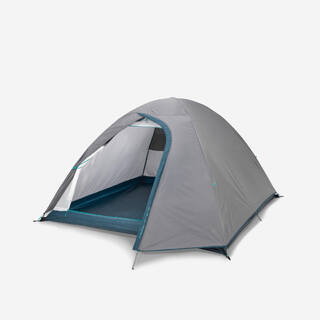
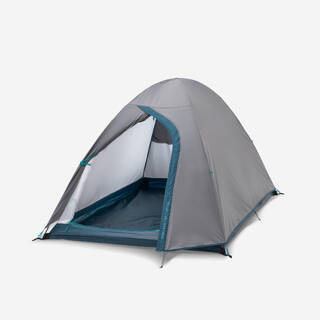
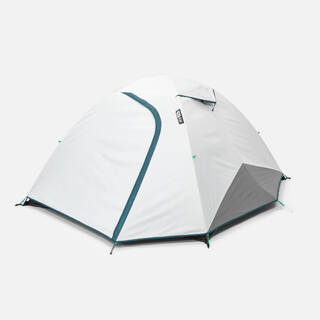
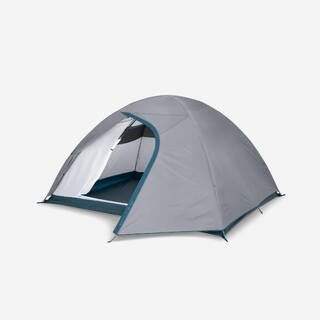






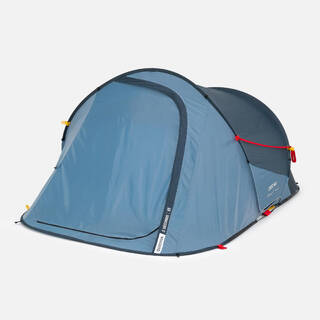

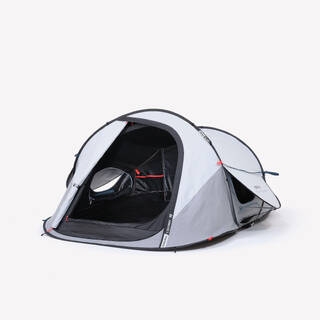
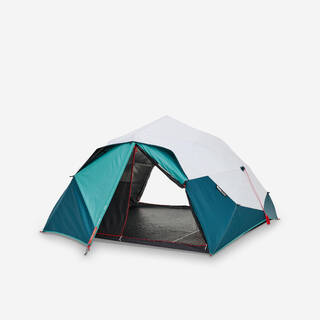
Quechua Tent Engineering: Hydrostatic Head Ratings and Monsoon Waterproofing for Indian Campers
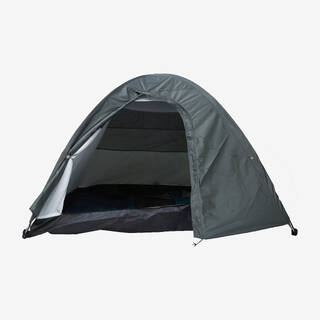
Quechua tents dominate Decathlon's camping portfolio with hydrostatic head ratings spanning 2000mm PU coating for entry-level base camps to 5000mm for high-altitude Himalayan expeditions. The polyester flysheet undergoes factory-applied polyurethane lamination, creating a molecular barrier against horizontal monsoon rain and condensation. Groundsheets use reinforced 120D ripstop polyester with welded seams, blocking capillary water rise from saturated soil during Kerala or Coorg monsoon camping. Taped seams eliminate needle-hole permeability, critical when overnight humidity exceeds 85% in Western Ghats or Meghalaya cloud forests.
Tent capacity ratings follow ISO sleeping mat footprints: a 2-person tent allocates 120cm width (60cm per sleeper), while 3-person models expand to 180cm. Vestibule storage adds 0.8 to 1.2 square meters for wet boots, backpacks, and cooking gear, preventing interior moisture transfer. Quechua's Fresh & Black technology integrates aluminized inner coatings that reflect 99% of solar radiation, maintaining interior temperatures 17°C cooler than uncoated nylon during Rajasthan summer camping or Ladakh plateau midday heat. The blackout layer blocks 99% of dawn light, extending sleep cycles for multi-day trekking recovery.
Pole architecture separates into three systems: fiberglass for budget base camps (flexes under 40 km/h gusts but resists UV degradation), 7001 T6 aluminium alloy for trekking (30% lighter, withstands 60 km/h ridge winds), and DAC Featherlite for ultralight alpine (handles 80 km/h Himalayan jet streams). Hub-and-spoke designs like the 2 Seconds pop-up system use pre-tensioned spring steel, achieving full pitch in under 120 seconds without ground stake dependency. Freestanding geodesic domes distribute wind loads across four to six crossing poles, essential for exposed Spiti Valley or Zanskar campsites above 4000m altitude.
Solo vs Multi-Person Tent Selection: Pack Weight, Vestibule Ratios, and Trekking Mobility
Solo tents prioritize sub-1.5kg pack weights for single-carry Himalayan treks, using 20D silnylon flys and single-pole A-frame structures. The narrow 90cm floor width fits standard 51cm sleeping pads, while 30cm head height clearance allows seated gear sorting without full stand-up volume. Ventilation relies on opposing mesh panels and adjustable vents, preventing condensation when body moisture output reaches 300ml per night in sealed alpine environments. Solo vestibules measure 0.5 square meters, sufficient for a 50-liter backpack and one pair of boots.
Two-person tents balance shared gear distribution (1.8 to 2.2kg split between partners) with 210cm length and 120cm width, accommodating side-by-side sleeping without shoulder contact. Double-door configurations eliminate midnight crawl-overs, critical for couples or parent-child camping. Dual vestibules expand storage to 1.6 square meters total, housing two backpacks, trekking poles, and a compact stove. Three-person models jump to 3.2kg but provide 180cm width, fitting three 51cm pads or two adults with a child. The extra volume suits base camp setups where weight splits across multiple carriers or vehicle transport to Himachal or Uttarakhand roadhead campsites.
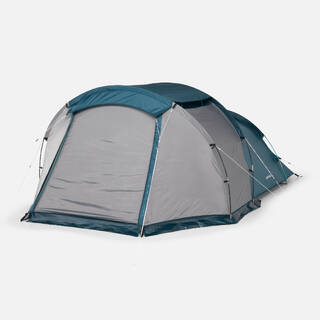
Four to six-person family tents transition to cabin or tunnel designs with 180 to 200cm peak height, enabling full standing posture for gear organization and clothing changes. Steel or fiberglass pole counts increase to eight or more, requiring 15 to 20 ground stakes for structural stability. These models weigh 8 to 12kg, suited for car camping at Lonavala, Coorg, or Rishikesh where portage distance stays under 200 meters. Separate sleeping pods and central living areas create privacy partitions, while sewn-in groundsheets prevent insect entry during humid coastal or forest camping.
Forclaz Trekking Tents: Packability, Pole Segmentation, and High-Altitude Wind Stability
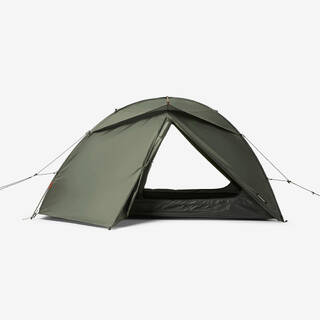
Forclaz trekking tents target multi-day Himalayan routes where every 100 grams impacts daily caloric expenditure. The Trek 900 series uses 7001 aluminium poles segmented into 38cm sections, collapsing to 42cm packed length for vertical backpack stowage. Flysheet fabrics drop to 30D ripstop nylon with 3000mm silicone coatings, balancing 950-gram weights against puncture resistance on rocky Ladakh or Kinnaur pitches. Inner mesh panels occupy 60% of wall surface area, maximizing breathability when condensation risk peaks during monsoon shoulder seasons or high-altitude temperature inversions.
Guyline anchor systems use reflective 3mm Dyneema cords with adjustable tensioners, allowing real-time pitch tuning when wind speeds shift from 20 km/h valley breezes to 50 km/h ridge gusts. Stake-out points number eight to twelve per tent, distributing lateral loads across the flysheet perimeter. Forclaz recommends burying stakes at 45-degree angles in soft soil or using rock anchors above treeline where ground penetration fails. The low-profile dome geometry keeps centroid height under 110cm, reducing sail area exposed to crosswinds on exposed Roopkund or Hampta Pass campsites.
Vestibule-to-floor ratios in Forclaz models reach 0.6:1, meaning a 2.5 square meter floor pairs with 1.5 square meters of covered storage. This ratio matters when monsoon rain persists for 12-plus hours, requiring dry space for wet gear sorting, boot drying, and stove cooking without interior moisture transfer. Stuff sack compression uses roll-top closures, reducing packed volume to 8 liters for a two-person tent, fitting inside a 60-liter backpack's top compartment alongside a sleeping bag and insulated jacket.
Fresh & Black Thermal Technology: Aluminized Coatings and UV Protection for Indian Summer Camping
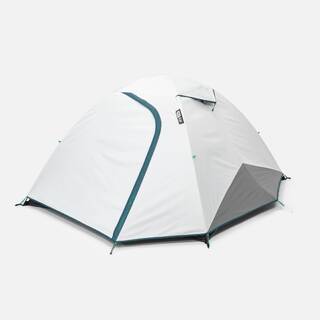
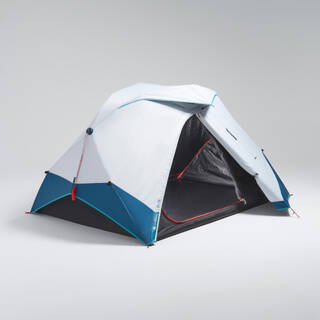
Fresh & Black technology applies a triple-layer laminate: outer 190T polyester for abrasion resistance, mid-layer aluminized polyethylene for solar reflection, and inner blackout polyester for light blockage. Laboratory testing shows interior temperatures plateau at 28°C when external shade temperatures reach 45°C, a 17°C reduction critical during May to June Rajasthan or Karnataka plateau camping. The aluminized layer reflects infrared wavelengths (700 to 2500 nanometers), preventing radiant heat transfer through the flysheet into the sleeping chamber.
UV protection reaches UPF 50-plus ratings, blocking 98% of UVA and UVB radiation during extended daytime occupancy. This matters for families camping at Goa beaches, Rann of Kutch salt flats, or Andaman coastlines where shade trees are absent and midday sun exposure exceeds 10 UV index. The blackout inner coating absorbs visible light (400 to 700 nanometers), creating near-total darkness even when sunrise occurs at 5:30 AM during summer solstice. Sleep quality improves measurably when circadian melatonin production continues uninterrupted past dawn.
Thermal performance degrades if the flysheet contacts the inner mesh, creating conductive heat bridges. Quechua designs maintain 10 to 15cm air gaps using clip-and-pole suspension, allowing convective airflow to vent heat through roof vents and door mesh. Ground-level intake vents pull cooler air from shaded soil layers, while peak exhaust vents release warm air via stack effect, generating passive circulation without battery-powered fans.
2 Seconds Pop-Up System: Spring Steel Mechanics and Rapid Deployment for Festival and Base Camp Use
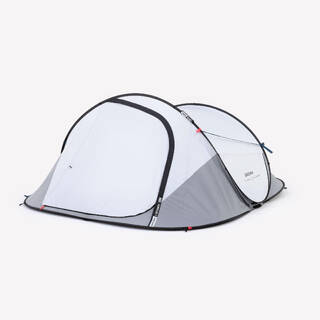
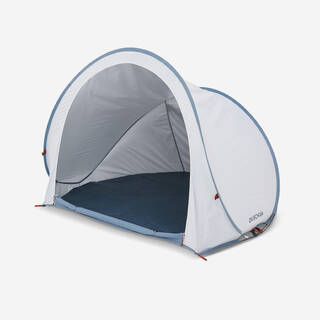
The 2 Seconds system integrates pre-tensioned spring steel hoops sewn into the flysheet perimeter, storing elastic potential energy when folded into a 65cm diameter disc. Deployment involves releasing a single Velcro strap, allowing the steel to snap into a self-supporting dome within 120 seconds. No pole threading, hub assembly, or ground staking is required for initial structure, though four corner stakes add wind resistance up to 50 km/h. This speed suits music festival camping at NH7 Weekender, Ziro, or Magnetic Fields where setup time competes with event schedules.
Spring steel hoops use 4mm diameter wire with 180-degree bend radii, cycling through 50-plus fold-and-deploy cycles before metal fatigue reduces tension. The flysheet attaches via sewn channels, eliminating separate pole sleeves that add weight and complexity. Packed diameter measures 65cm with 8cm thickness, requiring horizontal stowage across a car boot or strapped to a motorcycle pannier. Weight ranges from 3.2kg for two-person models to 4.8kg for three-person versions, acceptable for vehicle-based camping but excessive for multi-day trekking.
Ventilation in 2 Seconds tents relies on fixed mesh windows and a single roof vent, providing adequate airflow for temperate climates but insufficient for high-humidity monsoon conditions where condensation accumulates on inner surfaces. The system excels for overnight roadside camping during Ladakh or Spiti road trips, weekend getaways to Lonavala or Coorg, or emergency shelter during vehicle breakdowns in remote Himachal or Uttarakhand routes.
Groundsheet Durability and Stake-Out Geometry: Ripstop Denier Ratings and Monsoon Ground Saturation
Groundsheet fabrics range from 70D polyester for ultralight trekking (puncture-prone on sharp Himalayan scree) to 210D Oxford weave for family base camps (resists thorn penetration in Rajasthan scrubland or Karnataka forest floors). Denier measures fiber weight per 9000 meters, so 210D uses threads three times thicker than 70D, tripling puncture resistance but adding 400 grams to total tent weight. Polyurethane coatings reach 5000mm hydrostatic head on premium models, blocking capillary water rise when camping on saturated monsoon soil or riverbank sand.
Bathtub groundsheet construction folds edges upward 10 to 15cm, creating a sealed basin that prevents surface water intrusion during heavy rain. Welded seams replace stitched seams at corner stress points, eliminating needle holes where water wicks through thread. This design proves critical when camping on Goa beaches during pre-monsoon showers or Himalayan meadows where overnight dew saturates grass, transferring moisture through permeable tent floors.
Stake-out geometry uses equilateral triangulation, placing guyline anchors 120 degrees apart to distribute wind loads evenly. Aluminum Y-stakes penetrate hard clay or compacted Himalayan soil better than wire J-stakes, which bend at 30-degree angles in rocky ground. Stake length matters: 18cm stakes hold in loose sand or forest humus, while 25cm stakes are necessary for high-wind ridge camping where pullout forces exceed 15kg per anchor point. Reflective guylines prevent nighttime tripping, essential when navigating between tent and campfire or latrine areas without headlamps.
FAQ (Frequently Asked Questions)
Q1. Which tent is best for camping?
When purchasing a tent, look for key features such as capacity, wind resistance, ease of set up and weight. Based on the usage and camping duration, you can choose between Fresh and Black technology, Family tent, or personal tents.
Q2. What is the best waterproof tent available?
All Quechua tents are waterproof. The tent with additional technology on this is Fresh and Black tents. This keeps the insides of the tent, darker and 18°C cooler than the outside.
Q3. What hydrostatic head rating do I need for monsoon camping in Kerala or Coorg?
Choose tents with minimum 3000mm flysheet and 5000mm groundsheet ratings for sustained monsoon rain. Lower ratings (2000mm) work for dry-season Himalayan camping but fail when horizontal rain persists beyond six hours. Taped seams and welded groundsheet corners prevent water intrusion through stitching holes.
Q4. How do I choose between a 2-person and 3-person tent for couples who carry extra gear?
A 3-person tent provides 180cm width versus 120cm in 2-person models, adding space for camera bags, drone cases, or a child. The weight penalty is 800 grams to 1kg, acceptable if splitting load between two backpacks. Larger vestibules (1.8 vs 1.2 square meters) keep wet boots and packs outside the sleeping area.
Q5. Can Quechua 2 Seconds pop-up tents handle Ladakh or Spiti high-altitude winds?
2 Seconds tents withstand 50 km/h winds when fully staked but lack the geodesic pole crossings needed for 70-plus km/h Himalayan ridge gusts. Use them for roadside camping below 4000m altitude. Above that elevation, switch to Forclaz trekking domes with six to eight stake-out points and low-profile geometry.
Q6. What is Fresh & Black technology and does it work in Rajasthan summer heat?
Fresh & Black uses aluminized coatings that reflect infrared radiation, keeping interiors 17°C cooler than uncoated tents when external temperatures hit 45°C. The blackout layer blocks 99% of sunlight, allowing sleep past 5:30 AM sunrise. It works best with proper flysheet-to-mesh air gaps and open roof vents for convective cooling.
Q7. How much weight should I expect for a solo trekking tent suitable for Himalayan routes?
Solo trekking tents weigh 1.2 to 1.5kg for silnylon models with aluminium poles. Ultralight versions drop to 900 grams using 20D fabrics and single-pole A-frames but sacrifice durability on rocky Ladakh or Kinnaur campsites. Budget an extra 200 grams for footprint groundsheets to protect against sharp scree.
Q8. Do I need a separate footprint or groundsheet for camping on rocky Himalayan terrain?
Yes, a footprint adds a sacrificial 70D polyester layer between sharp rocks and your tent's 120D groundsheet, extending floor life by 50-plus nights. Footprints cost 300 to 400 grams but prevent punctures that require field repairs with seam tape. They also keep the packed tent cleaner when breaking camp on muddy monsoon mornings.
Q9. What pole material is best for high-altitude camping above 4000 meters?
7001 T6 aluminium alloy poles handle sub-zero temperatures and 60 km/h winds without brittleness, unlike fiberglass which cracks below minus 10°C. DAC Featherlite poles save 200 grams and flex under 80 km/h gusts without permanent deformation. Avoid fiberglass for Ladakh, Spiti, or Zanskar where wind and cold combine.
Q10. How many stake-out points do I need for camping in open areas like Rann of Kutch or Spiti Valley?
Minimum eight stake-out points for two-person tents in exposed areas, twelve for larger models. Each guyline distributes wind load, preventing flysheet collapse when gusts exceed 50 km/h. Use 25cm aluminium Y-stakes buried at 45-degree angles, and add rock anchors where ground is too hard for penetration.
Q11. Can I use a family cabin tent for trekking or do I need a separate trekking tent?
Family cabin tents weigh 8 to 12kg and require vehicle access for transport, making them unsuitable for multi-day treks. Trekking tents weigh under 2.5kg for two-person models, pack into 8-liter stuff sacks, and use collapsible aluminium poles. Use cabin tents for car camping at Lonavala or Coorg, trekking tents for Himalayan routes.
Q12. How do I prevent condensation inside my tent during humid monsoon camping?
Open all roof vents and door mesh panels to maximize airflow, maintain 10cm flysheet-to-mesh air gaps, and avoid cooking inside the tent. Condensation forms when body moisture (300ml per night) contacts cold flysheet surfaces. Wipe inner walls with a microfiber cloth each morning and air the tent fully before packing to prevent mildew growth.